
Custom Silk Ties: A B2B Manufacturing Guide to Fabrics, 3-Fold vs. 7-Fold Construction, Interlining, and Tipping


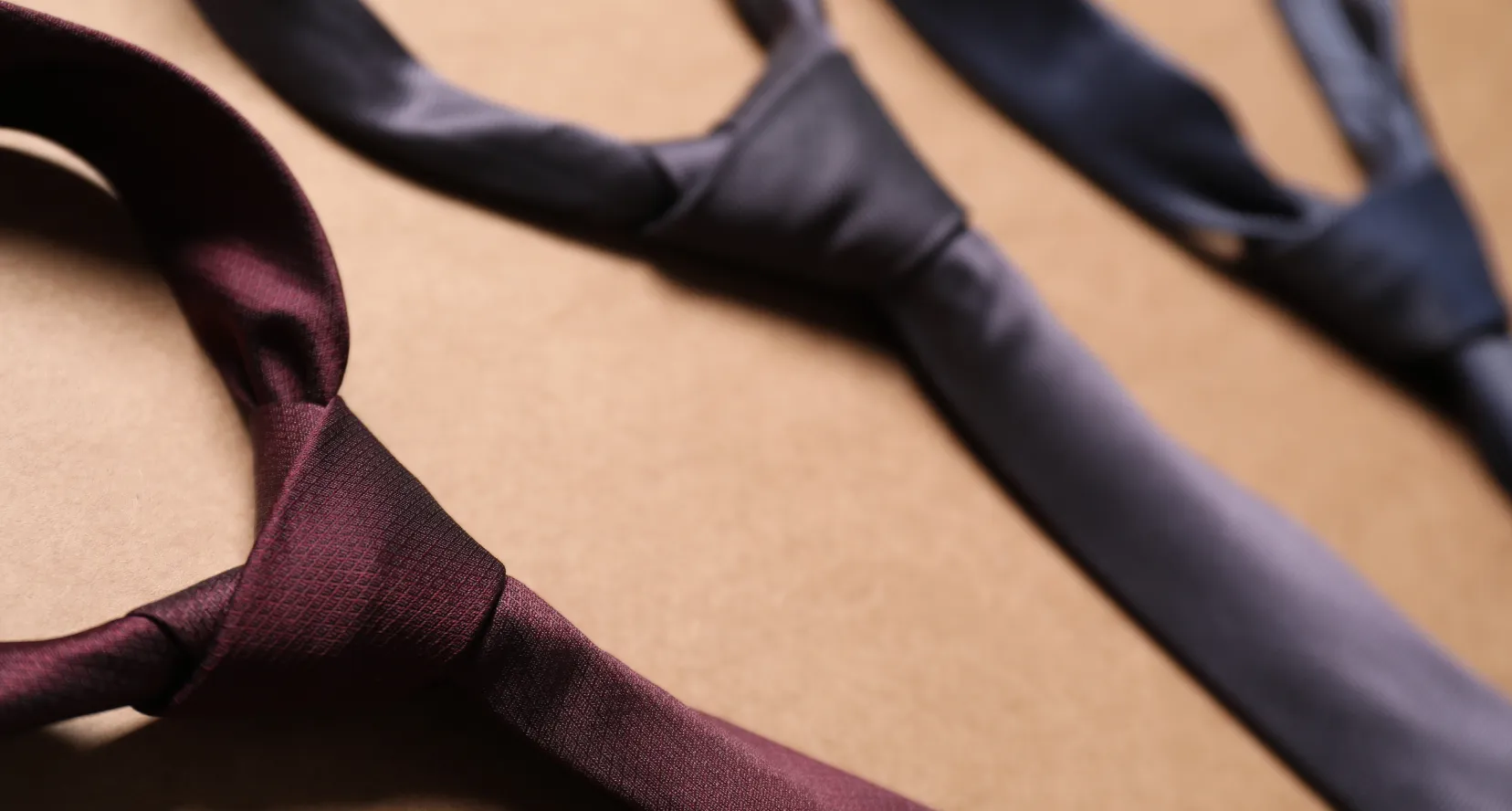
A silk necktie is one of the most mechanically demanding items in formalwear manufacturing. While frequently evaluated purely on aesthetic print or pattern design, a tie's real commercial value is determined by structural physics: geometric bias alignment, spring-back interlining recovery, and flexible internal stitching. When a wearer ties a Four-in-Hand or Half-Windsor knot, concentrated tensile, torsional, and compression forces converge along a 10-centimeter neckband. If the tie is improperly engineered, it twists diagonally down the shirt front, develops permanent creases across the knot zone, and ruptures at the tail seam.
Brands expanding into custom silk neckwear often approach tie manufacturing as simple two-dimensional cut-and-sew production. The result is often high defect rates, distorted drape, and customer dissatisfaction. Sourcing a production-ready necktie line requires specifying raw fabric weaves, exact bias angles, interlining compositions, folding architectures, and flexible slip stitching. This technical manufacturing guide provides the precise engineering metrics and quality standards required to produce commercial-grade silk neckties for luxury menswear and corporate clients.
A commercial-grade custom silk tie program is defined by a true 45-degree bias cut, Grade 6A mulberry silk twill or yarn-dyed jacquard, double-brushed wool or wool-cotton interlining matched to shell weight, a hand-stitched slip stitch with an elastic reserve loop, and structural bar-tacking (travetto) at both blade ends. Locking these mechanical parameters prevents necktie twisting, knot distortion, and fabric shearing during wear.
1. Shell Fabric Selection: Silk Twill vs. Yarn-Dyed Jacquard
The foundation of any necktie line begins with the shell fabric. Neckties require textiles that balance tensile strength, knot hold, and surface aesthetics. In luxury neckwear manufacturing, two distinct fabric categories dominate the market: printed silk twill and yarn-dyed silk jacquard.
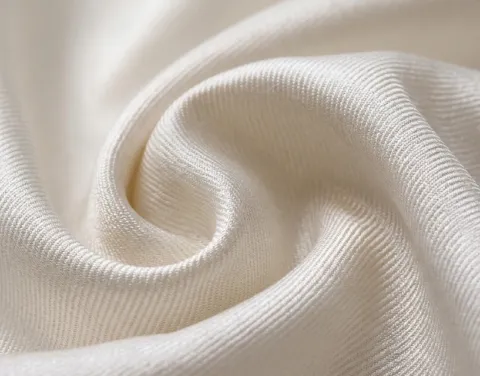
Printed Silk Twill (14 to 18 Momme): Silk twill is characterized by visible diagonal ribbing created by a 2/1 or 2/2 weave. Woven from 100% mulberry silk, twill provides a crisp hand feel, excellent wrinkle recovery, and a low-luster surface. It is the global standard for classic foulard prints, geometric micro-patterns, and institutional heraldry. In manufacturing, twill must be woven at a minimum density of 14 momme (~60 gsm) to prevent interlining show-through, while 16 to 18 momme (~69 to 78 gsm) represents the premium benchmark for luxury fashion houses. For custom prints, see our silk twill fabric specifications.
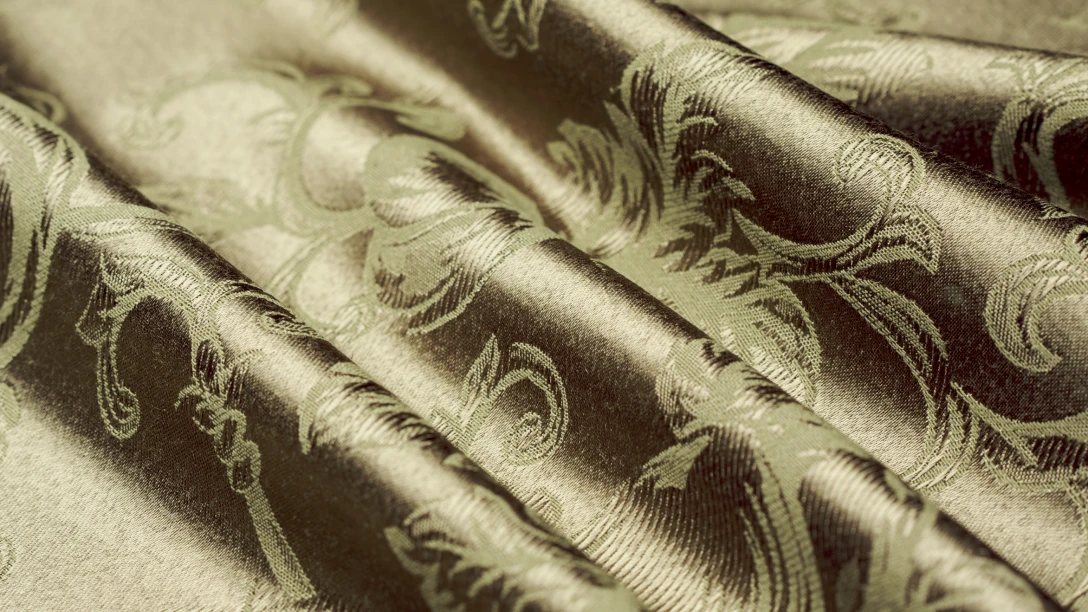
Yarn-Dyed Silk Jacquard (20 to 28 Momme): Unlike flat-printed twill, jacquard patterns are woven directly into the fabric structure using colored warp and weft silk filaments on computerized looms. Jacquard fabrics feature rich tactile depth, structural weight, and subtle light refraction between satin and matte weave sections. It is widely specified for regimental stripes, textured micro-structures, and formal wedding collections. Because the motifs are structural, jacquard fabric is inherently heavier and stiffer than twill, requiring a lighter, softer interlining to achieve a balanced knot.
| Fabric Specification | Weight (Momme / GSM) | Tactile Profile | Knot Characteristics | Primary Commercial Application |
|---|---|---|---|---|
| Silk Twill (Printed) | 14–18 mm (~60–78 gsm) | Smooth, visible diagonal ribs | Compact, clean dimple formation | Classic foulards, club ties, seasonal prints |
| Silk Jacquard (Yarn-Dyed) | 20–28 mm (~86–120 gsm) | Textured, raised structural motifs | Full, substantial knot volume | Corporate formal, regimental stripes, weddings |
| Silk Satin (Charmeuse) | 16–19 mm (~69–82 gsm) | High gloss, ultra-smooth face | Fluid, soft knot hold | Black-tie formalwear, evening accessories |
| Silk Grenadine (Garza) | Variable open gauze weave | Coarse, open architectural texture | Crisp knot with structural grip | Sartorial bespoke, high-end menswear |
2. The Critical Geometry of the 45-Degree True Bias Cut
The single most important cutting rule in necktie production is the true bias cut. Woven fabric possesses virtually no elastomeric stretch along the warp (lengthwise grain) or the weft (crosswise grain). However, when cut at exactly a 45-degree angle to the selvedge, the weave grid elongates mechanically under tension and contracts naturally when relaxed.
Preventing Bias Roll and Torque Twisting: If a cutting marker deviates from 45 degrees by even 2 or 3 degrees, the resulting tie will develop asymmetrical internal torque. When tied around the collar and suspended naturally, a miscut tie will twist corkscrew-style toward the left or right rather than hanging flat against the shirt placket. This defect, known as "bias roll," cannot be ironed or steamed out; it is permanently locked into the grainline orientation.
Three-Piece Shell Layout: A standard necktie measures approximately 148 cm to 150 cm in length. Because silk fabric rolls are typically woven at 114 cm or 140 cm widths, cutting a single continuous 150 cm strip at a 45-degree bias is commercially unfeasible and creates catastrophic fabric waste. Necktie shells are therefore drafted in three distinct segments: the large blade (apron), the neckband (gusset), and the small blade (tail). These three pieces are joined via bias seam lines angled at 45 degrees, which nest cleanly under the collar and stay hidden during wear.
Fabric Consumption Realities: Due to diagonal pattern nesting, cutting neckties on a true bias generates substantial cutting scrap (often 35% to 45% waste). On average, one linear meter of 114 cm wide silk yields approximately 2.5 to 3.0 neckties. Attempts by discount manufacturers to reduce waste by shifting the cutting angle to 30 or 60 degrees directly causes product distortion.
3. Fold Architecture: 3-Fold vs. 6-Fold vs. 7-Fold (Sette Pieghe)
A necktie's fold construction dictates its weight, internal drape, and retail price architecture. Different fold formats serve distinct market tiers:
The Standard 3-Fold Tie: The commercial workhorse of global retail. The silk shell is folded inward once on each side (forming three layers) over a dedicated internal interlining core. The interlining supplies the structural bulk and elasticity, while the silk serves as the outer envelope. The 3-fold construction accounts for over 90% of global tie production due to its reliable shape retention, balanced weight, and cost-efficient fabric yield.
The 6-Fold Tie: A luxury compromise between industrial efficiency and sartorial craftsmanship. The silk shell is folded inwards three times on each side (creating six internal folds). It can be constructed with a lightweight interlining or unlined. A 6-fold tie uses roughly 60% more silk yardage than a standard 3-fold, delivering a weightier, more substantial hand feel and a clean, rolling blade edge.
The Masterwork 7-Fold Tie (Sette Pieghe): The historic pinnacle of Italian neckwear tailoring. A genuine 7-fold tie is cut from a large single piece of silk and folded inward seven times like an origami fan, requiring no synthetic or wool interlining to establish body. The thickness, drape, and springiness are achieved entirely through the layered silk cloth itself. True unlined 7-fold ties consume more than double the yardage of a 3-fold tie and require extensive manual folding and hand-pressing. They command retail prices between $180 and $350 and serve high-end sartorial and bespoke luxury markets.
4. Interlining Engineering: Wool vs. Wool-Cotton vs. Synthetic Blends
If the silk shell is the face of the tie, the interlining is its spine. The interlining dictates whether a tie forms an elegant dimple below the knot, resists crushing when tightened, and recovers its flat shape after untying.
Double-Brushed Pure Wool Interlining: The gold standard in luxury tie manufacturing. Natural wool fibers possess an inherent natural crimp and elasticity (springback memory). When the tie is unknotted and hung overnight, the wool fibers expand back to their original resting state, releasing compression wrinkles automatically. Double-brushed wool provides a soft, rounded hand feel and ideal knotting volume.
Wool-Cotton Blends (60% Wool / 40% Cotton): The premier commercial standard for tailored menswear. The wool provides elastic recovery, while the cotton core adds structural firmness and prevents the tie from stretching excessively over years of daily wear. Interlining weight must be calibrated precisely to the shell: lightweight twills require a heavier interlining (320 to 360 gsm), while heavy jacquards require a lighter interlining (240 to 280 gsm) to avoid a stiff, bulky knot.
Synthetic Polyester / Rayon Interlinings: Common in mass-market promotional neckwear. Synthetic interlinings lack natural fiber recovery; once creased, they retain permanent fold marks. They also produce a stiff, cardboard-like drape that fails to roll smoothly along the edges. Luxury brands should strictly avoid synthetic interlinings.
5. Hand Assembly Standards: Slip Stitch, Travetto, and Loops
A necktie must never be sewn closed down its center spine with a rigid machine lockstitch. When a knot is tied, the outer shell stretches along the bias while the inner lining shifts. A rigid machine seam restricts this internal movement, causing the silk to pucker and stitch threads to snap.
The Hand-Sewn Slip Stitch (Libera Piega): Luxury neckties are closed down the center back using a single continuous thread sewn with a loose, hidden slip stitch. At the tail end of the tie, this thread terminates in an exposed loop of thread measuring 2 cm to 3 cm, often tucked inside the fold. This "reserve loop" allows the thread to extend and contract dynamically as the tie is pulled and knotted, ensuring the tie retains its shape and elasticity without tearing internal seams.
Structural Bar-Tacks (Travetto): At both ends of the central spine seam—approximately 15 cm up from the large blade tip and 10 cm up from the small blade tip—the fold is anchored with a heavy, hand-stitched bar-tack (known in Italian tailoring as the travetto). The travetto locks the folds in place, preventing the tie from spreading open while maintaining flex.
Keeper Loops (Passante) and Labeling: The tie must feature a self-fabric keeper loop sewn into the back spine seam to secure the small tail. For retail collections, brands often specify a woven brand label placed just below the keeper loop, reinforced with discreet corner tacking.
6. Tipping Construction: Self-Tipped, Untipped Hand-Rolled, and Decorative
Tipping refers to the fabric lining the reverse apex of both the large and small blades:
- Self-Tipped: The reverse points are lined with the identical silk fabric as the shell. This is the clean, cohesive hallmark of luxury manufacturing. It consumes extra silk yardage but delivers a flawless, unified aesthetic.
- Decorative / Jacquard Tipped: The reverse points are lined with a contrasting custom-woven silk or bemberg cupro lining, often featuring the brand's logo, monogram, or signature contrast colorway (e.g., royal purple or navy).
- Untipped with Hand-Rolled Edges (Sfamato): Favored in high-end Italian sartorial tailoring. The tie has no interior tipping fabric; instead, the raw edges of the silk blade are painstakingly rolled by hand toward the reverse and secured with delicate hand pick-stitching. Untipped ties offer an airy, lightweight blade that drapes with exceptional fluid movement.
7. Sizing Metrics, Production Economics, and Quality Testing
Proportional sizing must align with contemporary lapel widths and consumer demographics:
- Blade Widths: 7.5 cm (modern slim/contemporary), 8.0 cm (balanced standard classic), and 8.5 cm (traditional executive/sartorial).
- Standard Length: 148 cm to 150 cm (fits individuals 170 cm to 188 cm tall). Extra-long (XL) ties measure 158 cm to 162 cm for taller or larger builds.
The Manufacturing Quality Audit: Before releasing bulk shipments, our quality inspection team subjects tie samples to three mechanical benchmarks:
- The Hanging Balance Test: The tie is draped over a horizontal rod at its midpoint. Both blades must hang vertically parallel without twisting or flaring outward.
- The Recovery Spring Test: The neckband is tied into a tight knot, left for four hours, unknotted, and hung overnight. The wool interlining must eliminate over 95% of compression wrinkles within 12 hours.
- The Bias Pull Test: The blade is pulled firmly lengthwise. The shell must elongate smoothly by 2 to 3 cm under tension and snap back instantly to its original dimensions when released.
At DreamSilk, we produce custom silk ties, coordinating silk accessories, and matching pocket squares for menswear labels, corporate gifting, and luxury retailers. We weave 100% Grade 6A mulberry silk on advanced computerized looms and support both classic 3-fold construction and artisan hand-folded styles. Many brands bundle ties with cufflinks and pocket squares inside branded rigid gift boxes—explore our custom silk gift sets to elevate your program's average order value. Contact our technical sales team with your vector artwork and target specifications to initiate sample prototyping.
FAQ
Silk twill is a smooth fabric with visible diagonal ribbing, typically printed with classic foulards or micro-patterns. It offers a crisp knot and fluid drape. Yarn-dyed silk jacquard features textured, raised motifs woven directly into the fabric using colored threads. Jacquard is heavier, thicker, and provides a more substantial knot, making it ideal for formalwear and regimental stripes.