

Custom Silk Sheets: A B2B Manufacturing Guide to Seamless Weaving, Momme Weight, Pocket Depth, and Hem Construction


In luxury bedding manufacturing, silk sheets represent the highest capital investment per unit and the most technically demanding cut-and-sew category. Unlike silk pillowcases or small sleep accessories that endure localized friction, a fitted or flat sheet must withstand continuous multidirectional shear stress, abrasive body friction, and heavy laundering loads across an expansive surface area. Brands expanding into custom silk bedding frequently encounter customer complaints regarding center seam discomfort, premature fabric thinning near the foot of the bed, and elastic slippage off deep mattresses.
Developing a production-ready tech pack for custom silk sheets requires understanding wide-width loom capabilities, tensile abrasion limits across different momme weights, dimensional stability under repeated washing, and geometric corner drafting. Overlooking these engineering variables results in high return rates and eroded margins. This technical manufacturing guide provides the precise material specifications, construction standards, and sizing tolerances required to source commercial-grade silk sheets for global retail and hospitality brands.
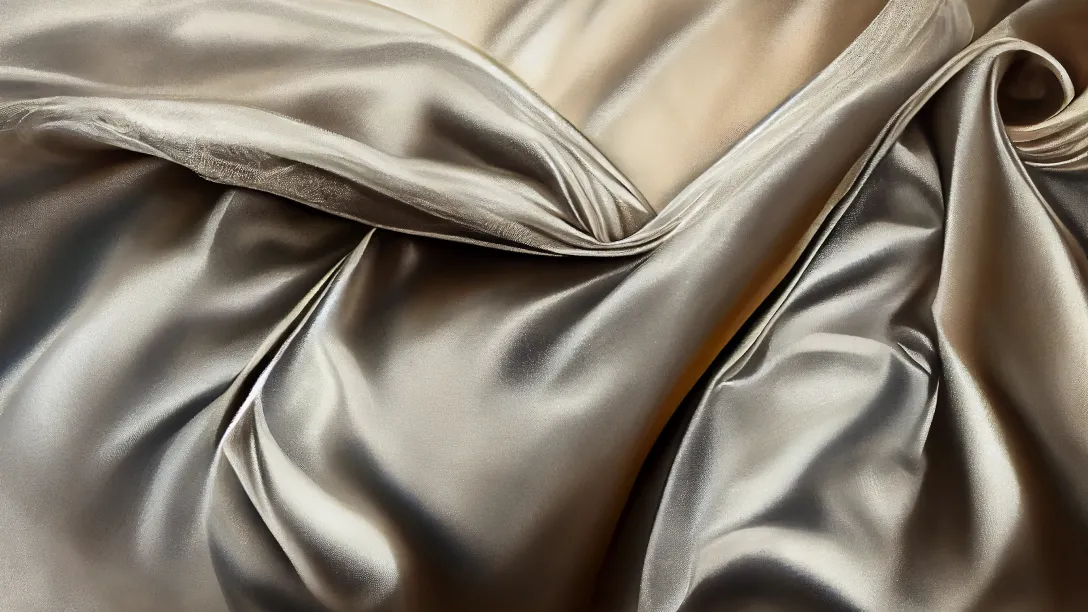
A commercial-grade custom silk sheet program is built on seamless wide-width weaving (up to 280 cm), Grade 6A long-fiber mulberry silk charmeuse at 22 to 25 momme, continuous 360-degree fully encased braided elastic with a minimum 40 cm pocket depth, and fully enclosed French seams on all fitted corners. Pre-shrinking the yardage via industrial decatizing to stabilize residual shrinkage below 1.5% is mandatory to ensure precise dimensional fit across regional mattress sizes.
1. The Structural Divide: Seamless vs. Seamed Silk Sheets
The primary architectural distinction in silk sheet manufacturing is whether the sheet is woven seamless or constructed from narrower fabric panels joined by a seam. This decision dictates both unit production cost and consumer market positioning.
Traditional Narrow-Width Looms (114 cm to 140 cm): Standard silk weaving looms produce fabric widths of 114 cm (45 inches) or 140 cm (55 inches). Because a Queen or King bed sheet requires widths exceeding 200 cm, manufacturers utilizing narrow-width machinery must stitch two or three panels together. This results in either a center seam running directly down the middle of the mattress or two parallel seams along the outer thirds. In luxury retail, seamed sheets face immediate market resistance. The joined seam creates a palpable ridge that causes tactile discomfort, experiences accelerated abrasion against the sleeper's body, and presents a recurring point of structural failure during laundering.
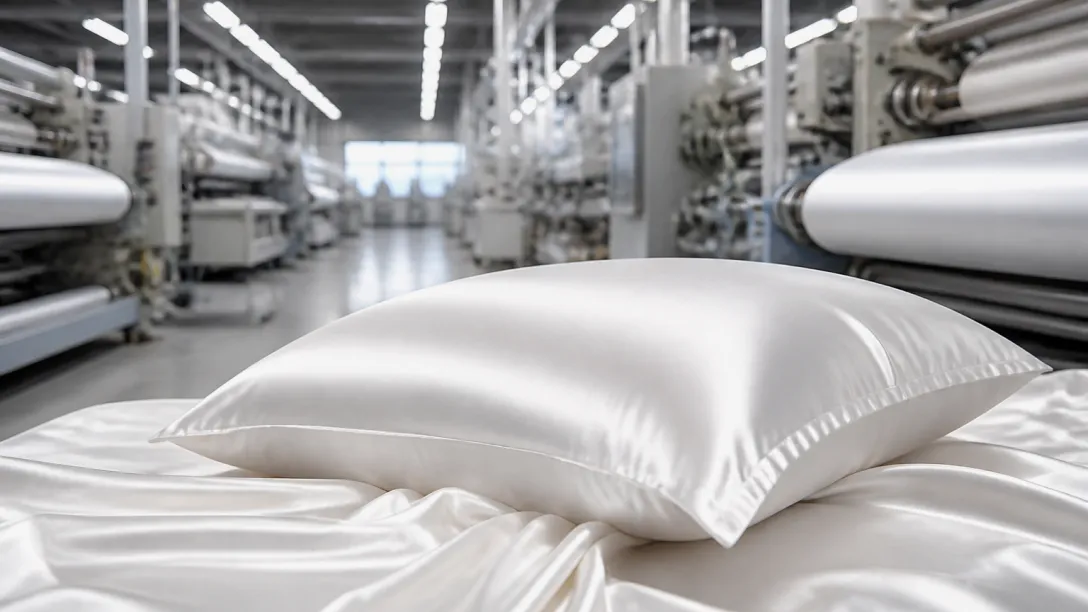
Specialized Wide-Width Shuttleless Looms (Up to 280 cm): Modern luxury bedding demands seamless construction. Producing seamless sheets requires specialized, wide-width rapier or air-jet looms capable of weaving mulberry silk charmeuse fabric at widths between 250 cm and 280 cm. Weaving at this width demands rigorous raw filament quality control; any variation in yarn tension across a 2.8-meter warp beam results in visible tension bands or uneven fabric density. Seamless silk sheets provide a uniform, uninterrupted sleeping surface, superior tensile distribution, and a clean drape over mattress perimeters.
2. Momme Weight Selection: 19mm vs. 22mm vs. 25mm for Bedding
Momme (mm) represents the fabric's physical weight and thread density (where 1 momme equals approximately 4.3056 gsm). While 19 momme serves as an acceptable entry-level specification for silk apparel and sleepwear, bed sheets require significantly higher mass to withstand mechanical abrasion from heels, elbows, and frequent washing.
19 Momme (~82 gsm): While occasionally specified for entry-tier retail lines seeking lower wholesale price points, 19 momme silk charmeuse possesses limited abrasion resistance when used as a bottom fitted sheet. Under the repetitive friction of human heels and body turning, 19 momme fabric can experience thread thinning and surface fuzzing within 12 to 18 months of regular use. It is acceptable for top flat sheets, but it is not recommended for high-friction fitted sheets.
22 Momme (~95 gsm): The industry benchmark for premium direct-to-consumer (DTC) and boutique hotel programs. At 95 gsm, the warp and weft thread density provides over 35% greater tensile strength and abrasion resistance compared to 19 momme. The fabric is completely opaque across all light colorways (ivory, champagne, pearl grey), exhibits a substantial liquid drape, and delivers a commercial lifespan exceeding three to five years under proper laundry care.
25 Momme (~108 gsm): The ultra-luxury and hospitality standard. Possessing an exceptionally dense yarn count, 25 momme silk charmeuse provides maximum resistance to yarn slippage, puncture, and surface abrasion. The heavier weight creates an opulent, rich hand feel that drapes firmly over the bed without excessive shifting. For luxury flagship collections positioned above $400 retail per set, 25 momme is the definitive material specification.
| Fabric Specification | Weight (GSM) | Abrasion Resistance | Opacity | Recommended Bedding Application |
|---|---|---|---|---|
| 19 Momme Charmeuse | ~81.8 gsm | Moderate (Lower durability on fitted sheet) | Semi-opaque in white/pale tones | Entry-level flat sheets, pillowcase sets |
| 22 Momme Charmeuse | ~94.7 gsm | High (Commercial standard benchmark) | Fully opaque in all colorways | Flagship fitted sheets, full bedding sets |
| 25 Momme Charmeuse | ~107.6 gsm | Exceptional (Maximum commercial lifespan) | Fully opaque, heavy drape | Ultra-luxury collections, executive suites |
| 30 Momme Charmeuse | ~129.2 gsm | Extreme (Heavyweight upholstery grade) | Total opacity, stiff drape | Specialized heavy bedspreads, decorative throws |
3. Fitted Sheet Engineering: Pocket Depth, Corner Geometry, and Elastic Grip
The fitted sheet is the most mechanically stressed component of a bedding set. A poorly engineered fitted sheet pops off mattress corners during sleep, causing frustration and product returns. Precision patterning must accommodate modern mattress profiles.
Pocket Depth Grading: Over the past decade, the standard consumer mattress profile has increased significantly due to multi-layer memory foam cores, internal coil springs, and plush pillow-top toppers. A standard 30 cm (12-inch) pocket depth is no longer adequate for the global luxury market. Production tech packs should categorize pocket depths into clear commercial tiers:
- Standard Pocket: 35 cm (14 inches) finished depth, accommodating mattresses up to 28 cm high.
- Deep Pocket: 40 cm (16 inches) finished depth, accommodating mattresses up to 34 cm high. This is the recommended commercial default for North American and European retail collections.
- Extra-Deep Pocket: 45 cm (18 inches) finished depth, designed specifically for heavy pillow-top and custom luxury hotel mattresses up to 40 cm high.
Every pocket depth specification must incorporate a 6 cm to 8 cm tuck-under allowance beneath the mattress. If a mattress is 32 cm deep, a 40 cm pocket ensures an 8 cm anchor under the mattress base to prevent corner lift-off.
Corner Seam Construction: The four vertical box corners of a fitted sheet bear concentrated shear forces when pulled over the mattress edges. Standard straight stitching with overlocked raw edges is prone to splitting. High-end manufacturing mandates fully enclosed French seams (double-fold seams) or heavy double-needle topstitching along all four corner joins. Structural bar-tacking must be applied at the bottom junction where the corner seam meets the elastic casing.
Elastic Placement: 360-Degree Continuous vs. Corner-Only: Budget sheets frequently utilize elastic strips sewn only at the four corners. In silk bedding, corner-only elastic is an engineered failure; because silk charmeuse has a smooth, low-friction surface, the unelasticated sides slip upwards during movement. A production-grade silk fitted sheet requires a 360-degree continuous elastic perimeter. A high-resilience, 1.5 cm to 2.0 cm wide braided elastic must be fully encased within a double-folded silk hem along the entire circumference of the sheet, ensuring consistent, uniform clamping power under the mattress.
4. Flat Sheet and Pillowcase Construction Standards
While the fitted sheet focuses on grip and tensile durability, the flat (top) sheet and pillowcases establish the primary visual presentation of the bed.
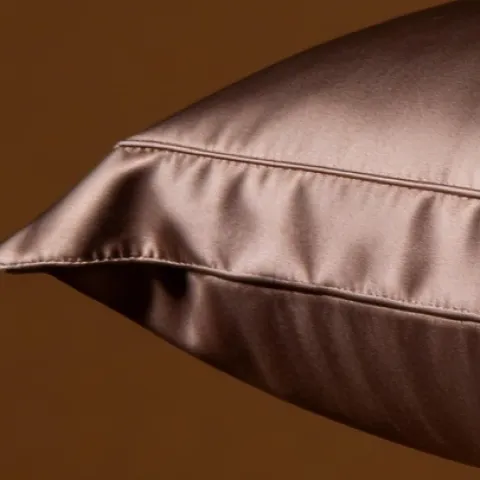
Top Cuff Hemming: The top hem of a luxury flat sheet must feature a substantial, tailored cuff measuring 8 cm to 10 cm (3 to 4 inches). The remaining three sides should be finished with a clean, narrow 1 cm double-folded hem with mitered corners. Mitered corner finishing eliminates bulky fabric overlaps at the bottom edges, ensuring the sheet lies perfectly flat when tucked.
Decorative Detailing: Depending on the brand's aesthetic architecture, the top cuff can incorporate specialized decorative stitching:
- Classic Hemstitch (Drawn Thread Work): An openwork ladder stitch running parallel to the top cuff fold, providing a traditional European aesthetic.
- Contrast Piping: A narrow bias-cut silk cord (typically 2 mm to 3 mm) inserted along the seam of the top cuff. The piping fabric must be cut from identical momme weight silk to ensure balanced shrinkage during washing.
- Double-Stitch Topstitching: Clean parallel single-needle stitching for a modern, minimalist luxury aesthetic.
Stitch Density (SPI) and Needle Selection: All flat sheet and pillowcase seams must maintain 11 to 13 stitches per inch (SPI). Stitch density below 10 SPI creates weak seams under tension, while density above 14 SPI excessively perforates the delicate silk protein fibers. Operators must exclusively use Microtex sharp needles in sizes 60/8 or 70/10 to avoid snagging horizontal weft yarns.
5. Fabric Pre-Shrinking and Laundering Stability
Natural mulberry silk fiber naturally contracts upon exposure to moisture, thermal energy, and mechanical agitation. Raw woven silk charmeuse exhibits a residual shrinkage rate of 3% to 6% in the warp and 2% to 4% in the weft during initial wash cycles. On an expansive flat sheet measuring 270 cm in length, a 5% warp contraction results in a permanent 13.5 cm loss in fabric length, rendering the sheet impossible to tuck securely.
To deliver true dimensional stability, the fabric yardage must undergo controlled pre-shrinkage processes prior to cutting:
- Continuous Steam Decatizing: Wide-width fabric yardage is fed through an open-width continuous steam decatizing chamber. High-temperature steam relaxes internal tension introduced during high-speed weaving, stabilizing residual shrinkage to under 1.5%.
- Industrial Water Pre-Relaxation: For bedding collections designated as machine-washable on delicate cycles, yardage undergoes an industrial cold-water wash and tensionless drying cycle before layout. This mechanical pre-relaxation stabilizes the weave structure against future laundering distortion.
- Colorfastness Benchmarks: Because bedding remains in prolonged contact with human skin, sweat, and laundering friction, dyed silk must meet stringent international colorfastness standards:
- Colorfastness to Domestic Washing (ISO 105-C06): Minimum Grade 4.0.
- Colorfastness to Perspiration (Acid and Alkaline) (ISO 105-E04): Minimum Grade 4.0.
- Colorfastness to Dry / Wet Rubbing (ISO 105-X12): Minimum Grade 4.5 Dry / Grade 3.5 Wet.
6. Global Bed Sizing Matrices and Regional Standards
Sizing dimensions for bedding vary significantly across geographical markets. Applying an incorrect regional sizing chart leads to severe fit defects. A custom bedding program must grade patterns to match local mattress dimensions precisely:
| Region & Size Name | Mattress Dimensions (W x L) | Fitted Sheet Spec (W x L x Pocket) | Flat Sheet Spec (W x L) |
|---|---|---|---|
| US Queen | 152 x 203 cm (60 x 80 in) | 152 x 203 x 40 cm | 245 x 270 cm |
| US King | 193 x 203 cm (76 x 80 in) | 193 x 203 x 40 cm | 275 x 270 cm |
| US California King | 183 x 213 cm (72 x 84 in) | 183 x 213 x 40 cm | 265 x 280 cm |
| UK / EU King | 150 x 200 cm | 150 x 200 x 38 cm | 240 x 275 cm |
| UK / EU Super King | 180 x 200 cm | 180 x 200 x 38 cm | 275 x 275 cm |
| Australia Queen | 153 x 203 cm | 153 x 203 x 40 cm | 245 x 270 cm |
| Australia King | 183 x 203 cm | 183 x 203 x 40 cm | 275 x 270 cm |
All finished sheet dimensions should adhere to a strict manufacturing tolerance of ±1.5 cm across length and width.
7. Production Economics, Yield Optimization, and Sourcing Workflow
Fabric consumption directly governs unit economics in silk bedding manufacturing. Due to the high cost of raw mulberry silk fiber, efficient marker drafting and yardage utilization are critical to maintaining margin targets.
Fabric Consumption Estimates (on 280 cm Wide Fabric):
- Complete 4-Piece Queen Sheet Set (1 Fitted, 1 Flat, 2 Pillowcases): Requires approximately 6.2 to 6.8 linear meters of 280 cm wide silk fabric.
- Complete 4-Piece King Sheet Set: Requires approximately 6.8 to 7.4 linear meters of 280 cm wide silk fabric.
- Individual Fitted Sheet (Queen/King): Consumes approximately 3.0 to 3.4 linear meters.
At DreamSilk, we engineer custom silk sheets, matching custom silk pillowcases, luxury silk duvet covers, and complete silk bedding collections at our Suzhou manufacturing facility. Our OEM/ODM capabilities provide reliable execution for global brands:
- Prototyping & Lab Dips: Custom pantone lab dips completed in 3 to 5 working days; pre-production sheet samples delivered in 7 to 10 working days.
- Production MOQ: 50 sets per style/color for piece-dyed solid colors; 100 sets for custom digital prints or specialized jacquards.
- Bulk Production Cycle: 20 to 30 working days following sample approval.
- Quality Assurance: 100% inline seam inspection, fabric flaw inspection under calibrated light boxes, needle detection clearance, and final AQL 2.5 quality audits.
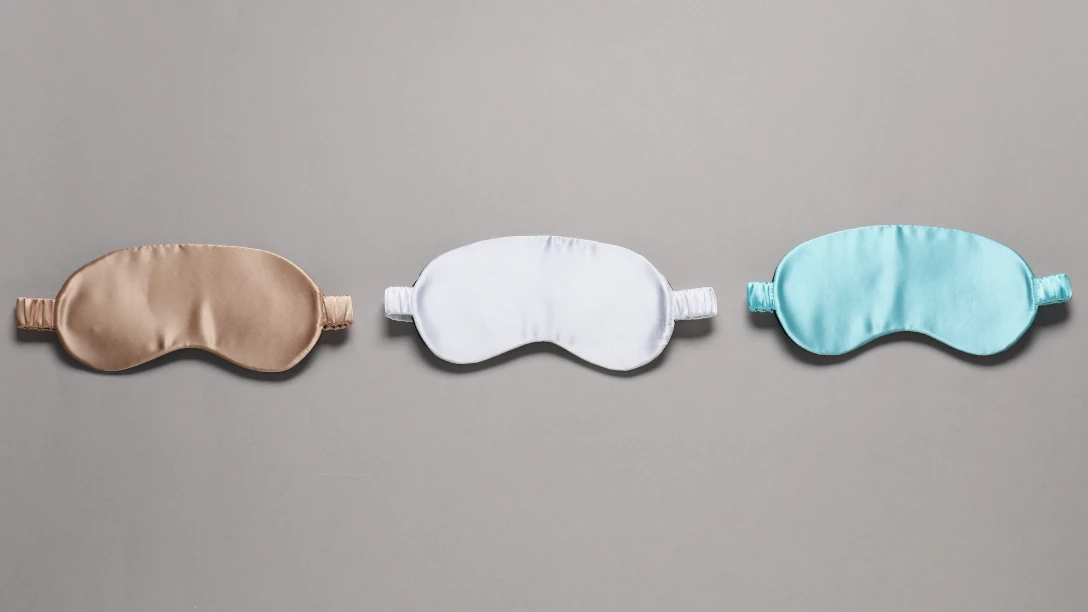
Many brands package custom sheets alongside coordinating silk eye masks or sleep accessories in branded rigid gift boxes to elevate perceived value and average order value. Provide your sizing specifications, target momme weights, and color palette to our engineering team, or contact us for a direct factory quotation to initiate your sampling phase.
FAQ
Seamless silk sheets are woven on specialized wide-width looms (up to 280 cm), allowing the entire sheet to be constructed from a single continuous piece of fabric. Seamed sheets are manufactured using traditional narrow-width looms (114 cm or 140 cm), requiring two or three fabric panels to be stitched together. Seamless sheets represent the premium luxury standard because they eliminate uncomfortable tactile ridges, offer superior tensile strength across the sleeping surface, and prevent uneven abrasive wear along the join line.