Peignoirs en soie sur mesure : guide B2B sur le poids en mommes, les spécifications de longueur, la solidité de la ceinture et les normes de confection


Les peignoirs en soie allient un drapé architectural à de fortes exigences physiques d'usure. Contrairement aux taies d'oreiller ou aux masques de sommeil, un peignoir subit d'importantes contraintes mécaniques au niveau des épaules, des emmanchures, des passants de ceinture et des bandes de fermeture avant chaque fois que la personne bouge, s'assoit ou noue le vêtement. Les marques qui se développent dans les vêtements d'intérieur en soie sur mesure rencontrent fréquemment des taux de défauts élevés causés par le glissement des coutures, l'arrachement des passants de ceinture et un choix inapproprié du grammage du tissu. Un dossier technique prêt pour la production doit spécifier le poids en mommes, l'architecture des coutures, les points d'arrêt de renfort et la stabilité dimensionnelle.
Un programme de peignoirs en soie sur mesure de qualité commerciale se définit par une charmeuse en soie de mûrier Grade 6A de 22 à 25 mommes, des coutures anglaises entièrement fermées, des renforts par points d'arrêt structurels sur tous les points de tension (y compris les passants de ceinture et les coins de poches), ainsi qu'une gradation précise du rapport longueur/ampleur. Le verrouillage de ces paramètres d'ingénierie avant la coupe en série évite l'éclatement des coutures, la déformation du tissu et une défaillance structurelle prématurée après le lavage.
1. Sélection du tissu : charmeuse 19 mm, 22 mm ou 25 mm pour les peignoirs
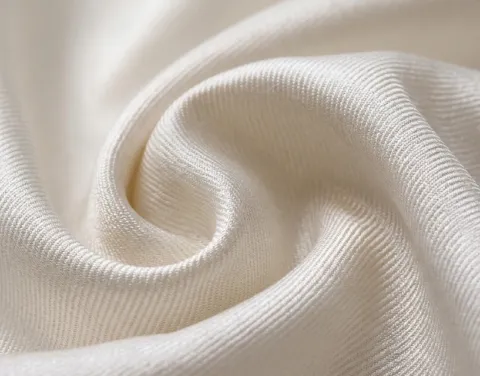
Le choix de la base textile détermine le drapé, la chaleur et l'intégrité structurelle d'un programme de peignoirs sur mesure. Dans les vêtements de détente de luxe, le tissu charmeuse en soie de mûrier reste la référence de l'industrie grâce à son endroit satiné lustré et son toucher à faible friction. Étant donné que les peignoirs présentent des panneaux verticaux plus longs que les ensembles de pyjama ou les taies d'oreiller, la sélection du poids du tissu est essentielle pour éviter l'affaissement ou la transparence.
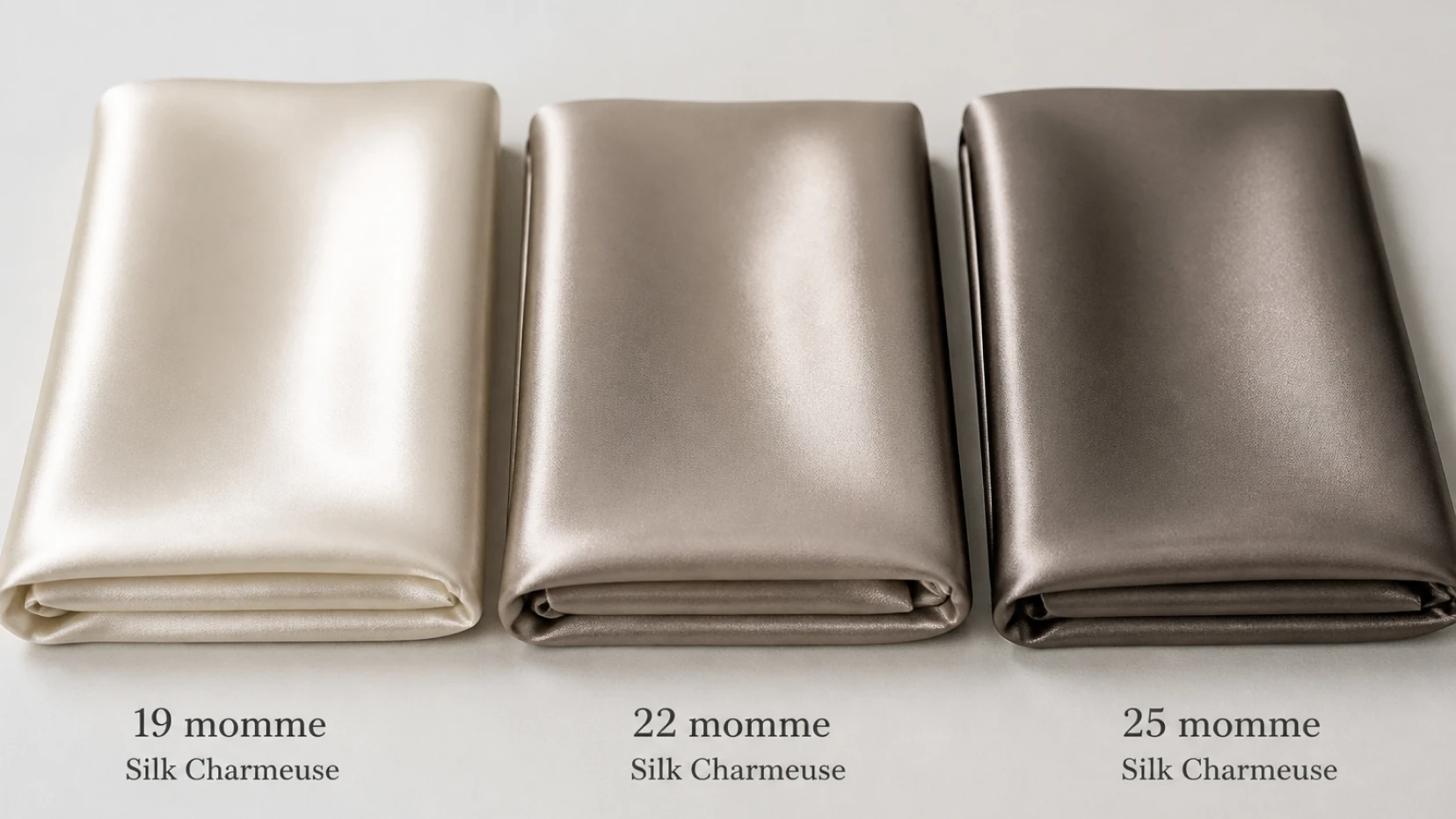
Charmeuse en soie 19 mommes (~82 g/m²) : Idéale pour les kimonos légers d'été ou les gammes de prix d'entrée de gamme au détail. Elle offre un drapé fluide mais manque de la tenue structurelle nécessaire pour les silhouettes lourdes ou longues jusqu'au sol.
Charmeuse en soie 22 mommes (~95 g/m²) : La référence du luxe pour les peignoirs de vente au détail haut de gamme. Elle offre une résistance supérieure des coutures, une opacité totale dans les teintes pâles (comme l'ivoire et le champagne) et une excellente durabilité au fil de nombreux cycles de lavage.
Charmeuse en soie 25 mommes (~108 g/m²) : La norme du luxe lourd. Utilisée pour les peignoirs phares longs jusqu'au sol, les collections d'hiver et les vêtements d'intérieur structurés de qualité hôtelière, offrant un tombé et une longévité exceptionnels.
| Spécification en Mommes | Poids (GSM) | Opacité et Drapé | Application Principale |
|---|---|---|---|
| 19 Mommes | ~81,8 gsm | Fluide, semi-opaque dans les couleurs claires | Peignoirs d'été légers, kimonos courts |
| 22 Mommes | ~94,7 gsm | Dense, totalement opaque | Vente au détail de luxe principale, peignoirs de mariée |
| 25 Mommes | ~107,6 gsm | Lourd, drapé architectural | Peignoirs phares longs au sol, hôtellerie de luxe |
2. Architecture des coutures et normes de densité de points
La construction intérieure d'un peignoir en soie dicte sa durée de vie. Les bords surjetés sont inacceptables dans les vêtements d'intérieur en soie haut de gamme, car les bords coupés exposés s'effilochent rapidement sous la contrainte du lavage et les chaînettes de surjet irritent la peau du porteur.
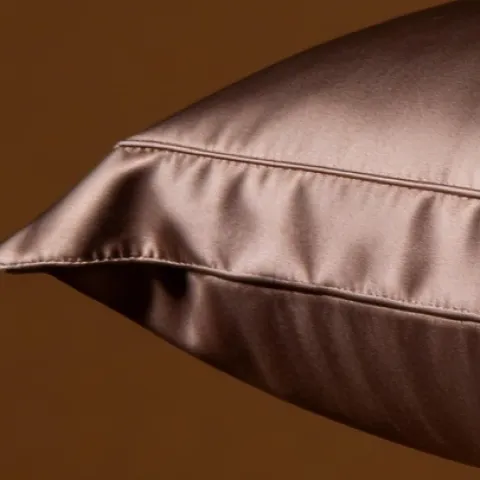
Construction en coutures anglaises : Toutes les coutures structurelles principales — y compris les coutures latérales, les jonctions d'emmanchures et les coutures d'épaules — doivent utiliser des coutures anglaises entièrement fermées (coutures à double pli) d'une largeur finie de 5 mm à 6 mm. Cela enferme toutes les fibres brutes à l'intérieur de la ligne de couture.
Calibrage des points par pouce (SPI) : Les machines à coudre doivent être réglées entre 11 et 13 points par pouce pour la charmeuse de 19 à 25 mommes. Un SPI plus faible crée des coutures lâches sujettes au glissement des fils, tandis qu'un SPI plus élevé (supérieur à 15) perfore les fibres protéiques de la soie et fragilise l'étoffe.
Spécifications des aiguilles : Les opérateurs doivent utiliser des aiguilles pointues Microtex de taille 65/9 ou 70/10 pour percer proprement l'armure satin dense sans accrocher les filaments.
3. Solidité des passants de ceinture et renfort des poches
Les passants de ceinture et les poches plaquées représentent les points de contrainte mécanique les plus élevés sur tout peignoir. Lorsqu'un utilisateur tire ou serre la ceinture, toute la force cinétique s'exerce directement sur la minuscule zone où le passant s'attache à la couture latérale. Sans une ingénierie appropriée, le tissu se déchire instantanément.
Renfort par points d'arrêt : Chaque passant de ceinture et chaque coin de poche doit intégrer des points d'arrêt structurels (coutures de renfort en zigzag dense) pour dissiper les charges de traction.
Entoilage interne et bande de stabilisation : Pour les peignoirs lourds de 22 mm et 25 mm, une bande invisible de coton léger ou de ruban de stabilisation en soie doit être thermocollée dans la marge de couture latérale intérieure, juste derrière l'emplacement du passant de ceinture. Cela empêche l'enveloppe extérieure en charmeuse de se déchirer sous la tension latérale de la ceinture.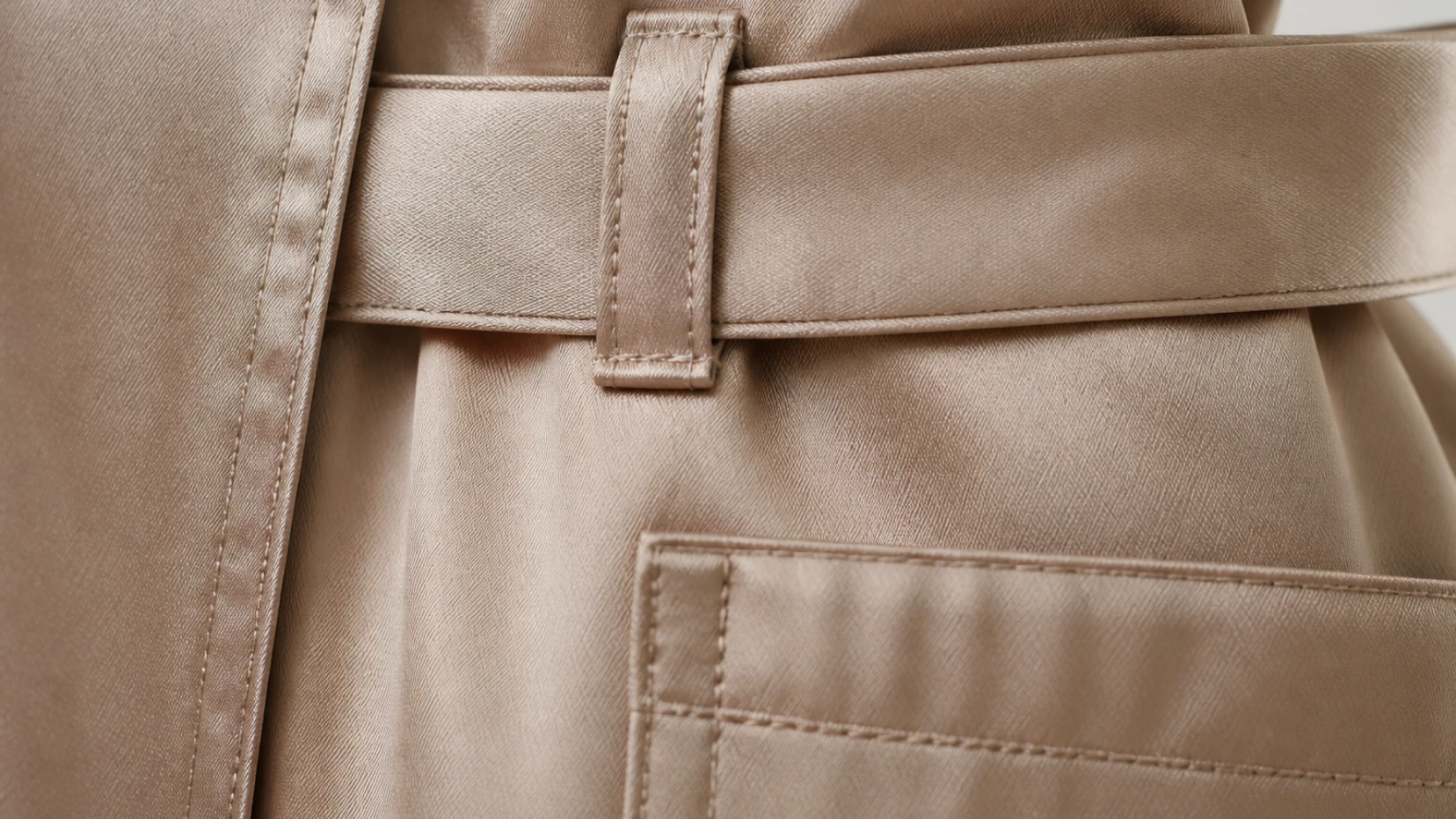
4. Gradation de la silhouette : longueur, ampleur de l'ourlet et architecture des manches
Une gradation proportionnelle garantit qu'un peignoir flatte diverses morphologies tout en conservant un confort fonctionnel. Les dimensions du patron doivent tenir compte de la superposition sur des vêtements de nuit ou d'intérieur.
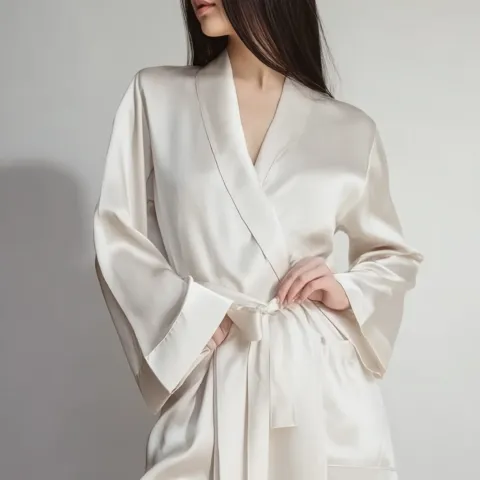
Spécifications de longueur : Les peignoirs standard longueur genou mesurent de 95 cm à 105 cm à partir du point haut de l'épaule (HPS). Les modèles mi-mollet mesurent de 115 cm à 125 cm, tandis que les peignoirs phares longs jusqu'au sol nécessitent de 130 cm à 140 cm.
Circonférence de l'ampleur (Sweep) : L'ampleur de l'ourlet inférieur doit varier de 130 cm à 160 cm selon la taille et le style. Une ampleur insuffisante restreint la longueur de la foulée lors de la marche.
Conception des manches : Les manches kimono traditionnelles offrent une mobilité décontractée des bras avec une large ouverture (25 cm à 35 cm), tandis que les peignoirs ajustés à passepoil présentent des emmanchures structurées et des poignets étroits pour une silhouette cintrée.
5. Liens de maintien internes, étiquettes et accessoires
Un peignoir haut de gamme exige des détails fonctionnels qui améliorent son confort d'utilisation. Les peignoirs portefeuilles standard doivent inclure un lien de maintien intérieur (modesty tie) — un petit ruban cousu à l'intérieur de la parementure avant droite qui se noue à une boucle sur la couture latérale gauche, empêchant les panneaux avant de s'entrouvrir.
Les étiquettes de marque tissées et les vignettes d'entretien doivent être solidement ancrées dans la couture d'encolure dos ou la couture latérale à l'aide de fils de satin à bords doux pour éviter toute irritation cutanée. Les ceintures assorties dans le même tissu doivent être renforcées par des surpiqûres internes pour éviter qu'elles ne vrillent au lavage.
6. Économie de production et flux d'approvisionnement
La consommation de tissu pour les peignoirs est nettement plus élevée que pour les articles de nuit standard en raison des exigences de longueur et d'ampleur. Les peignoirs standard consomment de 2,5 à 3,5 mètres linéaires de tissu par unité selon la taille et le style.
Chez DreamSilk, nous fabriquons des peignoirs en soie sur mesure, des pyjamas en soie sur mesure assortis et des lignes complètes de vêtements en soie sur mesure dans notre usine de Suzhou. Notre flux de travail B2B rationalisé garantit une exécution fiable :
- Prototypage : 7 à 10 jours ouvrables après validation du dossier technique.
- MOQ de production : 50 pièces par modèle et par coloris pour les teintes unies teintes en pièce.
- Délai de production en série : 20 à 30 jours après l'approbation de l'échantillon.
Les marques regroupent fréquemment les peignoirs avec des taies d'oreiller en soie ou des masques de sommeil assortis pour augmenter la valeur perçue au détail. Envoyez vos spécifications techniques à notre équipe d'ingénierie ou contactez-nous pour un devis d'usine direct afin de démarrer votre partenariat de fabrication.
FAQ
Pour les peignoirs de vente au détail de luxe, la charmeuse en soie de mûrier Grade 6A de 22 mommes et 25 mommes constitue la norme commerciale recommandée. Le 22 mommes offre une durabilité des coutures exceptionnelle, une opacité totale dans les coloris clairs et un toucher luxueux. Le 25 mommes procure un drapé architectural encore plus lourd, idéal pour les peignoirs phares longs jusqu'au sol et les collections d'hôtellerie de luxe. La soie plus légère de 19 mommes convient aux kimonos d'été d'entrée de gamme.