
Zijden ochtendjassen: een fabrikantengids over stijlen, momme-gewicht en kwaliteitsverwerking


Een zijden ochtendjas verkoopt op twee dingen: hoe hij aanvoelt en hoe hij eruitziet als je hem omslaat. Beide komen neer op keuzes die de meeste productpagina's overslaan — de zijdebinding, het momme-gewicht, de snit van de mouw en hoe de naden binnenin zijn afgewerkt. Doe die goed en je hebt een ochtendjas die mensen jarenlang houden; doe ze fout en hij leest als een goedkope satijnen jas.
Wij maken zijden ochtendjassen op maat in onze fabriek in Suzhou, van kimono- en wikkelstijlen tot kort en op volledige lengte. Deze gids loopt door wat een zijden ochtendjas werkelijk kwaliteit geeft, de stijlen en gewichten om uit te kiezen, en wat te specificeren wanneer je een ochtendjas bouwt voor een merk of een cadeaulijn.
Wat een zijden ochtendjas kwaliteit geeft
Een kwaliteits-zijden ochtendjas komt neer op vier dingen: 100 % moerbeizijde in een charmeuse-binding, een momme-gewicht rond 19 tot 22, vezel van kwaliteit 6A en nette verwerking met Franse naden. Veel „zijden” ochtendjassen op de markt zijn eigenlijk polyester satijn, dus de vezel en het gewicht op het label zijn het eerste om te controleren.
Elk daarvan doet specifiek werk:
• Moerbeizijde. De gladde, gelijkmatige vezel die een ochtendjas zijn zachte greep, glans en duurzaamheid geeft. Zie onze gids „wat is zijde-charmeuse” over hoe vezel en binding samenwerken.
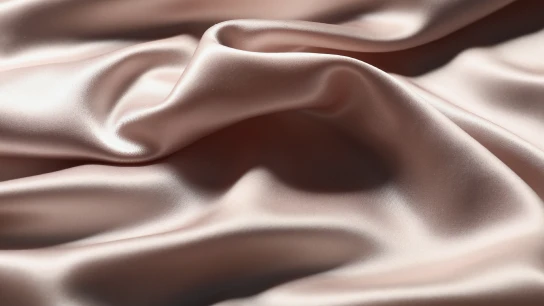
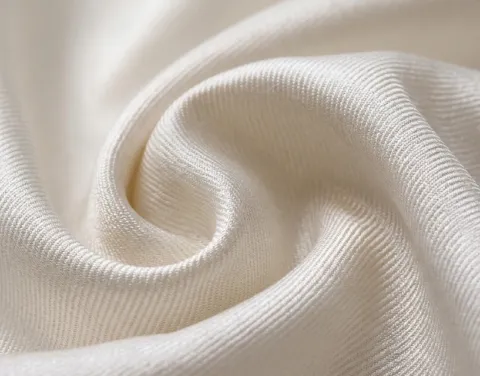
• Charmeuse-binding. De satijngezichtsbinding die voor bijna alle zijden ochtendjassen wordt gebruikt, met een glanzende voorkant, matte achterkant en de vloeiende val die een ochtendjas nodig heeft. Het is dezelfde zijde-charmeuse die voor premium nachtkleding en beddengoed wordt gebruikt.
• Kwaliteit 6A. De hoogste commerciële kwaliteit moerbeizijde — de langste, schoonste vezels, die pilling weerstaan en lang meegaan.
• Het juiste momme. Zwaar genoeg om substantieel aan te voelen en goed te hangen, licht genoeg om te draperen en te bewegen. Meer over gewicht hieronder.
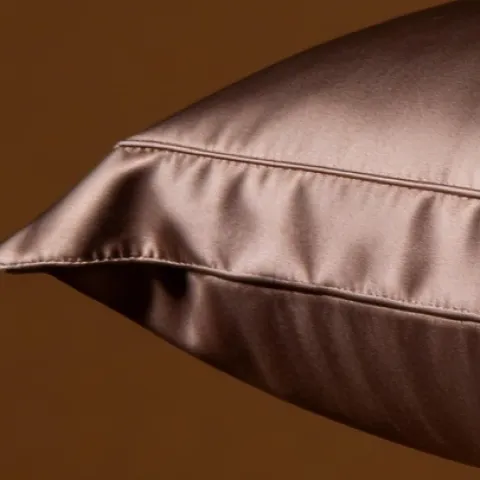
• Nette naden. Franse naden sluiten de rauwe rand binnen het kledingstuk in zodat de zijde niet rafelt — het kenmerk van een ochtendjas die is gebouwd om lang mee te gaan.
Als een ochtendjas geen vezelgehalte, momme en kwaliteit vermeldt, behandel de gaten dan als een waarschuwing. Echte zijde wordt altijd met die specs verkocht.
Stijlen zijden ochtendjas: kimono, wikkel, kort en lang
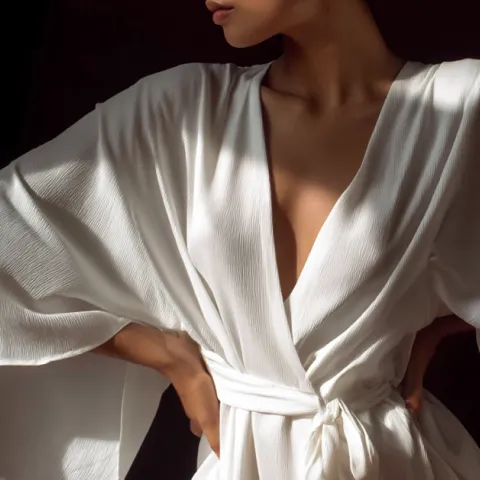
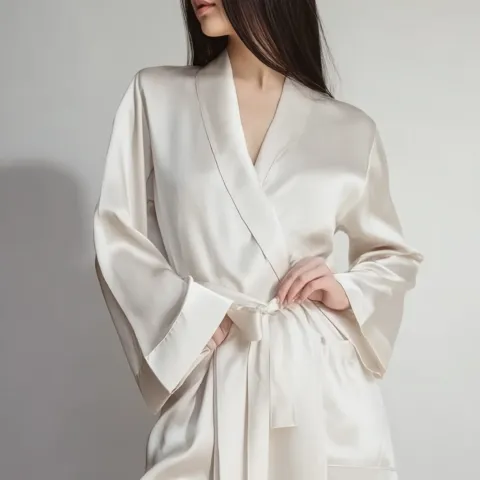
De belangrijkste stijlen zijden ochtendjas zijn de kimono (wijde mouwen, rechte snit, ceintuur), de wikkel (getailleerde overslag met een ceintuur van dezelfde stof) en lengtevariaties — kort (heup tot knie) en lang (halverwege de kuit tot de vloer). Kimono- en wikkelvormen passen bij een breed scala aan maten omdat de ceintuur de pasvorm aanpast.
| Stijl | Snit | Het best voor |
| Kimono-ochtendjas | Rechte T-lijnsnit, wijde verlaagde mouwen, ceintuur, ongestructureerd | Layeren over outfits, loungen, een modieuze look |
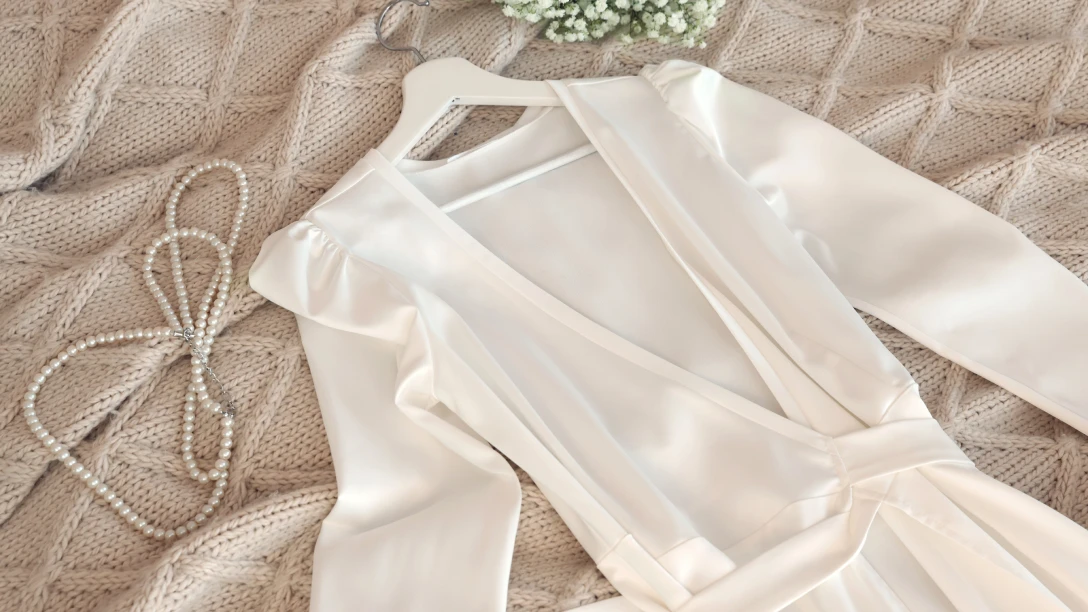
| Wikkelochtendjas | Overslaande voorkant, ceintuur van dezelfde stof, zit dichter op het lichaam | Dagelijks loungen, flatteert over lichaamstypes |
| Korte ochtendjas (heup-knie) | Lichter, minder stof | Warm weer, reizen, klaarmaken bruid, strandcover-up |
| Lange ochtendjas (kuit-vloer) | Volledige bedekking, dramatische val | Koelere avonden, statement-loungewear, hotel en spa |
Een paar opmerkingen bij het kiezen:
• Kimono of wikkel. Een kimono valt recht van de schouders met wijde mouwen en leest meer als een lichte laag; een wikkel zit dichter op het lichaam en leest meer als klassieke loungewear. De ceintuur op beide maakt ze vergevingsgezind qua maat.
• Lengte naar gebruik. Korte ochtendjassen pakken plat en passen bij warme klimaten en foto's van het bruidsgezelschap; lange ochtendjassen geven bedekking en een dramatischere look voor koelere seizoenen en horeca.
• Mouwvorm. Die verandert het silhouet meer dan kopers verwachten — een wijde kimonomouw is een ander kledingstuk dan een ingezette mouw, zelfs in dezelfde stof.
De juiste zijde en het juiste momme-gewicht voor een ochtendjas
Voor zijden ochtendjassen is 19 tot 22 momme de zoete plek. Het is zwaar genoeg om substantieel aan te voelen en met een vloeiende val te hangen, terwijl het licht genoeg blijft om te bewegen en te layeren. Onder 19 momme voelt een ochtendjas dun; boven 25 wordt hij zwaar en stijf voor een kledingstuk dat moet stromen.
Momme is de gewichtseenheid van zijde — één momme is ongeveer 4,34 gram per vierkante meter. Voor een stromend kledingstuk als een ochtendjas is gewicht een balans:
• 16-19 momme. Licht en luchtig, met de meest vloeiende val. Goed voor ochtendjassen voor warme klimaten en zomer, al kan het lichtste uiteinde onbeduidend aanvoelen.
• 19-22 momme. Het standaardbereik voor zijden ochtendjassen. Substantiële greep, goede val en duurzaamheid bij dragen en wassen. 22 momme is de gangbare premiumkeuze.
• 25 momme en hoger. Zwaarder en meer gestructureerd. Sommige luxe ochtendjassen gebruiken het voor een dichter gevoel, maar het kost meer en beweegt minder, dus voor ochtendjassen is het de uitzondering.
Kwaliteit telt evenveel als gewicht. Een ochtendjas van 19 momme in moerbeizijde van kwaliteit 6A voelt gladder en gaat langer mee dan een zwaardere ochtendjas in een lagere kwaliteit, dus lees momme en kwaliteit samen. Onze gids over zijde-momme-gewicht splitst gewicht uit over producten.
Hoe een zijden ochtendjas wordt gemaakt
De verwerkingsdetails scheiden een ochtendjas die merken herbestellen van een die terugkomt. Hier is waar je op moet letten en wat wij in de onze bouwen.
• Franse naden overal. Charmeuse rafelt, dus de binnennaden moeten de rauwe rand insluiten. Franse naden geven een nette binnenkant en stoppen het uitrafelen over jaren van dragen en wassen. Onze gids voor zijde-naaitechnieken behandelt de naadconstructie in detail.
• Ceintuur van dezelfde stof en binnenbandje. Een bijpassende ceintuur plus een binnenste tailleband houdt de wikkel dicht en de pasvorm verstelbaar. Ceintuurlusjes bij de zijnaden voorkomen dat de ceintuur zoekraakt.
• Zaknaden in de zijnaad. Praktisch voor een loungeochtendjas en een kenmerk waar kopers naar zoeken; nette zakzakjes van dezelfde stof houden de lijn glad.
• Mouw- en kraagafwerking. Een belegde of met eigen stof omboorde kraag en manchet geven een nette rand; bies of contrastafwerking is een gangbare upgrade.
• Gelijkmatige, smalle zoom. Een smalle, gelijkmatige zoom behoudt de val. Een zware zoom trekt een lichte ochtendjas omlaag.
Voor merken zijn dit de specificatiepunten om vast te leggen op een techpack: binding, momme, kwaliteit, stijl, lengte, mouwtype, plaatsing van ceintuur en lusjes, zakken, afwerking, label en maatgradering.
Waarvoor zijden ochtendjassen worden gebruikt
Een zijden ochtendjas dekt meer terrein dan nachtkleding, wat deels is waarom hij goed verkoopt.
• Loungewear en nachtkleding. Het kerngebruik — gedragen over een nachtjapon, lingerie of op zich thuis. Hij combineert met zijden pyjama's als een gecoördineerde set.
• Bruids- en bruidsmeisjesochtendjassen. Een grote markt — bijpassende korte zijden ochtendjassen voor de klaarmaakochtend van het bruidsgezelschap, vaak gemonogrammeerd. Sterk voor personalisatie en zijden cadeausets.
• Hotel- en spavoorzieningen. Zijden ochtendjassen op volledige lengte voor premium suites en spa's.
• Cadeaus. Een populair cadeau voor allerlei gelegenheden; een duidelijke maattabel maakt van een cadeau een blijvertje in plaats van een retour.
• Layeren en daagse dracht. Een ochtendjas in kimonostijl doet dubbel dienst als een lichte laag over een outfit.
Hoe je een echte zijden ochtendjas herkent
Veel ochtendjassen die als „zijde” worden verkocht zijn polyester satijn met een zijde-klinkende naam. Deze checks bevestigen het echte.
• Het label vermeldt „100 % moerbeizijde” met een momme-gewicht. Geen vezelgehalte en geen momme betekent meestal polyester.
• Kwaliteit 6A is gespecificeerd. De hoogste kwaliteit; de afwezigheid ervan op een premium geprijsde ochtendjas is een signaal.
• De achterkant is mat. Echte charmeuse heeft een glanzende voorkant en een merkbaar matte achterkant; polyester satijn is vaak aan beide kanten glanzend.
• Hij voelt koel bij eerste aanraking. Zijde voelt koel en warmt dan op; polyester blijft op kamertemperatuur en kan klam aanvoelen.
• Franse naden binnenin. Kwaliteits-zijden ochtendjassen werken de binnennaden af; goedkope laten rauwe of gelockte randen achter.
• OEKO-TEX-certificering. Dit bevestigt dat het verven en veredelen vrij zijn van schadelijke residuen, wat telt voor een kledingstuk dat op de huid wordt gedragen. Zie wat dat dekt op onze pagina certificeringen.
Verzorging van een zijden ochtendjas
Een zijden ochtendjas gaat jaren mee met de juiste verzorging.
• Koud handwassen, of fijne cyclus in een waszak. Gebruik koel water en een pH-neutraal of zijdespecifiek wasmiddel. Controleer eerst het wasetiket en de kleurechtheid.
• Geen bleek, geen wasverzachter. Bleek vernietigt zijde; verzachter maakt het oppervlak dof en kan zich ophopen.
• Niet wringen. Pers het water voorzichtig uit tussen handdoeken.
• Aan de lucht drogen in de schaduw. Plat leggen of hangen weg van direct zonlicht, en nooit in de droger.
• Laag strijken of stomen. Strijk op een lage zijde-stand vanaf de achterkant met een doek, of stoom terwijl hij hangt.
• Hangend bewaren. Een stromende ochtendjas kreukt bij de vouwen als hij gevouwen wordt bewaard, dus hang hem om de val schoon te houden.
Onze gids over het wassen van zijde-charmeuse behandelt de volledige routine.
Inkoop van zijden ochtendjassen op maat voor je merk
Een ochtendjasprogramma valt of staat met de stof en de make. Moerbei-6A-charmeuse op 19-22 momme, met Franse naden en goed afgewerkt, geeft je een ochtendjas die goed fotografeert en het wassen overleeft; dunne, laaggradige zijde of polyester leest als goedkoop en komt terug. Leg de binding, momme, kwaliteit, constructie en certificering vast vóór de bulk.
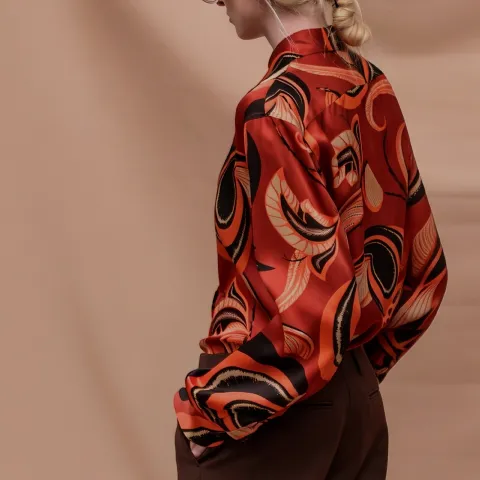
DreamSilk maakt zijden ochtendjassen op maat van begin tot eind in onze fabriek in Suzhou — kimono, wikkel, kort en op volledige lengte, in moerbeizijden charmeuse van kwaliteit 6A, OEKO-TEX gecertificeerd. We passen kleur en print, afwerking en bies, ceintuur en zakken, geweven labels, maatgradering en verpakking aan, en produceren bijpassende sets over zijden pyjama's en bredere zijden kleding voor gecoördineerde lijnen. Voor maatwerkprints en patroonopties, zie onze zijden patroonbibliotheek.
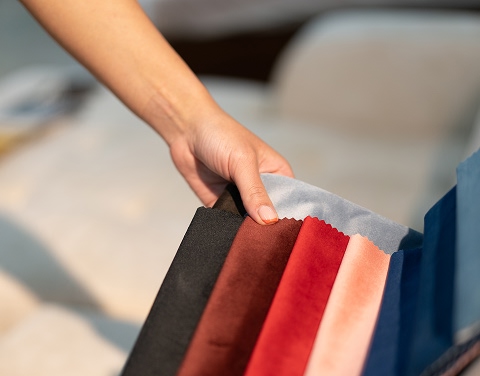
Geef ons je stijl, momme, kleur of print, maten en volume. We sturen gratis stofstalen en een sample zodat je de greep en make kunt controleren, samen met een duidelijk specificatieblad. Ontdek onze pagina voor zijden ochtendjassen op maat of neem contact op voor een offerte om te beginnen.
FAQ
Voor zijden ochtendjassen is 19 tot 22 momme de zoete plek. Het is zwaar genoeg om substantieel aan te voelen en goed te draperen, terwijl het licht genoeg blijft om te stromen en te layeren. 22 momme is de gangbare premiumkeuze; onder 19 voelt een ochtendjas dun, en boven 25 wordt hij zwaar en stijf voor een stromend kledingstuk. Lees momme samen met kwaliteit — een ochtendjas van 19 momme 6A voelt beter dan een zwaardere van lagere kwaliteit.