
Silk Sewing Techniques: A Manufacturer's Guide to Matching Seam Construction with Silk Garments


In luxury silk apparel, the fabric is only half the story. The other half is what happens at the seams — how each piece of silk is joined, finished, and edged. A premium 22-momme charmeuse can read as either luxury or mass-market depending entirely on the silk sewing techniques used to construct the garment. Silk is slippery, fluid, fragile under stress, and prone to fraying. The wrong stitch construction produces puckering, seam slippage, or a bulky internal profile that ruins the fabric's natural drape.
After more than a decade producing silk garments for international brands, we have settled on a core set of silk sewing and seam techniques that match specific silhouettes, fabrics, and price tiers. This guide walks through each technique, when it is the right call, and how multiple silk seam construction methods combine in a single high-end piece.
Why Silk Sewing Techniques Differ from Standard Garment Construction
Silk does not behave like cotton. The yarn slides under the presser foot. The cut edges fray within minutes of cutting. The fabric stretches differently on grain, cross-grain, and bias. A standard seam that works fine on linen or cotton twill produces visible puckering, seam slippage, and uneven hems on silk charmeuse.
For luxury silk apparel, this means three things have to be different from typical garment construction:
1. Seam allowances are smaller and more controlled. Standard cotton garments often use 1.5 cm (5/8") seam allowances. Premium silk garments typically use 5–7 mm enclosed seam allowances (with French seams) or 1 cm clean-finished allowances. Tighter allowances reduce bulk and produce the flat, fluid internal profile silk needs.
2. Raw edges almost always have to be enclosed. Silk frays aggressively. A raw edge that is merely overlocked may still develop loose threads after washing. Premium silk seams enclose raw edges fully — French seams, bound seams, or specialized double-folded constructions — rather than relying on overlock alone.
3. Stitch tension and needle size must match silk's specific behavior. We typically use 70/10 microtex needles for charmeuse, 60/8 for chiffon and very fine silks, and 80/12 only for heavier silk twill. Thread tension runs slightly looser than on cotton to avoid puckering. Stitch length is typically 2.0–2.5 mm, finer than the 3 mm standard for cotton garments.
These adjustments are the difference between silk garments that hang correctly off the production line and silk garments that look fine on the rack but distort after the first wash. They are also why specialized silk garment manufacturers exist as a separate tier from general apparel factories.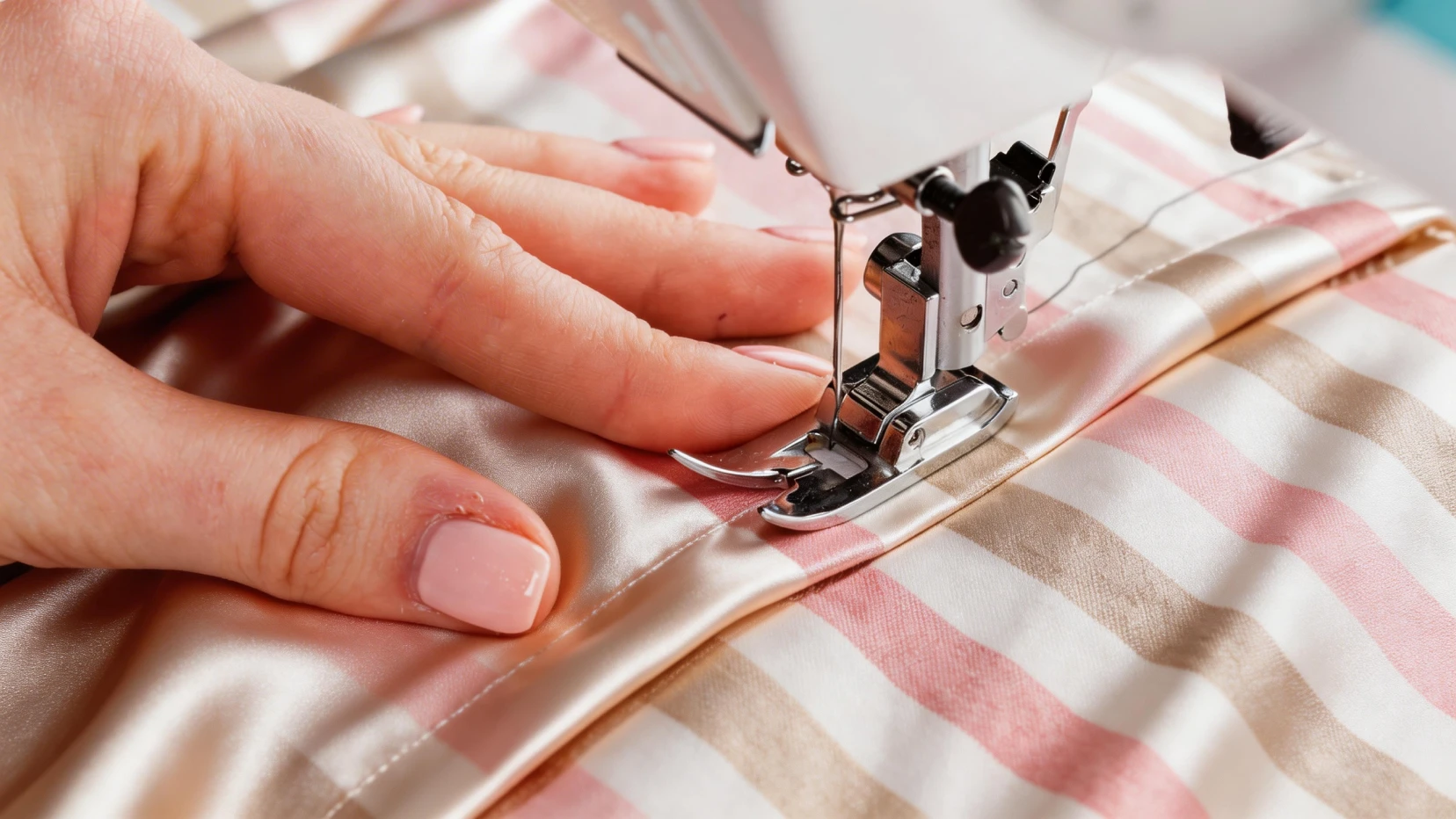
French Seam: The Gold Standard for Lightweight Silk Garments
The French seam is the most recognized silk sewing technique in luxury garment construction, and for good reason. It encloses raw fabric edges completely between two rows of stitching, leaving the interior of the garment as clean as the exterior. Because silk is prone to unraveling, exposed raw edges are almost never allowed in haute couture or premium ready-to-wear.
Process principle. The seam is sewn twice. First, place fabric pieces wrong sides together and stitch a narrow seam (typically 3–5 mm). Trim the seam allowance close to the stitching (1.5–2 mm). Press the seam open, then fold fabric right sides together along the seam line and stitch again at 5–7 mm from the folded edge. The first stitching line is now fully enclosed inside the second seam, and no raw edges show on either face of the garment.
Best fabric pairings. Lightweight and medium-weight silks: silk chiffon, silk organza, silk georgette, silk habotai, silk crepe de chine under 16 mm, light silk charmeuse under 19 mm.
Application scenarios. French seams are mandatory for premium silk sleepwear (where the interior touches skin), lightweight silk blouses, slip dresses, lined and unlined chiffon dresses, summer silk garments worn directly against skin. Anywhere the interior of the garment will be visible or felt, French seams are the correct call.
Practical limitations. French seams work cleanly on straight seams (side seams, inseams) and gentle curves. On sharp curves like armscyes, the technique either requires fabric clipping that compromises the enclosure, or a mock French seam variant that achieves a similar internal appearance. We frequently combine French seams on straight runs with mock French or bound seams on curves in the same garment.
Why it matters for brand positioning. A French-seamed silk pajama set turned inside out looks indistinguishable from the outside — clean, smooth, no raw edges, no overlock threads showing. This is the visual signal of luxury silk construction. Customers handling a returned garment can see whether the brand is paying for real craftsmanship or cutting corners on construction.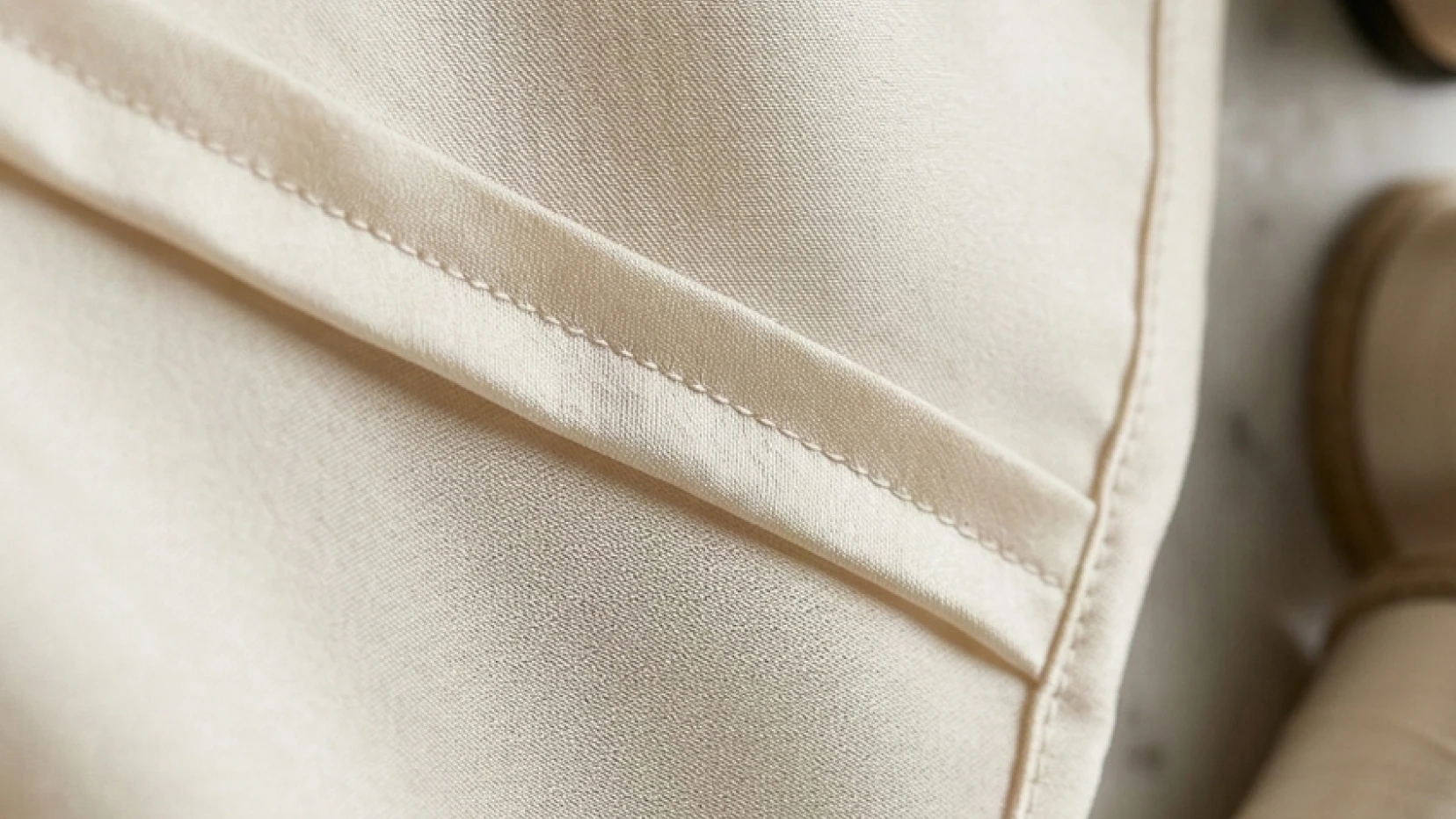
Plain Seams, Welt Seams, and Topstitched Construction for Structural Silk Pieces
Plain seams — also called superimposed seams or flat seams — are the most basic stitching method in any garment manufacturing. Two pieces of fabric are placed right sides together and stitched in a straight line along the matched edges. In silk garment production, plain seams alone are rarely used because the exposed raw edge frays aggressively after washing.
Process principle. The plain seam itself is straightforward — what makes it work on silk is the finishing of the raw edges. We use three primary finishing approaches:
- Plain seam with overlock. The plain seam is followed by a fine-thread 3-thread overlock pass that wraps the raw edge. For lightweight silks, we use specialized ultra-fine thread to avoid bulk and to prevent the overlock from showing through to the right side of the fabric.
- Plain seam pressed open with both edges overlocked separately. Used in heavier silk garments where pressing open the seam reduces bulk on the interior.
- Plain seam inside a lining. When the garment is fully lined, plain seams with light overlock are sufficient because the raw edges are hidden behind the lining layer.
Best fabric pairings. Heavier silks where French seams would create excessive bulk: silk twill 18+ mm, heavy silk charmeuse 22+ mm, silk dupioni, silk-wool blends, silk jacquards.
Application scenarios. Lined silk dresses (raw edges hidden behind lining), structured silk shirts (where seams need to be pressed flat for collar and cuff construction), silk blazers and outerwear, silk skirts with hidden interior construction.
The bulk consideration. French seams enclose raw edges but double the fabric thickness at the seam line. On heavier silks, this becomes problematic — the seam reads as bulky and disrupts drape. Plain seams with specialized finishing avoid the bulk while still preventing fraying through the overlock layer. The trade-off is that the interior shows the overlock thread; for lined garments this is invisible to the end customer.
Welt Seams and Topstitched Flat Seams for High-Stress Areas
When a silk garment requires structural strength without visible bulk — particularly in stressed areas like silk pants inseams, silk shirt yokes, or silk blazer assembly — welt seams and topstitched flat seams become the preferred silk sewing techniques.
Process principle.
- Welt seam. A standard plain seam is sewn first, then the seam allowance is pressed to one side. A second row of topstitching is applied through the garment piece and the pressed-down seam allowance, securing the seam flat against the fabric.
- Flat seam (specialized). Two fabric pieces are joined with edges aligned and sewn flat using a coverstitch machine, producing a fully flat interior surface with no bulk. This is the construction used in premium silk activewear and high-performance silk shorts.
Best fabric pairings. Medium to heavy silks where structural integrity at seams matters: silk twill 16+ mm, silk wool blends, silk linen blends, structured silk for outerwear.
Application scenarios.
- Silk wide-leg trousers and palazzo pants: welt seams along inseams and side seams handle sitting and walking stress without seam slippage
- Premium silk shirt yokes: topstitched seams produce sharp clean lines at the shoulder
- Silk pajama set side seams (where customers want a more casual, slightly visible seam aesthetic)
- Reinforced areas in silk camisoles and lingerie where stress concentrates
Visual signature. Welt seams produce a visible topstitched line on the garment exterior. For some silhouettes this is desirable (it reads as deliberate craftsmanship); for others it is wrong (slip dresses and luxury evening wear should have invisible seams). Designers should specify upfront whether welt construction is acceptable for a given silhouette.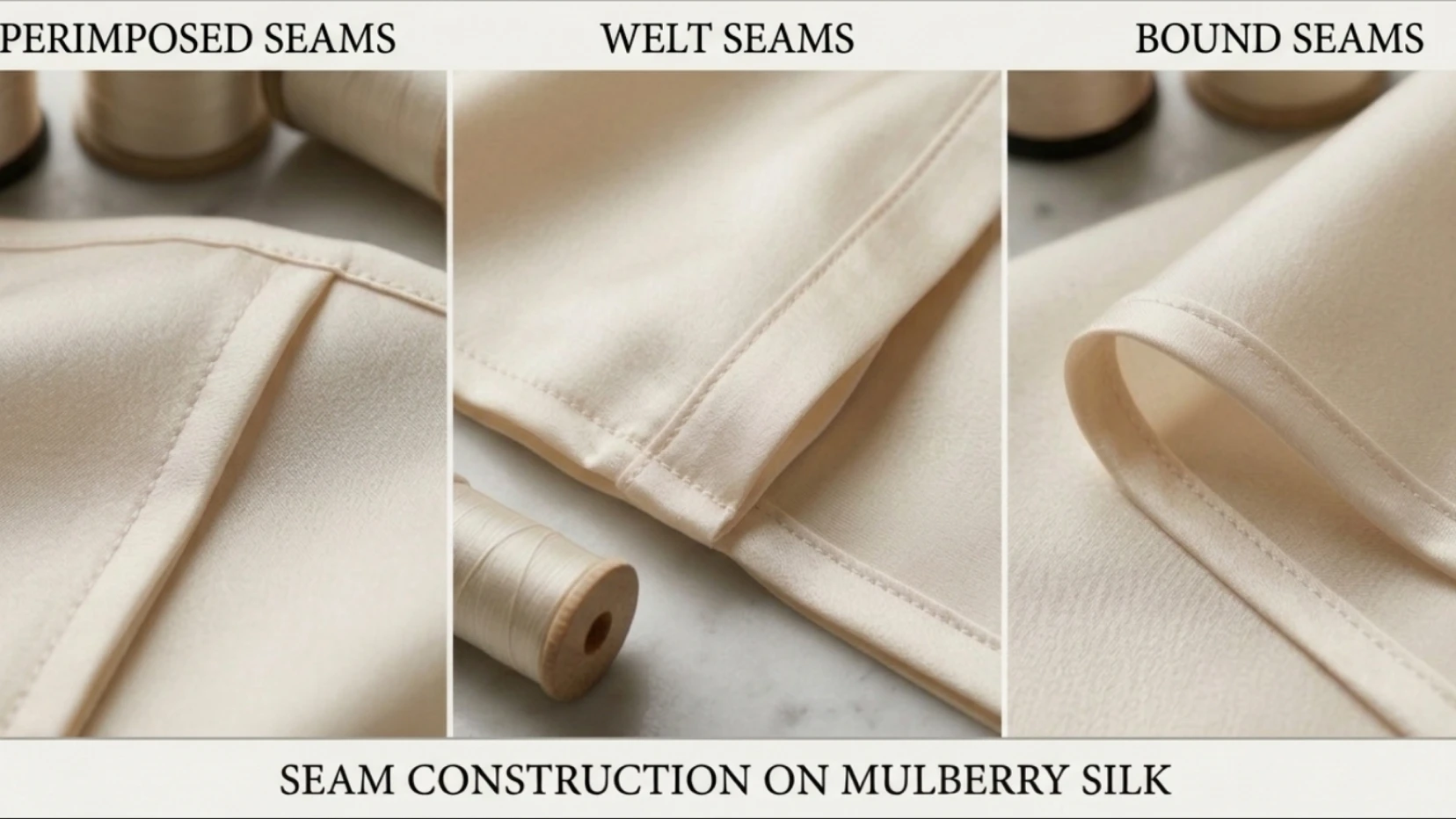
Bound Seams (Hong Kong Finish): Silk Bias Tape Edge Finishing
Bound seams (also called Hong Kong seams in haute couture) use a separate strip of fabric — typically a bias-cut binding cut from matching or contrasting silk — to fully enclose raw edges. The bias strip is folded over the raw edge and stitched in place, completely sealing the raw fabric inside the binding.
Process principle. Cut a bias strip from matching silk (typically 2.5–3 cm wide for finished 5 mm binding). Fold the strip lengthwise to wrap around the raw edge of the main fabric. Stitch through all layers to secure the binding against the fabric. The raw edge is now completely enclosed, the interior shows a clean bias-bound finish, and the binding strip can be visible (as a design element) or hidden inside the seam.
Best fabric pairings. Medium to heavy silks where the binding becomes a visible craftsmanship signal: silk charmeuse 19+ mm, silk twill, silk-wool, silk-linen blends, silk jacquards.
Application scenarios.
- Unlined silk blazers — the Hong Kong seam finish turns the interior of the blazer into a visual luxury statement
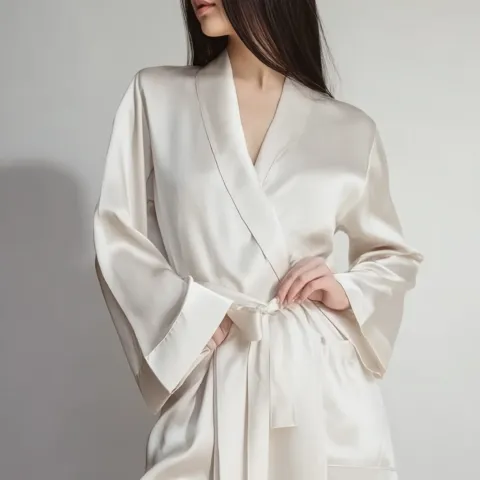
- Premium silk robe necklines and front plackets — bound seams add structural weight and finished elegance
- Collarless silk cardigans and kimonos
- High-end silk dress armscyes and necklines where a French seam cannot navigate the curve cleanly
Why brands specify bound seams. When a silk garment can be flipped inside out without revealing any raw edges or overlock thread, the interior reads as expensive. Bound seams are how premium tailored silk pieces achieve this. The technique adds significant labor time (typically 30–50% more sewing time per seam compared to plain construction) and proportionally more cost, which limits its use to genuinely premium price tiers.
Hong Kong finish as a brand signal. Some luxury brands specifically market the Hong Kong seam finish on unlined silk blazers and structured pieces — turning the interior of the garment into a sales feature. End customers who fold back the lapel of a Hong Kong-finished silk blazer see colored or contrast bias binding wrapping every interior seam, which signals haute couture-level construction to anyone familiar with garment quality.
Overlock and Serging Techniques: Anti-Fraying Protection for Silk
Overlocking (also called serging) trims the raw edge of fabric while simultaneously wrapping the cut edge with thread. For silk garments, overlock is not the primary seam construction — it is the finishing pass that protects raw edges from fraying, almost always used in combination with another seam type.
Process principle. A specialized 3-thread or 4-thread overlock machine simultaneously trims fabric and wraps the cut edge with thread loops. The result is a sealed edge that resists fraying through repeated washing. For premium silk, we use ultra-fine 100-weight or finer polyester thread on the overlock to minimize visible thread mass on the interior.
Best fabric pairings. All silk weaves, but with different thread weights and overlock settings depending on the base:
- Lightweight silks (chiffon, habotai, georgette): 3-thread fine overlock with 100/120-weight thread
- Medium silks (CDC, charmeuse 16–19 mm): 3-thread overlock with 80/100-weight thread
- Heavy silks (charmeuse 22+ mm, twill, jacquard): 4-thread overlock with 60/80-weight thread
Application scenarios.
- Inside lined silk dresses and skirts (combined with plain seams)
- Inside silk blouses and shirts (combined with French seams on visible seams, plain+overlock on inner seams)
- Seam allowance finishing on silk pant inseams before welt-stitching
- Hem allowance finishing before rolled or hand-stitched hems
The visibility problem. On lightweight silks, low-quality overlock thread can show through to the right side of the fabric as a faint line. This is one of the most common silk construction defects we see in samples from non-specialized factories. The fix is using genuinely fine thread (100+ weight) and a properly tensioned overlock machine — not cheaper thread plus tighter settings.
When overlock alone is insufficient. For sleepwear, lingerie, and any silk piece worn directly against skin where the interior matters, overlock alone is not enough. French seams or bound seams are required. Overlock alone is acceptable only when the seam is hidden behind a lining layer.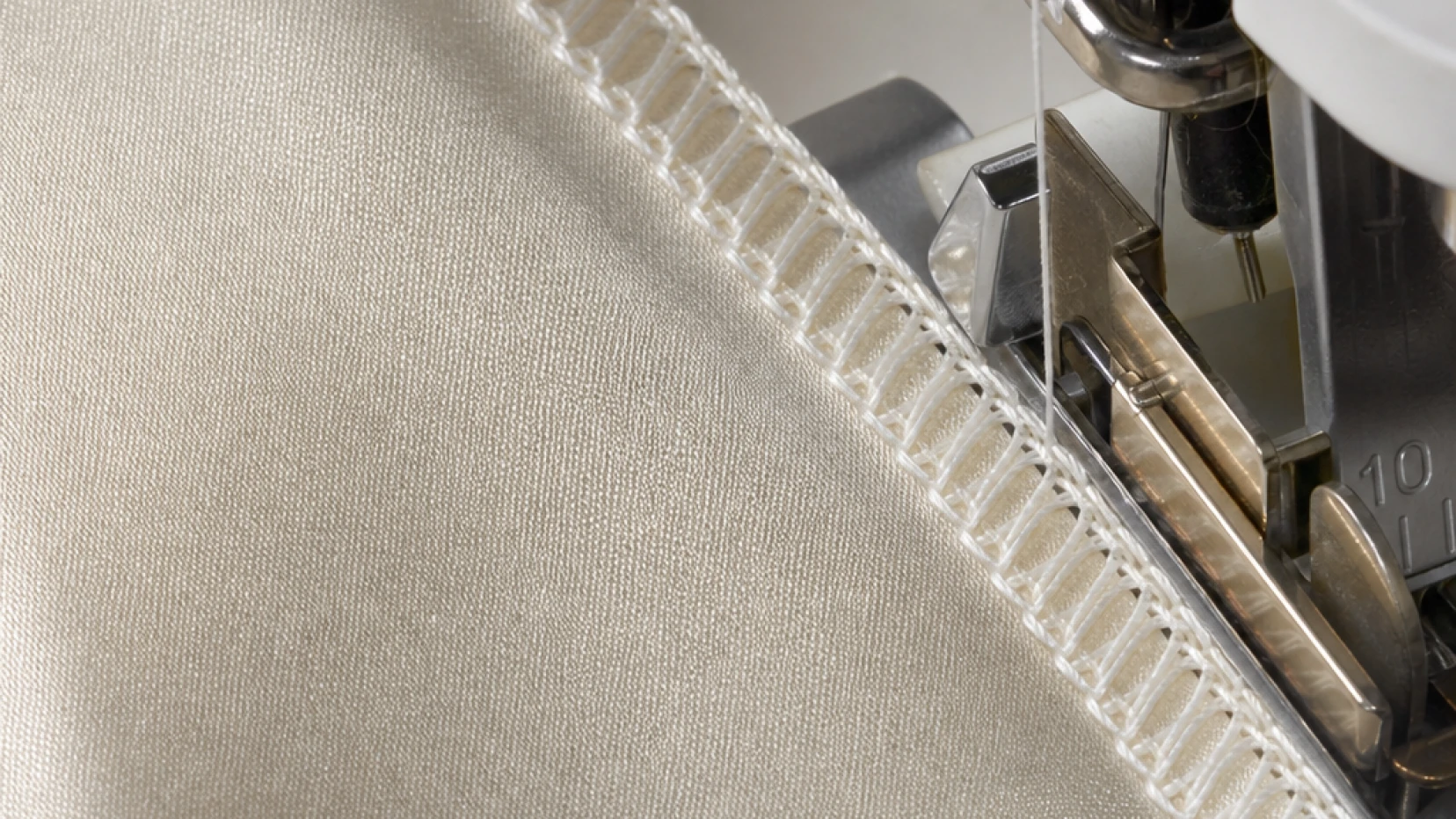
Narrow Stitched Hems and Rolled Hems: Fluid Finishing for Silk Edges
A heavy hem disrupts the natural drape of silk. To preserve silk's fluid character at the bottom edge of a garment, the silk sewing techniques used at hems must add minimal mass — typically just 2–3 mm of fabric fold. This is the narrow stitched hem (also called the rolled hem or baby hem).
Process principle. The fabric edge is folded inward twice, each fold approximately 1–2 mm wide. The final folded edge measures 2–3 mm total height. A single row of fine stitching (or a specialized rolled-hem foot on the sewing machine) secures the fold in place. Done correctly, the hem reads as nearly invisible while still providing clean edge finishing.
Hand-rolled variant. For the highest tier of silk products — luxury silk scarves, premium evening dress hems, couture pieces — the rolled hem is done entirely by hand. Skilled artisans roll the silk edge between thumb and forefinger and secure with tiny hand stitches. A hand-rolled hem produces a slightly puffed, fluid edge that machine rolling cannot quite replicate. For luxury silk scarf programs especially, the hand-rolled hem is a recognized brand signal of premium positioning.
Best fabric pairings. Almost all silk weaves at lighter to medium weights: silk chiffon, georgette, habotai, CDC, charmeuse up to 22 mm. Heavier silks (25+ mm charmeuse) become difficult to roll cleanly because the fabric mass resists the small fold radius.
Application scenarios.
- Silk scarf edges (hand-rolled for luxury positioning; machine-rolled for mid-tier)
- Silk slip dress and camisole hems
- Lightweight silk blouse hems
- Silk shorts and pajama bottoms hems
- Sheer silk overlay layer edges in evening wear
The labor consideration. A skilled operator can machine-roll a hem at approximately 1.2 m per minute. Hand-rolling the same hem takes 30–60 minutes for a typical scarf perimeter (about 4 m). This labor difference is why hand-rolled silk scarves retail at significantly higher price points than machine-finished equivalents.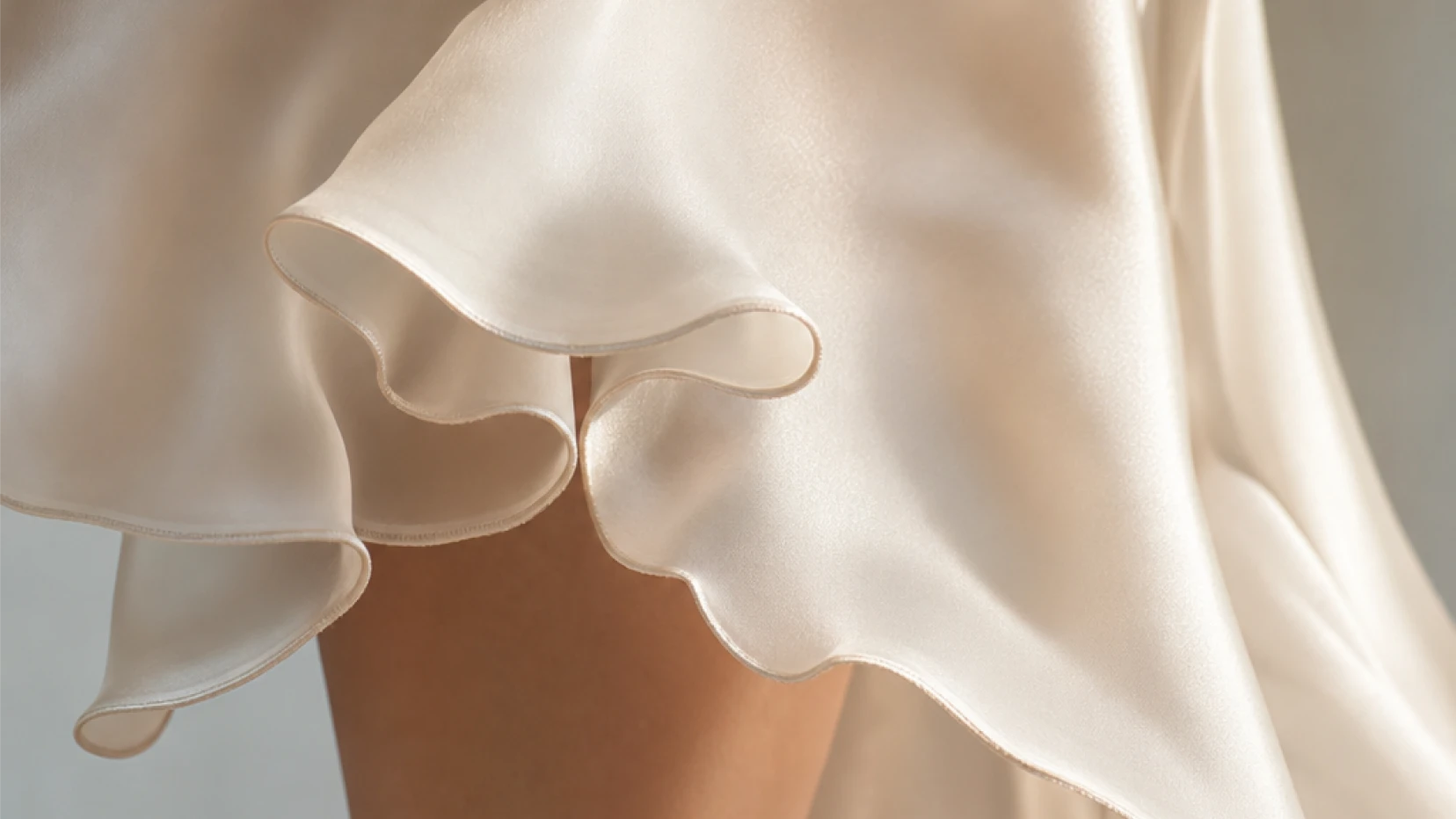
Silk Seam Construction Matched to Garment Category (and the Multi-Seam Anatomy of a Premium Piece)
Different silk garment categories call for different combinations of these techniques. Below is the silk seam construction strategy we apply across the major product categories.
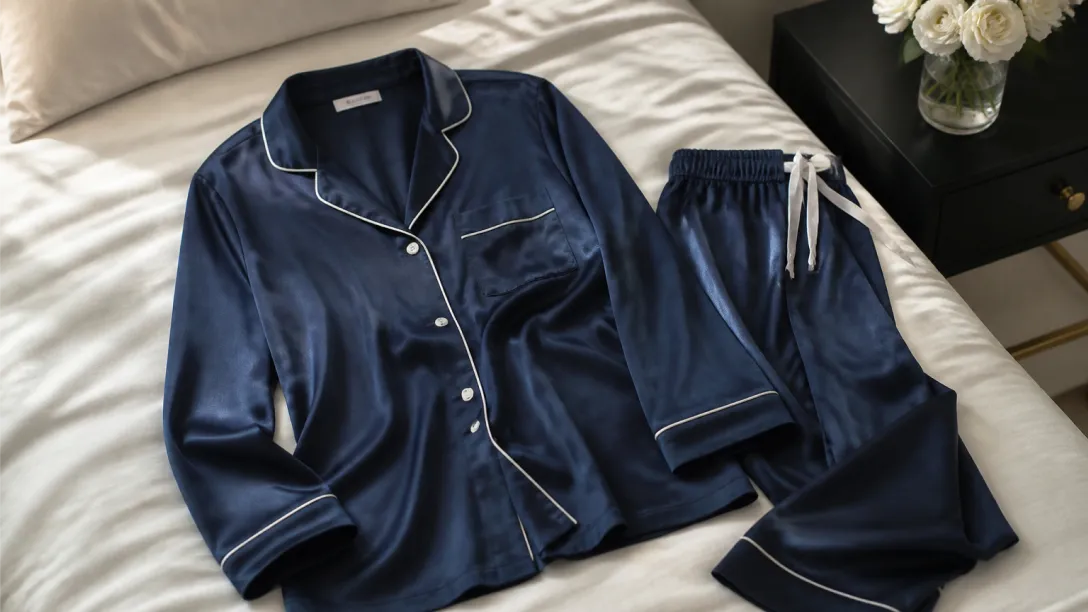
Silk Sleepwear and Loungewear
Categories: silk pajamas, silk nightgowns, silk robes, silk camisoles, silk shorts.
Construction strategy: maximum skin comfort, maximum friction resistance, completely enclosed raw edges.
- Side seams and armhole inseams: French seams. Mandatory. Enclosed raw edges prevent skin irritation and add tensile strength for movement during sleep.
- Robe and camisole necklines: bound seams with matching silk bias tape. Adds elegant structural weight to the neckline.
- Hems: narrow stitched hems (2–3 mm rolled). Keeps the lower edges fluid and weightless.
- Inner pockets and decorative trim: French seams or bound seams depending on visibility.
For the full development cycle on silk sleepwear specifically, our silk pajama customization process guide walks through every production step.
Silk Daywear and Elegant Separates
Categories: silk shirts, silk dresses, silk skirts, silk pants.
Construction strategy: fluid drape balanced with structural integrity in stressed areas.
- Silk shirts: French seams on side panels and sleeve seams; plain seams with hidden fusing inside collars and cuffs for structure; topstitched yokes for clean shoulder lines; narrow rolled hems on curved bottom edges.
- Silk pants: welt seams or reinforced plain seams along crotch and inseams to handle sitting stress without seam slippage.
- Silk dresses and skirts (lined): plain seams with fine 3-thread overlock — raw edges hidden behind lining layer; bias-bound necklines and armscyes.
- Bias-cut silk dresses: French seams or fine bound seams on all visible seams. We cover the full bias-cut construction approach in our custom silk dresses guide.
Tailored Silk Outerwear
Categories: silk blazers, silk-wool jackets, silk-linen tailored pieces.
Construction strategy: architectural tailoring with clean interior lines, often using the interior as a visual selling point.
- Interior structural seams (unlined or half-lined): bound seams (Hong Kong finish). Every structural seam encased in premium silk binding.
- Main assembly: precision plain seams combined with lightweight interlining for structure without stiffness.
- Lapels and collar: plain seams with topstitching for sharp edges.
- Hems: hand-stitched or fine machine hems with hem tape.
The Multi-Seam Anatomy of a Premium Silk Garment
Brand buyers occasionally ask whether a silk garment can be constructed using a single seam type to reduce production cost. The answer is almost always no. Premium silk garments are anatomies of multiple specialized stitches, each chosen for the specific function of that pattern piece.
Here is the seam-by-seam breakdown of a premium silk dress shirt produced in our facility:
| Pattern Piece / Location | Silk Sewing Technique Used | Technical Reason |
|---|---|---|
| Side seams and sleeve inseams | French seam (5 mm) | Encloses raw edges completely; prevents fraying during laundering |
| Armscye (armhole) curve | Mock French seam or fine bound seam | Manages the curve cleanly without puckering or restricting arm movement |
| Collar, cuffs, and front placket | Plain seams with topstitching | Creates sharp, crisp edges; interlining is sealed inside for structure |
| Back yoke joint | Enclosed plain seam (burrito method) | Sandwiches the shirt body between two yoke layers for completely smooth interior |
| Bottom curved hem | Narrow rolled hem (2 mm) | Follows the curved shirttail without twisting or creating bulk |
| Button placket | Plain seam with hidden fusing | Provides structural support for buttons without showing on exterior |
By combining these silk sewing techniques strategically across different parts of the garment, the factory simultaneously optimizes production efficiency, durability, and the perceived premium value of the finished piece at retail. A single-technique garment costs slightly less to produce but reads as compromised quality to a customer who knows what to look for.
For brand owners and product developers, the practical implication is this: the construction spec for a premium silk garment is not "use French seams everywhere." It is a piece-by-piece map of which technique is correct for each location, based on stress patterns, visibility, and skin contact.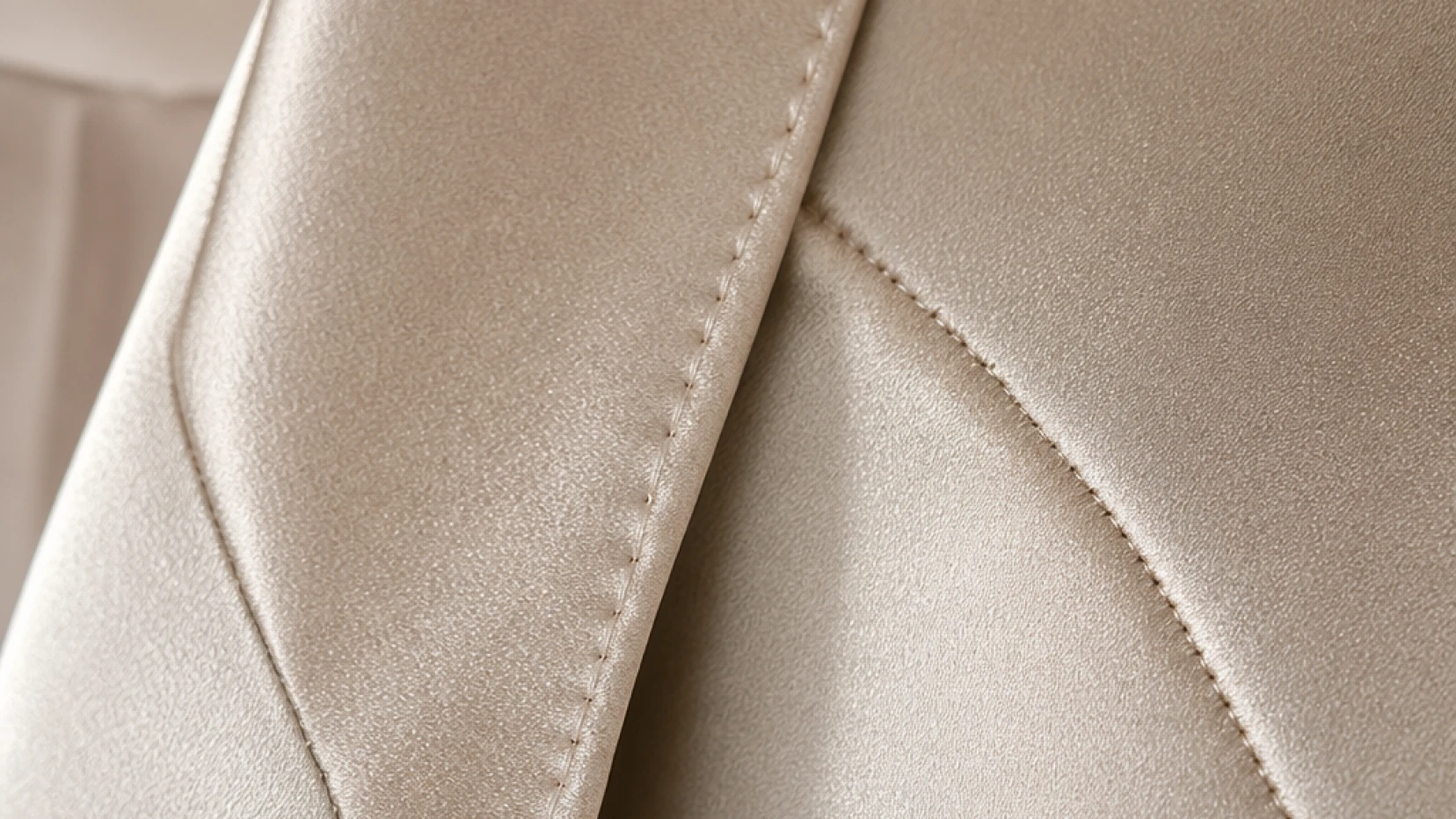
How to Specify and Verify Silk Sewing Techniques in Production
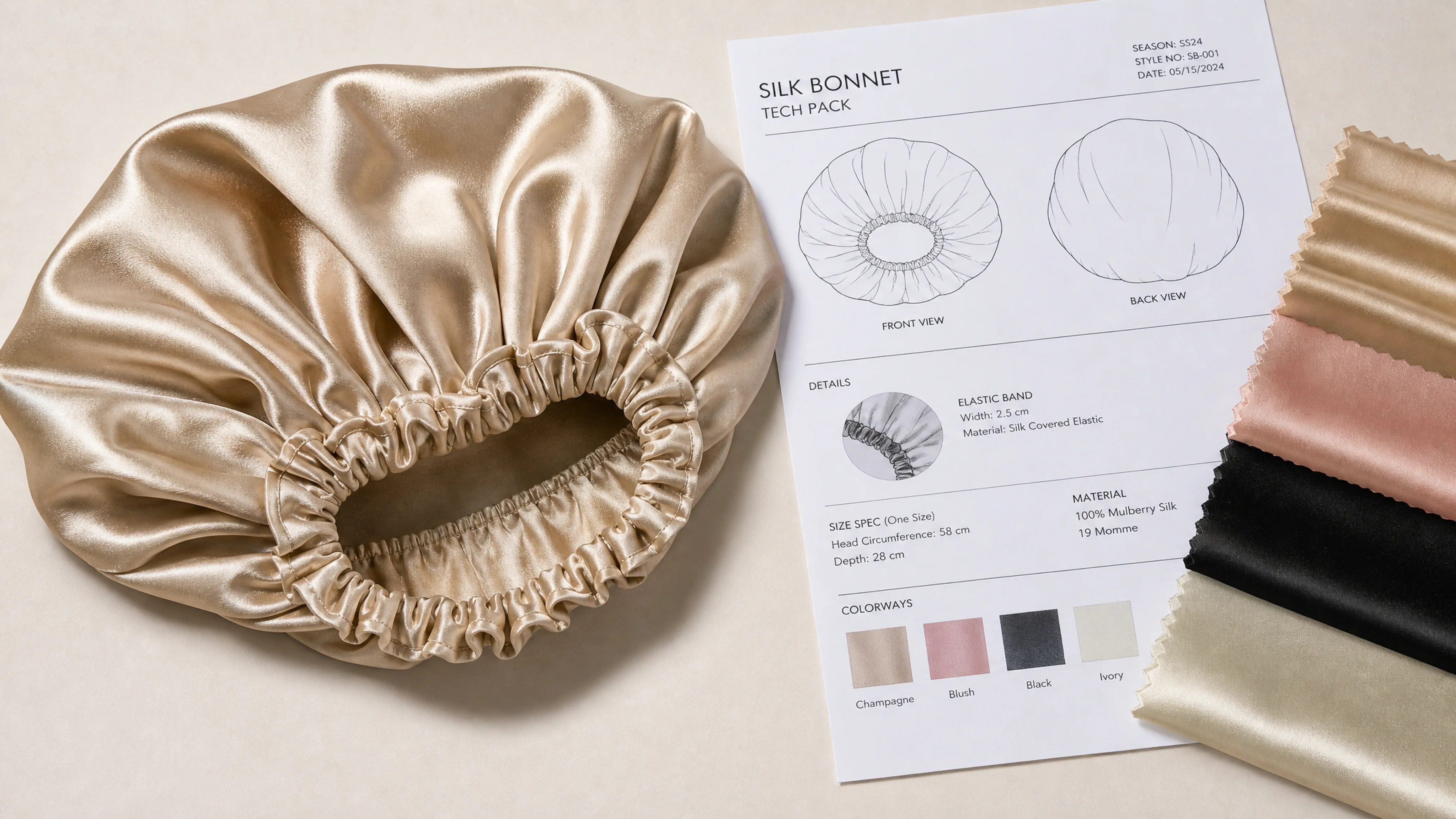
For brand buyers sourcing custom silk garments, the seam construction spec is one of the most consequential — and least frequently scrutinized — parts of the tech pack. Here is how to specify and verify silk sewing techniques in a production order.
At the tech pack stage:
- Specify the seam type for each major construction line (side seams, armscyes, hems, plackets, necklines)
- Specify seam allowance widths (typically 5–7 mm for French seams; 10–15 mm for plain seams)
- Specify thread weight and color
- Specify stitch length (typically 2.0–2.5 mm for premium silk)
- For luxury programs, specify whether hems are machine-rolled or hand-rolled
At sample review:
- Turn the sample inside out and inspect every seam
- French seams should show no exposed raw edges, no overlock thread, no fraying
- Bound seams should show clean bias binding fully enclosing raw edges, even stitching width
- Overlock seams should show uniform thread density, no skipped stitches, no thread showing through to the right side
- Hems should sit flat without ripples or puckers; rolled hems should be uniform in width
At pre-production sample (PPS) verification:
- Wash the PPS through 5 standard care cycles
- Inspect all seams again post-wash for slippage, fraying, or unraveling
- Inspect hems for distortion or fraying
- Check fabric weight loss (should be negligible if construction is correct)
Red flags in silk construction:
- French seams that show exposed raw edges visible from outside — indicates seam allowance was too narrow
- Overlock thread visible from the right side of lightweight silks — indicates too-heavy thread or excessive overlock tension
- Seam puckering along straight runs — indicates wrong needle size, incorrect tension, or pattern grain issues
- Hems that ripple or distort after washing — indicates inadequate stitch length or wrong hem technique for the fabric weight
- Bulky internal profile when garment is felt from outside — indicates wrong seam type for the silk weight (typically French seams used on too-heavy silk)
At DreamSilk, our Suzhou factory operates dedicated silk-only sewing lines staffed by operators with 5+ years specifically on silk garment construction. Standard quality control includes garment inversion inspection on every piece, batch-level wash testing on production samples, and tensile strength testing on critical seams.
Build Premium Silk Garments With DreamSilk
Whether you are developing luxury silk sleepwear, tailored silk daywear, premium silk dresses, or structured silk outerwear, the silk sewing techniques used in production determine whether your finished garments support your brand's price positioning. DreamSilk runs dedicated silk-only sewing lines in our Suzhou facility, with operators trained specifically on French seams, bound seams, fine overlock, narrow rolled hems, and hand-rolled edge finishing.
Tell us what you want to build. We will come back with a construction spec recommendation for each pattern piece, a free pre-production sample showing the proposed seam construction, and a transparent quote that reflects the real cost of premium silk construction techniques.
Contact us for a custom silk garment quote or explore the full DreamSilk range of custom silk products to see what our silk garment construction can deliver for your brand.
FAQ
There is no single best technique — different parts of the same silk garment call for different silk sewing techniques. As a general principle: French seams for visible interior seams on lightweight silks, plain seams with fine overlock for lined garments and heavier silks, bound seams for premium tailored pieces, narrow rolled hems for fluid edges. The right seam matches the fabric weight, the garment silhouette, and the area's stress and visibility profile.