
Silk Charmeuse vs Satin: A Manufacturer's Guide to the Difference Buyers Get Wrong


"Charmeuse vs satin" is one of the most-searched silk comparisons online. It is also one of the most confused. Most buyers asking this question do not realize they are asking a malformed comparison — because charmeuse is a type of satin. They are not separate fabrics in opposition. They are a parent category and a sub-category.
What buyers actually want to know is one of three things: (1) what is the difference between silk charmeuse and other satins like duchess or peau de soie, (2) what is the difference between silk satin and polyester satin marketed as silk-look fabric, or (3) when a label says "silk satin" instead of "silk charmeuse," is it the same fabric or something different. This guide answers all three.
We weave silk charmeuse and other silk satins daily at our Suzhou facility. This is the breakdown we walk B2B clients through when they get tangled in the terminology before placing their first order.
The Short Answer: Charmeuse Is a Type of Satin
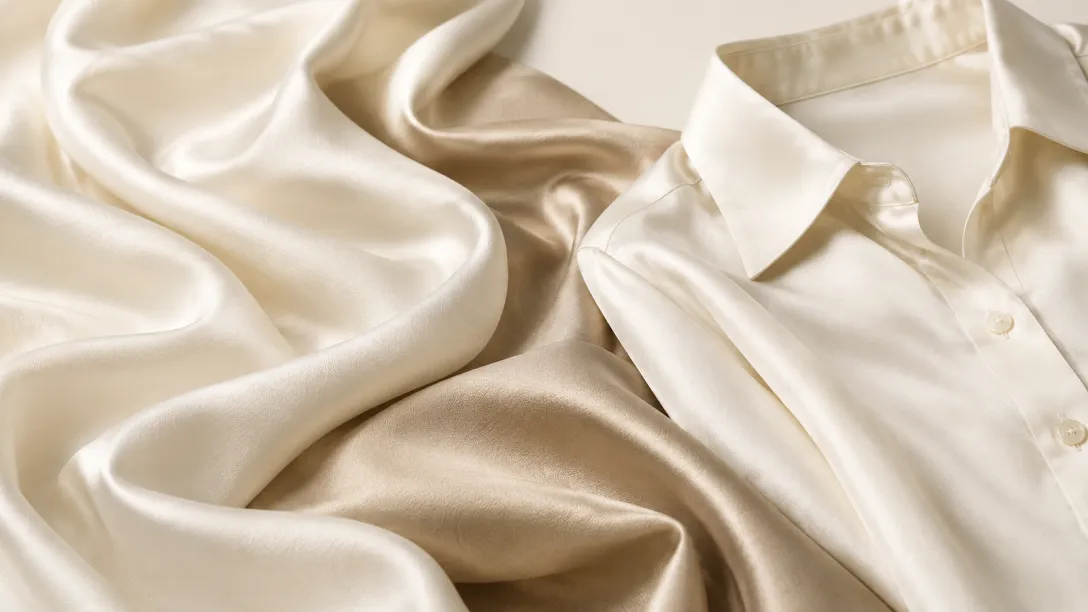
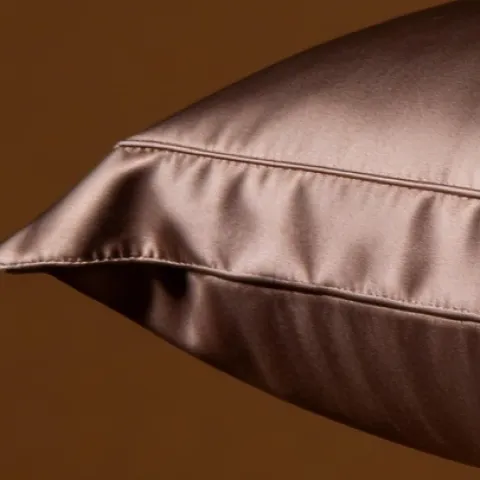
Charmeuse is a specific variation of the satin weave family. Both share the same fundamental structure — warp threads passing over multiple weft threads to create a glossy face and matte back — but charmeuse uses lighter, finer yarns and a more fluid weave, producing the liquid drape and concentrated luster that distinguish it from heavier satins like duchess or peau de soie.
So the correct framing is not "charmeuse vs satin." It is "charmeuse as one type of satin, compared against other types of satin." Or, in the real-world purchase decision: "silk charmeuse vs polyester satin marketed as silk-look fabric."
The confusion comes from how the textile industry uses these words inconsistently. "Satin" alone has been heavily co-opted by polyester manufacturers selling synthetic fabrics with a silk-like appearance. To distance themselves from synthetic look-alikes, silk producers tend to use "silk charmeuse" specifically when referring to the lightweight, draping, premium-quality silk satin used in luxury apparel and bedding. The terminology is informal, but it has become a quality signal in practice. If you see "silk satin" on a label, it usually refers to silk woven in a satin weave — most likely the same fabric as silk charmeuse, but possibly heavier and stiffer depending on the supplier.
For a complete walkthrough of what silk charmeuse is as a fabric on its own, see our what is silk charmeuse fabric guide.
The Satin Weave Family: Where Charmeuse Sits
To make the comparison clearly, it helps to understand the full satin weave family and where charmeuse fits within it. "Satin" describes a weaving structure with warp threads floating over four or more weft threads before being caught underneath by one. This basic structure has many named variations, each developed for specific use cases:
| Satin Variation | Weight | Hand-Feel | Best For |
|---|---|---|---|
| Charmeuse | Light (12–30 momme silk) | Fluid, liquid drape, soft | Slip dresses, pillowcases, sleepwear, scarves |
| Duchess satin | Heavy | Structured, stiff, polished | Bridal gowns, formal jackets, structured dresses |
| Peau de soie ("skin of silk") | Medium-heavy | Matte sheen, slightly grainy | Understated bridal and evening wear |
| Slipper satin | Medium | Tightly woven, less drape | Shoes, structured accessories, lining |
| Crepe-back satin | Medium | Satin one face, crepe the other (reversible) | Reversible apparel, drape-back dresses |
| Mikado satin | Medium-heavy | Subtle sheen, crisp hand | Modern minimalist bridal gowns |
| Hammered satin | Light-medium | Textured satin face | Statement evening wear |
| Jacquard satin | Variable | Patterned weave on satin base | Premium occasion wear, home textiles |
A few things become clear from this table. First, charmeuse is the lightest and most fluid member of the satin family — its identity is built on lightness and liquid drape. Second, all of these can technically be silk, polyester, or other fibers; the variation name describes the weave construction and finished hand, not the fiber. Third, when someone asks about "silk satin" in the apparel or bedding context, they are almost always describing charmeuse, because charmeuse is the most commercially common silk-fiber satin in those product categories.
Duchess satin, peau de soie, and the heavier silk satins do exist in 100% silk form. They are mostly used in formal occasion wear — wedding gowns, evening jackets, structured ballroom dresses — where the fabric's stiffness and substantial weight matter. For bedding, sleepwear, slip dresses, and most luxury apparel applications, silk charmeuse is the right call.
Silk Charmeuse vs Silk Satin: Same Fabric, Different Label
When a product label says "silk satin" rather than "silk charmeuse," buyers should check the spec sheet rather than assuming. In most cases, the two terms describe the same fabric. But there are nuances.
Most "silk satin" in bedding and lightweight apparel = silk charmeuse. When a bedding brand uses "silk satin" on its product page, the fabric is almost always silk in a charmeuse weave. The two terms are functionally interchangeable in that category. Many brands use "silk satin" rather than "silk charmeuse" because "satin" is a more familiar word to general consumers.
Some "silk satin" in formal wear = duchess satin or peau de soie. In wedding and evening wear contexts, "silk satin" can refer to heavier silk satins built for structure. A bridal supplier saying "100% silk satin" for a gown bodice probably means duchess satin or a similar heavy silk satin, not charmeuse.
The label question matters when sourcing. For B2B buyers building branded product lines, the gap between "silk charmeuse" and "silk satin" should be closed by the supplier specification sheet, not by guesswork. Three items to confirm:
- Fiber content (100% mulberry silk vs blend vs synthetic)
- Momme weight (12–30mm for charmeuse-equivalent; outside this range likely indicates a different satin variation)
- Weave structure note (most spec sheets will specify "charmeuse weave" or "satin weave 5-harness" or similar technical descriptor)
If a supplier cannot or will not provide these on the spec sheet, the fabric is unverified. For our silk charmeuse fabric range, the spec sheet states all three explicitly along with OEKO-TEX certification and grade certification.
Silk Charmeuse vs Polyester Satin: The Comparison Most Buyers Actually Need
Strip away the terminology confusion and the real question buyers usually ask under "charmeuse vs satin" is this: is the silky-looking satin I am about to buy actually silk, or is it polyester? This is the comparison that drives real purchase decisions.
The answer matters because polyester satin and silk charmeuse share visual similarities — both have a glossy face and matte back, both feel smooth to the touch — but they perform completely differently in the categories that actually drive buyer satisfaction.
Here is how they compare directly:
| Property | Silk Charmeuse (100% mulberry silk) | Polyester Satin |
|---|---|---|
| Fiber source | Natural protein from silkworm | Petroleum-derived plastic polymer |
| Surface feel | Cool to first touch, then warms | Room temperature, can feel clammy |
| Sheen | Natural luminous luster | Plastic-like, often duller or "flat-shiny" |
| Drape | Fluid, weighted, liquid | Slipperier but lighter, less natural fall |
| Breathability | High; regulates moisture | Poor; traps body heat and sweat |
| Static electricity | None; silk has no static charge | Common; produces static, frizz, cling |
| Hair benefit | Reduces breakage, frizz, friction | Reduces friction only; creates static |
| Skin benefit | Hypoallergenic; supports skin hydration | Limited; can trap heat and bacteria |
| Wash durability (premium) | 150+ wash cycles at 22 momme | 50–100 cycles before noticeable wear |
| Burn test | Burns slowly, smells like burning hair, self-extinguishes | Melts into plastic bead, smells like burning plastic, continues burning |
| Sustainability | Renewable natural fiber | Petroleum-based; sheds microplastics |
| Typical retail price (pillowcase) | $40–$200 | $10–$40 |
The single most important practical takeaway: polyester satin is not silk, and marketing it as "silk-like" or with names like "satin silk" exploits buyer confusion. If a product is real silk, the label will explicitly say "100% silk" or "100% mulberry silk" with momme weight specified. If it just says "satin" or "silk-feel satin" or similar, assume it is polyester.
For brand buyers, the implication is clear. If your customer expectation is the natural fiber benefits of silk — temperature regulation, hair-friendliness, hypoallergenic skin contact, multi-year durability — you need real silk charmeuse, not polyester satin. The retail price difference exists because the production cost difference is real, not because of markup.
Charmeuse vs Other Named Satins: Duchess, Peau de Soie, Crepe-Back Satin
For B2B buyers sourcing premium silk products, the comparison that matters most is silk charmeuse against the other named silk satins. Each has its own commercial territory.
Charmeuse vs Duchess Satin
Charmeuse is light, fluid, and built for drape. Duchess satin is heavy, stiff, and built for structure. A charmeuse slip dress conforms to the body and falls in liquid folds; a duchess satin bridal gown holds a structured silhouette without clinging.
Use silk charmeuse for: slip dresses, pillowcases, pajamas, robes, lightweight blouses, evening separates that need fluid movement.
Use silk duchess satin for: structured bridal gowns, formal jackets, ball gowns with full skirts, occasion dresses where the fabric needs to hold dramatic shape.
Charmeuse vs Peau de Soie
Both are silk satins, but peau de soie ("skin of silk" in French) has a more matte surface and a slightly grainy texture compared to charmeuse's overt gloss. Peau de soie is medium-weight and structured rather than fluid.
Use silk charmeuse when: you want overt luxury luster.
Use silk peau de soie when: you want understated, matte elegance — formal evening dresses, daytime bridal styles, occasion pieces where shine would be too much.
Charmeuse vs Crepe-Back Satin
Crepe-back satin has a smooth satin face on one side and a textured crepe face on the other — making it functionally reversible. Charmeuse has a smooth satin face and a matte plain-weave back, not a textured crepe back.
Use silk charmeuse when: only one side of the fabric will show, or you want consistent satin luxury throughout.
Use silk crepe-back satin when: you want a reversible design element, drape-back dress styling, or a heavier silk satin with more body than charmeuse provides.
For a deeper comparison of how charmeuse stacks against the broader range of silk weaves (twill, crepe de chine, habotai, chiffon, georgette), our what is silk charmeuse fabric guide covers the full weave landscape.
Side-by-Side: Charmeuse vs Satin on Look, Feel, Performance, and Cost
Bringing the comparison threads together, here is how silk charmeuse compares against the two most relevant alternatives — other silk satins (duchess as the representative heavy silk satin) and polyester satin (the synthetic look-alike most buyers encounter at retail).
| Comparison Point | Silk Charmeuse | Silk Duchess Satin | Polyester Satin |
|---|---|---|---|
| Weave structure | Light satin (long warp floats, fine yarn) | Heavy satin (longer floats, thicker yarn) | Variable; mimics light or heavy satin |
| Weight (momme) | 12–30 mm | 30+ mm | Not measured in momme |
| Look (face) | Liquid luster, deep luminous sheen | Polished sheen, more controlled | Flat or plastic-y shine |
| Look (back) | Matte plain weave | Matte plain weave | Often shiny both sides (synthetic) |
| Hand feel | Cool, slippery, smooth | Substantial, firm, smooth | Room temperature, slippery |
| Drape | Liquid, fluid, body-following | Structured, hold-shape | Stiff or limp depending on weight |
| Stretch on bias | Slight | Minimal | Minimal |
| Best applications | Slip dresses, pillowcases, pajamas, evening separates | Bridal gowns, formal jackets, structured dresses | Costumes, mass-market accessories, prop apparel |
| Skin contact | Hypoallergenic, hair- and skin-friendly | Wearable but heavier feel | Can trap heat and create static |
| Wash durability | 150+ wash cycles (22 mm) | Typically dry clean only | 50–100 wash cycles |
| Per-meter wholesale | $12–$45 (12–25 mm silk) | $25–$60 (silk) | $4–$10 |
| Suitability for luxury brands | Premium and luxury | Couture and formal | Entry-tier or non-luxury positioning |
A few practical notes from production:
- The "drape" difference between charmeuse and duchess satin is dramatic. A silk charmeuse panel held up by one corner will pour straight down in fluid folds. A duchess satin panel held the same way will hang in a more structured curve, holding its shape.
- The temperature test (briefly touch the fabric to your cheek or wrist) consistently separates silk from polyester. Silk feels cool; polyester feels at body temperature or slightly warm.
- Silk charmeuse pricing varies primarily by momme weight and silk grade. Grade 6A mulberry silk at 22 mm typically runs $25–$35 per meter wholesale. Lower grades and lighter weights drop below $15.
- The polyester pricing range ($4–$10) is what makes the synthetic so tempting on retail shelves, but the per-unit cost difference is dwarfed by the customer perception difference once the fabric is in someone's hands.
How to Choose: Charmeuse or Satin by Application
For brand owners and B2B sourcing teams, the practical question is which fabric to spec for which product. Here is the decision framework that works in real production planning.
When to Choose Silk Charmeuse
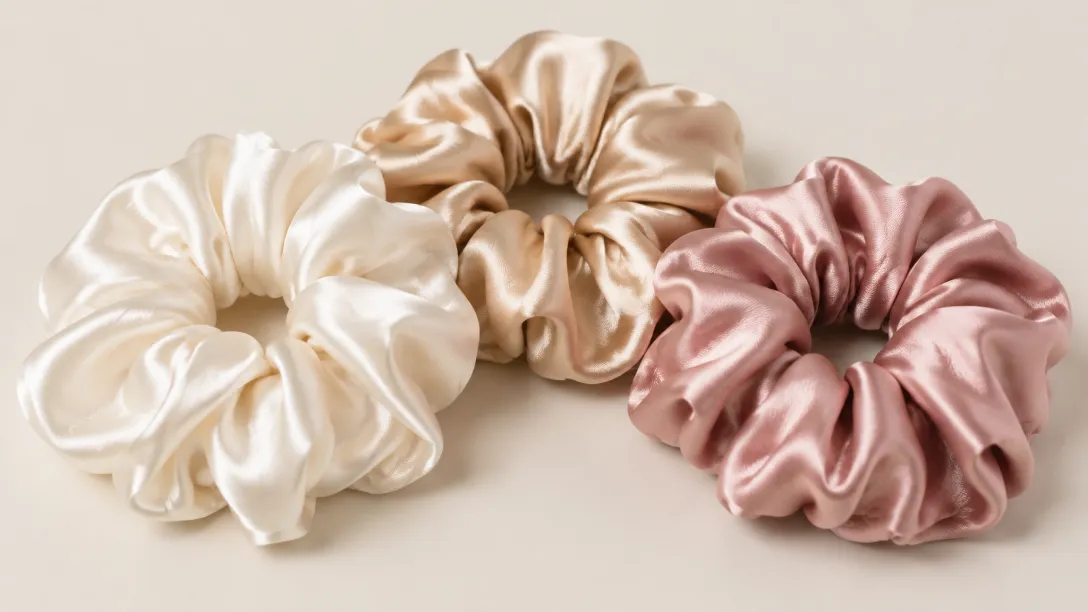
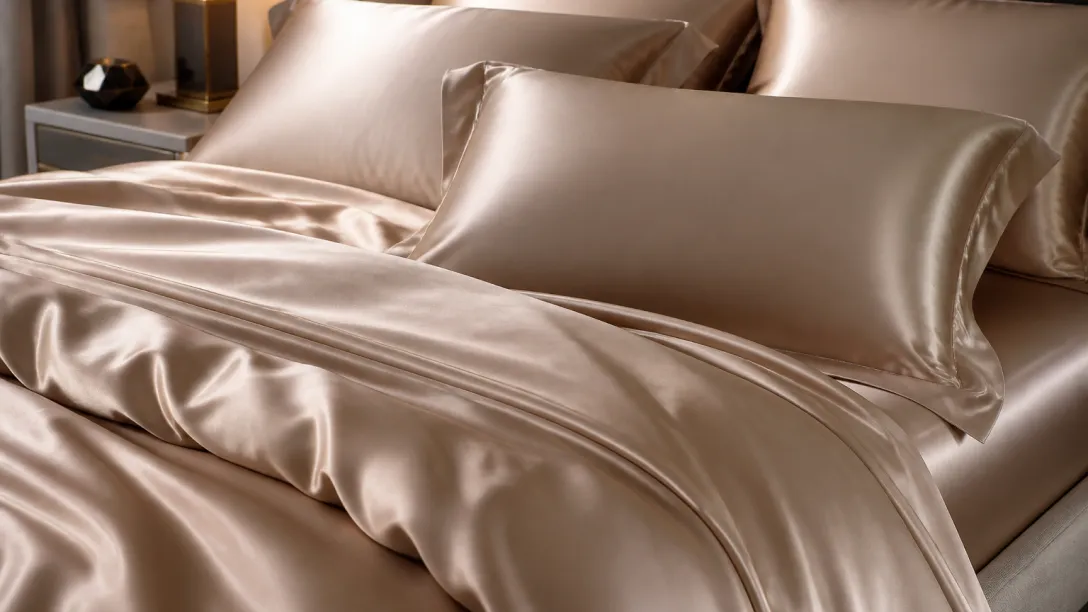
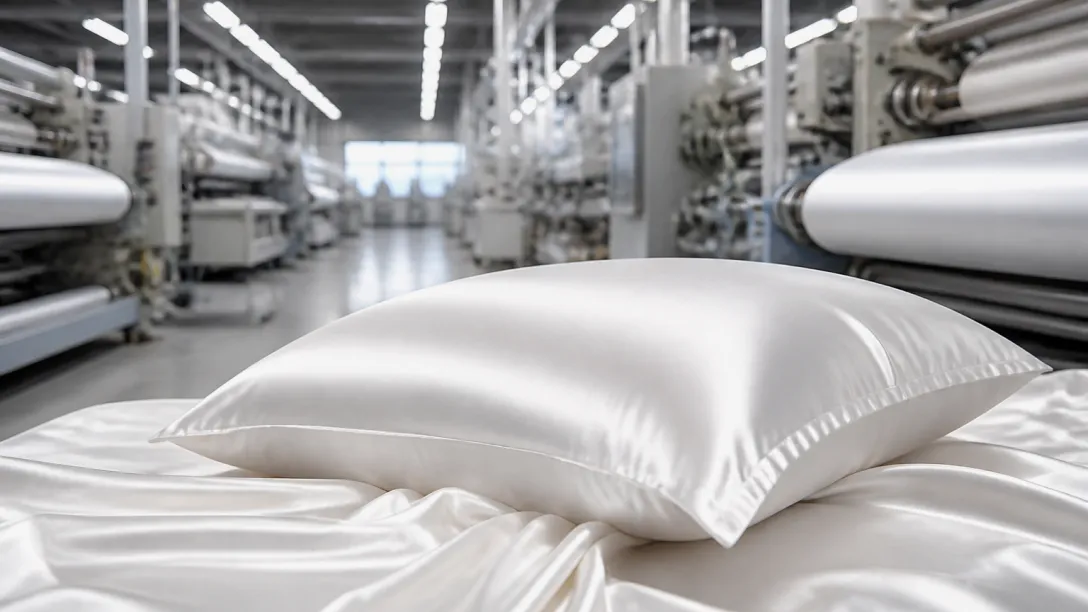
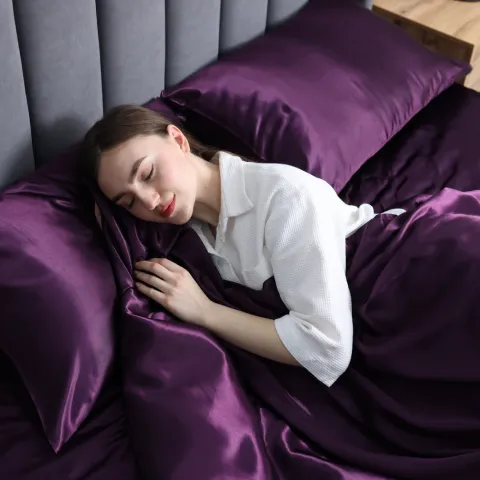
- Pillowcases and silk bedding sets. Charmeuse is the industry standard for silk pillowcases, silk sheets, and silk duvet covers. Its glossy face glides against hair and skin without friction. 22–25 momme is the optimal range. See our silk pillowcase benefits guide for the full breakdown.
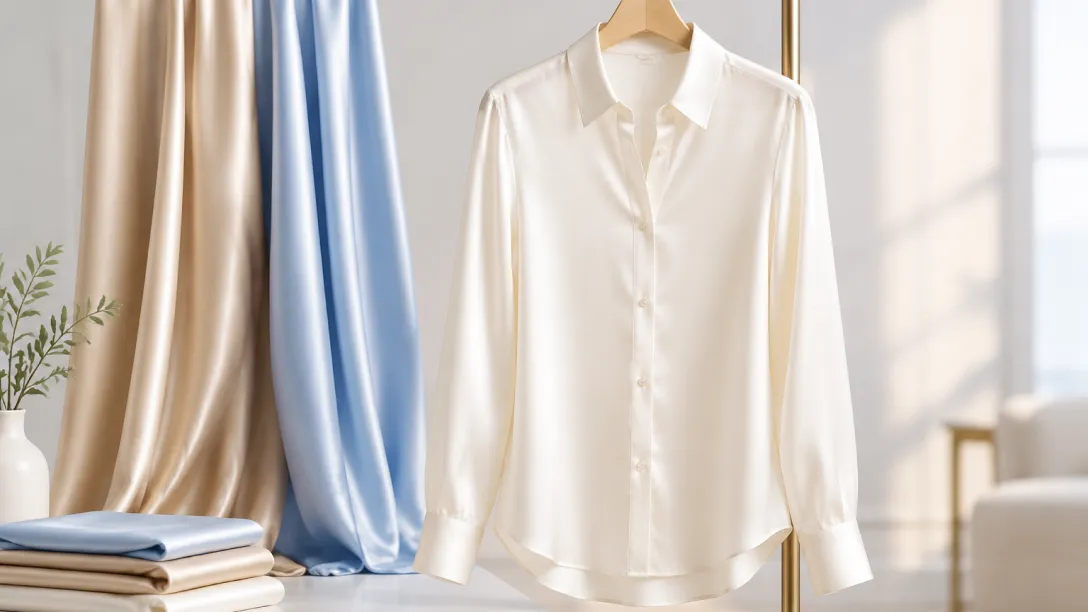
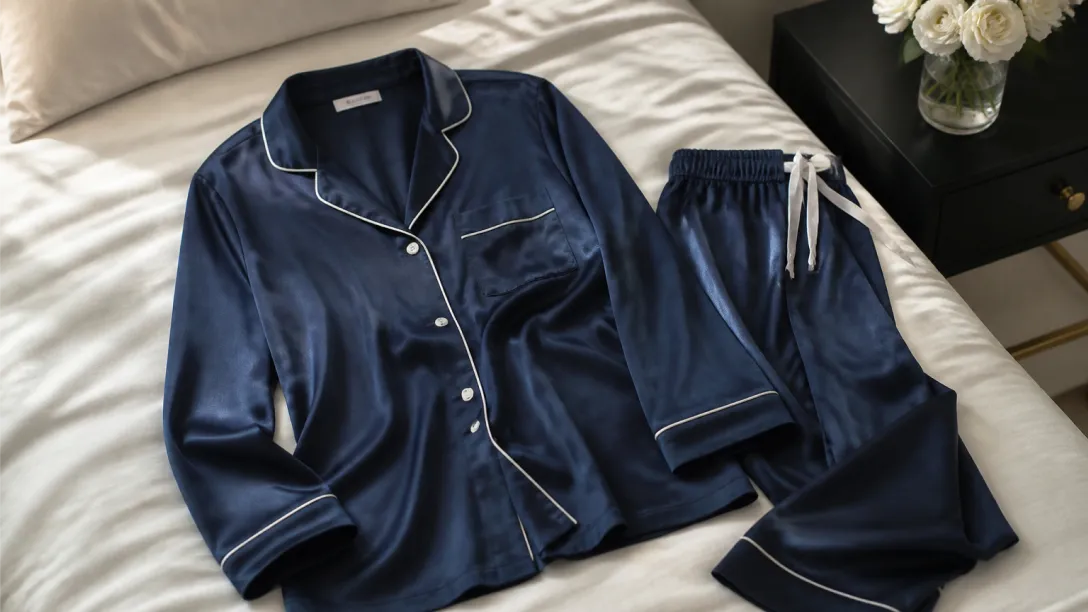
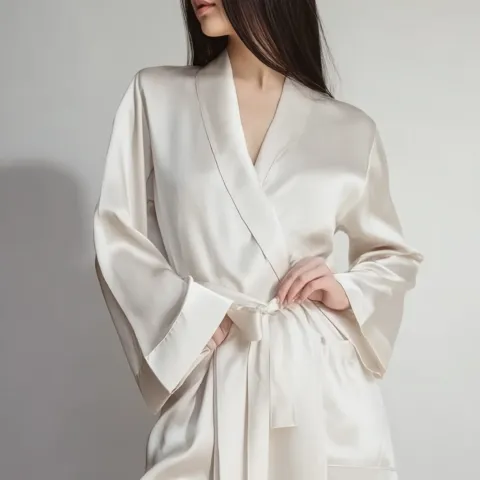
- Premium sleepwear and loungewear. Charmeuse is the default for silk pajamas, silk robes, and nightgowns. 16–22 momme covers most of this market.
- Slip dresses and bias-cut apparel. Charmeuse's liquid drape and slight bias stretch make it the textbook fabric for bias-cut silk dresses. Our custom silk dresses guide covers the bias-cut construction details.
- Lightweight scarves and small accessories. For silk scarves that prioritize liquid drape and luster over structured fold (the alternative being silk twill), charmeuse at 12–16 momme is the right call.
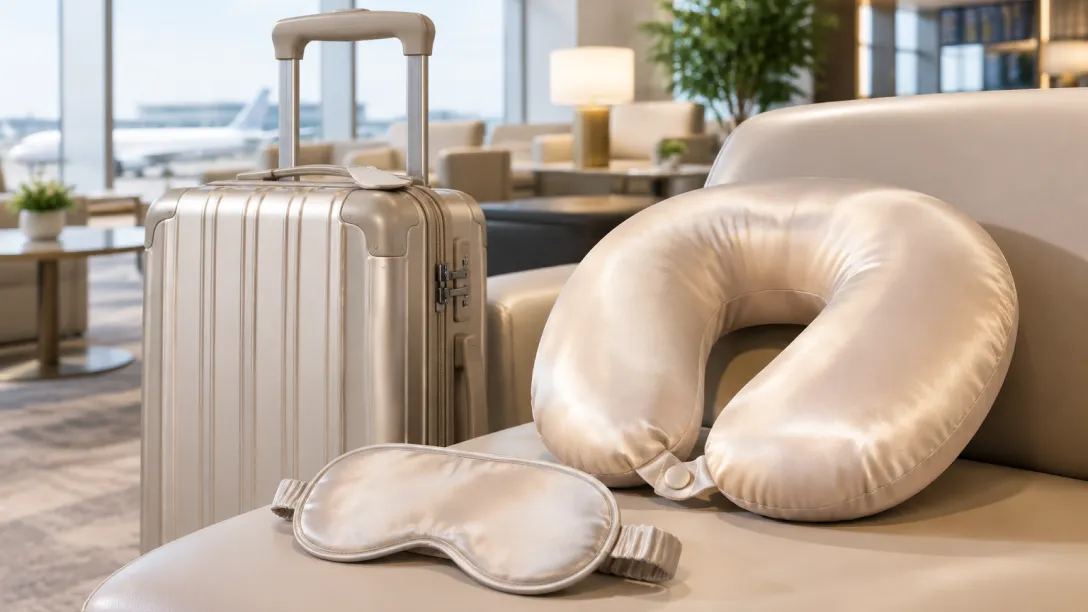
- Silk eye masks and small accessories. Silk eye masks at 22 momme charmeuse is the standard premium spec.
When to Choose Other Silk Satins
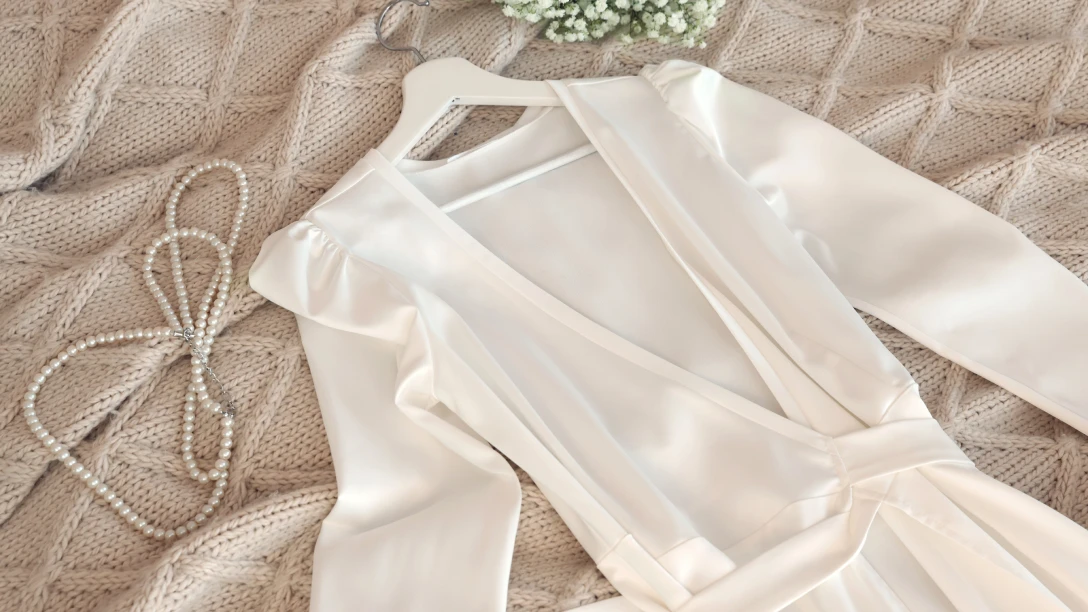
- Bridal gowns with structured bodices and full skirts. Silk duchess satin holds the architectural silhouette that bridal designers want. Charmeuse would cling rather than stand away.
- Tailored silk evening jackets and structured occasion dresses. Heavier silk satins (duchess, mikado, slipper satin) give the necessary body.
- Couture pieces where matte elegance is preferred over overt sheen. Silk peau de soie reads as more understated than charmeuse and pairs well with quiet luxury positioning.
When Polyester Satin Might Be Acceptable
Polyester satin has legitimate use cases when honestly marketed as a synthetic alternative:
- Entry-tier brand lines. Customers buying a $15 pillowcase or $25 robe understand they are not getting silk. Polyester satin is fine when not marketed as silk.
- Costumes, theater wardrobe, and prop apparel. Where look-on-camera matters more than skin-contact performance.
- Promotional merchandise. Where unit cost is the dominant constraint.
- Linings for non-premium garments. Where customer interaction with the lining is brief.
Polyester satin should not be specified for premium-positioned silk-look products, sleepwear that customers will use nightly, or any product marketed on silk's natural fiber benefits. The customer disappointment when the fabric reality fails to match the marketing damages brand trust permanently.
How to Verify What You Are Actually Buying
For B2B buyers sourcing silk charmeuse or any silk satin for a brand program, here is the verification protocol that prevents the most common sourcing mistakes.
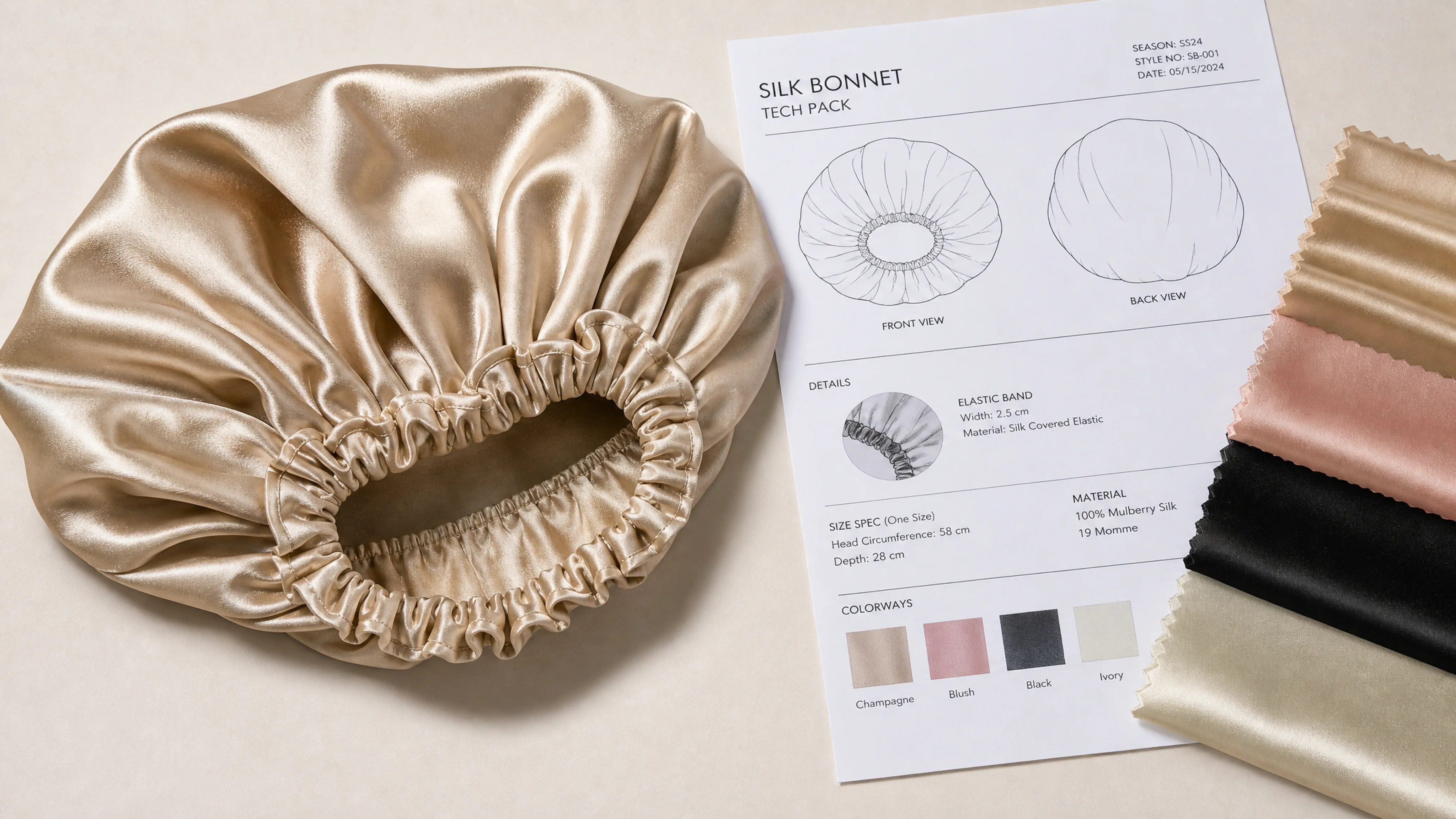
Request the spec sheet, not the marketing description. The spec sheet should state: fiber composition (100% mulberry silk vs blend), momme weight, weave construction (charmeuse / duchess / peau de soie / etc.), warp and weft thread count, finishing treatment, and certifications.
Verify fiber composition with a burn test on a swatch. Take a small thread from a fabric corner. Hold a match to it briefly. Real silk burns slowly, smells like burning hair, and self-extinguishes when the flame is removed — leaving brittle ash. Polyester melts into a hard plastic bead, smells like burning plastic, and continues burning when the flame is removed. The test is conclusive on fiber composition.
Verify momme weight with a GSM test. Cut a 10×10 cm fabric sample and weigh it. Multiply by 100 to get GSM. The result should match the claimed momme: 22 momme ≈ 95 g/m², 19 momme ≈ 82 g/m², 25 momme ≈ 108 g/m². Tolerance ±3% is normal. Deviation beyond 5% suggests inaccurate spec.
Verify grade with documentation. Premium silk should be Grade 6A mulberry silk, certified by the supplier or its mill. Grade certification confirms fiber length, fineness, and consistency at the highest commercial level. Lower grades (5A, 4A, 3A) cost less but produce thinner, less durable fabric.
Confirm OEKO-TEX certification on the finished fabric. OEKO-TEX STANDARD 100 on the finished product (not just on raw silk) confirms the absence of harmful chemical residues from dyeing and finishing. Essential for any product sold into the EU, Japan, or Australian markets, and a meaningful trust signal in other markets.
Inspect the back face. Real silk charmeuse has a noticeably matte back face with a slightly textured surface from the plain weave structure. Polyester satin often has a similarly shiny back face because synthetic fibers reflect light more uniformly across both sides.
Watch for the price red flag. A \"silk charmeuse\" pillowcase priced below $30 retail or sold wholesale below $8 per meter is almost certainly mislabeled polyester. The economics of real silk production cannot support those prices at any momme weight or grade.
Source Real Silk Charmeuse from a Specialized Manufacturer
If you are sourcing silk for a brand collection and want to avoid the satin terminology confusion entirely, work with a manufacturer that specifies fiber, weave, momme, and grade transparently on every quote. DreamSilk weaves silk charmeuse in momme weights from 12 to 30, all Grade 6A mulberry silk, OEKO-TEX STANDARD 100 certified, in our integrated Suzhou facility.
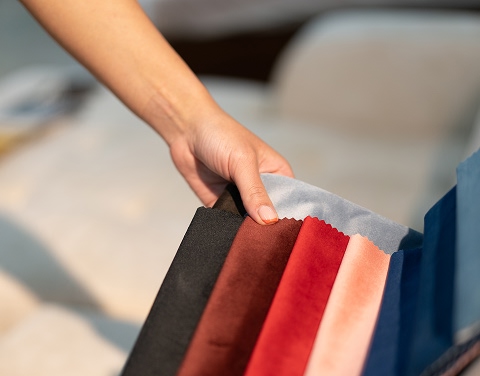
Tell us your target product, momme weight, and required volume. We will send free fabric swatches in multiple weights so you can compare hand and drape side by side, plus a transparent spec sheet that states exactly what fabric you are sourcing.
Explore our silk charmeuse fabric range or contact us for a quote to get started.
FAQ
Charmeuse is a specific type of satin. Both share the satin weave structure (warp threads floating over multiple weft threads), but charmeuse uses lighter yarns and finer construction to produce a fluid, liquid drape distinct from heavier satins like duchess. So "charmeuse vs satin" is not really an opposition — it is a sub-category compared with the broader satin family.