

Silk Apparel & Clothing Manufacturing: Fabric, Blends, and Craftsmanship Standards for Premium Brand Collections


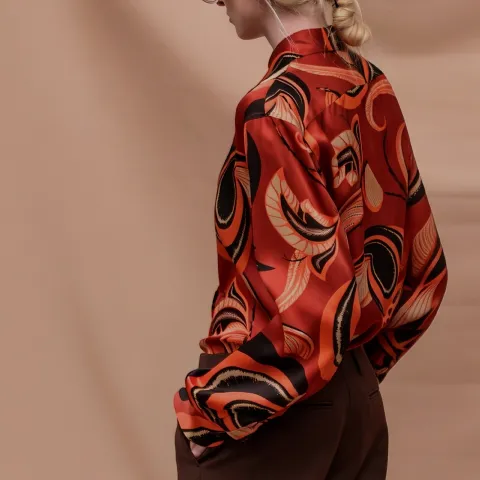
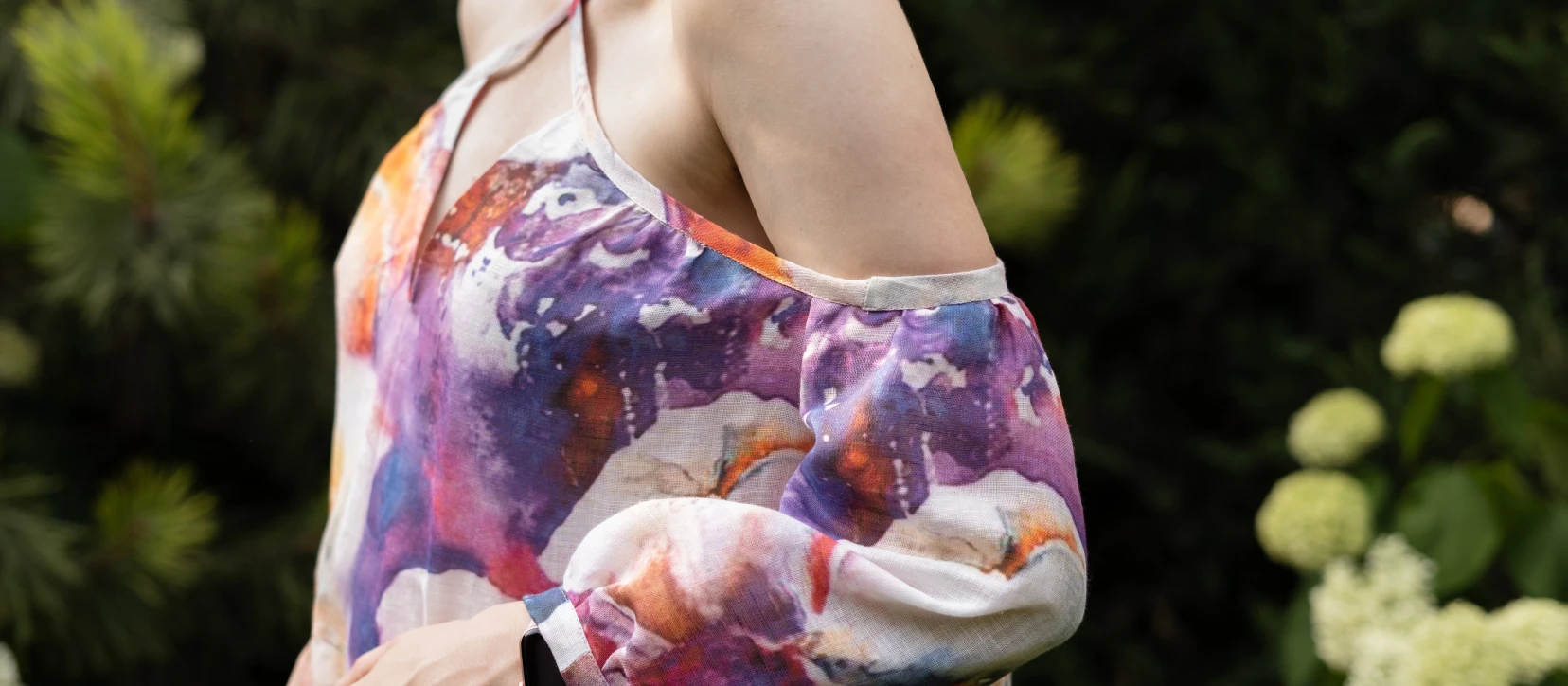 Developing a silk apparel collection looks straightforward on paper — pick a silhouette, pick "silk," put it into production. The reality is that "silk" splits into roughly ten distinct weaves and blends, each with its own drape, weight, and behavior under the needle. Match the wrong weave to the wrong garment and the finished piece reads as cheap, no matter how good the design was. Match it correctly and even a simple silhouette looks like couture.
This is the breakdown we walk brand clients through at our Suzhou facility before they sign off on a first tech pack. It covers the fabric and blend choices that make commercial sense by garment category, the construction techniques that separate factories that can handle silk from factories that should not be quoting on it, and the quality and certification standards that decide whether your collection clears UK and EU retail compliance on day one.
The Silk Apparel Engineering Matrix: Matching Fabric to Garment Category
The single most useful tool in silk apparel development is a fabric-to-garment matrix. Most fabric guides list silk weaves abstractly; brands need to know which weave to spec for which silhouette and what construction technique that weave demands.
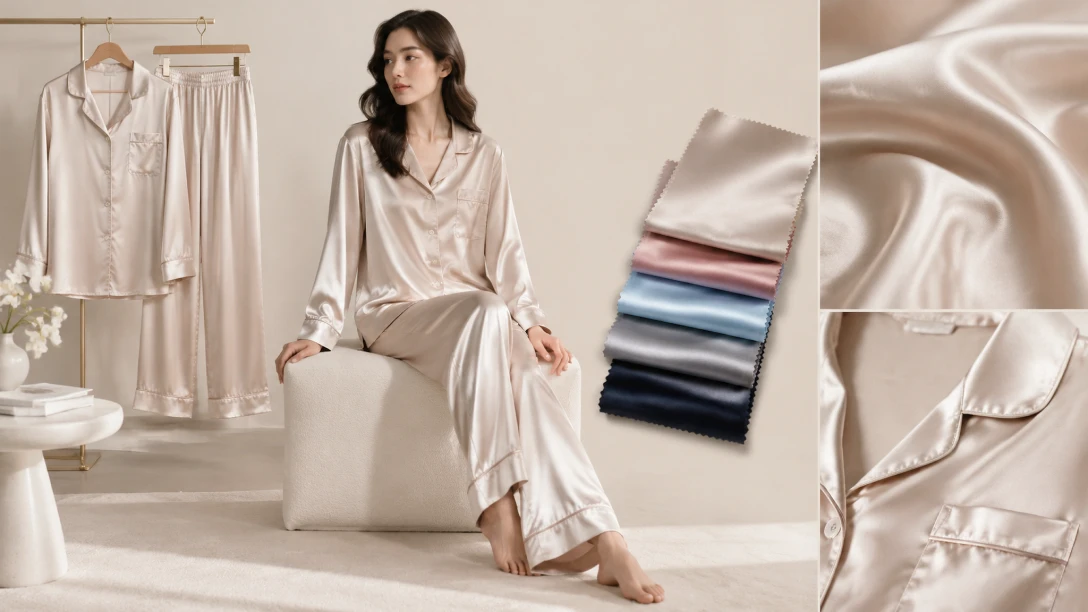
Loungewear and sleepwear series. The category that built modern silk apparel demand. Drape and skin-feel are the deciding properties.
| Garment Category | 100% Silk Fabric Options | Silk Blend Options | Essential Techniques |
|---|---|---|---|
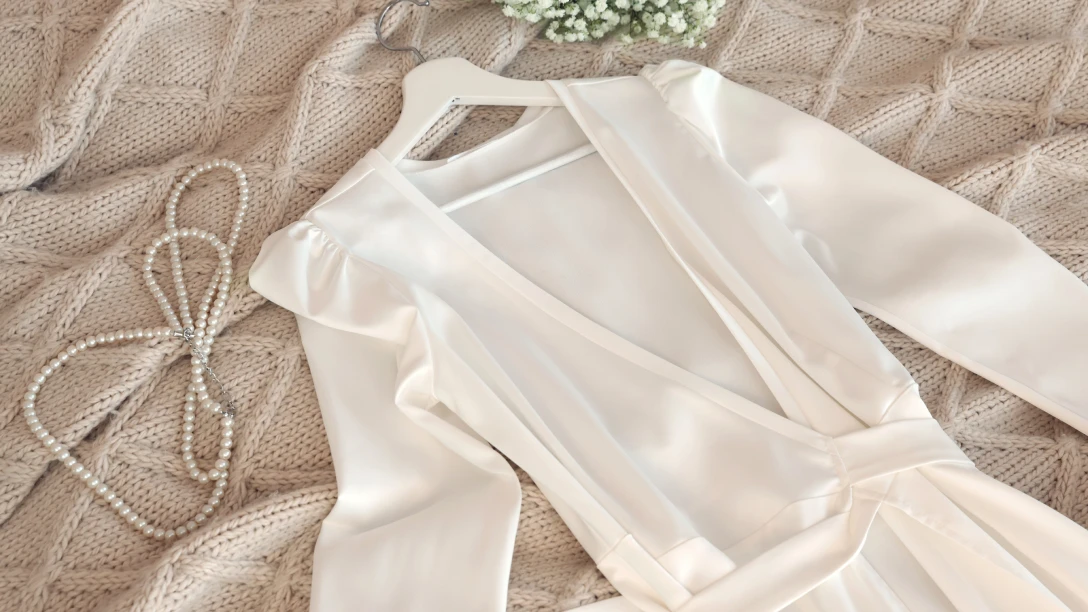
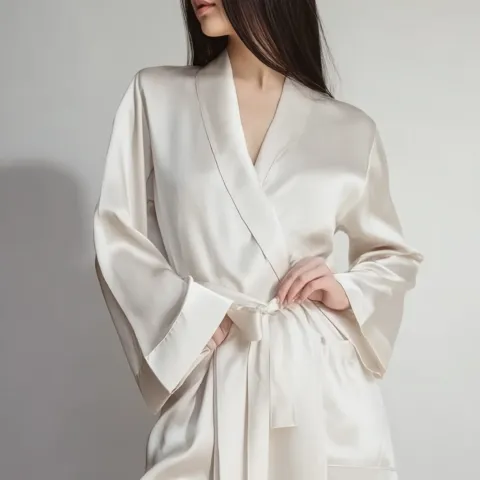
| Silk Robes | Silk Charmeuse, Silk Jacquard, Stretch Silk Charmeuse, Silk Velvet | Silk Viscose, Stretch Silk Viscose | French seams, hand-rolled hems |
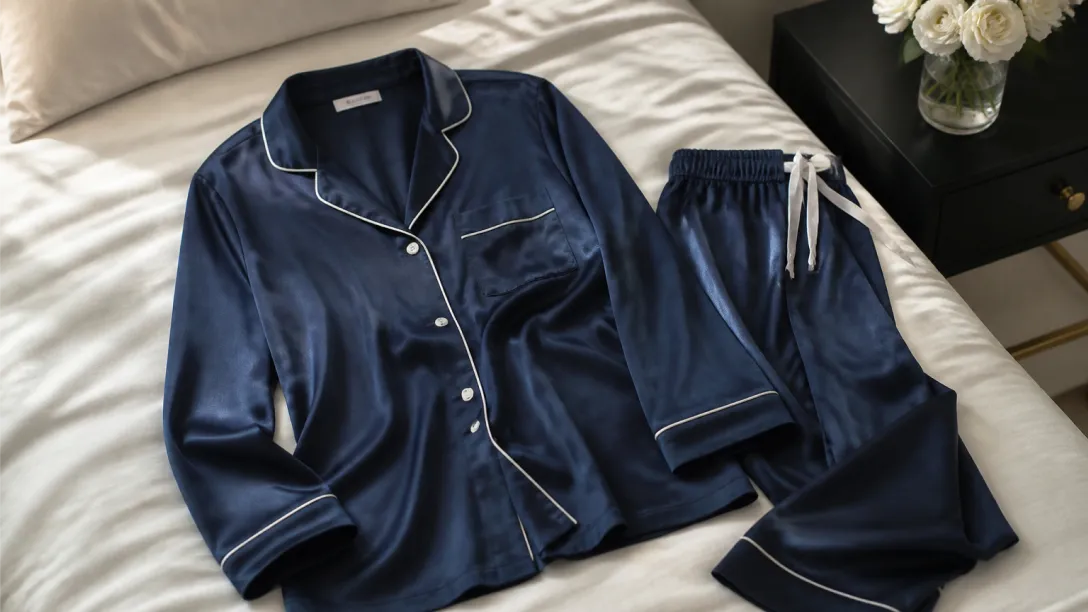
| Silk Pajamas | Silk Charmeuse, Stretch Silk Charmeuse, Silk Crepe de Chine | Silk Viscose, Stretch Silk Viscose | French seams, contrast piping |
| Silk Nightgowns | Silk Charmeuse, Stretch Silk Charmeuse, Silk Crepe de Chine | Silk Viscose, Stretch Silk Viscose | Bias cutting, French seams |
Ready-to-wear series. Wider audience, higher average order value, and the category that stress-tests a factory's pattern grading and sewing skill. Get this right and the brand can carry a multi-season program.
| Garment Category | 100% Silk Fabric Options | Silk Blend Options | Essential Techniques |
|---|---|---|---|
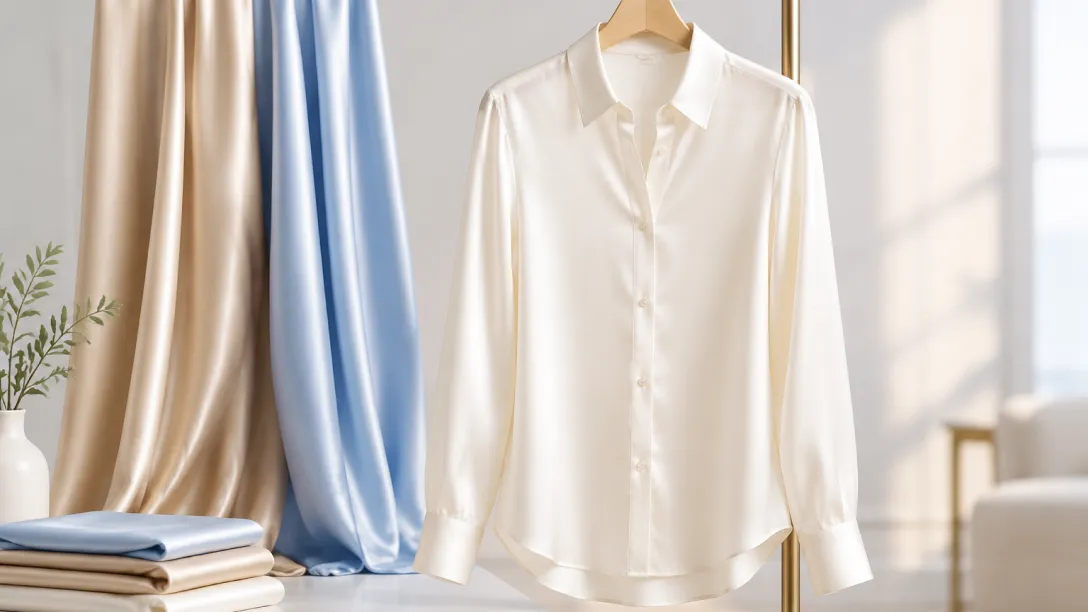
| Silk Shirts and Blouses | Silk Crepe de Chine, Silk Twill, Silk Double Georgette, Stretch Silk Charmeuse | Silk Viscose, Stretch Silk Viscose | French seams, baby hems |
| Silk Camisoles | Silk Charmeuse, Stretch Silk Charmeuse, Silk Habotai (lining) | Silk Viscose, Stretch Silk Viscose | Bias cutting, French seams |
| Silk Dresses | Silk Crepe de Chine, Silk Georgette, Silk Jacquard, Stretch Silk Charmeuse | Silk Viscose, Silk Linen, Stretch Silk Viscose | French seams, invisible zippers, bias cutting |
| Silk Pants and Shorts | Silk Twill, Silk Double Georgette, Stretch Silk Charmeuse, Silk Charmeuse, Silk CDC | Silk Linen, Silk Wool, Silk Viscose, Stretch Silk Viscose | Clean-finished tailored seams |
| Silk Blazers | Silk Twill, Heavy Silk Charmeuse, Silk Double Georgette, Heavy Silk CDC | Silk Linen, Silk Wool, Silk Viscose, Stretch Silk Viscose | Structured tailoring, Habotai lining |
Read the matrix in two directions. Vertically, it tells you which fabrics belong in which category. Horizontally, it tells you which construction techniques the factory needs to be able to execute for that fabric. A factory that says it can produce silk apparel but cannot do French seams or bias-cut camisoles is not a silk apparel manufacturer in the real sense — it is a general garment shop that occasionally takes silk orders.
The Silk Apparel Fabric Foundation: 100% Mulberry Silk Weaves
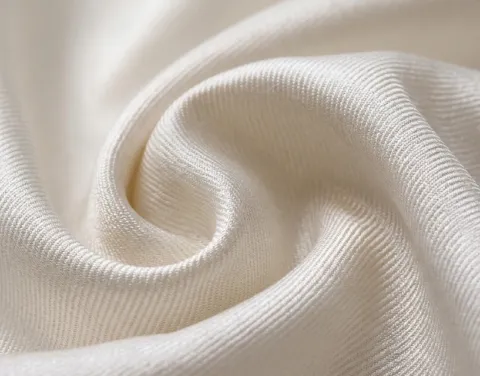
For premium brand positioning, 100% mulberry silk is non-negotiable. The fiber itself is the same across all the weaves below — what changes is the loom construction, and the construction determines everything downstream about how the garment behaves.
For Ultimate Luster and Drape
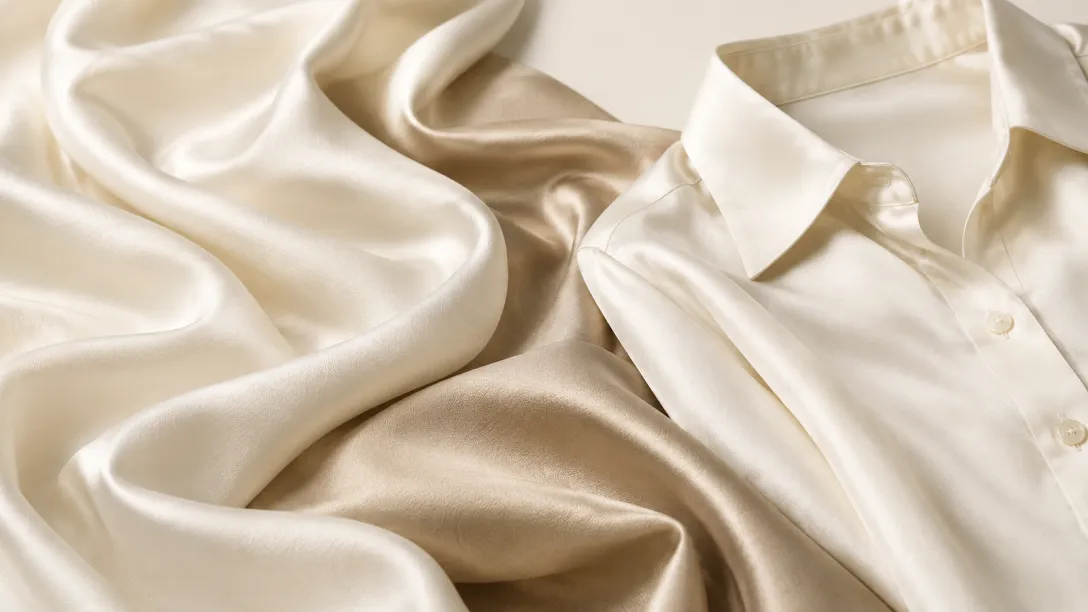
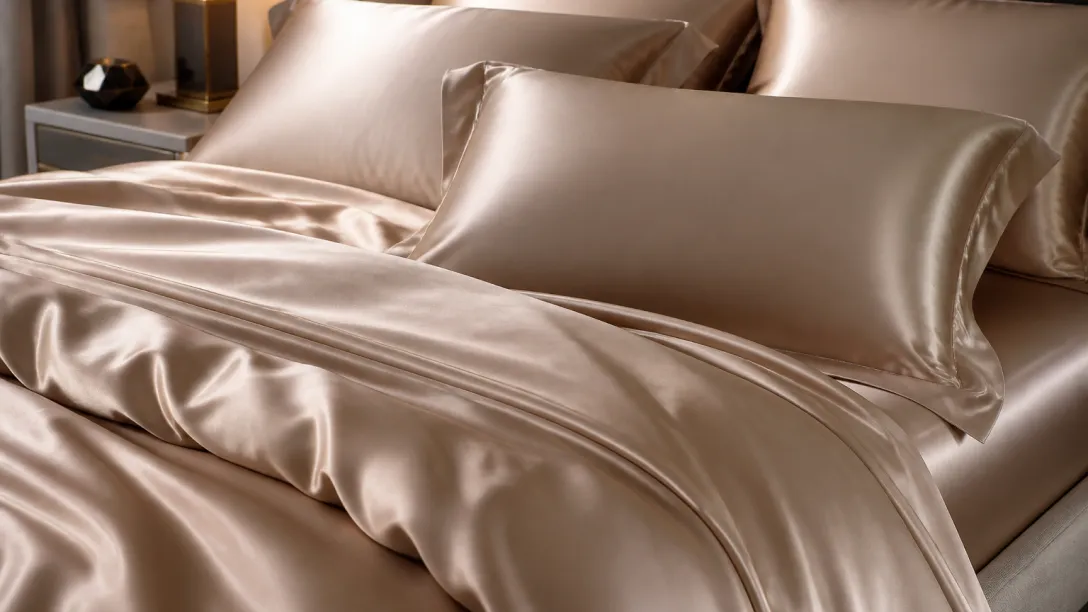
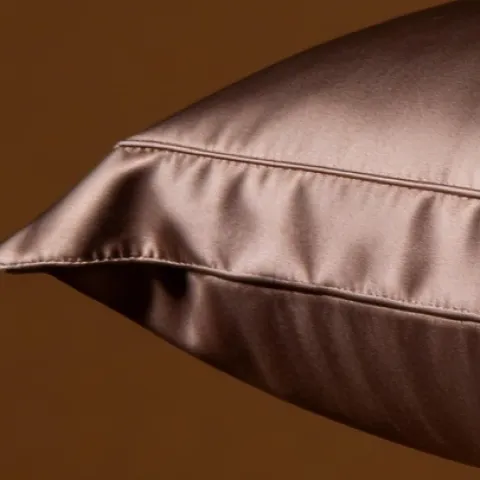
Silk Charmeuse is the quintessential silk apparel fabric. A satin-weave construction with long warp floats produces the glossy front face and matte back face that most people picture when they imagine "silk." Drape is fluid — almost liquid — and the hand-feel is the cool, slippery sensation the category is named for. Best for luxury silk robes, slip dresses, camisoles, and bias-cut nightgowns. Charmeuse is also the most-confused silk weave with polyester satin imposters, so spec sheets should always state "100% mulberry silk charmeuse" with momme weight, not just "silk satin." For a full breakdown of charmeuse versus other satin variations, see our silk charmeuse vs satin breakdown.
Silk Jacquard puts the pattern into the weave itself rather than printing it on top. A jacquard loom uses individually controlled warp threads to create tonal motifs that catch light differently as the garment moves. Heavier hand than charmeuse, used most often for premium occasion robes and evening shirts where visual depth matters more than maximum drape.
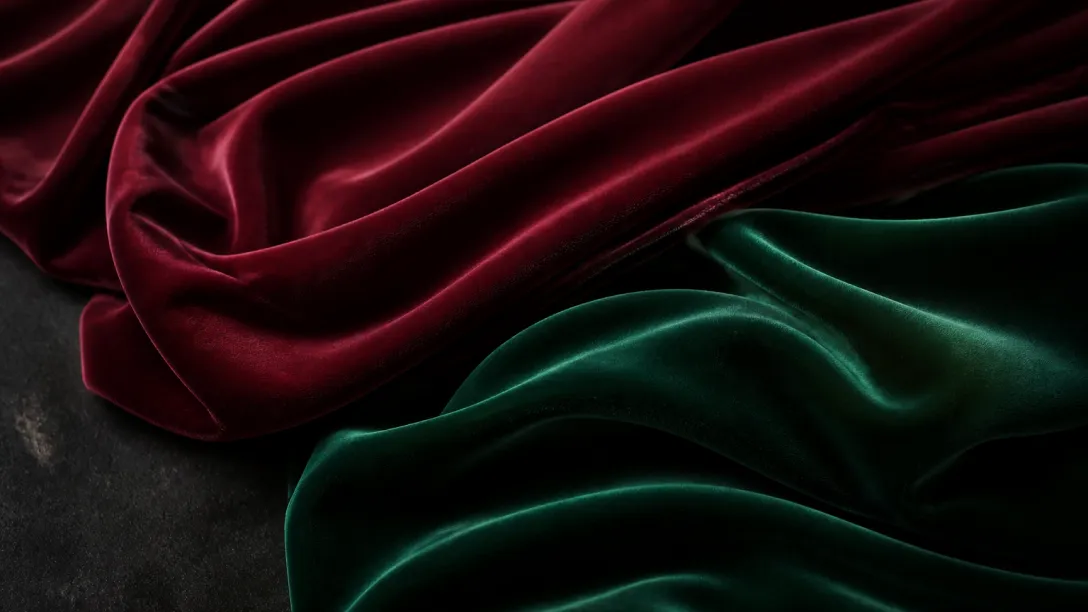
Silk Velvet is silk pile fabric — a dense, light-absorbing surface that reads as deep, almost three-dimensional luxury. Used for statement robes and pyjamas in pre-fall and resort programs, especially when paired with metallic embroidery or jewel-tone palettes.
For Durability and Matte Elegance
Silk Crepe de Chine has microscopic surface crimps from highly twisted yarns, producing a matte, slightly pebbled face. CDC is more wrinkle-resistant than charmeuse, less prone to snagging, and easier to maintain. Best for silk shirts, everyday camisoles, lightweight pants, and the kind of luxury dresses that wear daily rather than for occasion.
Silk Twill is woven with a diagonal rib that gives it body and structure. It holds shape well, prints with crisp vibrancy, and resists the limpness that lighter silks can develop after multiple wears. Best for tailored silk pants, structured shirts, scarves, and unstructured blazers.
For Sheerness and Lightweight Volume
Silk Chiffon is the lightest commercial silk woven, almost transparent, with a very fluid drape. Best for layered overlays on dresses and robes, and for the floaty sleeve constructions that show up in occasion wear.
Silk Georgette uses twisted yarns to produce a slightly grainier surface than chiffon, with a touch more body. Double georgette doubles the weight for a heavier hand that still drapes fluidly. Best for flowing midi dresses, ruffled sleeves, and dress overlays that need more substance than chiffon.
Silk Organza is sheer but stiff. Where chiffon and georgette drape, organza holds shape. Best for structural collar and cuff elements on shirts, formal over-garments, and bridal-adjacent pieces where volume needs to stay sculptural.
For Cost-Effectiveness and Texture
Silk Habotai is a plain-weave silk with a smooth matte face. Lightweight, breathable, and the most cost-effective commercial silk. Best used as a premium lining inside tailored silk garments, and as the outer fabric for summer camisoles and basic loungewear pieces where the silk hand matters more than overt luster.
Silk Blends for Apparel: Expanding Commercial Range Without Losing the Silk Hand
Blends are how silk apparel programs scale beyond the premium tier. Each blend solves a specific design or commercial constraint while preserving enough silk hand to justify the silk story on the label.
Silk-Cotton combines silk's softness with cotton's crispness and tear resistance. Best for shirts with a structured silhouette and summer pants that need to hold a crease. Material cost drops compared to 100% silk, and the blend handles slightly rougher daily wear.
Silk-Viscose (sometimes labeled silk-rayon) is the most commercially flexible blend. Viscose delivers exceptional drape, and the silk content keeps the hand luxurious. Best for volume-market silk robes, camisoles, and dresses. This blend is the standard solution when brands need to enter the silk loungewear category at a sub-luxury price point without abandoning the category narrative.
Silk-Linen balances linen's rugged breathability with silk's subtle sheen. Best for resort-wear pants and relaxed summer shirts where the brand wants the silk story but the silhouette needs structure and the customer needs durability.
Silk-Wool brings the warmth of wool with the silk fiber softening what would otherwise be an itchy hand. Best for winter trousers, heavy overshirts, and transitional blazers. The blend reads as luxurious in cold-climate markets and lets a silk apparel program extend its calendar from spring-summer to year-round.
Stretch silk variants add 2–5% spandex or elastane to charmeuse and viscose blends, providing recoverable stretch without losing the silk visual. Used in fitted silk camisoles, body-conforming dresses, and pajamas built for movement.
Momme Weight Decisions Across Silk Apparel Categories
Momme is the silk industry's weight unit — 1 momme equals approximately 4.34 g/m². The momme range a fabric is woven at decides how the finished garment hangs, how it reads on camera, and whether it earns the price point on the tag. The chart below covers the working ranges across the silk apparel categories that move at retail.
| Garment Category | Recommended Momme | What This Weight Does |
|---|---|---|
| Silk Camisoles | 16–19 mm | Light enough for bias drape, opaque enough for daily wear |
| Silk Shirts and Blouses | 14–19 mm | Holds collar and cuff structure without feeling heavy |
| Silk Pajamas | 16–22 mm | 19 mm is the mid-market standard, 22 mm reads as premium |
| Silk Robes | 19–25 mm | 22 mm is the European premium reference; 25 mm is ultra-luxury |
| Silk Slip Dresses | 19–22 mm | Best balance of bias drape, opacity, and luxury hand |
| Silk Pants | 16–22 mm | Heavier weights give tailored structure |
| Silk Blazers | 22 mm+ heavy | Needs body to hold lapel and structured shoulder |
| Silk Linings | 8–14 mm habotai | Light and slippery for interior glide |
Two notes from the production floor. First, GSM tolerance on premium silk should hold within ±3% of the target momme across the full roll width. Anything beyond ±5% indicates loom tension issues that will show as visible streaking on satin-weave faces. Second, very low momme (under 12) and very high momme (over 30) both add sourcing cost — the working sweet spot for commercial silk apparel is 16–22 momme. For a deeper breakdown by category, our silk momme weight breakdown covers every weight from 8 to 30.
Silk Garment Construction: The Sewing Techniques That Separate Couture from Off-the-Rack
Fabric is half the equation. The other half is the construction technique applied to that fabric, and silk demands techniques that mass-market garment factories cannot execute at acceptable quality. Three techniques matter most.
French Seams
Standard overlock stitching is the default in volume garment production. On silk, overlock produces a bulky, fraying edge that telegraphs through the front of lightweight weaves and feels rough against the skin in any application that touches the body. French seams solve both problems by enclosing the raw fabric edge entirely inside a folded seam.
The construction is two passes. First pass: wrong sides together, narrow seam (around 3–5 mm). Trim close to the stitching. Second pass: fold the fabric right sides together, encasing the trimmed edge, and stitch again at 6 mm. The result is a closed, clean, fully enclosed seam with no visible raw edge from either side.
French seams are standard practice at our facility for silk shirts, camisoles, robes, pajamas, and any silk garment where the interior is visible during wear. The seam is slightly bulkier than a single-line construction, which is why it is restricted to straight seams — armholes and sharply curved seams use mock French seams or bias-bound seams instead.
Bias Cutting
A bias cut places the pattern at 45° to the warp and weft grain of the fabric. For non-stretch silks like charmeuse, bias cutting unlocks meaningful diagonal stretch that lets the garment contour the body in motion. This is the technique behind the slip-dress silhouette that defined 1990s minimalism and that returns to the runway in every cycle since.
Bias cutting requires three production disciplines that general factories often skip:
- Single-ply cutting. Bias-cut panels cannot be cut from a stacked layup the way grain-cut panels can. Each panel cuts individually, on grain-aligned tissue, with the grainline drawn on every piece.
- Pre-stretch and rest. After cutting, panels rest for at least 24 hours before sewing to let the bias settle. Skipping this step produces garments that grow unevenly after the customer wears them once.
- Directional sewing. Vertical bias seams sew hem-to-waist, not waist-to-hem, to avoid stretching the grainline through the foot pressure. The factory's machine operators need to know this without being told.
Bias cutting is the technique behind silk camisoles, slip dresses, bias-cut robes, and the lingerie-inspired daywear that runs through every European luxury silk program. Our silk dress construction breakdown walks through the bias-cut pattern preparation in more detail.
Premium Edge Finishing: Baby Hems and Hand-Rolled Hems
The hem is the most exposed inch of a silk garment and the easiest place for a factory to give away its skill level. Two techniques distinguish couture-grade silk apparel.
Baby hems (also called rolled hems) finish chiffon shirts, lightweight blouses, and chiffon overlays with a tiny enclosed edge — typically 2–3 mm of folded fabric, stitched twice. The result is a hem that disappears visually and adds almost no weight, preserving the airy drape the lightweight silk was chosen for in the first place.
Hand-rolled hems are the next level up — the hem allowance rolls between the operator's fingers as it passes under a hand-controlled needle. The edge is three-dimensional, slightly rounded, and visibly artisan. Used for luxury silk robes, evening pieces, and any silk scarf or accessory where the edge is a featured detail.
These techniques are slow. A hand-rolled silk robe hem can take a skilled operator 30–45 minutes per garment. The premium-tier price exists because the construction time exists.
For a deeper look at the full silk sewing technique stack, see our silk sewing techniques breakdown.
Silk Apparel Quality Control: From Fabric Inspection to AQL Finished-Goods Standards
Quality control on silk apparel runs in three stages, and a manufacturer that skips any of them is rolling the dice on whether the shipment passes inspection.
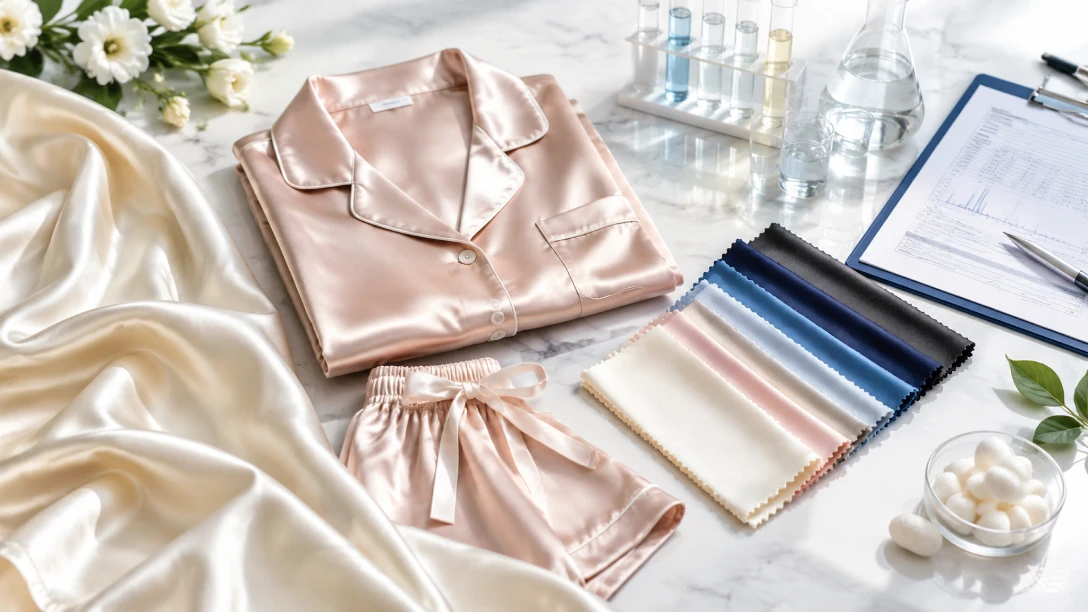
Stage 1: Fabric inspection on roll arrival. Every roll inspects against the spec sheet for GSM (within ±3% of target momme), color match (ΔE ≤ 1.0 against the approved swatch), weave defect count, and surface uniformity. Defective rolls reject and return before any cutting starts. This single discipline prevents most downstream finished-goods rejections.
Stage 2: In-process inspection at sewing. Charmeuse is unforgiving — uneven machine tension produces visible puckering on the satin face that cannot be steamed out. Bias-cut panels stretch unevenly if the operator pulls instead of guides. In-line inspection during sewing catches these issues at the panel stage, not at the finished garment.
Stage 3: Finished-goods inspection at AQL II 2.5. AQL (Acceptable Quality Limit) is the standard sampling protocol used across the global apparel industry. AQL II 2.5 means the inspection sample size is set by ISO 2859, and the maximum allowable defect rate at the major defect level is 2.5%. For premium silk apparel sold into UK and EU retail, AQL II 2.5 is the floor. Tighter standards (AQL II 1.5 or 1.0) apply to bridal and couture-tier programs.
Pre-shipment inspection should always include a documented report — major/minor/critical defect counts, measurement deviation tally against the tech pack tolerance, and a representative sample photo set. If your manufacturer does not produce this documentation as standard, the inspection is not happening at scale.
Certifications and Compliance for Silk Apparel Manufacturing
Three certifications matter for silk apparel entering European, UK, North American, and Japanese retail. Skipping these closes off retail channels.
- OEKO-TEX STANDARD 100. Tests the finished fabric for harmful substances — heavy metals, formaldehyde, prohibited dyes. Required by every major European retailer for textiles touching skin. Certification must cover both the silk base and the dye-and-finish process used on the specific roll, not just a generic mill certification from years ago.
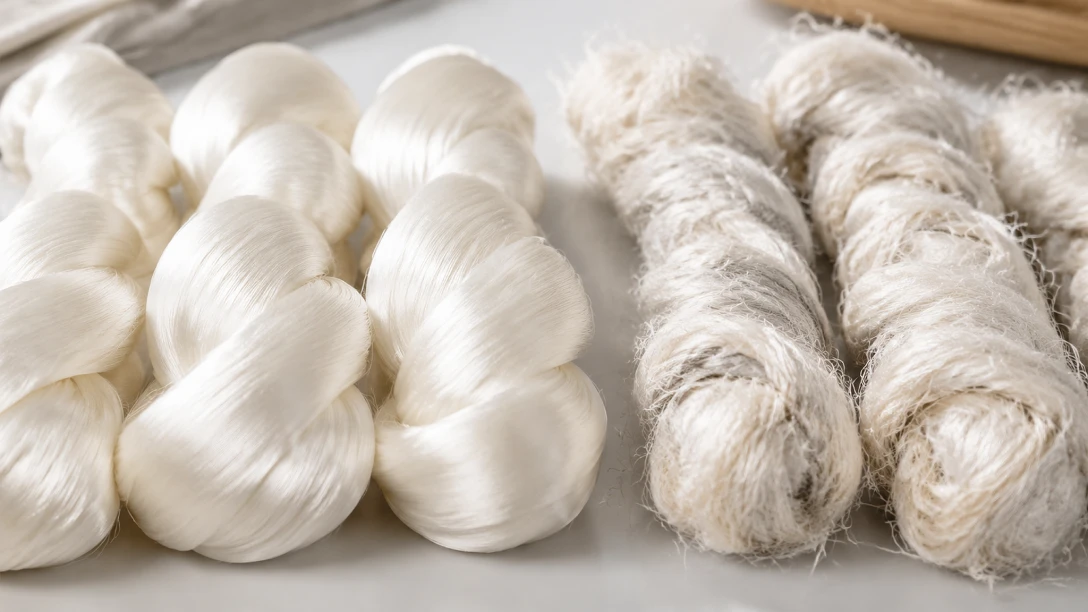
- Grade 6A Mulberry Silk Certification. Grade 6A is the highest commercial grade for raw mulberry silk yarn, evaluated on filament length, fineness, evenness, and absence of defects. For luxury-tier apparel, Grade 6A is the spec. Lower grades (5A, 4A) produce thinner, less uniform, less durable fabric and should be priced and positioned accordingly.
- ISO 105 color fastness suite. ISO 105-C06 (color fastness to washing) and ISO 105-X12 (color fastness to rubbing) confirm that dyed silk holds color through normal wear and care. Required for any silk apparel product making care-label claims about washing.
Our certifications page documents the full certification stack we provide on every order, with sample certificates available on request.
Working with a Silk Apparel Manufacturer: What to Provide and What to Expect
For brand owners and sourcing teams approaching a silk apparel program for the first time, the process tightens dramatically once the right information moves through the right stages.
Provide at the inquiry stage:
- Tech pack with construction details, seam specifications, and finishing techniques per garment
- Pantone color references (or fabric swatches for color matching)
- Target momme weight per fabric, or target hand-feel description if momme is not yet specified
- Required certifications for your retail channels
- Volume forecast and delivery timeline
Expect from the manufacturer:
- Spec sheet quote that itemizes fabric weight, grade, certifications, and per-unit construction cost
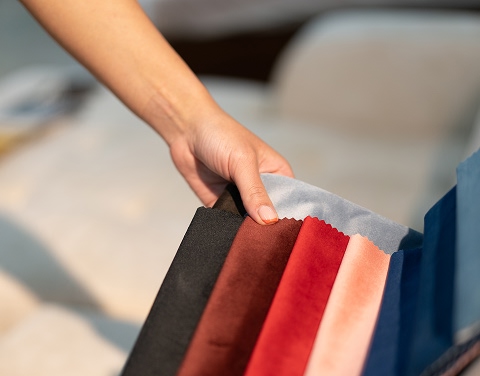
- Free fabric swatches in the proposed momme weight and color reference, dispatched within 5–7 working days
- Sample garment within 10–14 working days of sample-approval payment, made on the production line that will run the bulk
- Pre-production sample (PPS) approval before bulk begins
- In-production photo updates and finished-goods inspection report
DreamSilk offers all of this as standard for silk apparel programs across robes, pajamas, dresses, shirts, camisoles, and tailored separates. We weave silk in-house from Grade 6A mulberry silk yarn at our integrated Suzhou facility, dye to Pantone reference, cut and sew with silk-experienced operators on French-seam-capable machines, and inspect to AQL II 2.5 before shipment. Browse our custom silk clothing range for the categories we run, or explore the silk robe, silk pajama, silk dress, and silk shirt collections individually.
Build Your Silk Apparel Program with a Specialized Manufacturer
If you are sourcing silk for a brand collection — robes, pajamas, dresses, shirts, camisoles, or tailored separates — DreamSilk runs the full silk apparel manufacturing chain from fiber to finished garment at our integrated Suzhou facility. Every fabric is Grade 6A mulberry silk, OEKO-TEX STANDARD 100 certified. Every garment is cut and sewn by silk-experienced operators using French seams, bias cutting, and the edge finishes that the category demands.
Send us your tech pack, target momme weight, color references, and volume forecast. We will send free fabric swatches in the proposed weights, a transparent spec-sheet quote with no greige-versus-finished weight tricks, and a sample garment built on the production line that will run your bulk.
Explore our custom silk clothing range or contact us for a quote to start your silk apparel program.
FAQ
Silk apparel manufacturing is the end-to-end production of garments using silk fiber as the primary fabric. It covers fabric weaving (charmeuse, crepe de chine, twill, jacquard, etc.), dyeing and finishing, pattern grading, cutting, sewing, and finished-goods inspection. Specialized silk apparel manufacturers handle the fabric weaving in-house or through tight mill partnerships; general garment factories typically buy finished silk yardage and cut-and-sew only.