
Silk Manufacturing Process: From Raw Silk to Finished Fabric


For fashion designers, sourcing managers, and textile brands, pure silk represents the pinnacle of luxury apparel and high-end home textiles. However, transforming a fragile biological filament into a high-tensile, uniform woven fabric requires an extraordinary level of industrial precision.
At Suzhou Dream Silk Co., Ltd., located in the heart of China’s historic silk region, we combine centuries-old textile traditions with modern closed-loop manufacturing technologies. This comprehensive guide details the technical step-by-step transformation of raw silk into premium finished fabrics, providing the exact engineering parameters and quality benchmarks that define world-class silk production.
1. Advanced Sericulture and the Biology of Premium Silk Filaments
The production of high-grade commercial silk begins with controlled sericulture, specifically utilizing the larvae of the Bombyx mori silkmoth. The quality of the final textile is directly dependent on the strict environmental parameters maintained during this biological phase.
Environmental Control and Feeding Regimen
Silkworms are highly sensitive to corporate farming conditions. To produce the uniform, high-strength proteins required for premium fabrics, the larvae are housed in climate-controlled cleanrooms.
● Temperature Stability: The rooms are kept consistently between 22°C and 26°C.
● Humidity Management: Relative humidity is strictly regulated between 70% and 85% depending on the growth instar stage.
● Dietary Standards: The larvae feed exclusively on fresh, pesticide-free leaves harvested from white mulberry trees (Morus alba). A single silkworm will consume roughly 30,000 times its initial weight in mulberry leaves during its six-week feeding cycle.
The Physics of Metamorphosis and Liquid Fibroin Secretion
When a mature larva reaches its fifth instar, its appetite ceases, and its spinning glands mature. The silkworm anchors itself to a structured wooden or plastic framework called a mountage. It then moves its head in a continuous, precise figure-eight pattern for three to eight days.
During this period, the insect secretes a dual-strand liquid protein called fibroin from two large silk glands. Simultaneously, a secondary pair of glands secretes sericin, a water-soluble gummy protein that binds the twin fibroin filaments together. Upon contact with the air, this liquid secretion solidifies into a continuous composite structure known as a cocoon. A single healthy cocoon contains an unbroken filament measuring anywhere from 600 to 1,200 meters in length. 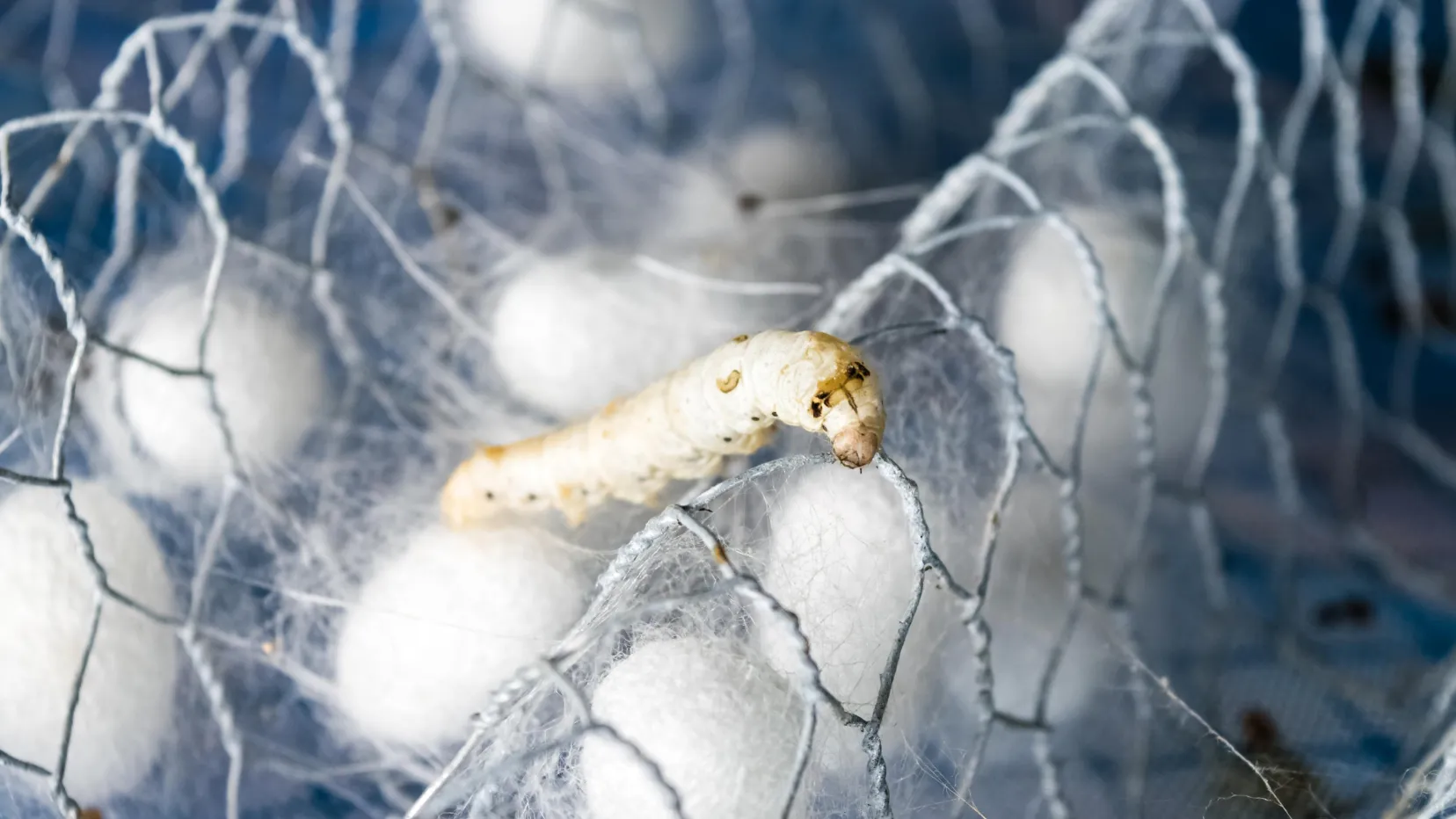
2. Industrial Cocoon Sorting, Stifling, and Deflossing Mechanics
Once the spinning process is complete, harvesting begins. This phase is critical for sorting the raw yield into commercial-grade categories before any mechanical processing occurs.
Optical and Manual Sorting Benchmarks
Not all cocoons are fit for luxury fabric manufacturing. Our quality control team manually sorts the harvest alongside automated optical scanning machinery.
1. Defective Elimination: Any cocoons displaying staining, irregular shapes, thin shells, or structural perforations are immediately segregated.
2. Grading Criteria: Only intact, uniformly white cocoons with thick, dense shells are advanced to the primary production line. This rigorous selection ensures the resulting yarn achieves an international 6A Grade standard.
Thermic Stifling and Preservation
To preserve the structural integrity of the continuous filament, the pupa inside the cocoon must not be allowed to emerge as a moth. If the moth hatches, it secretes an alkaline enzyme that dissolves the top of the cocoon, cutting the continuous thread into thousands of useless short fibers.
● Process Parameters: Selected cocoons undergo hot-air stifling or high-pressure steam treatments at temperatures ranging from 110°C to 115°C.
● Moisture Reduction: This thermal treatment neutralizes the pupa while completely drying out the cocoon shell, dropping the inner moisture content to less than 10%. This controlled drying prevents internal mold growth, allowing the raw materials to be stored safely in climate-controlled warehouses for long-term production stability.
Mechanical Deflossing
Before entering the reeling basins, the cocoons pass through a mechanical deflossing machine. This apparatus uses light wire brushes to strip away the loose, tangled, low-density outer layers of silk fibers. Removing this "floss" exposes the clean, neatly organized main shell body, making it significantly easier to locate the exact outer terminal end of the continuous primary filament. 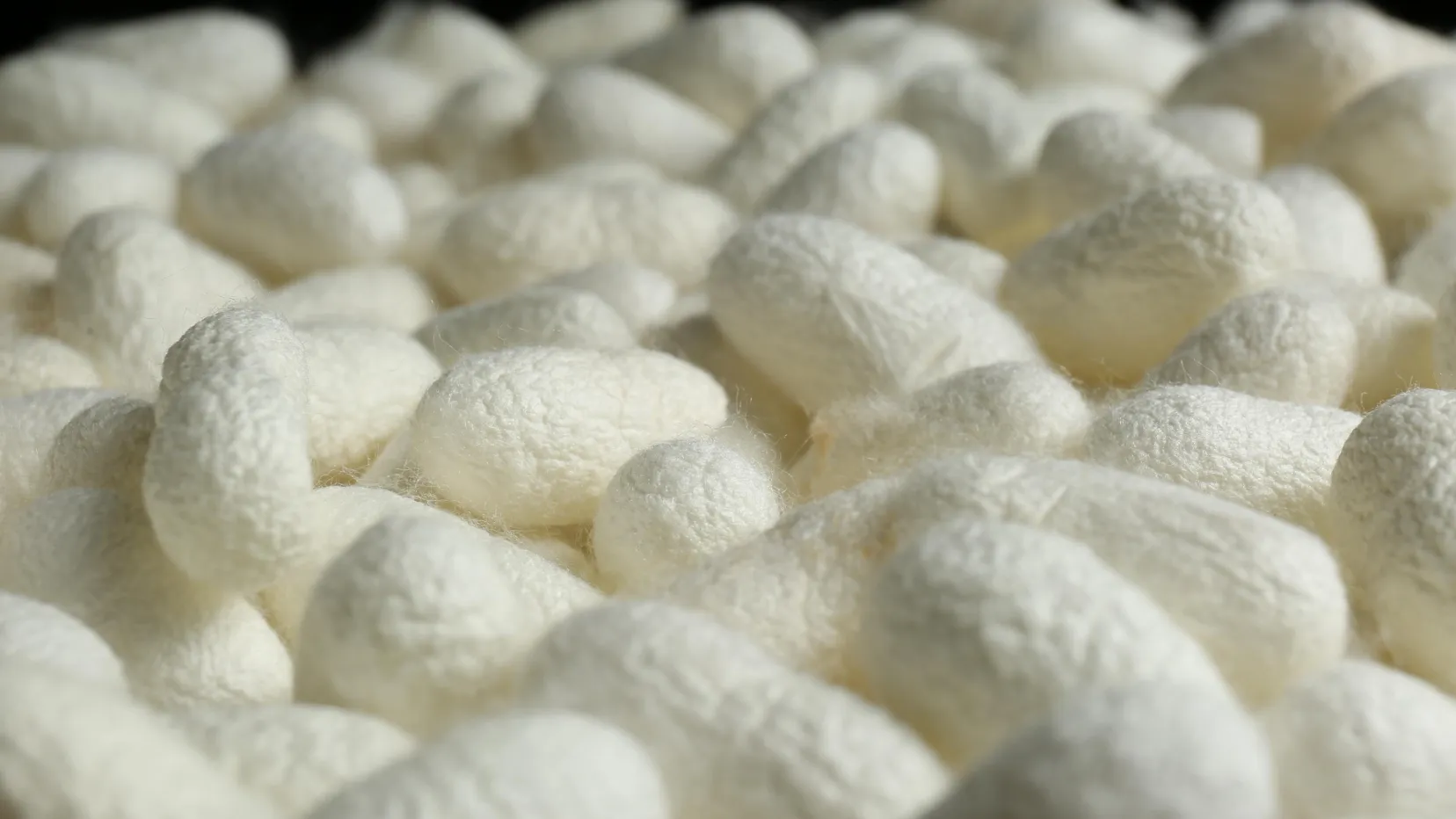
3. Precise Thermal Reeling: Extracting the Continuous Silk Yarn
Mechanical reeling is the exact engineering intersection where biological cocoons transform into viable industrial yarn. The fundamental challenge here is managing the tough outer sericin layer.
The Controlled Hydrothermal Boiling Protocol
The sericin protein acts as a natural industrial cement, locking the fibroin strands tightly in place. To unlock these strands without degrading the inner protein, the cocoons undergo a multi-stage boiling and soaking process:
● The Boiling Phase: Cocoons are immersed in pressurized hot water basins at 95°C to 98°C for several minutes to soften the hard outer crust.
● The Penetration Phase: The cocoons are transferred to a slightly cooler basin at 60°C, which creates a vacuum effect inside the shell, drawing water inward to soften the internal layers evenly.
● The Reeling Basin: The cocoons float in a warm water basin maintained at 40°C to 45°C. This specific temperature keeps the sericin soft and pliable without completely stripping it away, which is vital because a small amount of sericin is needed to help the strands stick together during yarn formation.
Mechanical Thread Searching and Multistrand Filament Reeling
Once softened, rotating automated brushes gently skim the surface of the floating cocoons to catch the loose, single filament ends.
Because an individual silk filament is incredibly thin—typically averaging just 1.5 to 3.5 denier—it is far too fragile to withstand industrial weaving or sewing on its own. To build a commercial-grade thread, multiple cocoons must be reeled together simultaneously.
The filament ends from 4 to 20 cocoons are pulled together through a precise porcelain guide eyelet. The gathered bundle passes through a grooved wheel system known as a croisure, which twists the filaments slightly around one another. This mechanical friction expels excess water and fuses the independent strands into a single, uniform, highly cohesive thread of raw silk yarn.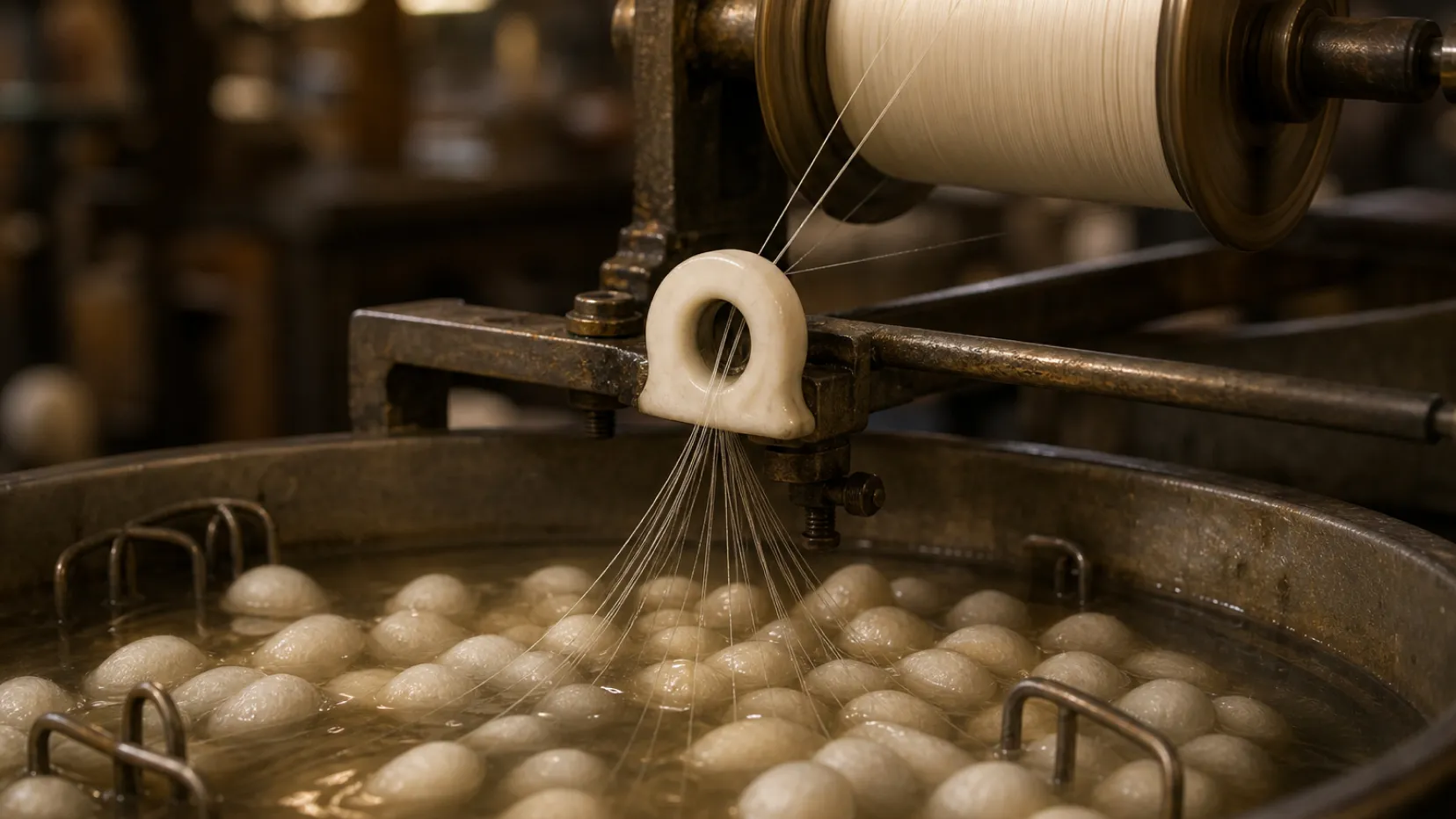
4. Technical Silk Throwing and Yarn Structural Modifications
The reeled thread, still containing a portion of its original sericin coating, is classified as raw silk. While strong, raw silk lacks the specific structural elasticity and tensile properties required for complex weaving styles. To modify its behavioral characteristics, the yarn undergoes a process called throwing.
Mechanical Twisting Profiles (S vs. Z Twists)
Silk throwing involves feeding the raw yarn through industrial twisting machines to alter its physical structure and strength profile. By spinning the yarn at precise revolutions per meter (RPM), technicians can customize the texture and strength of the final fabric.
● The S-Twist: The fibers are spiraled in a clockwise direction, mirroring the slant of the central section of the letter "S".
● The Z-Twist: The fibers are spun in an counter-clockwise direction, matching the slant of the letter "Z".
Commercial Yarn Categories for Custom Weaving
By combining different twist counts, directions, and ply counts, we generate four primary technical yarn configurations:
1. Tram Yarn: Created by taking two or more raw silk threads, combining them with a very light twist (typically 80 to 120 turns per meter in a single direction). Tram yarn is highly flexible and soft, making it the ideal choice for weaving the smooth filling (weft) of satin fabrics.
2. Organzine Yarn: Engineered by taking two highly twisted individual threads (up to 400 to 600 turns per meter in the Z direction) and then twisting them together in the opposite S direction. This cross-twisted internal architecture provides maximum tensile strength, making Organzine the industry standard for the longitudinal warp threads on high-speed industrial looms.
3. Crepe Yarn: Twisted at extreme counts, often reaching 1,500 to 3,000 turns per meter. This high torsional stress causes the yarn to loop and contract slightly, which creates the distinctive textured, undulating surfaces found in Silk Crepe de Chine and Silk Georgette.
4. Spun Silk Yarn: Produced by collecting short, broken, or damaged fibers from deflossing and reeling leftovers. These secondary materials are combed and spun together using traditional ring-spinning methods, creating a slightly textured yarn ideal for specialized knitwear or heavier structural fabrics.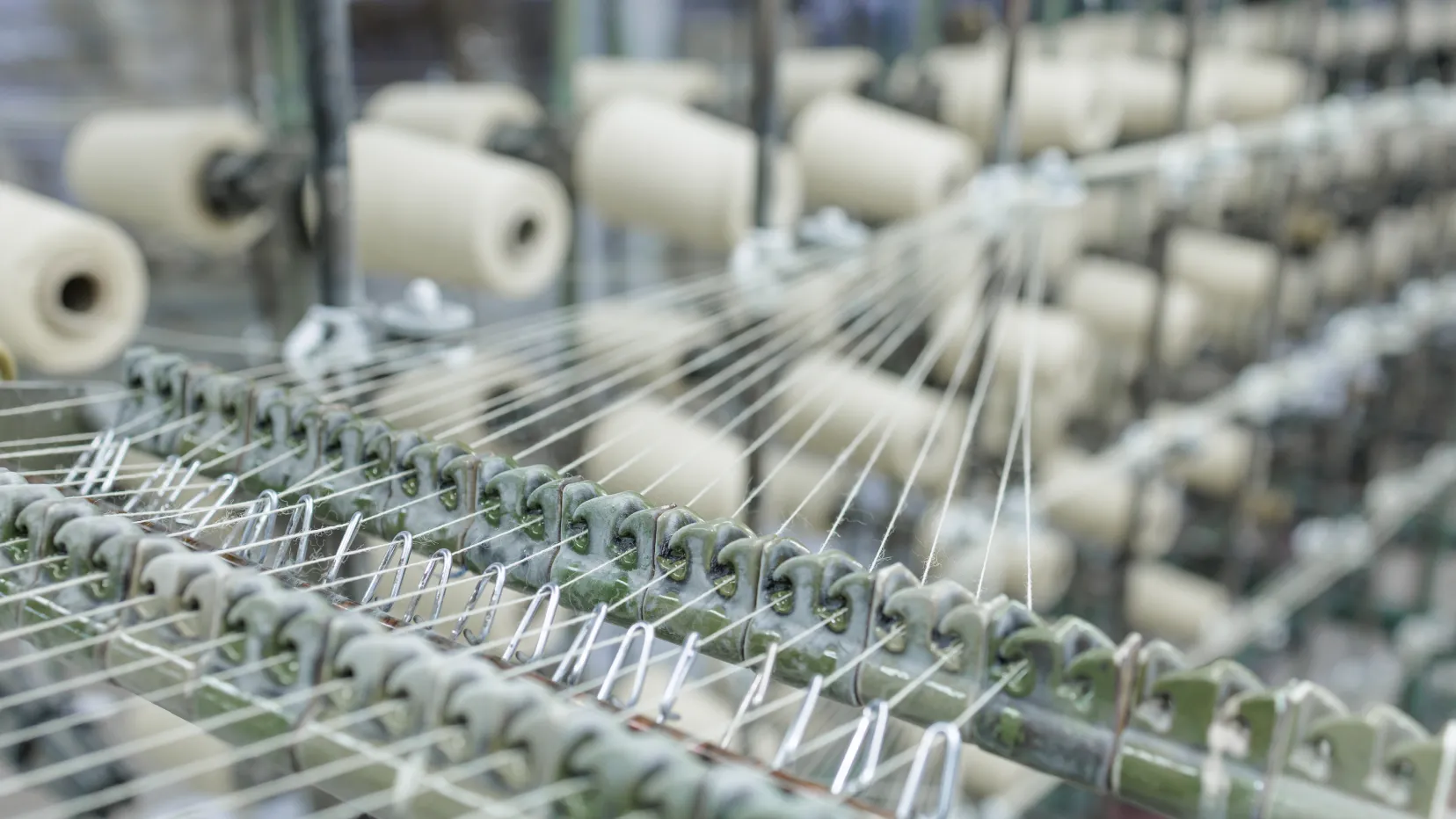
5. Chemical Degumming Operations and Fiber Weight Optimization
While a small amount of sericin protects the yarn during mechanical throwing, its presence makes the fiber feel stiff, coarse, and dull. To reveal the signature luster and fluid drape associated with premium silk, the yarn or the woven fabric must undergo chemical degumming.
The Alkaline Degumming Protocol
Degumming is the precise chemical extraction of sericin proteins from the structural fibroin core. The process must be carefully monitored; over-processing will degrade the underlying fibroin, causing the yarn to become weak and brittle.
● Chemical Composition: The material is immersed in a mild alkaline bath containing refined Marseilles soap and sodium carbonate ($Na_2CO_3$), with the pH strictly stabilized between 9.5 and 10.5.
● Thermal Exposure: The bath is heated to 95°C and held for 60 to 90 minutes.
● The Molecular Transition: The hot alkaline solution breaks down the peptide bonds of the amorphous sericin protein, causing it to dissolve completely into the water while leaving the crystalline fibroin fibers perfectly intact.
Material Weight Metrics and Visual Characteristics
The removal of sericin causes significant changes to the physical properties of the textile:
| Production Phase | Total Protein Comp. | Surface Texture | Light Reflection Profile |
| Raw Silk Yarn | 75% Fibroin, 25% Sericin | Coarse, matte, rigid | Diffuse scattering, low gloss |
| Fully Degummed Silk | 99.8% Fibroin, <0.2% Sericin | Smooth, fluid, ultra-soft | Specular reflection (prismatic luster) |
Because sericin accounts for roughly 20% to 25% of the initial cocoon mass, fully degumming the material results in a corresponding weight loss. Sourcing managers must factor this natural weight reduction into their raw material calculations to ensure their final fabric meets exact target specifications.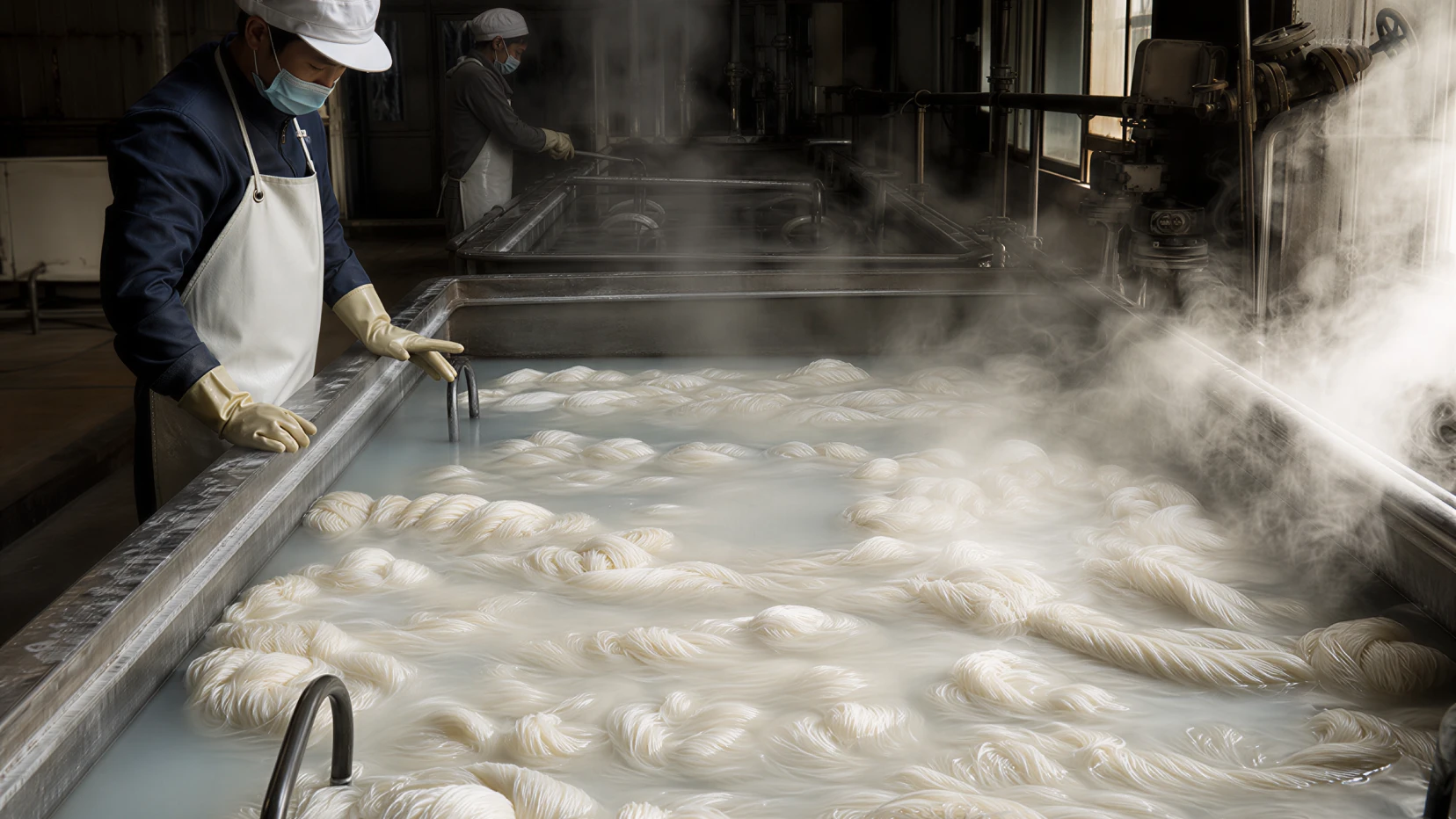
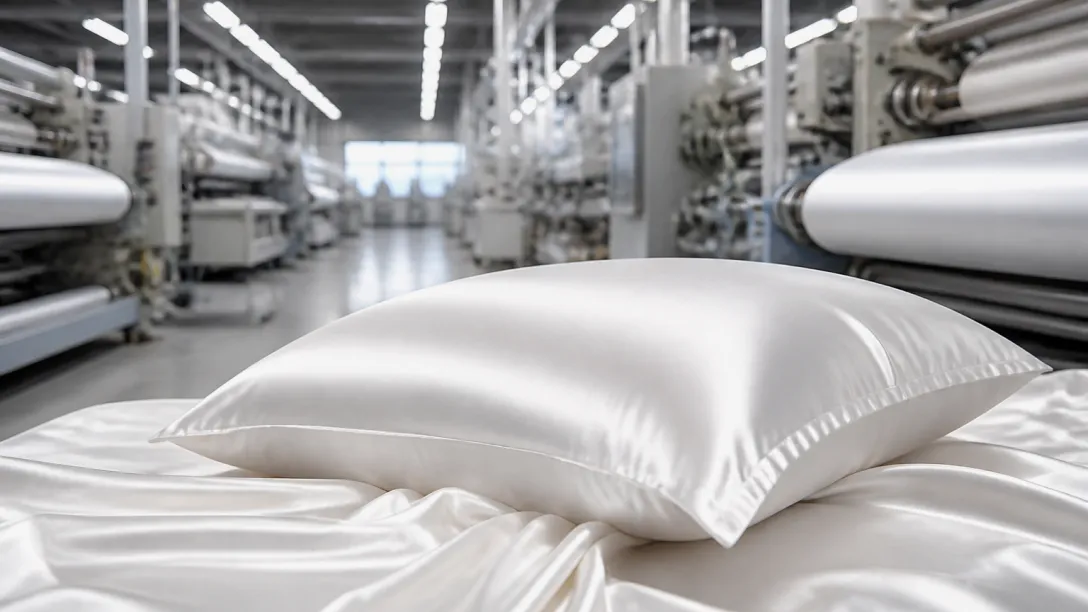
6. Advanced Weaving Methodologies and Fabric Mass Calculations
Once the yarn is fully prepared, it is transferred to modern high-speed looms. The specific structural arrangement of the warp (vertical) and weft (horizontal) threads determines the final fabric type and weight, which is measured using the traditional Japanese unit of mass: Momme (mm). One momme equals approximately 4.340 grams per square meter
According to the international Fédération Internationale de la Soie (International Silk Association), standardizing these structural definitions ensures consistency across global high-end fashion and luxury interior supply chains.
1. Satin Weave (The Foundation of Silk Charmeuse)
In a satin weave pattern, the warp thread floats over multiple filling threads before interlacing under one. For example, a 4/1 satin structure means the warp floats over four weft threads before passing under the fifth.
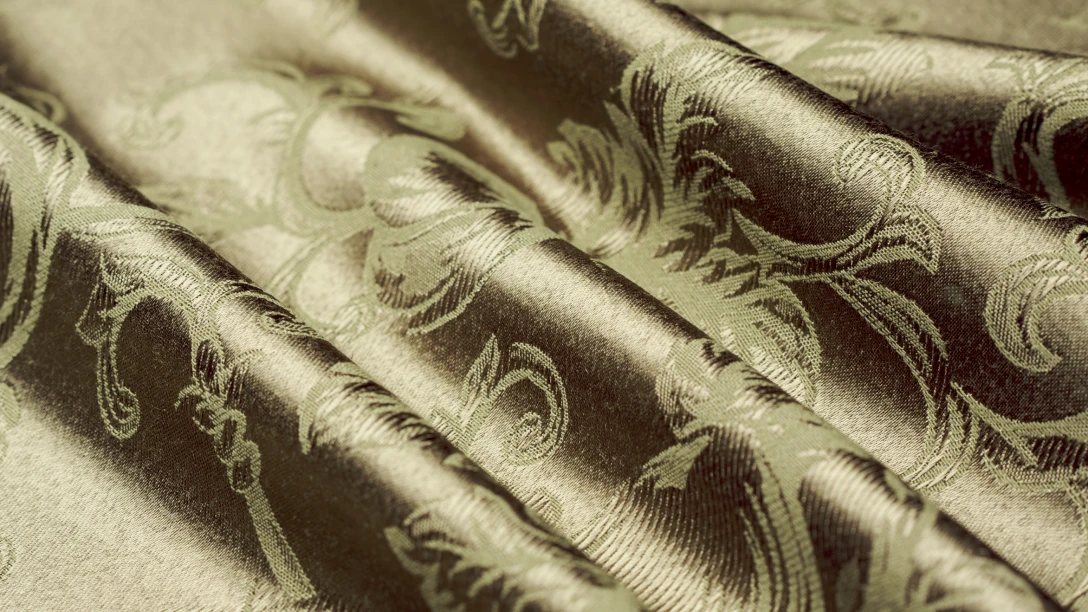
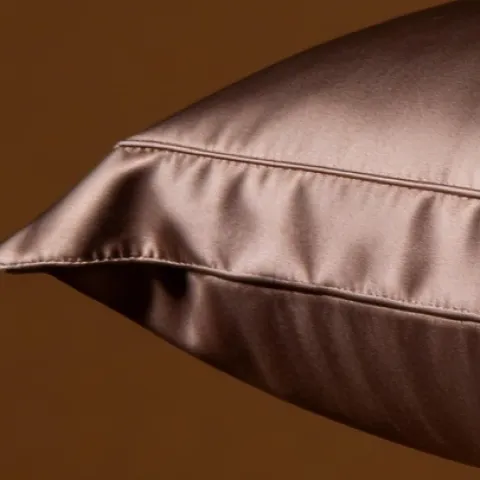
● Visual Profile: This minimized interlacing creates a broad, smooth surface area that catches and reflects light in uniform directions, producing a high-gloss, liquid-like sheen.
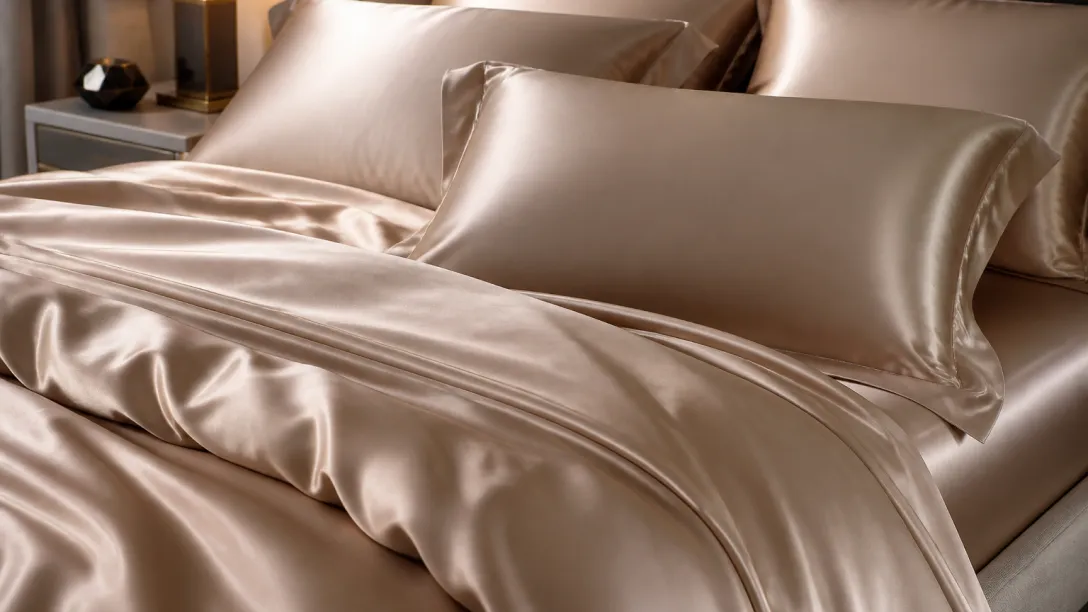
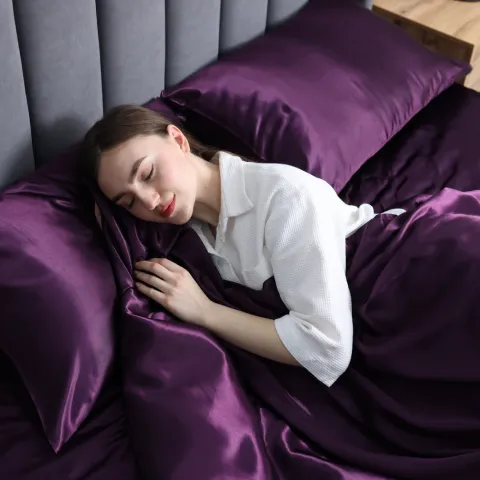
● Common Weights: Produced between 12mm and 40mm. Luxury silk pillowcases and evening gowns typically require 19mm, 22mm, or 30mm Charmeuse for balanced durability and hand-feel.
2. Plain Weave Variations (Habotai, Chiffon, and Crepe)
A plain weave uses a simple, alternating over-one, under-one grid pattern. The final appearance depends entirely on the thickness and twist profile of the yarn used:
● Silk Habotai: Uses low-twist, uniform yarn to yield a smooth, lightweight, flat-surfaced fabric (typically 8mm to 16mm) that functions beautifully as high-end lining material.
● Silk Chiffon: Utilizes highly twisted S and Z crepe yarns woven loosely with open spacing. This creates a highly translucent, featherweight fabric (3.5mm to 8mm) with exceptional breathability.
● Silk Crepe de Chine (CDC): Uses a non-twisted warp combined with highly twisted crepe weft threads. As the fabric settles, the twisted yarns contract, producing a matte, fine-grained, crinkled surface with excellent natural wrinkle resistance (typically 12mm to 18mm).
3. Twill Weave Structures
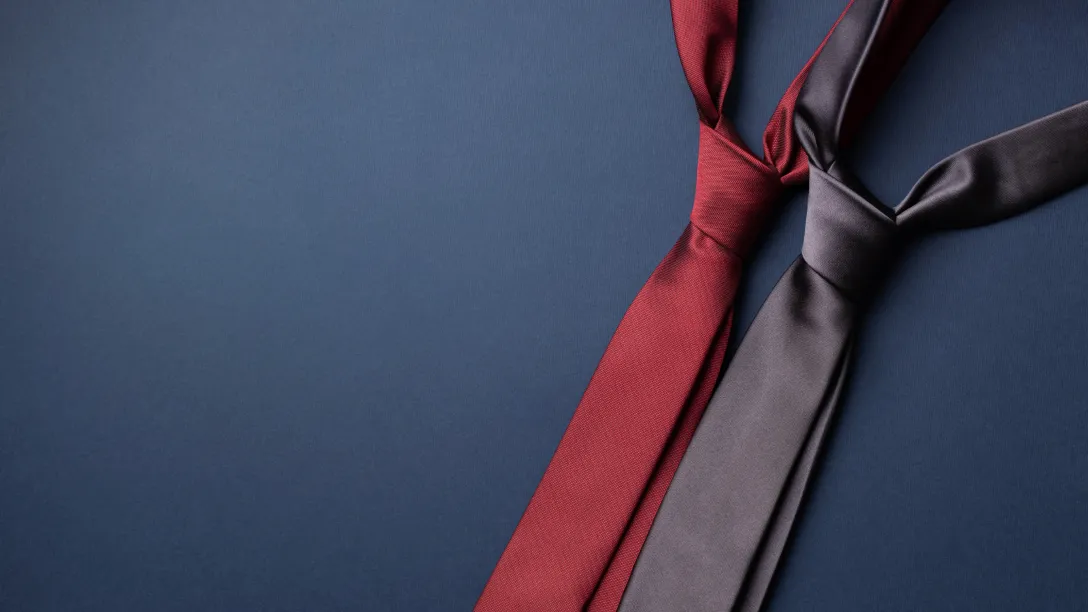
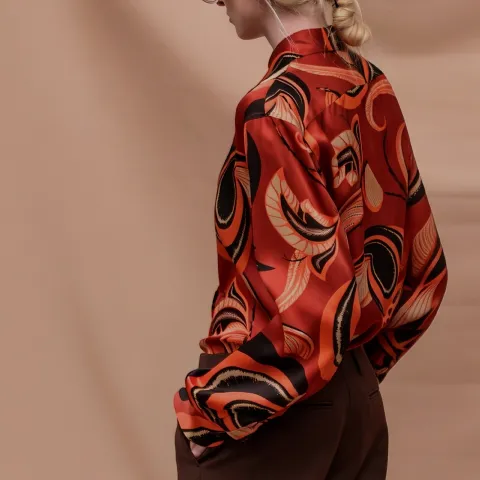
A twill weave moves the interlacing pattern over in a stepped sequence, creating a series of distinct diagonal ribs across the face of the fabric. This structural design distributes mechanical stress evenly across the weave, making Silk Twill highly resistant to tearing and abrasion. It serves as the industry standard for premium printed fashion scarves and structural neckties.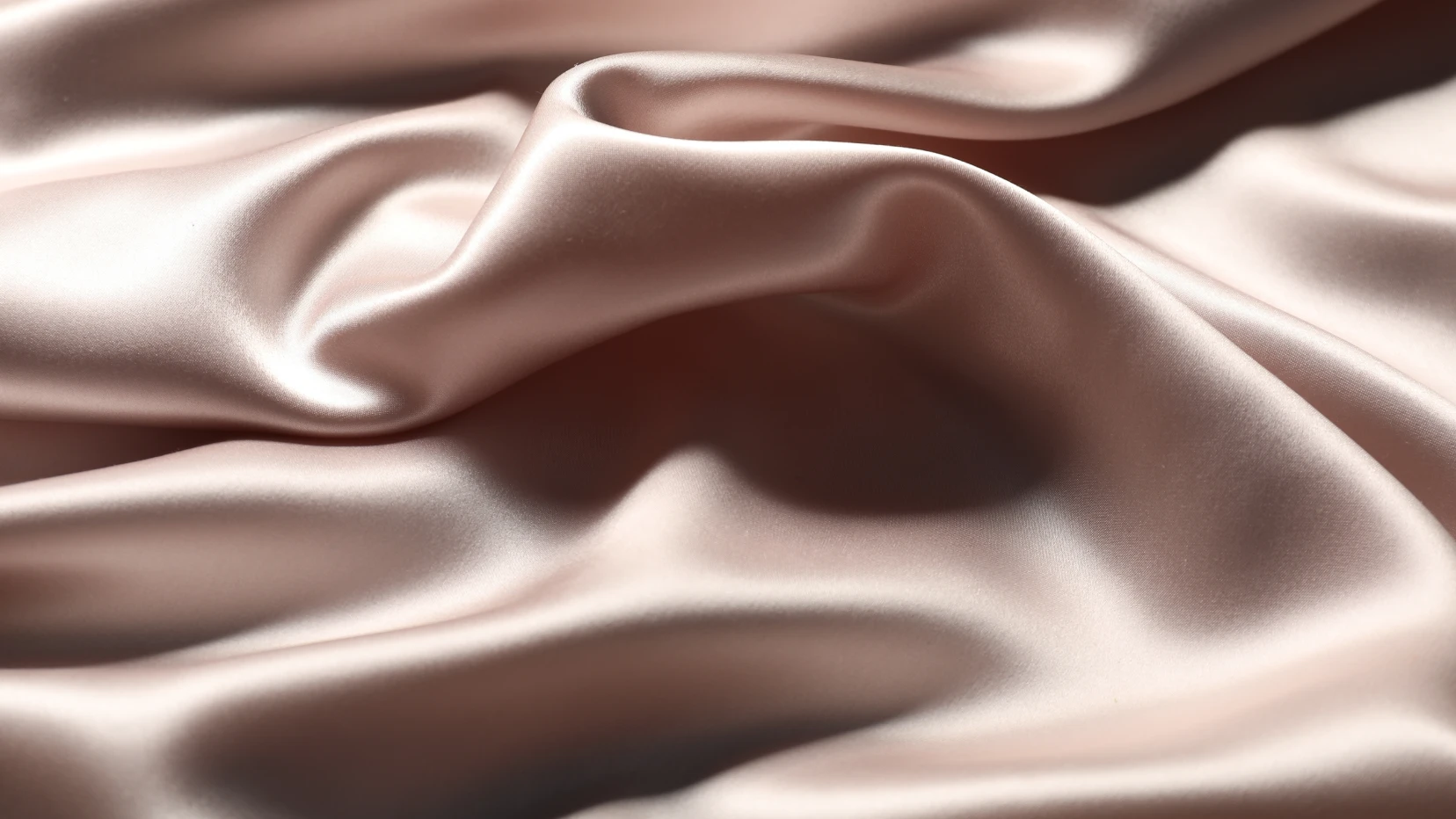
7. Eco-Friendly Dyeing, Mechanical Sandwashing, and Quality Assurance
The final stage of the manufacturing process involves adding rich colors and specialized surface textures to the newly woven fabric, followed by a rigorous multi-point inspection.
Closed-Loop Dyeing and Precision Digital Textile Printing
Modern commercial clients demand exact color matching alongside strict environmental compliance. Our production facilities operate with advanced, eco-friendly systems:
● Acid Dye Fixation: We utilize low-impact reactive and acid dyes that form covalent bonds directly with the amino acid groups inside the silk fibroin. This achieves a colorfastness rating of Grade 4 or higher against washing and light exposure.
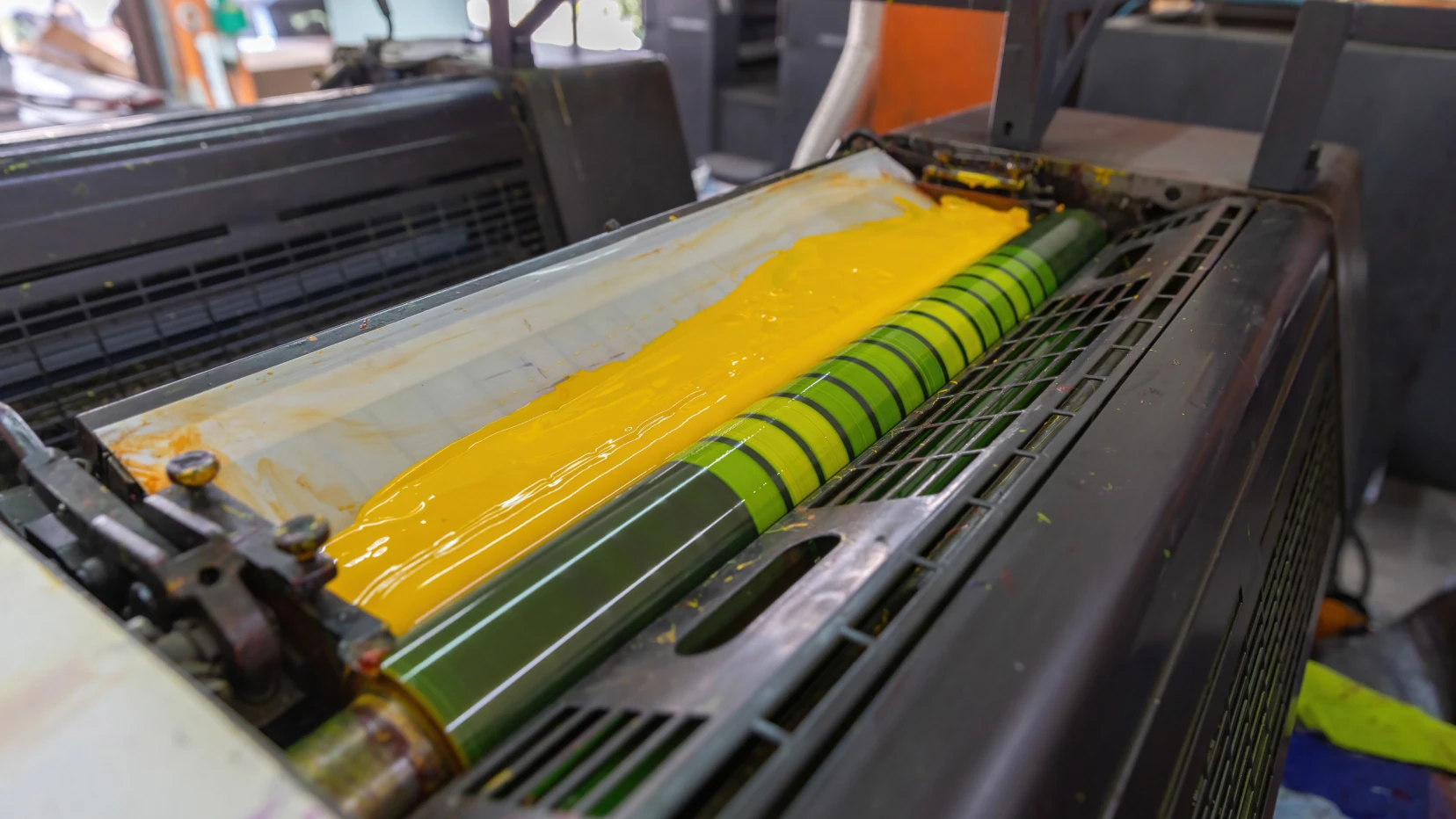
● Digital Inkjet Customization: For intricate patterns, fabric rolls undergo a digital inkjet printing process. The fabric is pre-treated with natural alginate thickeners, passed through high-precision piezo print heads, and then steamed at 102°C to lock the pigment deep within the core fibers, reducing chemical waste by over 60% compared to traditional screen printing.
The Chemistry Behind Mechanical Sandwashing
To create a vintage, ultra-soft matte texture, the fabric can undergo a specialized post-weaving treatment known as sandwashing.
● The Process: Fabric rolls are loaded into specialized washing drums alongside uniform, non-abrasive ceramic micro-beads and a mild, pH-neutral enzyme solution.
● The Micro-Structural Effect: As the drum rotates, the ceramic beads rub gently against the fabric surface. This light mechanical friction causes the outer layer of the microscopic fibroin filaments to split slightly into tiny, loose micro-fibrils.
● The Final Texture: These micro-fibrils create a soft, velvety layer across the surface of the fabric. This layer diffuses incoming light waves, shifting the fabric from a high-gloss sheen to a rich, muted matte finish with a peach-skin hand-feel.
8. Key B2B Sourcing Parameters and Production Specifications
For global apparel brands and purchasing managers, establishing precise commercial criteria is essential for smooth supply chain operations. At Suzhou Dream Silk Co., Ltd., we streamline the procurement process by providing clear, standardized metrics for all custom manufacturing projects.
Standard Commercial Production Specifications
● Raw Material Certification: 100% Pure Mulberry Silk, OEKO-TEX Standard 100 Certified.
● Available Width Profiles: Standard widths include 114cm (45") and 140cm (55"). For specialized home bedding and luxury duvet covers, we provide wide-format rolls extending up to 280cm (110").
● Minimum Order Quantities (MOQ):
○ Standard Plain Dyed Fabrics: 200 meters per custom color.
○ Custom Digital Printed Fabrics: 40 to 50 meters per design roll.
○ Sandwashed and Specialty Blends: 40 to 50 meters per roll.
Tailored Private Label Packaging and Fulfillment Options
To support seamless retail launches and premium corporate gifting lines, our final processing division provides complete end-to-end product assembly:
● Fabric Bulk Shipments: Rolled neatly onto high-density cardboard cores, wrapped in moisture-proof PVC barriers, and packed into reinforced corrugated export boxes.
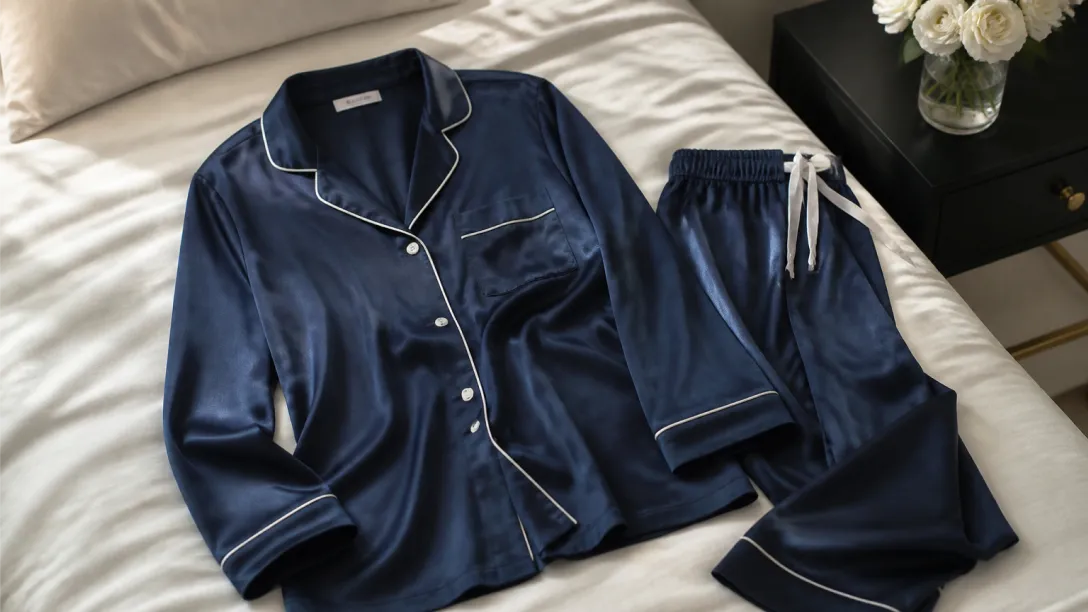
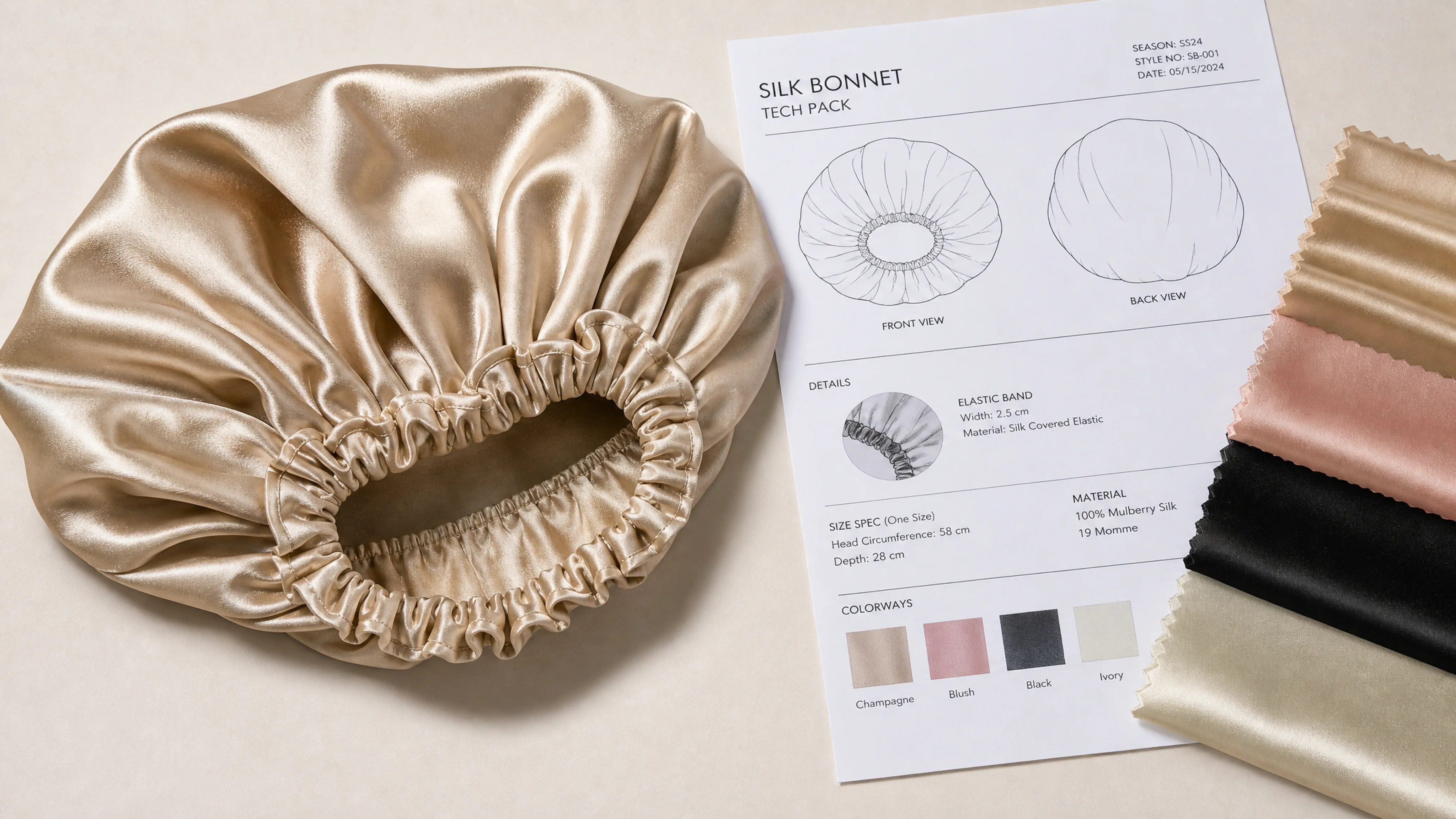
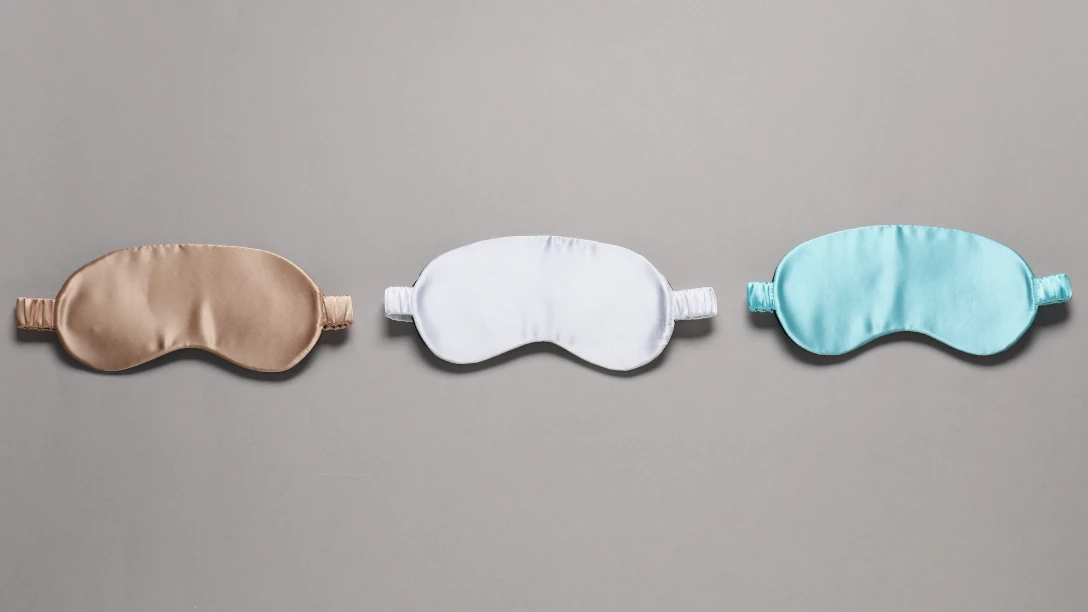
● Finished Product Assembly: Full cutting, sewing, and labeling services for custom silk clothing lines, luxury pajamas, and sleep eye masks.
● Custom Retail Packaging: Options include minimalist biodegradable frosted zipper bags, rigid gift boxes with custom hot-stamping, and custom-branded silk ribbon inserts to match your brand identity.
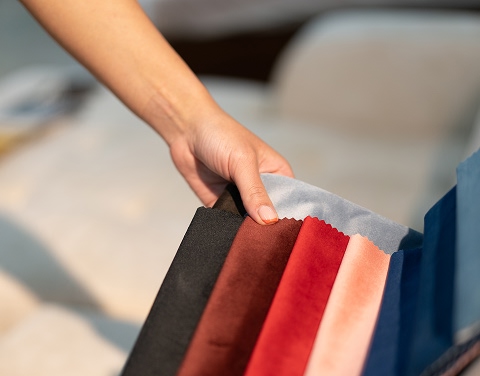
Are you ready to elevate your brand's textile product lines with premium, traceably sourced mulberry silk? Whether you require high-density, wide-format silk fabric rolls for high-end home bedding or small-batch custom apparel manufacturing, our engineering team is here to help. Contact Suzhou Dream Silk Co., Ltd. today to receive updated wholesale fabric swatch cards, verify technical process parameters, or obtain an accurate factory-direct quote for your custom manufacturing project.
FAQ
On average, it requires approximately 5,000 to 7,000 high-quality intact silkworm cocoons to produce 1 kilogram of raw silk yarn. When factoring in the 20% to 25% weight loss that occurs during the chemical degumming phase (the removal of sericin gum), it takes roughly 8,000 to 10,000 cocoons to yield 1 kilogram of fully refined woven silk fabric.