
Custom Silk Eye Mask: A Sourcing & Design Playbook for Brands


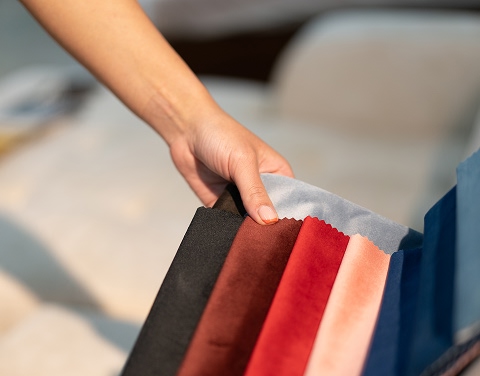
If you're sourcing a custom silk eye mask for a wellness brand, hotel amenity line, bridal gift set, or beauty retail SKU, the difference between a forgettable product and a repeat best-seller comes down to a handful of decisions: silk grade, momme weight, fill, strap system, and how your logo is applied. Get those right and the mask feels like a $60 luxury item. Get them wrong and it feels like a polyester giveaway with a silk label sewn on.
This guide is written from the floor of our factory. We've produced silk eye masks for spa chains, DTC sleep brands, airline first-class kits, and bachelorette gift companies for over a decade. Below is what actually matters when you customize one — specs, MOQs, lead times, pricing logic, and the small details that move review scores from 4.2 to 4.8.
What "Custom Silk Eye Mask" Actually Means
"Custom" gets used loosely. In practice, customization on a silk eye mask falls into three layers, and your unit cost depends on how many you stack.
- Surface customization — printed logo, embroidered monogram, sequin patterns, or applied labels on stock-shape masks.
- Construction customization — silk grade, momme weight, fill type, strap style, piping color, and closure method.
- Form customization — non-standard shapes (3D contoured, oversized, ruched, animal silhouettes), custom dimensions, multi-layer builds with cooling gel or aromatherapy pockets.
A surface-only customization on our standard 22-momme classic mask ships in 12–15 days. A fully custom 3D mold with embroidered logo, custom silk dye, and bespoke gift box is a 30–40 day project. Plan backwards from your launch date accordingly.
Silk Quality: The Two Numbers That Decide Everything
Two specs do most of the work in determining whether your mask feels luxurious or cheap: silk grade and momme weight. Both should be on every quote you accept.
Grade 6A Mulberry Silk Is the Floor, Not the Ceiling
Mulberry silk graded on an A–C scale, with 6A being the highest tier. Grade 6A means long, unbroken strands from pearly white cocoons — uniform color, minimal defects, strong tensile. Below 5A you'll see slubs, color inconsistency, and weak threads that pill after a few washes. For any product that touches the face nightly, accept nothing under 6A. Our entire eye mask program runs on 6A long-strand mulberry.
Momme Weight: Why 19–22mm Is the Sleep Mask Sweet Spot
Momme (mm) measures the weight of a standardized silk panel — higher number, denser fabric, more silk per square inch. The full range runs from about 6mm (chiffon) to 30mm (heavy upholstery silk).
For eye masks specifically, the answer isn't "highest possible." Going above 22 momme makes the mask feel bulky against the face without measurably better light-blocking, since opacity is mostly handled by the inner fill layer. Below 16mm, the silk feels thin and shows wear within months.
| Momme Weight | Feel | Best Use | Cost Index |
|---|---|---|---|
| 16 mm | Light, slightly translucent | Promotional giveaways, low-budget hotel kits | 1.0× |
| 19 mm | Soft, opaque, comfortable | Spa retail, mid-tier DTC, gift sets | 1.2× |
| 22 mm | Dense, premium, durable | Luxury retail, hotel amenity, bridal | 1.4× |
| 25 mm | Heavy, very lustrous | Specialty luxury — uncommon for masks | 1.7× |
For most brands, 19 momme is the value play and 22 momme is the upgrade that lets you charge a premium. We don't recommend 25mm for sleep masks unless your customer specifically requests it — the extra weight is noticeable on the face and the price jump is steep.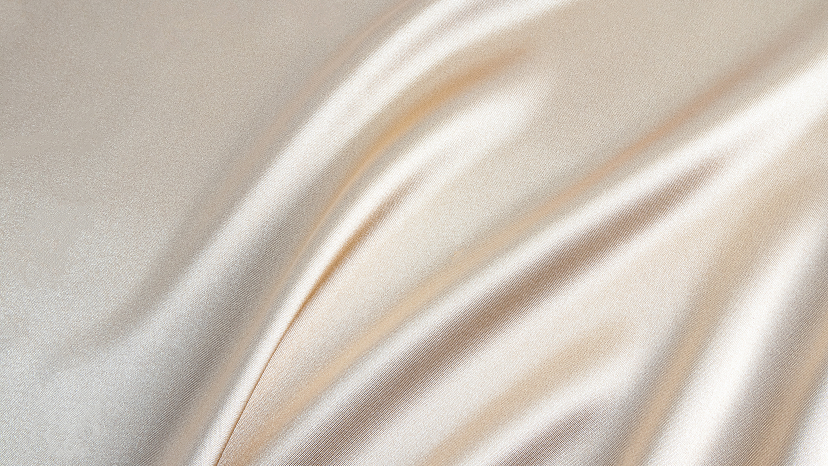
Construction Choices That Customers Actually Notice
Filling: Silk Floss vs. PP Cotton vs. Memory Foam
The fill is hidden, so brands underspend here. Customers feel it within ten seconds of putting the mask on.
- 100% mulberry silk floss — Lightest, most breathable, biodegradable. Best feel against the eye area, regulates temperature. Adds about $0.50–$0.80 per mask versus PP. Our default for premium lines.
- PP cotton (polypropylene fiber) — Affordable, fluffy, holds shape well. Less breathable than silk floss and traps heat in summer. Standard for promotional products.
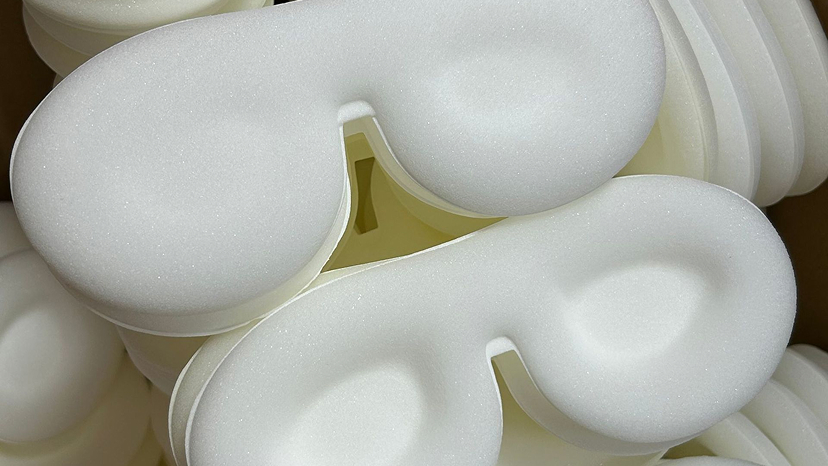
- Memory foam or contoured EVA — Used for 3D blackout masks where you need structure to hold eye cavities. Heavier, blocks light very effectively, supports lash extensions.
Shape: Classic, 3D Contoured, or Oversized
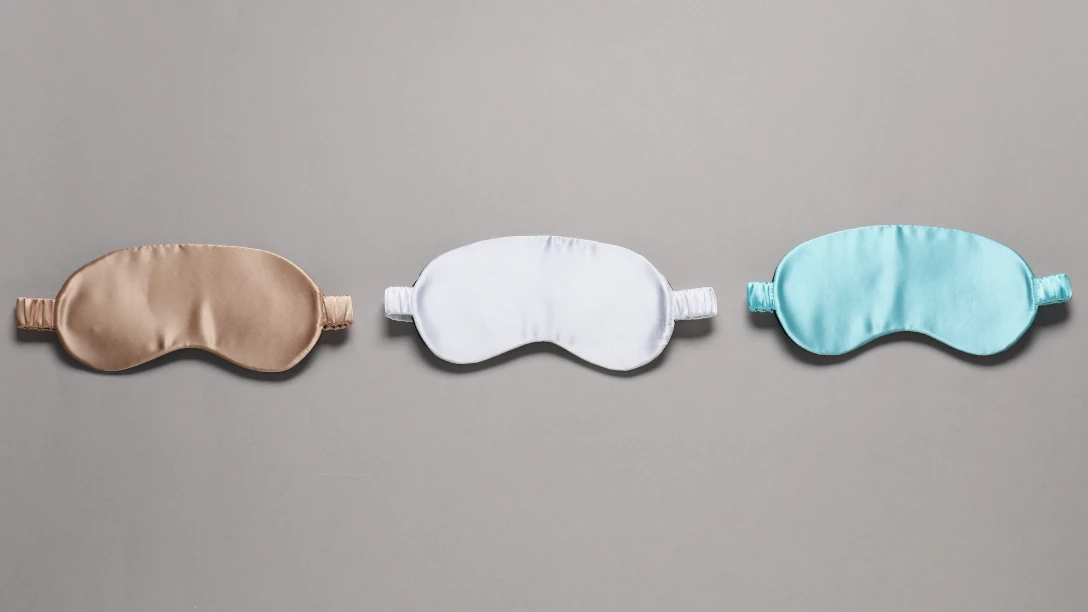
The classic teardrop shape (roughly 21cm × 10cm) covers about 95% of buyers and is the safest default. Three reasons to deviate:
- 3D contoured cups — Hollow eye cavities prevent any contact with eyelids. Mandatory for customers with eyelash extensions or who wear false lashes overnight. Adds 15–20% to unit cost.
- Oversized / wraparound — Extends to cover temples, blocks light from peripheral angles, partial sound dampening. Travel-focused brands and migraine wellness lines use this format.
- Ruched or scalloped edges — Pure aesthetic upgrade. Strong performance in bridal, gifting, and Instagram-driven categories.
Strap Systems
The strap is where cheap masks fail. Three options:
- Silk-covered elastic band — Most common, looks polished, comfortable for most head sizes. Can press the eyes if too tight on broad heads.
- Adjustable elastic with metal slide buckle — Fits any head size, but the buckle can dig in when sleeping on hard pillows. Use a covered or low-profile buckle to mitigate.
- Velcro closure — Maximum adjustability, easy on/off, no pressure. Slightly less elegant in product photography. Great for travel and wellness positioning.
Logo Application: Print, Embroidery, or Sequins
How you put your brand on the mask affects unit cost, MOQ, and whether it survives 50 washes. Quick decision matrix:
| Method | Best For | MOQ | Wash Durability | Setup Time |
|---|---|---|---|---|
| Digital silk printing | Full-color logos, photo prints, all-over patterns | 50–100 pcs | Excellent on real silk | 3–5 days for sample |
| Embroidery | Wordmark logos, monograms, names | 20–25 pcs per design | Permanent | 2–3 days for sample |
| Sequin appliqué | Bridal, fashion-forward, statement pieces | 50 pcs | Hand-wash only | 5–7 days for sample |
| Heat-transfer / foil | Names in gold/rose-gold for events | 25–50 pcs | Limited — avoid washing | 2 days for sample |
Two technical notes most factories won't volunteer: screen printing on pure mulberry silk causes ink bleed and dulls the surface — we don't recommend it on real silk, only on satin or imitation silk. And sequin work is genuinely hand-applied; if a supplier quotes you a 7-day turnaround on 1,000 sequined masks, ask to see their workshop.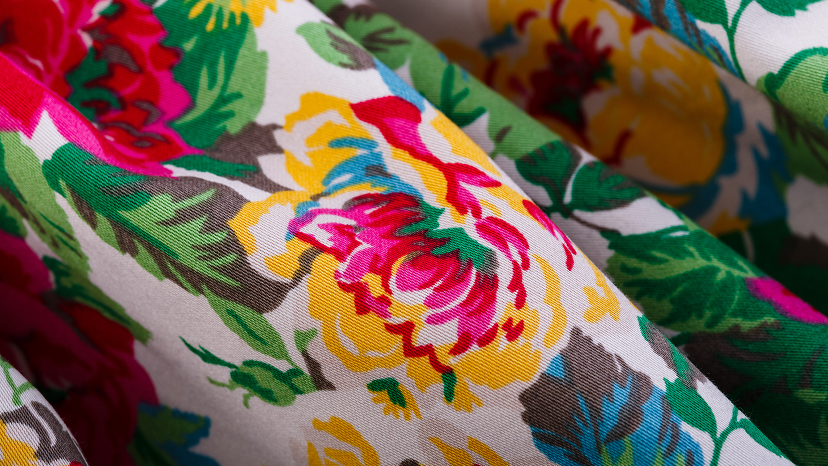
MOQ and Pricing Logic
Minimum order quantities scale with how much customization you stack. Realistic ranges from our facility:
- Stock-shape mask, hangtag only: No MOQ — 1 piece possible for sampling.
- Embroidered logo, stock fabric: 20–50 pcs per design. Below 50, the embroidery setup cost dominates the unit price.
- Digitally printed silk, custom artwork: 50–100 pcs per pattern. The printing line has a minimum fabric run.
- Custom shape with new mold/pattern: 300+ pcs to amortize tooling.
- Custom gift box with brand printing: 300–500 pcs minimum from packaging partners.
Per-unit pricing on a 19–22 momme 100% mulberry mask with silk-covered strap and embroidered logo lands roughly between $4 and $12 FOB depending on volume, fill choice, and packaging. Anything quoted under $3 is almost certainly imitation silk or polyester satin marketed as silk — verify with a burn test on the sample.
Verification: How to Tell Real Silk From "Silk"
"Silk satin" on a product page often means polyester satin in a satin weave. Real silk vs. polyester is easy to confirm before you sign a PO:
- Burn test — Pull a few threads from a hidden seam. Real silk burns slowly, smells like burnt hair, and leaves a brittle black ash you can crush. Polyester melts into a hard plastic bead and smells chemical.
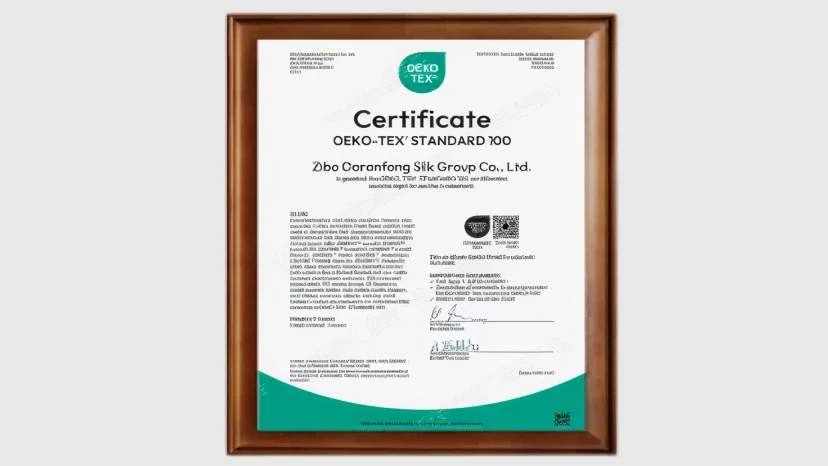
- OEKO-TEX Standard 100 certificate — Ask for the actual certificate, not just a logo on the website. It should show the supplier's name and a valid date.
- Momme number on the spec sheet — If your supplier can't or won't state momme weight in writing, the product probably isn't silk or isn't the silk they're claiming.
- Cool touch and slow recovery — Real silk feels cool against the skin and recovers slowly when crumpled. Polyester satin recovers instantly and feels warm.
Packaging: Where Margin Hides
Packaging often costs 15–25% of total unit cost on a premium mask, and it's the first thing the customer sees. Three tiers we typically recommend:
- Tier 1 — OPP poly bag with hangtag. Functional, low cost, used for promotional and amenity orders. Around $0.10–$0.30 per unit.
- Tier 2 — Silk drawstring pouch. Matches the mask material, doubles as a travel pouch. Strong perceived value at moderate cost. Around $0.80–$2.00.
- Tier 3 — Branded magnetic gift box with foam insert. The right choice for retail shelf, bridal, and corporate gifting. Requires 300+ unit MOQ on the box itself. Around $2–$5.
If you're selling at retail above $40, Tier 3 pays for itself in conversion. If you're an amenity or giveaway, Tier 1 is correct — overpackaging giveaway items reads as wasteful, not luxurious.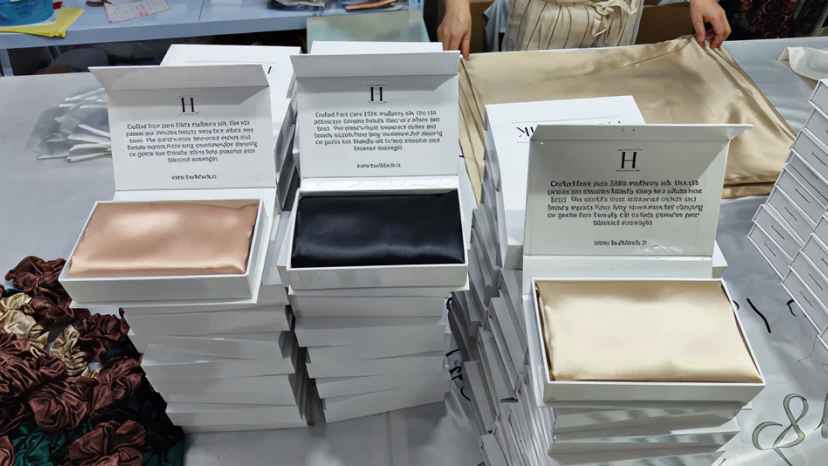
Lead Times: Plan These Realistically
| Stage | Solid Color, Stock Shape | Embroidered Logo | Custom Print | Custom Shape + Custom Box |
|---|---|---|---|---|
| Sample | 3–5 days | 3–5 days | 7–10 days | 15–20 days |
| Bulk (under 500) | 10–12 days | 12–15 days | 15–20 days | 25–30 days |
| Bulk (500–2000) | 15–20 days | 18–22 days | 20–25 days | 30–40 days |
Air freight adds 3–7 days, sea freight 25–35. Most launches that miss their window do so because the buyer underestimated artwork approval cycles, not factory production — build in two rounds of approvals at the sample stage.
Common Mistakes We See on First-Time Custom Orders
- Spec'ing 25mm silk for an eye mask. It feels heavy, costs more, and customers don't perceive it as better. Use the budget on fill quality or packaging.
- Skipping the strap test. Always wear-test the sample for at least one full night before approving bulk. Strap pressure issues only show up after 30+ minutes.
- Embroidering complex artwork in a tiny font. Embroidery has a minimum stitch resolution. Logos under about 3cm wide should be simple shapes or single-color text — gradients and fine detail won't render.
- Approving artwork via JPG. Always work from AI or PDF vector files for printing and embroidery. JPG approvals routinely cause color and edge problems in production.
- Accepting "silk" without a momme number. If it's not on paper, it's not what you think it is.
Match Your Mask to Your Use Case
| Use Case | Recommended Spec |
|---|---|
| DTC sleep brand, retail $35–60 | 22mm 6A mulberry, silk floss fill, embroidered logo, silk pouch |
| Hotel / spa amenity | 19mm 6A mulberry, PP cotton fill, printed logo, OPP bag with hangtag |
| Bridal / bachelorette gifting | 19–22mm, embroidered name in gold thread, ruched edges, branded gift box |
| Lash extension / beauty market | 22mm 6A mulberry, 3D contoured cups, velcro closure, magnetic box |
| Travel kit / airline first class | 19mm mulberry, oversized wraparound, adjustable buckle, silk pouch |
| Corporate wellness gift | 19mm mulberry, embroidered company logo, silk pouch with logo card |
Ready to Spec Your Custom Silk Eye Mask?
Send us your artwork, target retail price, and quantity range, and we'll come back within 24 hours with a tiered quote covering 19mm and 22mm options, fill choices, and packaging tiers. Free physical samples are available for serious project briefs, and we'll cover the silk grade certifications and OEKO-TEX documentation in the same package — no chasing paperwork down the line.
Request a quote and free sample for your custom silk eye mask project
FAQ
For embroidered logos on stock-shape masks, MOQ starts at 20–25 pieces per design. Digital printing on custom silk artwork generally starts at 50 pieces. Custom shapes or fully bespoke molds require 300+ pieces to make tooling cost-effective. We can produce single-piece samples for any spec before committing to bulk.