
Custom Silk Bonnets: A B2B Guide to Construction, Sizing, and Ordering


A silk bonnet looks like the simplest product in a silk line: a circle of fabric, a band, some gathering. That simplicity is deceptive. A bonnet is worn for eight hours straight, in direct contact with edges and the hairline, washed more often than any pillowcase, and reviewed mostly on one question — did it stay on at 3 a.m.? Small specification errors turn into one-star reviews within the first week of a launch.
A production-ready custom silk bonnet comes from five decisions: construction (single, double, or reversible), momme weight, band engineering, sizing, and branding. Brands that specify all five before sampling get a product with low return rates and high repeat purchase. This guide walks through each decision with factory-floor specifics, so your tech pack arrives at the factory already half-done.
Where the Bonnet Sits in a Silk Hair Line
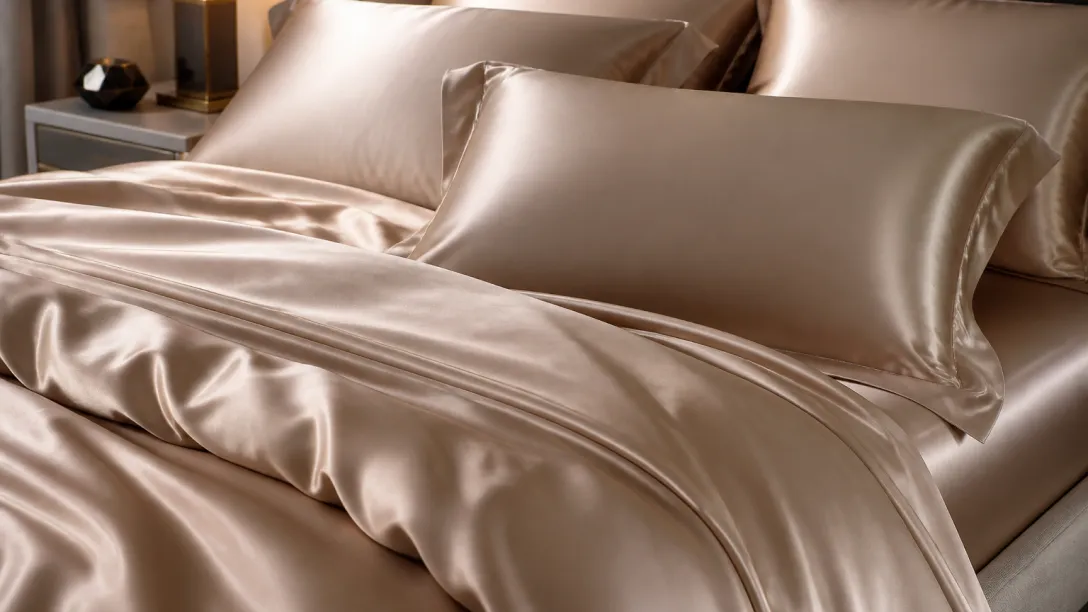
For most brands, the bonnet enters the line as the second or third SKU. The typical sequence is a custom silk pillowcase to open the category, then a bonnet and silk scrunchies to complete the hair-care story. The logic is commercial: a customer who sleeps on silk already understands the friction argument, so the bonnet sells without re-education, and it carries a repeat-purchase cycle that bedding does not. Bonnets wear out, get gifted, and get bought in second colors.
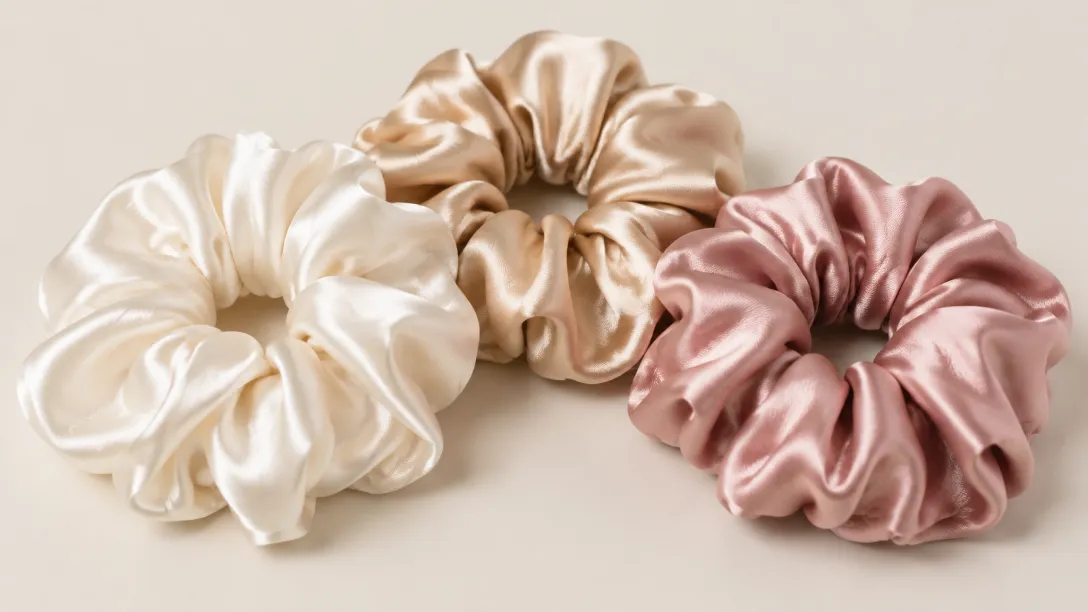
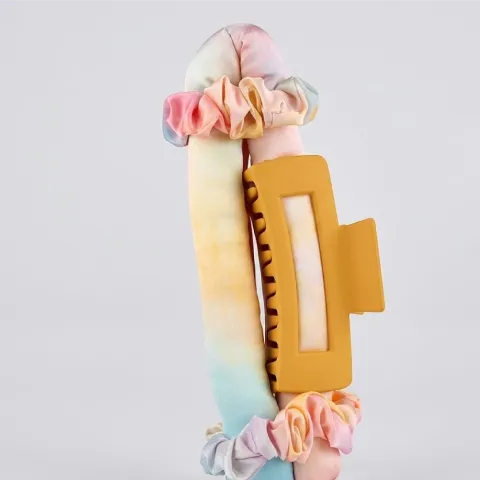
The bonnet also completes the bundle. Pillowcase plus bonnet plus scrunchie is the standard "silk hair routine" set on Amazon and Shopify, and producing all three from one factory keeps the color matching and labeling consistent — a point we return to in the branding section below.
Construction: Single, Double, or Reversible
Construction is the first line in your spec sheet, and it sets both the cost floor and the review ceiling.
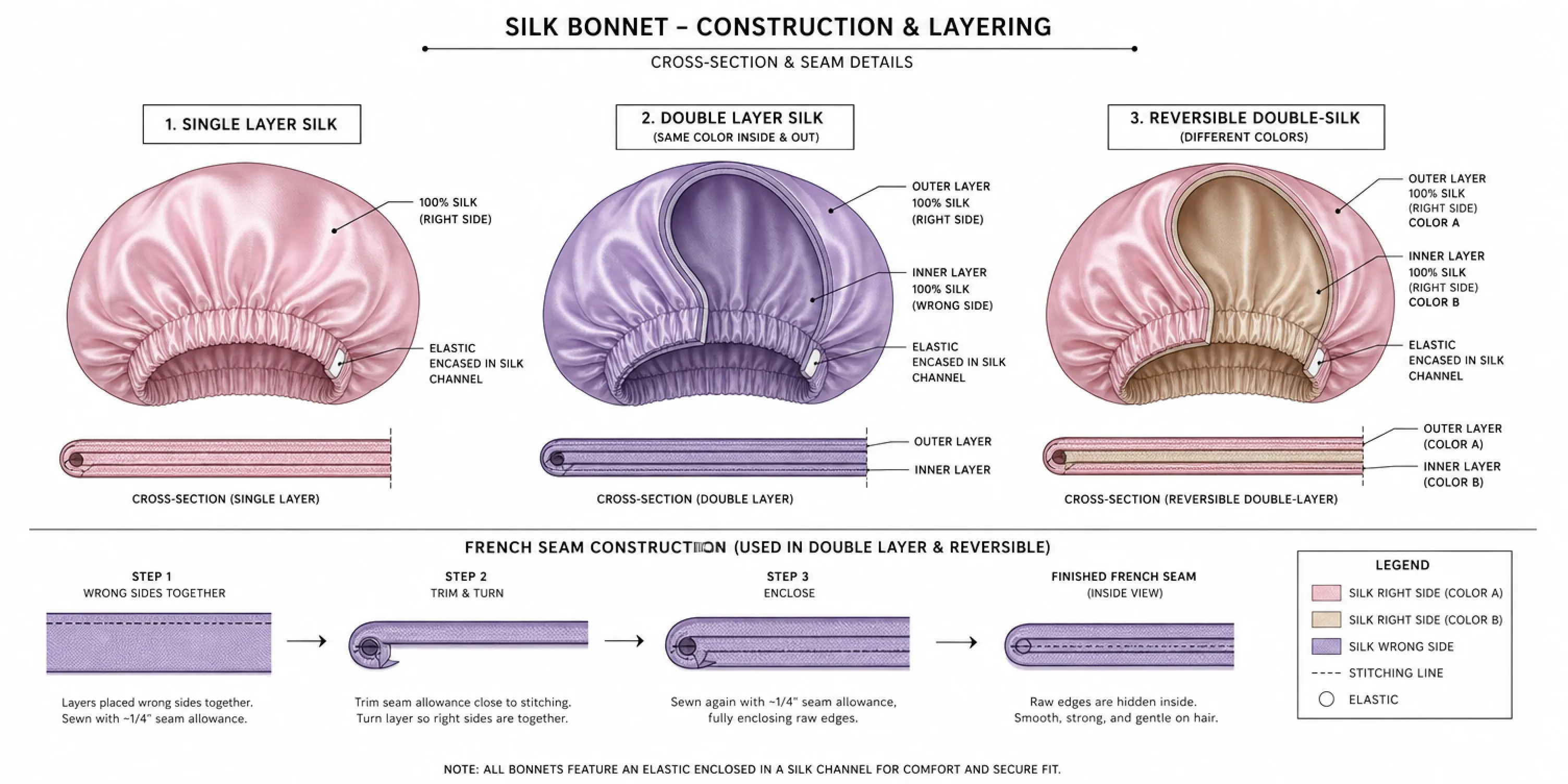
Single-layer bonnets use one sheet of silk as shell and contact surface at once. They are light, breathable, and cheap, and they suit promotional runs and warm-climate markets. The trade-off is structural: a single layer loses shape faster, shows wear at the elastic channel first, and feels thin in the hand — a problem when the product photography promises luxury.
Double-layer construction is the default for any brand charging more than entry-level prices. Two layers of silk charmeuse are sewn together so the inner face is always smooth silk, whatever the outer layer carries — a print, a contrast color, or embroidery backing. Double-layer bonnets hold their shape through washing, tolerate nightly use for a year or more, and give the product enough body to photograph well.
Reversible double-silk is the premium variant: both faces are finished silk, so the customer gets two colorways in one SKU. It costs roughly 15–20% more in labor and fabric than a standard double layer, but it retails at a visible premium and performs well in gift positioning.
Whichever construction you choose, specify the seams. French seams or fully enclosed seams keep raw edges away from hair; the crown gathering point, where all the fabric converges, should be finished flat so it cannot snag curls or press a mark into the scalp overnight. If you want background on why these seam types matter on silk, our silk sewing techniques guide covers the mechanics.
Momme and Fabric Selection for Bonnets
Momme choice for bonnets follows different logic than for pillowcases. A pillowcase lies flat and distributes wear; a bonnet is gathered, stretched over a head nightly, and machine-washed weekly by most users. That duty cycle punishes light fabric.
| Momme | Character on a bonnet | Best for |
|---|---|---|
| 16 | Light, slightly translucent, wears fastest at the band channel | Promotional items, gift-with-purchase, trial SKUs |
| 19 | Balanced weight, drape, and durability; widest stock color range | The default for most brands; best-seller weight |
| 22 | Denser hand feel, visibly richer, longer service life | Premium positioning, flagship SKUs |
| 25–30 | Heavy and substantial; can feel warm on the head in summer | Ultra-premium or winter-positioned lines |
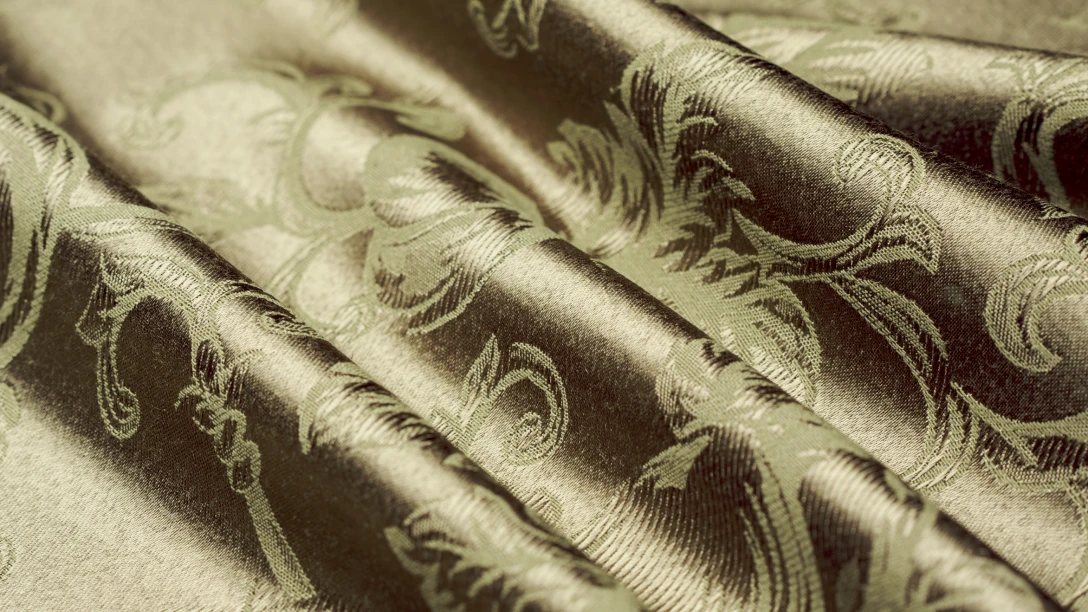
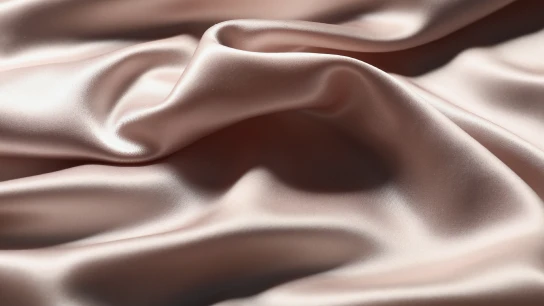
For the hair-contact layer, use mulberry silk charmeuse: the glossy face reduces friction against strands, and the matte back grips the outer layer in double construction. Grade 6A fiber with OEKO-TEX Standard 100 certification covers the safety question for a product worn against the scalp — EU and US buyers increasingly ask for the certificate number before they ask for the price. Background reading: silk charmeuse fabric and the momme weight guide.
The Band Decides the Reviews
Read the negative reviews of any competing bonnet on Amazon. Almost none complain about the silk; nearly all complain about the band. It dug in, it slipped off, or it lost stretch after a month. Band engineering is where a bonnet program is won or lost.
Four band structures cover the market:
- Enclosed elastic channel — the classic. A 1.5–2.5 cm elastic runs inside a silk channel so no elastic touches the hairline. Specify the elastic's stretch ratio and recovery, not just its width; cheap elastic passes inspection and fails in week six.
- Wide flat band — a 4–6 cm gathered silk band with light elastic inside. Spreads pressure across the hairline, protects edges, and is the preferred structure in the textured-hair market.
- Drawstring plus elastic — an adjustable tie over an elastic base. One size genuinely fits most, which cuts both SKU count and size-related returns.
- Tie band — no elastic at all; long silk ties. Fashion-forward, fully adjustable, but slower to put on — position it as a premium style, not a core one.
Two factory details are worth writing into the spec. First, ask for a wash-tested elastic: the band should recover its original length after 50 standard wash cycles, and your supplier should be able to show the test, not just promise it. Second, offer a latex-free elastic option if you sell into the US or EU — it costs little and removes an allergy objection that surfaces in reviews more often than brands expect.
Sizing Is a Return-Rate Decision
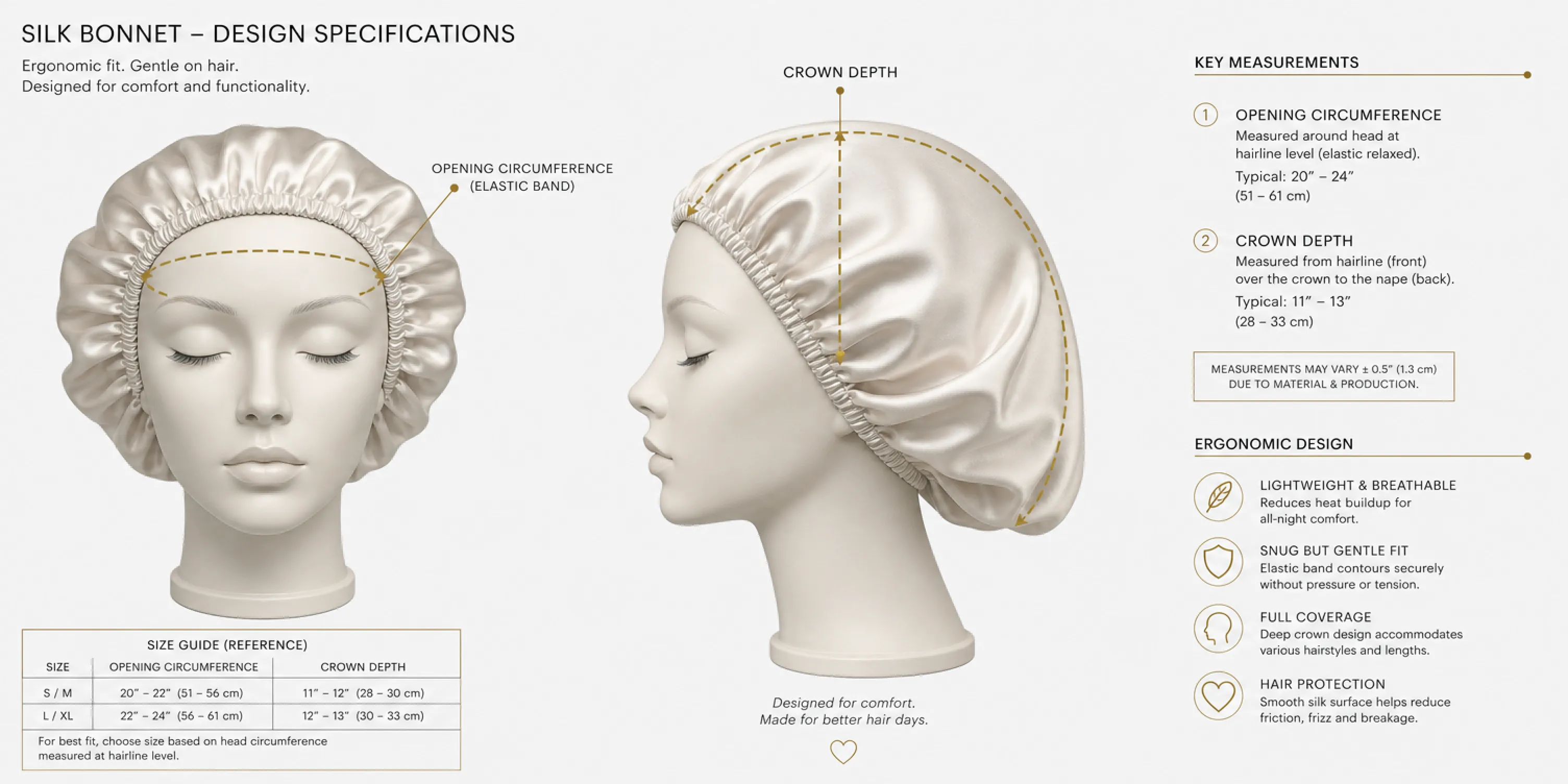
One-size-fits-all is the most expensive sizing strategy in this category. A bonnet that slips off a small head or crushes a full head of locs comes back as a return and a review, and the textured-hair customer segment — the fastest-growing buyer group for silk bonnets — is exactly the one one-size fails first.
| Size | Opening circumference | Crown depth | Target user |
|---|---|---|---|
| Kids | 44–48 cm | Shallow | Children 3–10 |
| Standard adult | 54–58 cm | Medium | Most adults, short to medium hair |
| Large / XL | 58–62 cm | Deep | Thick, voluminous, or curly hair |
| XXL / locs | 60–64 cm | Extra deep | Locs, braids, protective styles |
| Long bonnet | 54–58 cm | Extended tube | Waist-length hair, long braids |
Crown depth matters as much as circumference. A bonnet can fit the head perfectly and still crush a silk press if the crown is shallow. For a first order, two sizes — standard and XL — cover roughly 90% of the adult market without tripling your inventory. Adjustable drawstring constructions let you start with one size and add the second on the reorder, once review data tells you where the fit complaints concentrate.
Six Styles Worth Building
Most successful bonnet lines are built from a small set of proven structures rather than invented shapes. These six cover the commercial map:
| Style | Construction | Best for | Positioning |
|---|---|---|---|
| Standard elastic | Double layer | Broad market | Core SKU, every line needs one |
| Adjustable drawstring | Double layer | One-size coverage | Return-rate reducer |
| Wide band | Double layer | Edges and hairline protection | Textured-hair market |
| Long bonnet | Single or double | Long hair, braids | Niche premium |
| Reversible | Double silk both faces | Two looks in one | Premium and gift |
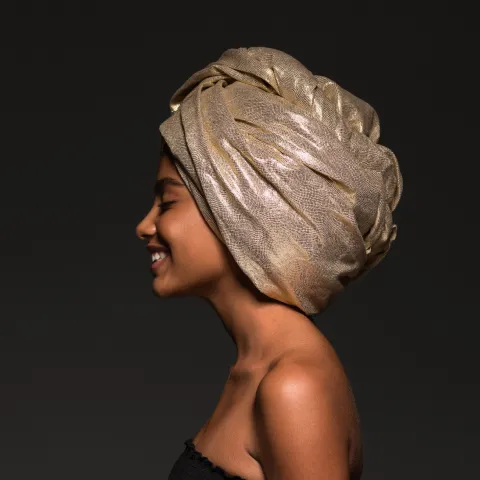
| Turban / sleep cap | Double layer, knot front | Fashion-led buyers | Daywear crossover |
Start with two: a standard elastic or adjustable style as the volume SKU, plus one differentiated style that gives your line a reason to exist next to established brands. Adding the rest becomes easy once the pattern blocks exist at the factory.
Branding, Color, and Bundle Matching
Embroidery is the dominant logo method on bonnets — durable through washing and visibly premium. Placement matters: put it on the band or at the side seam, never at the crown interior where stitching can press against the scalp. A woven label sewn into the band seam is the quieter alternative and carries the care instructions at the same time. Printed designs work on the outer layer of a double-layer bonnet, where the print backing never touches hair.
Color strategy deserves real attention because of the bundle effect. Customers who buy the pillowcase expect the bonnet and scrunchie in the same shade, and "almost the same" reads as a quality failure in a gift box. Producing the full set from one factory means all three pieces come from the same dye lot — the only reliable way to keep champagne identical across fabric widths and product types. This is the same mechanism behind our custom silk gift sets, and the gift set guide explains the one-factory matching logic in detail. Custom Pantone shades are available but carry a higher MOQ per color, so most first orders mix stock colors with one signature brand shade.
Packaging closes the loop: OPP bags for wholesale, branded boxes with insert cards for DTC. Options and structures are on our packaging options page.
MOQ, Sampling, and Timeline
The commercial frame at DreamSilk: MOQ of 50 pieces per style and color, custom samples in 5–7 days, and bulk production of 15–25 days after sample approval. Plan backward from your launch date and add shipping — sea freight to the US West Coast adds roughly a month.
Treat the sample as an audition, not a formality. Five checks catch most problems before bulk:
- The hand test — run your palm and then a piece of nylon hosiery around the entire interior. Any snag point the hosiery catches will catch hair.
- The wash test — machine-wash the sample five times on a gentle cycle. Check band recovery, seam integrity, and color bleed.
- The overnight test — have someone actually sleep in it. Fit problems invisible on a table appear by morning.
- The crown check — inspect the gathering point inside. It should lie flat with no knot of fabric.
- The measurement check — verify the actual opening circumference against the spec; a 2 cm shortfall doubles slippage complaints.
Five Bonnet Mistakes That Cost Brands Money
Specifying 16 momme for a flagship. The saving is under a dollar per unit; the reviews cost far more. Keep 16 momme for promotional runs only.
Skipping the elastic wash test. The band is a wear part. Untested elastic is the single most common cause of month-two review decline.
One size for a textured-hair market. If your customer wears locs, braids, or a silk press, standard sizing is a return policy written in fabric.
Embroidery placed at the crown interior. Thread backing against the scalp all night generates complaints no fabric quality can offset.
Splitting the bundle across suppliers. A bonnet from one factory and a pillowcase from another guarantees a dye-lot mismatch in the gift box. Bundle production exists precisely to prevent this.
Start Your Custom Silk Bonnet Project
Define five things — construction, momme, band structure, sizes, and branding — and you have a spec sheet a factory can quote the same day. If you want the bonnet to launch alongside pillowcases or scrunchies with matching color, say so at the brief stage so all pieces are scheduled from one dye lot.
Browse styles and specifications on our custom silk bonnet page, or send your brief — we reply within 24 hours with a quote, construction recommendations, and sample options.
FAQ
Our MOQ is 50 pieces per style and color. That covers a standard double-layer bonnet with your label or embroidery; custom Pantone dyeing carries a higher MOQ per color because the fabric is dyed to order.