

Comment coudre la soie charmeuse : guide d'un fabricant sur les aiguilles, les coutures et une finition nette


La soie charmeuse a la réputation d'être l'un des tissus les plus difficiles à coudre. L'endroit satiné qui lui donne cette brillance liquide est aussi ce qui la fait glisser, s'effilocher et plisser dès qu'une aiguille la touche. La plupart des soucis tiennent au réglage. Une mauvaise aiguille, un point trop long ou un pied-de-biche qui pousse le tissu ruineront une couture sur la charmeuse, alors que la même machine coud le coton sans broncher.
Nous cousons la soie charmeuse chaque jour dans notre usine de Suzhou, pour des écharpes, taies d'oreiller, pyjamas, robes de chambre et robes coupées en biais. Ce guide est la même séquence de réglage et de technique que suivent nos équipes de coupe et de couture pour obtenir des coutures nettes et des ourlets réguliers sur la charmeuse à l'échelle de production. Cela fonctionne pareil sur une machine ou sur cinquante.
Pourquoi la soie charmeuse est difficile à coudre
La charmeuse est difficile à coudre pour trois raisons : la surface satinée lisse glisse sur elle-même et sur le plateau de la machine, les fils fins s'effilochent vite à tout bord coupé, et le tissu est assez léger pour que les griffes ou une aiguille lourde l'entraînent vers le bas et plissent la couture. Réglez ces trois choses à l'étape de préparation et le tissu se tient.
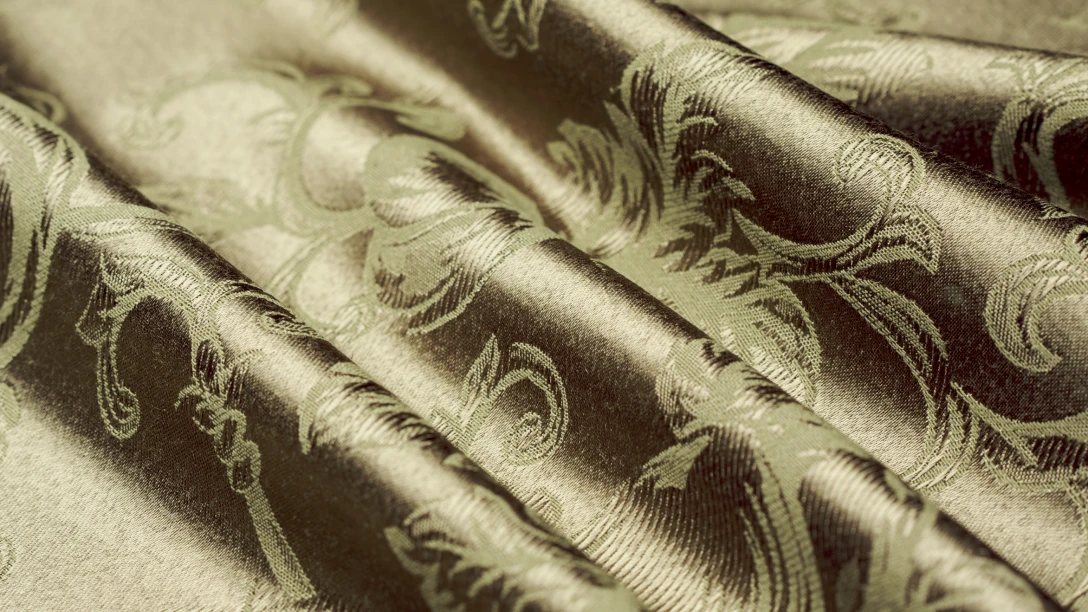
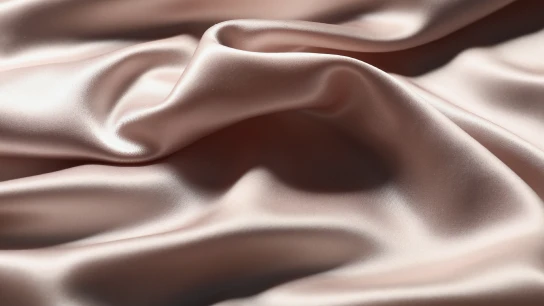
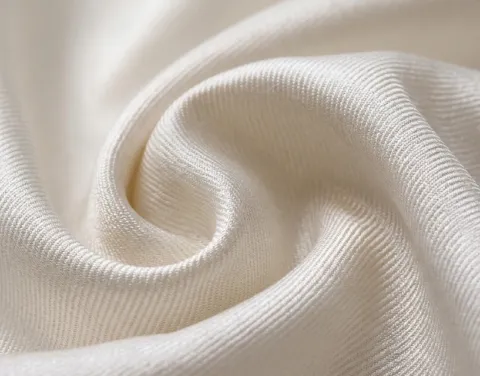
L'armure satin fait flotter de longs fils de chaîne en surface. C'est ce qui donne à la charmeuse son endroit brillant et glissant — il n'y a presque aucune texture à laquelle s'accrocher. Pour le détail complet de l'armure, voir notre guide « qu'est-ce que la soie charmeuse ».
Trois propriétés sont à l'origine de chaque problème que vous rencontrerez :
• Glissement. Les faces lisses bougent pendant la coupe et avancent de façon inégale pendant la couture.
• Effilochage. Les bords coupés s'effilochent vite car les flottés se libèrent ; une couture brute ne survivra pas au lavage.
• Plissage. Une aiguille épaisse ou un point long déforme l'armure fine, et un système d'entraînement qui tire laisse une ligne de couture ondulée.
La charmeuse est aussi sensible au poids. Une charmeuse 16 momme pour écharpe se comporte très différemment d'une charmeuse 22 momme pour taie d'oreiller. La charmeuse plus légère glisse et s'effiloche davantage ; la plus lourde se tient plus stable sous le pied. Connaître le momme de votre tissu vous indique par quelle aiguille et quel point commencer — notre guide du poids en momme de la soie couvre toute la gamme.
Outils et réglage de la machine pour la charmeuse
La plupart des problèmes de charmeuse se règlent avant la première couture, dans la façon dont la machine est réglée. Voici la base sur laquelle tourne notre ligne.
• Plaque à aiguille pour point droit. Le changement le plus utile à lui seul. Une plaque à petit trou rond empêche le tissu d'être poussé dans la zone de la canette au début d'une couture. Pas de plaque sous la main ? Une bande d'adhésif sur une plaque plus large fait un bon substitut.
• Pied pour point droit ou pied à roulette. Un pied à petite ouverture soutient le tissu juste à l'aiguille. Un pied à roulette ou un pied à double entraînement déplace aussi les couches ensemble au lieu de tirer celle du dessus.
• Pression du pied-de-biche réduite. Baissez la pression pour que le pied guide le tissu au lieu de le pousser devant l'aiguille. Trop de pression est une cause majeure de coutures ondulées.
• Tension supérieure légèrement plus lâche. Réduisez la tension d'un cran ou deux par rapport à un réglage coton. Une tension trop serrée tire le fil fin et fronce la couture.
• Une machine propre. Essuyez les peluches et vérifiez l'absence d'huile parasite avant de commencer. Les deux tachent la soie, et la marque ne part pas toujours.
Faites une couture d'essai sur une chute du même tissu à chaque fois. Deux minutes à vérifier le fil, la tension et la longueur de point évitent un panneau gâché.
Couper la soie charmeuse sans déformation
Coupez la charmeuse en une seule épaisseur sur une surface qui accroche — papier de soie, papier kraft ou drap de coton — avec des poids à patron et des ciseaux affûtés ou un cutter rotatif. La couper pliée ou sur une table nue laisse le tissu bouger, et une pièce coupée hors droit-fil devient plus tard une couture vrillée.
L'étape de coupe décide de la précision de vos pièces. La charmeuse glisse facilement hors du droit-fil, et une pièce coupée même légèrement de travers ne se coudra jamais droit.
• Une seule épaisseur, à chaque fois. Ne coupez jamais la charmeuse pliée. La couche du dessous glisse sous celle du dessus et les deux pièces ressortent de tailles différentes.
• Posez-la sur du papier ou du coton. Une couche de papier de soie ou kraft sous la soie l'accroche et l'empêche de glisser sur la table. Épinglez la soie au papier sur les bords et coupez les deux ensemble.
• Des poids plutôt que des épingles. Maintenez le patron avec des poids au lieu d'épingler à travers l'endroit. Si vous épinglez, gardez les épingles dans la marge de couture — les trous d'épingle se voient sur l'endroit fini.
• Une lame affûtée. Utilisez des ciseaux à fine denture (ils accrochent la soie) ou un cutter rotatif sur un tapis. Une lame émoussée tire et déforme le bord.
• Marquez dans le droit-fil. Utilisez de la craie tailleur ou des points de bâti, pas un stylo qui peut baver dans l'armure.
À l'échelle de production, nous détendons et mettons d'équerre chaque rouleau sur la table de coupe avant de poser les patrons, et nous coupons les pièces critiques pour le droit-fil — surtout les panneaux en biais — avec une marge supplémentaire pour pouvoir les rectifier après que le tissu s'est stabilisé.
Aiguille, fil et réglages de point selon le momme
Trois réglages portent l'essentiel de la qualité de couture : la taille d'aiguille, la grosseur de fil et la longueur de point. Les trois évoluent avec le momme du tissu.
Pour la plupart des charmeuses, utilisez une aiguille Microtex 70/10, un fil polyester fin ou un fil de soie 100, et un point de 1,5 à 2,0 mm. Commencez par là et ajustez selon le poids.
| Poids de charmeuse | Usage typique | Aiguille (Microtex / Sharp) | Longueur de point | Notes |
| 12-16 momme | Écharpes, doublures, blouses légères | 60/8 ou 70/10 | 1,5-1,8 mm | Glisse et s'effiloche le plus ; papier de soie sous les coutures |
| 19 momme | Pyjamas, robes légères | 70/10 | 1,8-2,0 mm | Le poids moyen du quotidien |
| 22 momme | Taies d'oreiller, robes de chambre, robes | 70/10 ou 75/11 | 2,0 mm | Le poids le plus stable à manipuler |
| 25-30 momme | Robes de chambre lourdes, pièces structurées | 75/11 | 2,0-2,2 mm | Toucher plus lourd, moins de glissement |
Aiguilles
Commencez toujours un projet en charmeuse avec une aiguille Microtex ou Sharp neuve. Une pointe émoussée ou universelle pousse entre les fils et laisse des trous visibles ou des accrocs. Changez l'aiguille dès que vous voyez un tirage. Évitez complètement les aiguilles à pointe bille, jean et universelle épaisse — elles sont faites pour un autre usage.
Fil
Le but est un fil assez fin pour se loger dans la couture sans ajouter d'épaisseur. Un polyester fin (autour de 60) ou un fil de soie 100 conviennent tous deux, et la finesse compte plus que la fibre. Un fil tout usage épais reste au-dessus de l'armure fine et plisse la couture. Si vous optez pour le polyester, testez d'abord sur une chute — certains polyesters s'étirent puis se détendent, ce qui laisse une ligne ondulée.
Commencer et entraîner la couture
Ne commencez pas une couture juste au bord coupé ; la machine peut l'aspirer. Utilisez l'une de ces trois astuces : tenez les deux fils vers l'arrière pour les premiers points, démarrez sur une petite chute de tissu et enchaînez directement sur votre pièce, ou réglez la longueur de point à zéro pour deux ou trois points afin d'ancrer au lieu de faire un point arrière. Cousez à une vitesse modérée et régulière. Pour l'ensemble plus large des réglages par poids selon les types de soie, voir notre guide des techniques de couture de la soie.
Des coutures qui tiennent sur la charmeuse
La couture anglaise est la norme pour la charmeuse car elle enferme complètement le bord brut, de sorte que le tissu ne peut pas s'effilocher à l'intérieur du vêtement. C'est la couture que nous utilisons sur presque tous les produits en charmeuse à coutures droites — écharpes, taies d'oreiller, pyjamas et robes de chambre.
La charmeuse s'effiloche agressivement. Tout bord brut exposé s'effilochera à l'usage et au lavage, la couture doit donc envelopper le bord.
Comment coudre une couture anglaise sur la charmeuse
1. Placez les deux pièces envers contre envers. Cousez le premier passage à environ 1 cm (3/8") du bord.
2. Recoupez la marge de couture au ras, jusqu'à environ 3 mm (1/8"). Recoupez net — les fils parasites traverseront la couture finie.
3. Repassez la couture à plat, puis pliez le tissu endroit contre endroit le long de la ligne de couture, en roulant cette première ligne juste au pli.
4. Cousez le second passage à environ 6 mm (1/4") du pli, enfermant le bord brut à l'intérieur.
Gardez les coutures anglaises étroites, environ 6 mm finies, pour qu'elles restent souples et ne raidissent pas le tombé.
Alternatives pour les coutures courbes
Là où une couture anglaise ne se couche pas à plat sur une courbe, utilisez plutôt l'une de celles-ci :
• Surjet étroit. Un surjet étroit 3 fils (ou 2 fils pour les poids les plus légers) finit les courbes nettement avec peu d'épaisseur. Détendez la tension du fil pour que le bord ne gondole pas.
• Couture gansée (Hong Kong). Envelopper le bord brut dans une bande de biais en soie donne une finition couture sur les pièces non doublées.
• Zigzag ou produit anti-effilochage. Après test sur une chute, un fin zigzag sur un bord recoupé, ou un mince trait de produit anti-effilochage, contient un léger effilochage.
Pour tout ce qui est coupé en biais — encolures, emmanchures, coutures de taille — faites un point de maintien juste à l'intérieur de la ligne de couture avant de manipuler la pièce, afin que le biais ne se déforme pas pendant le travail.
Ourler la charmeuse et la charmeuse coupée en biais
Les ourlets de charmeuse doivent être étroits et légers pour ne pas tirer contre le tombé.
• Ourlet roulotté double (ourlet bébé). Repassez 6 mm (1/4"), puis encore 6 mm, et cousez près du pli. L'ourlet standard pour les écharpes et les vêtements légers.
• Ourlet roulotté à la surjeteuse. Un ourlet roulotté de 1 mm donne un bord net et fin ; ouvrez-le à environ 2,5 mm pour un aspect picot plus doux. C'est ainsi que la plupart des bords d'écharpes en soie sont finis en production.
• Biais pour les courbes. Un ourlet complet ou courbe ne peut pas être simplement replié — gansez-le plutôt avec une bande de biais dans le même tissu.
La charmeuse coupée en biais demande une étape de plus : laissez-la pendre. Après l'assemblage, suspendez le vêtement sur un buste ou un cintre 24 à 48 heures avant d'égaliser l'ourlet. Le tissu en biais descend et se stabilise avec le temps ; ourlez-le trop tôt et la longueur finie devient inégale. Nous suspendons chaque robe coupée en biais avant de marquer l'ourlet — le détail de construction derrière cela est expliqué dans notre guide des robes en soie sur mesure, et les pièces finies se trouvent dans notre gamme de robes en soie sur mesure.
Repasser correctement la soie charmeuse
Le repassage fait ou défait la finition sur la charmeuse, et l'eau est le principal risque.
• Gardez-la sèche, ou à peine vaporisée. Les gouttes d'eau tachent la surface satinée et la marque peut être permanente. Utilisez un fer sec sur réglage soie/bas, ou une vapeur très légère à distance si votre tissu le supporte — testez d'abord.
• Utilisez une pattemouille. Un morceau d'organza de soie ou de coton fin entre le fer et l'endroit protège la surface. Repassez par l'envers mat quand c'est possible.
• Pressez, ne glissez pas. Levez et abaissez le fer à la verticale au lieu de le faire glisser d'avant en arrière, ce qui étire et déforme l'armure.
• Fixez, puis ouvrez. Repassez d'abord la couture à plat telle que cousue pour fixer les points, puis ouvrez-la ou couchez-la d'un côté. Cela réduit le plissage.
Résoudre les problèmes courants de couture de la charmeuse
La même poignée de soucis revient sans cesse. Voici ce qui cause chacun et comment le corriger.
| Problème | Cause | Solution |
| La couture plisse ou ondule | Point trop long, tension trop serrée ou pression du pied trop forte | Raccourcir le point à 1,5-2,0 mm, détendre la tension supérieure, baisser la pression du pied |
| Le tissu est aspiré dans la machine | Démarrage au bord sur un trou d'aiguille large | Monter une plaque point droit ; démarrer sur une chute ou tenir les fils vers l'arrière |
| Trous d'aiguille, accrocs, tirages | Aiguille émoussée ou inadaptée (universelle, bille, jean) | Microtex 60/8-75/11 neuve ; changer au premier tirage |
| Les bords s'effilochent | Bord brut laissé exposé | Couture anglaise ou surjet étroit pour enfermer le bord |
| Les pièces se cousent inégales | Coupées pliées ou hors droit-fil | Couper en une épaisseur sur papier, dans le droit-fil, avec des poids |
| L'ourlet en biais ondule | Ourlé avant que le tissu se stabilise | Suspendre 24-48 h, puis égaliser et ourler |
| Taches d'eau sur l'endroit | Vapeur ou gouttes au repassage | Fer sec, pattemouille, repasser par l'envers |
S'approvisionner en soie charmeuse prête à coudre
Un résultat net commence par le tissu. Une charmeuse correctement décreusée, pré-rétrécie et tissée à tension constante se coud bien plus prévisiblement qu'une soie bon marché mal ennoblie qui dévie du droit-fil et rétrécit au premier lavage. Pour toute série que vous prévoyez de couper et coudre, confirmez le poids en momme, le grade (la mûrier 6A est le meilleur grade commercial) et que le tissu est prétraité et certifié — voir ce que cela couvre sur notre page certifications.
DreamSilk tisse de la soie charmeuse de 12 à 30 momme dans notre usine de Suzhou, entièrement en soie de mûrier grade 6A et certifiée OEKO-TEX STANDARD 100, fournie prête à couper. Nous la cousons aussi en interne en produits finis — taies d'oreiller et linge de lit, pyjamas et robes de chambre — la même charmeuse est donc disponible au mètre ou en produit fini en marque blanche.
Indiquez-nous votre produit, votre momme cible et votre volume. Nous enverrons des échantillons gratuits en plusieurs poids pour que vous testiez le toucher et fassiez votre propre essai de couture, ainsi qu'une fiche technique claire. Découvrez notre gamme de soie charmeuse ou contactez-nous pour un devis pour commencer.
FAQ
Utilisez une aiguille fine et pointue. Une Microtex (ou Sharp) 70/10 est le choix sûr par défaut pour la plupart des charmeuses, en descendant à 60/8 pour les poids écharpe légers (12-16 momme) et 75/11 pour les 22-30 momme plus lourds. Commencez toujours avec une aiguille neuve et changez-la dès que vous voyez un tirage. Évitez les aiguilles universelle, bille et jean — une pointe émoussée laisse des trous visibles dans l'armure.