
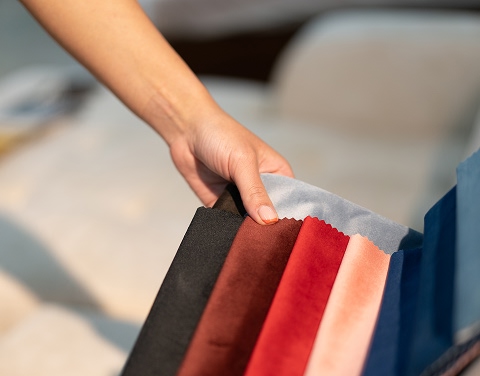
Sandwashed Silk: A Manufacturer's Guide to the Process, Best Fabric Bases & Garment Applications


When you brief a luxury apparel collection, raw material is only half the decision. The texture, drape, and shelf appeal of the finished garment are usually shaped just as much by what happens to the fabric after weaving as by what was woven. Among the post-treatments DreamSilk runs daily in our Suzhou facility, none gets requested more often by international B2B clients than sandwashed silk.
This guide breaks down what sandwashing actually does to silk on the factory floor — the process steps, the chemistry, the tradeoffs — and which fabric bases hold up best under it. It also covers the garment categories that fit the finish, how the result holds up in real use, and how brand buyers can verify sandwashed silk quality before placing a production order.
What Sandwashed Silk Actually Is (And Why It Looks Nothing Like Standard Silk)
Sandwashing is a specialized post-fabrication treatment applied after a silk fabric has been woven, degummed, and dyed. The name comes from the original mid-20th-century process, which tumbled finished silk with actual sand or fine stones inside industrial rotary drums to physically abrade the surface fibers. Modern factories — including ours — no longer use raw sand. Instead, sandwashed silk fabric is produced using a combination of ultra-fine ceramic media, controlled enzyme wash agents, and silicone-based softeners. The mechanical effect is the same, but the fiber damage is far better controlled.
What you end up with is a silk that looks and feels structurally different from any untreated silk:
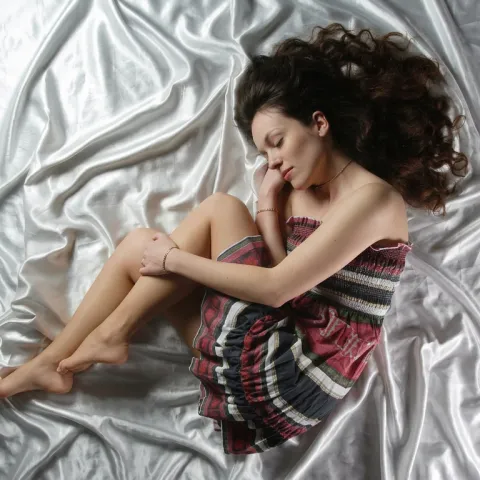
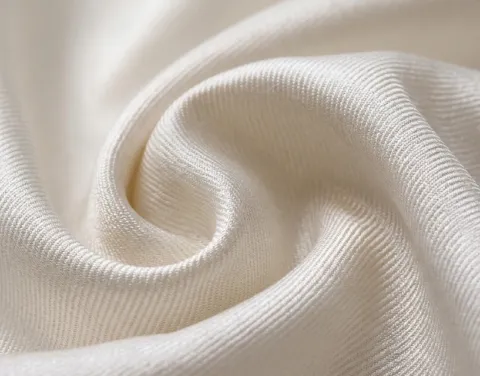
- A peach-skin hand. The micro-abrasion gently lifts a layer of broken fiber ends across the surface, producing a fine downy nap. Run a finger across sandwashed silk and the feedback is closer to suede or peach skin than to traditional silk.
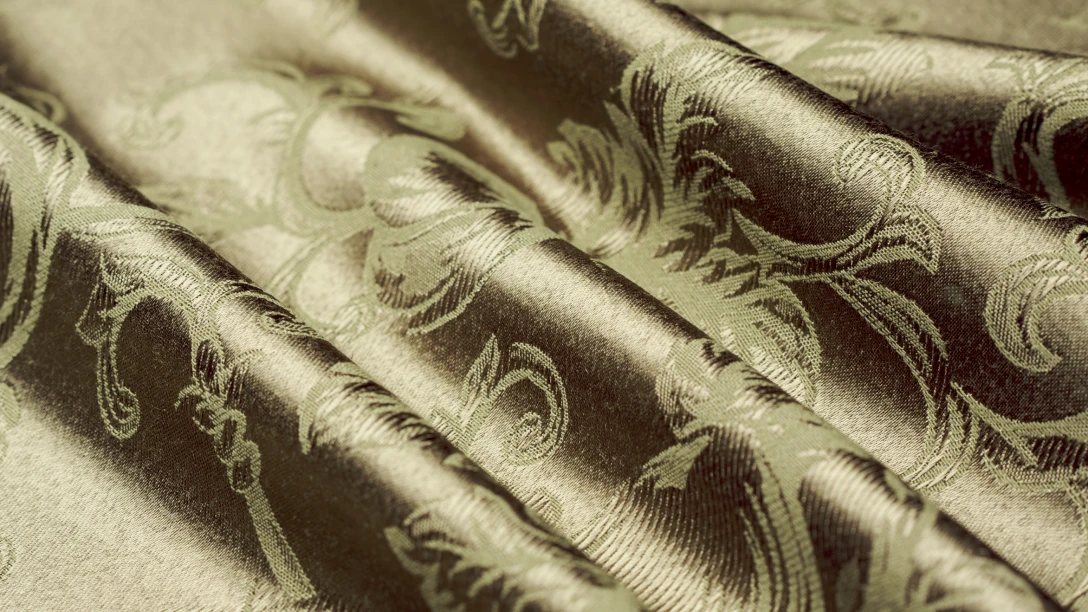
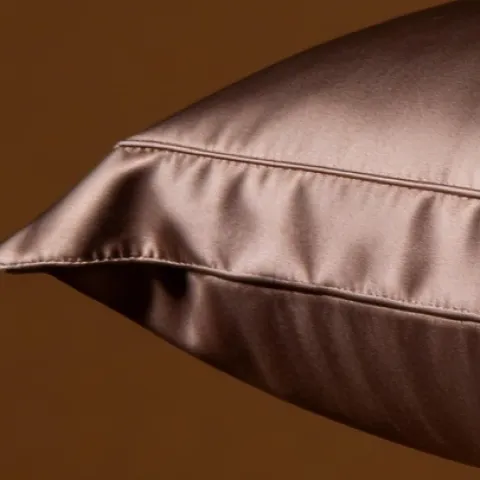
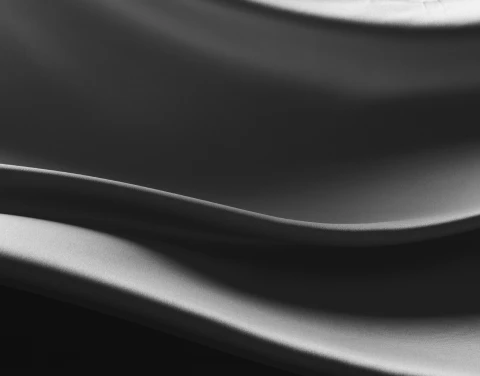
- A matte, diffused finish. Standard silk reflects light directionally — the long satin floats in charmeuse, for example, act like tiny mirrors. Sandwashing breaks up that directional reflection. The surface still glows, but in a soft, internal way, not a high-gloss way.
- Relaxed, vintage drape. The treatment partially loosens the weave structure and removes some of the natural stiffness of degummed silk. Garments cut from sand washed silk hang more fluidly, settle faster, and read as "broken in" the moment they come off the hanger.
The result fits a specific design intent: silk that does not signal "evening occasion." The matte finish and relaxed body let silk read as everyday luxury — exactly the territory the "quiet luxury" trend has expanded into across the European, North American, and Japanese markets in recent seasons.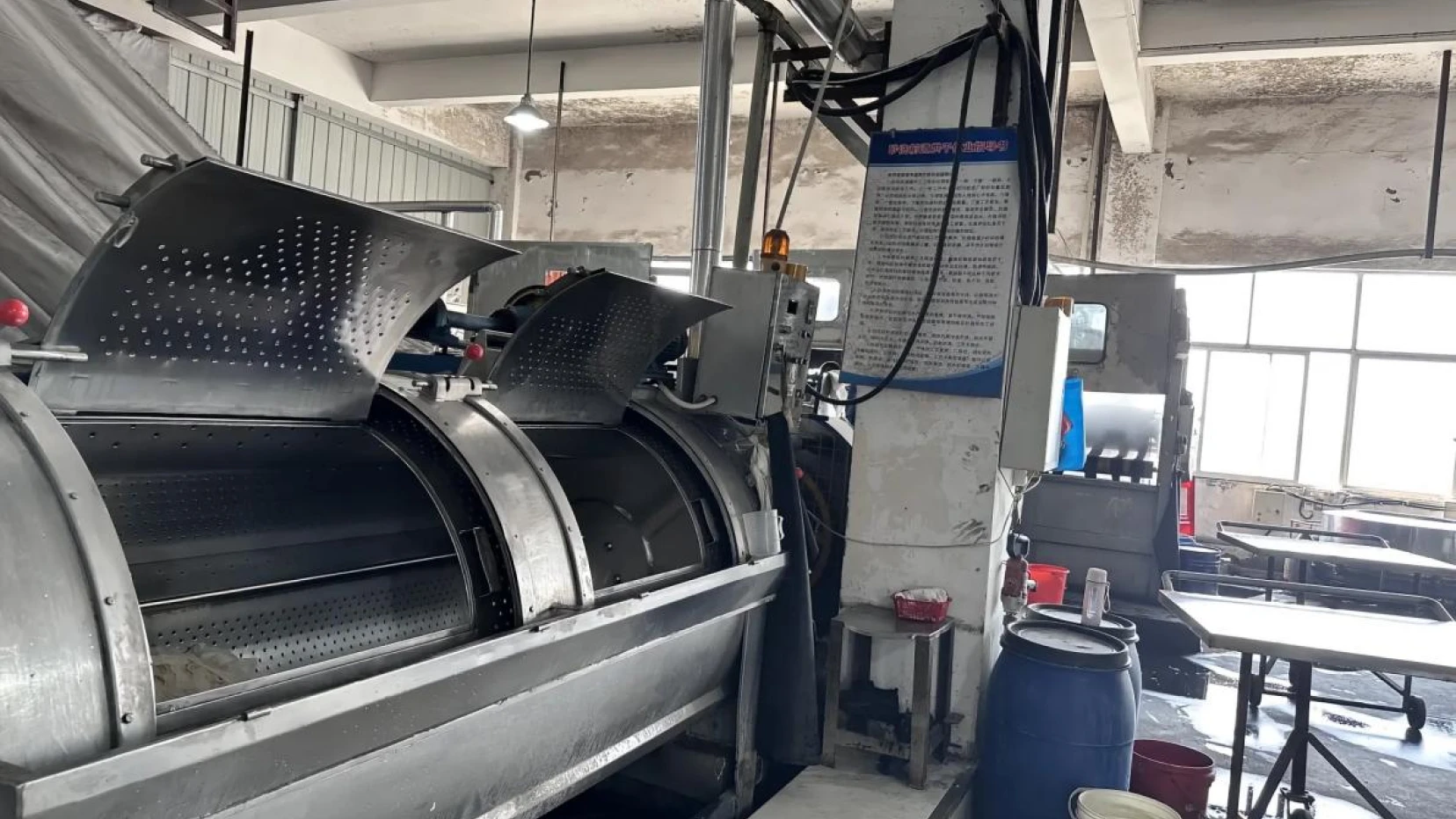
How the Sandwashing Process Works: From Greige Fabric to Peach-Skin Finish
For brand buyers who want to understand what they are actually paying for when they spec sandwashed silk, here is what happens in the factory between greige fabric arriving and finished sandwashed silk leaving the dyeing line.
Step 1: Degumming. Raw silk filament is coated in sericin, the natural glue that holds the cocoon together. Degumming boils the fabric in a mild alkaline bath at around 95 °C for 45–90 minutes, dissolving the sericin and releasing the silk fibroin underneath. Silk loses 22–28% of its mass in this step. This is normal and applies to all silk, not only sandwashed.
Step 2: Dyeing. Most sandwashed silk is piece-dyed (the whole fabric is dyed after weaving, not from pre-dyed yarn). Reactive or acid dyes are used depending on the target color depth and fastness requirements. The dye bath runs at 85–95 °C for 60–90 minutes.
Step 3: Mechanical sandwashing. The dyed fabric is loaded into a large rotary drum with ultra-fine ceramic or natural stone media, water, and a mild softening agent. The drum tumbles for 30–90 minutes depending on the target intensity. Light sandwashing produces a subtle peach-skin handle; heavy sandwashing produces a more pronounced matte nap and a noticeably more relaxed drape.
Step 4: Enzyme treatment (optional). Some specifications combine the mechanical pass with a cellulase- or protease-based enzyme rinse. Enzymes work at the molecular level, breaking down a thin outer layer of protein fiber rather than abrading mechanically. Used in combination, enzymes can even out the surface and reduce the risk of streaks or patchiness from uneven drum tumbling.
Step 5: Silicone softener. A final low-temperature bath with a silicone or amino-silicone softener locks in the hand-feel and gives the fabric its signature drape.
Step 6: Drying and finishing. The fabric is dried on tenter frames at controlled tension to set the dimensions. Sandwashed silk gets one more pass through a calendering or sueding finisher to even out the nap before being rolled and inspected.
The whole post-weaving treatment cycle adds 4–7 days to a standard silk production timeline. It also adds 8–15% to fabric cost, depending on the intensity of the wash and whether enzymes are used. For brand buyers, that cost difference is generally a worthwhile investment for the texture upgrade, but it should be factored into the production schedule from day one.
Worth flagging: silk loses additional weight during sandwashing itself, on top of the degumming loss. A 19 mm greige silk that finishes at 16 mm post-degumming can lose another 0.5–1.5 mm during heavy sandwashing. Specs should be confirmed on the post-sandwashing weight, not the pre-treatment weight, or you will receive a noticeably lighter fabric than expected.
Sandwashing vs Other Silk Post-Treatments (Enzyme Wash, Stone Wash, Pre-Shrink)
Sandwashing is one of several post-treatments commonly applied to silk. Brand buyers sometimes confuse them, and using the wrong term in a spec sheet leads to the wrong fabric arriving. Here is how each treatment differs:
| Treatment | Method | Hand Feel Effect | Surface Effect | Best For |
|---|---|---|---|---|
| Sandwashing | Mechanical abrasion with ceramic/stone media plus mild softener | Soft peach-skin, suede-like | Matte, slightly raised nap | Apparel, loungewear, slip dresses |
| Stone washing | Larger abrasive stones, more aggressive | Softer but with visible distress | More matte, sometimes streaky | Denim-style silk, vintage apparel |
| Enzyme wash | Cellulase or protease enzymes only, no mechanical media | Smoother, slightly softer | Slight sheen reduction | Lightweight bases (chiffon, habotai) |
| Pre-shrinking | Wet relaxation under low tension | Negligible hand change | None | All silk apparel for dimensional control |
| Sand-wash plus enzyme | Combined mechanical and chemical pass | Most uniform soft hand | Even matte finish | Premium charmeuse loungewear |
The most common confusion is between sandwashing and stone washing. Both use abrasive media, but stone washing uses larger stones, runs more aggressively, and is designed to produce visible distress — the silk equivalent of vintage denim. Sandwashing aims for the opposite: a uniform, controlled softening with no visible distress. If you want clean luxury, spec sandwashing. If you want a deliberately "broken in" or "vintage" appearance, spec stone washing.
Enzyme-only washes are sometimes marketed as sandwashing, but the result is different — softer, yes, but without the characteristic peach-skin nap. For brands targeting the quiet luxury aesthetic specifically, mechanical sandwashing (with or without an enzyme assist) is the right specification.
The Best Silk Fabric Bases for a Sandwashed Finish
Not every silk fabric can withstand mechanical sandwashing. The treatment puts real stress on the fiber structure, so the base needs enough body to handle it without thinning out, fraying, or developing surface damage. Lighter silks (chiffon, organza, gauze) generally cannot be sandwashed at all — they tear or develop holes under the drum.
The three fabric bases we run sandwashing on most often, in order of volume:
Silk Charmeuse (16 mm and above)
Silk charmeuse is the most popular base for sandwashed silk and the one that shows the most dramatic before-and-after. Standard charmeuse is famously glossy — the long satin-weave floats reflect light heavily. Sandwashing transforms it: the floats break up, the gloss diffuses, and the surface settles into a velvety matte texture. The drape becomes more fluid and the fabric reads as deeply luxurious without being flashy.
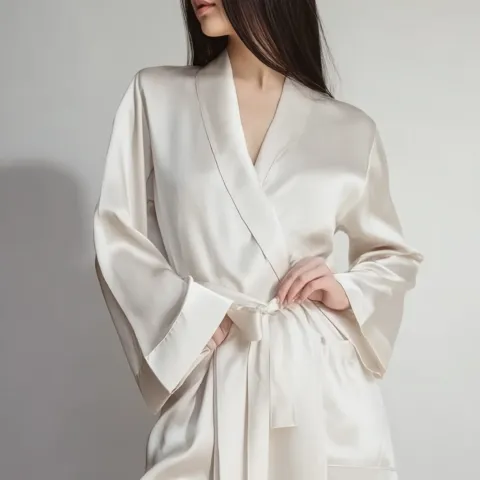
Best applications. Slip dresses, bias-cut midi skirts, luxury loungewear, relaxed evening wear, premium silk robes.
Momme range. 16 mm is the practical floor — below this, charmeuse thins out too much during the wash. 19–22 mm is the sweet spot. 25 mm charmeuse takes sandwashing beautifully and produces a particularly substantial peach-skin handle, ideal for premium positioning. For a deeper read on how momme affects fabric performance across products, see our silk momme weight guide.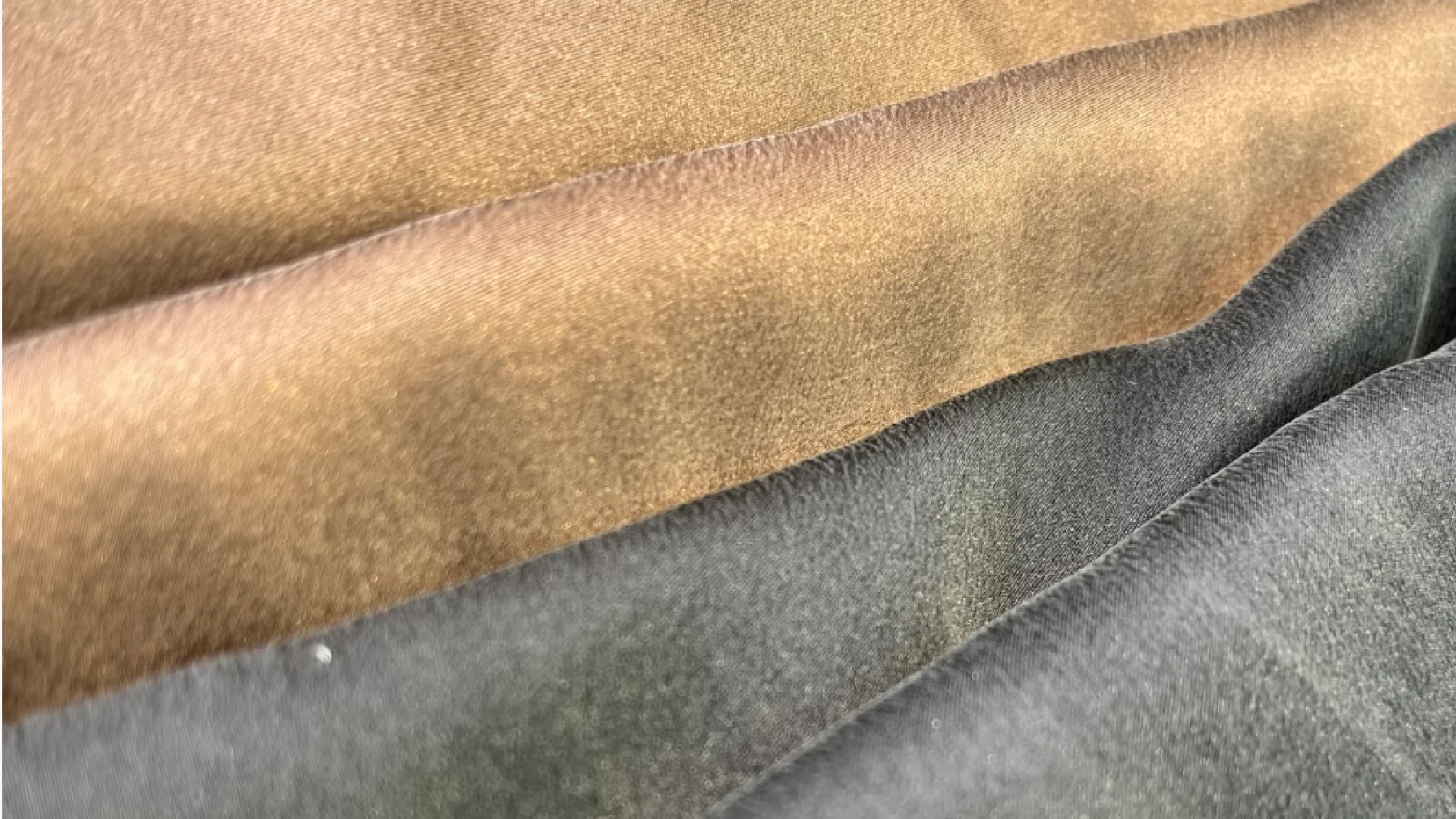
Silk Crepe de Chine (CDC)
Silk crepe de chine starts with a slightly crinkled, matte texture from its twisted-yarn plain weave. Sandwashing intensifies what is already there: the matte deepens, the drape gets more fluid, the slight crinkle softens, and the fabric develops the same peach-skin hand. Because CDC's plain weave is more stable than charmeuse's satin weave, sandwashed CDC tends to be more dimensionally consistent batch to batch.
Best applications. Everyday blouses, flowing skirts, wide-leg trousers, drawstring pants, drape-cut dresses.
Momme range. 14–18 mm CDC takes sandwashing well. Heavier CDC (20+ mm) becomes noticeably substantial and works for cooler-season pieces.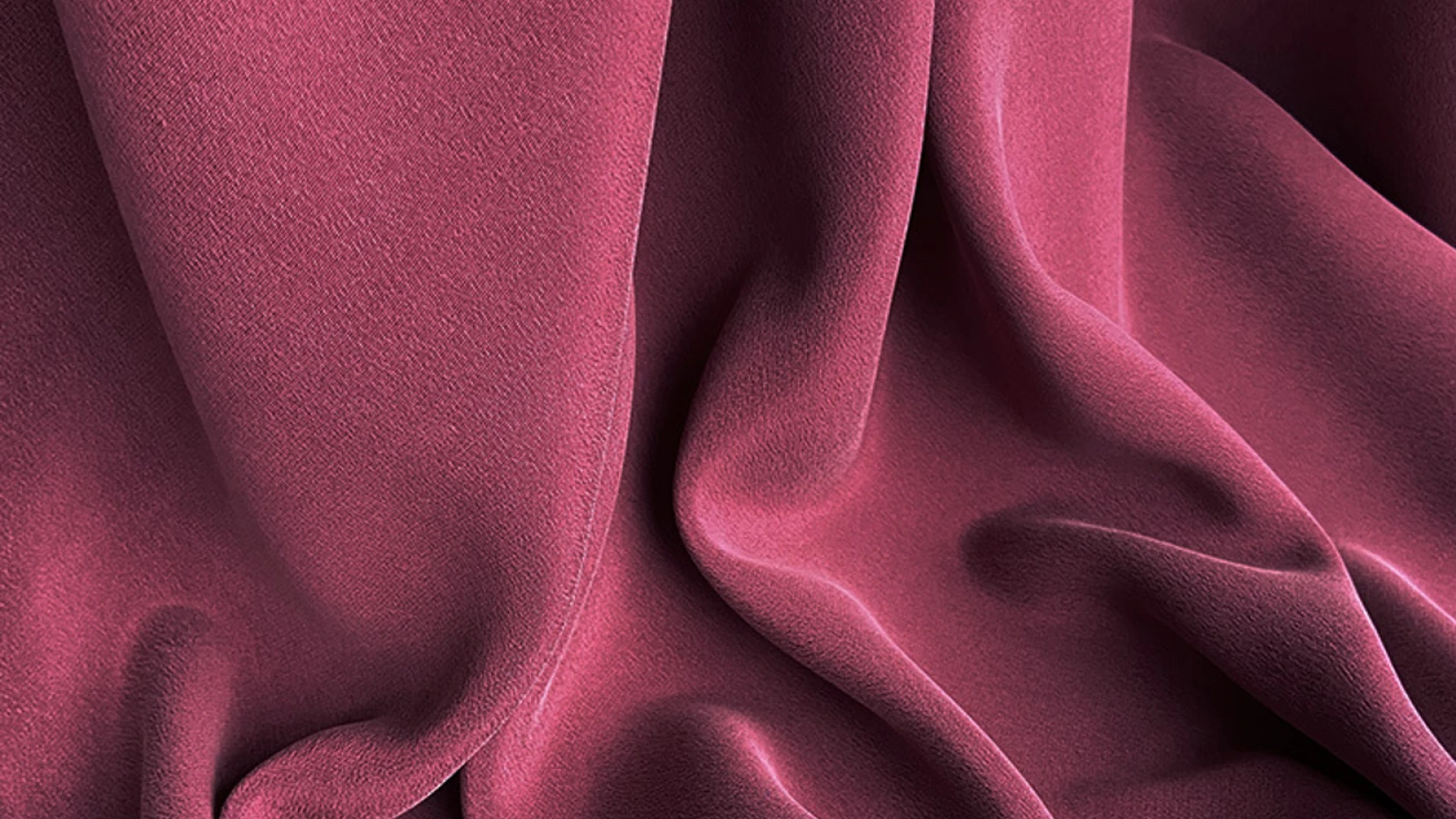
Silk Habotai
Silk habotai is a plain-weave silk with a smooth surface and slight inherent crispness. A light sandwash transforms it into one of the softest silk bases available — the crisp hand disappears and is replaced by something almost like cotton lawn, but with silk's natural thermal regulation. Habotai will not survive aggressive sandwashing, so this treatment is always run at lower intensity.
Best applications. Premium garment linings, lightweight summer apparel, scarves, lightweight sleepwear, eye mask lining layers.
Momme range. 12–16 mm habotai is the practical range for sandwashing. Below 12 mm, the fabric is too thin to survive even a light wash without becoming sheer.
A few additional bases we occasionally sandwash on request:
- Silk twill (10–18 mm) — sandwashing softens the diagonal rib but mutes printing detail, so this combination only works for plain or yarn-dyed twill, not for printed designs.
- Silk crepe-back satin — combines the gloss of satin and matte of crepe; sandwashing pushes it firmly toward all-matte.
- Silk-cotton blends — take sandwashing very well and produce a particularly soft handle, useful for high-volume apparel programs.
What does not sandwash well: silk chiffon, silk organza, silk georgette, silk dupioni (the slubs catch on abrasive media), and any silk under 12 mm.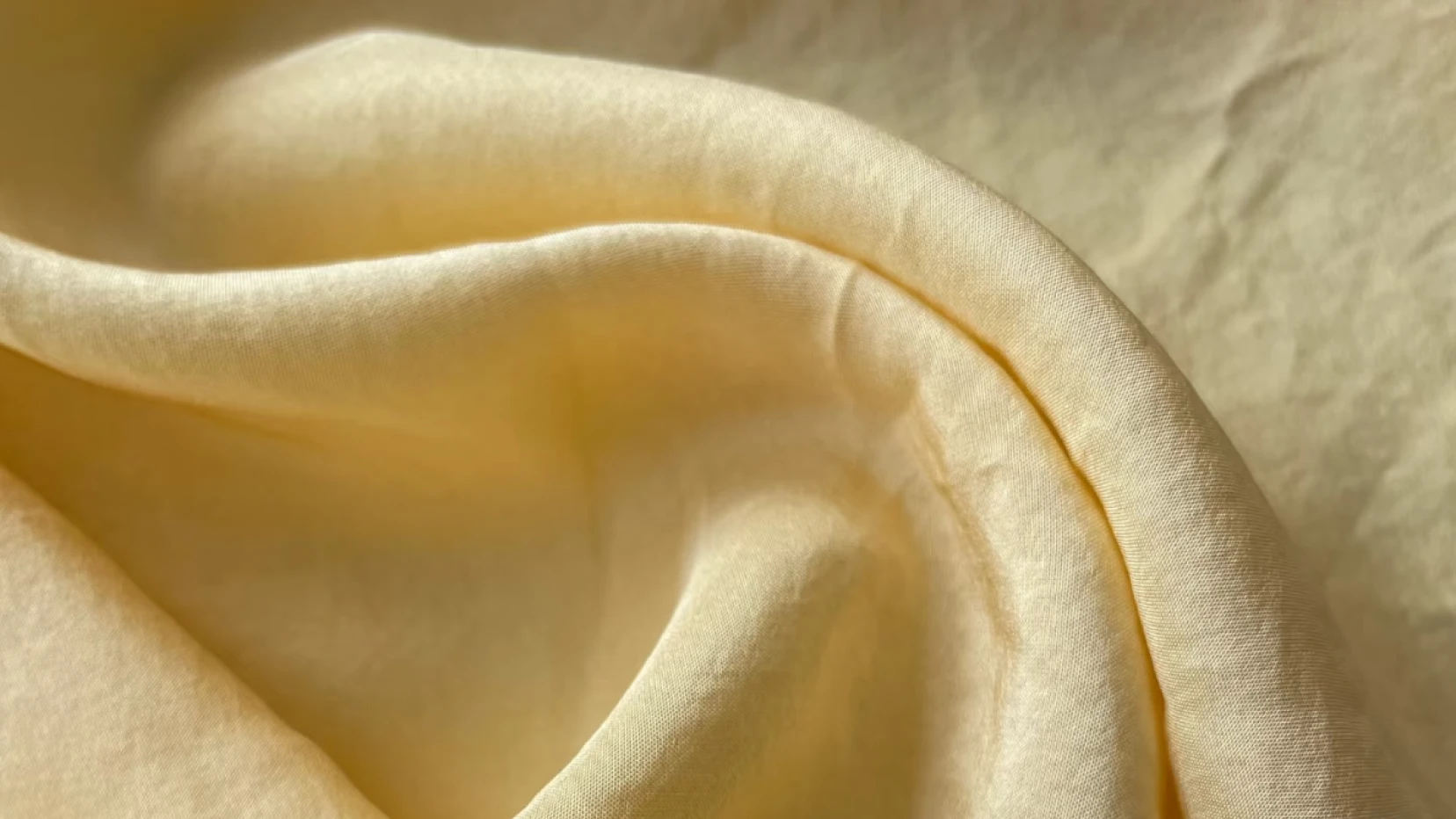
Sandwashed Silk Garments: What to Make With This Finish
The matte finish and relaxed hand of sandwashed silk align almost perfectly with the "quiet luxury" aesthetic — understated, tactile, comfortable, premium without signaling premium. This breaks the older association of silk with formalwear only, and opens up garment categories that were traditionally reserved for cotton or rayon. Below are the four categories where we see the highest demand from international brand clients.
1. Custom Silk Everyday Daywear
Traditional high-shine silk shirts can read as too formal for office or weekend wear. The matte texture of sandwashing solves that, allowing silk to blend naturally into everyday and work attire.
Recommended styles. Button-down shirts, blouses, camisoles, simple shells.
Selling points. Retains silk's breathability and luxurious hand while reading appropriate for jeans, dress pants, and tailored separates. Customers wear them more often, which justifies the silk premium to value-conscious buyers.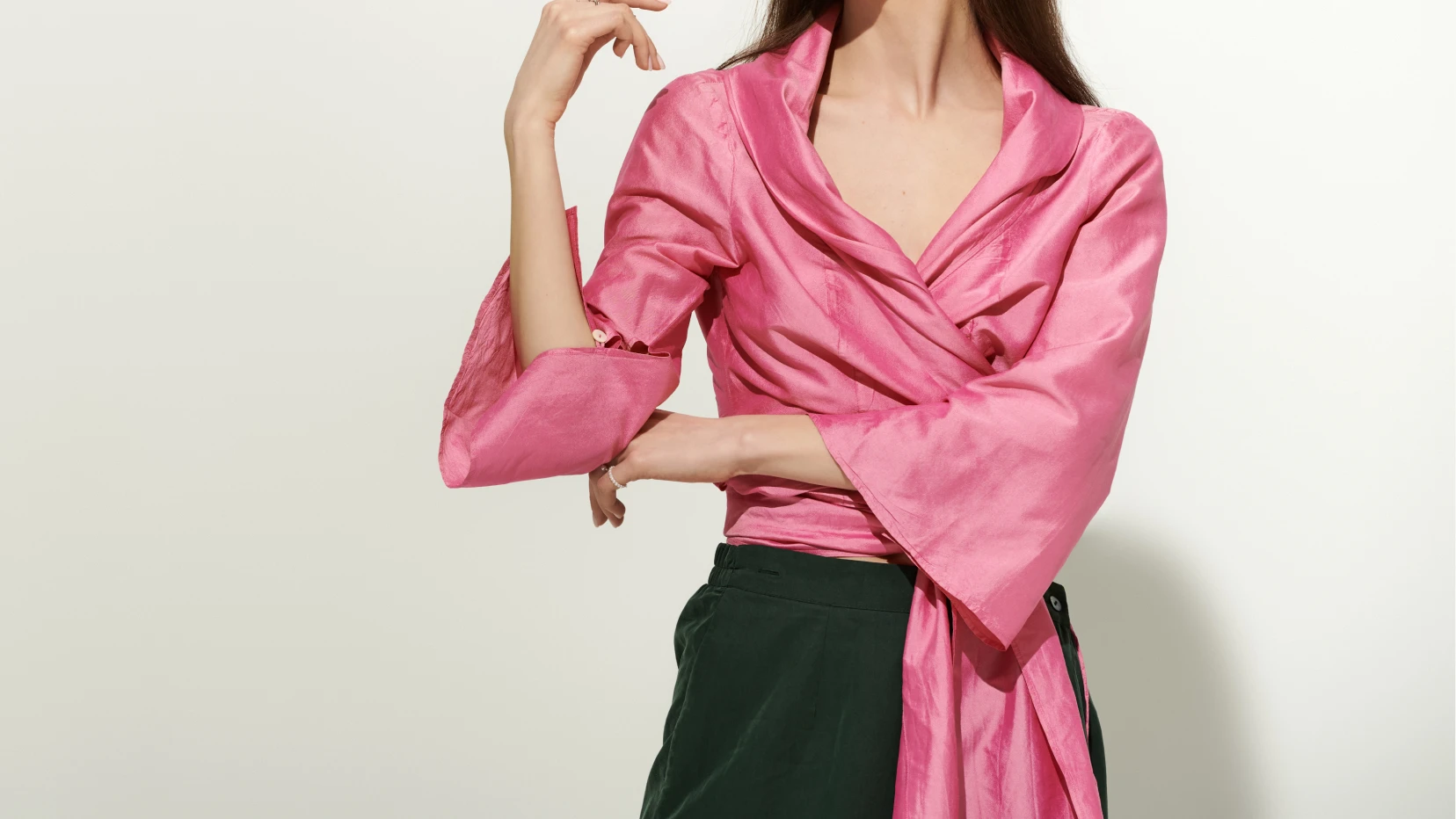
2. Custom Silk Slip Dresses & Midi Skirts
Sandwashed silk and bias-cut construction are a near-perfect technical match. The treatment makes the fabric more relaxed and streamlined, which is exactly what bias-cut needs to drape correctly on the body.
Recommended styles. Bias-cut slip dresses, bias midi skirts, slip nightdresses styled for daywear.
Selling points. Softer fibers contour the body more naturally on the bias. The matte surface is far more forgiving — it doesn't accentuate body curves or wrinkles the way glossy silk does, which makes the same silhouette more wearable across body types.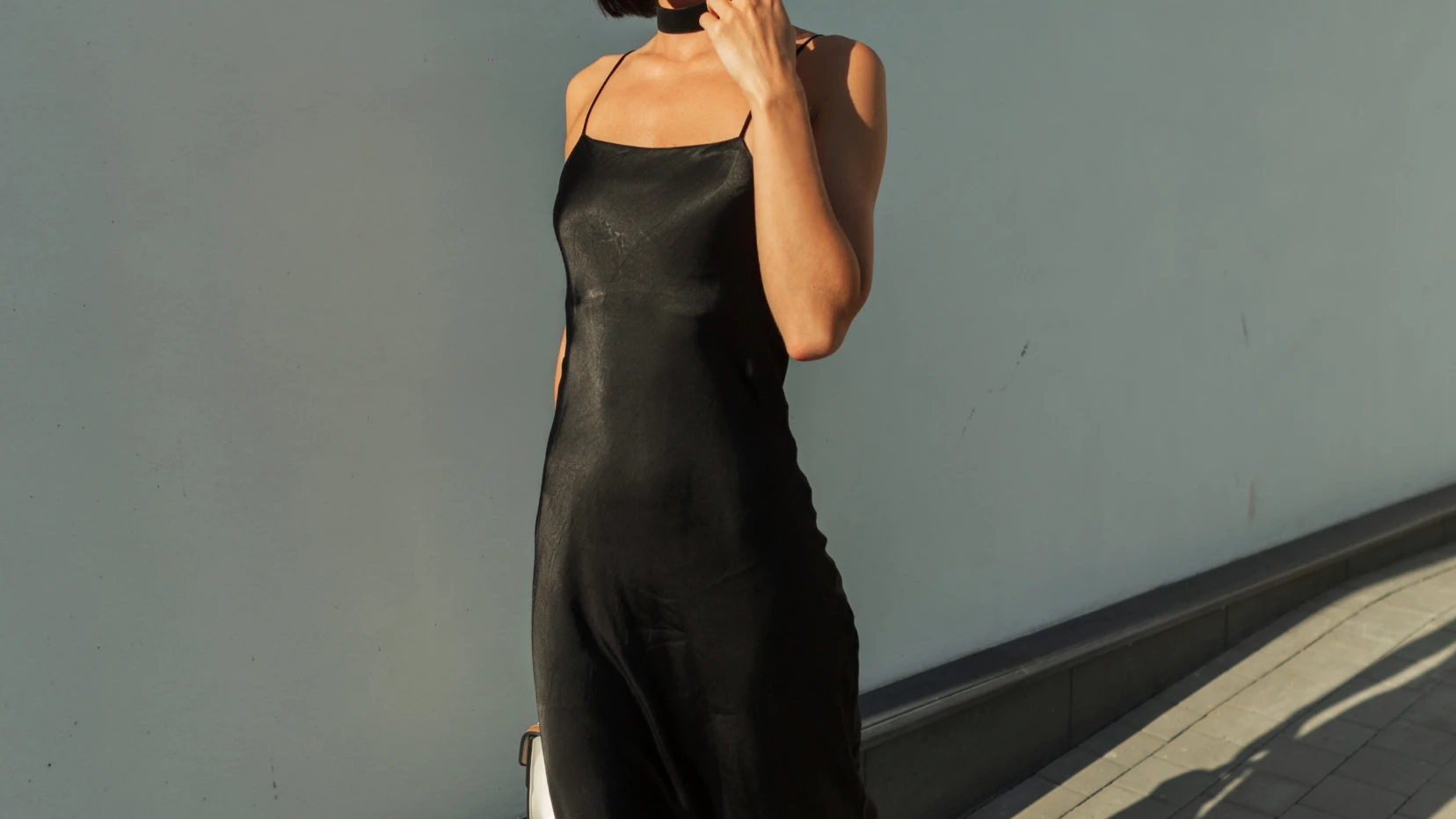
3. Custom Silk Luxury Loungewear & Intimates
The peach-skin softness of sandwashed silk is its strongest selling point for anything that touches skin for extended periods. This is where the treatment delivers the most obvious upgrade over standard silk.
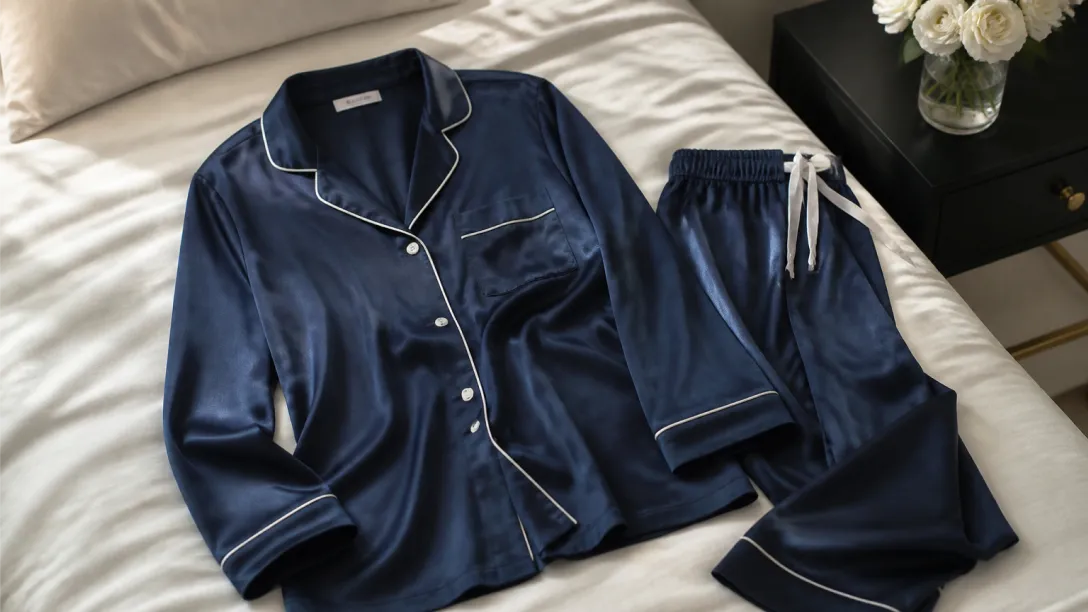
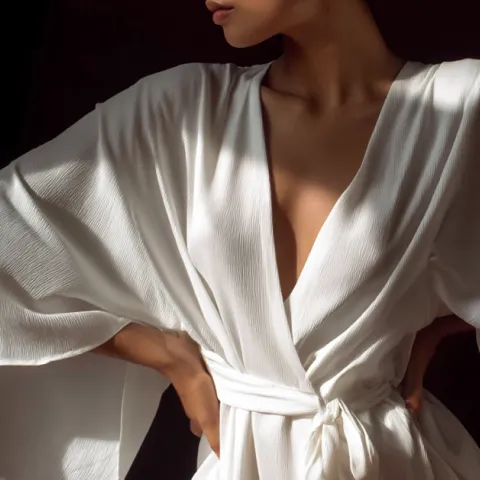
Recommended styles. Silk pajama sets, silk robes, silk boxers and shorts, camisole-and-short pajama sets, kimono-style robes. We cover the full development cycle for sleepwear in the entire process of customizing silk pajamas.
Selling points. The softer, velvety feel delivers a sleep experience standard silk doesn't match. The matte finish supports the increasingly popular "loungewear as outerwear" marketing angle — sandwashed silk pajama bottoms can plausibly be worn outside the home, expanding wear occasions per garment.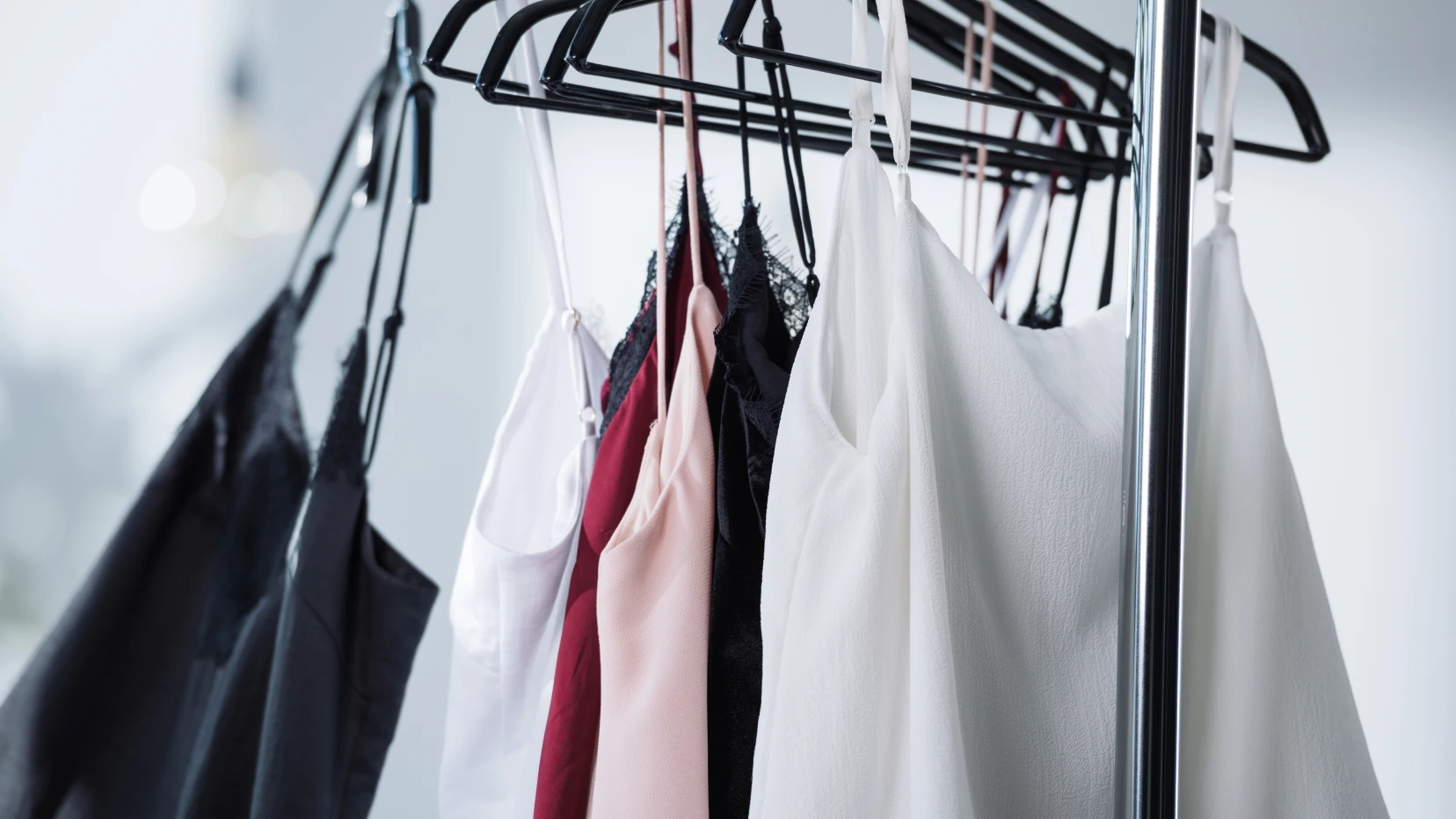
4. Custom Silk Wide-Leg Trousers
The fluid drape of sandwashed CDC or heavier charmeuse makes it ideal for wide-leg silhouettes that need movement. The trouser flows with each step, falling cleanly without the static cling that glossy silk often develops against skin.
Recommended styles. Wide-leg pants, drawstring trousers, palazzo pants, paperbag-waist trousers.
Selling points. A resort-style relaxed sophistication that pairs equally well with tailored blazers and casual knits. The matte finish also dyes more evenly into deep saturated colors (navy, espresso, charcoal) than glossy silk, which is increasingly important as the market shifts away from pastels.
A few categories where sandwashed silk works less well: structured outerwear (jackets, blazers — too much body needed), formal evening wear (where the matte finish removes the dressy signal), and tight-fitting bodycon silhouettes (where the drape relaxes rather than holds form).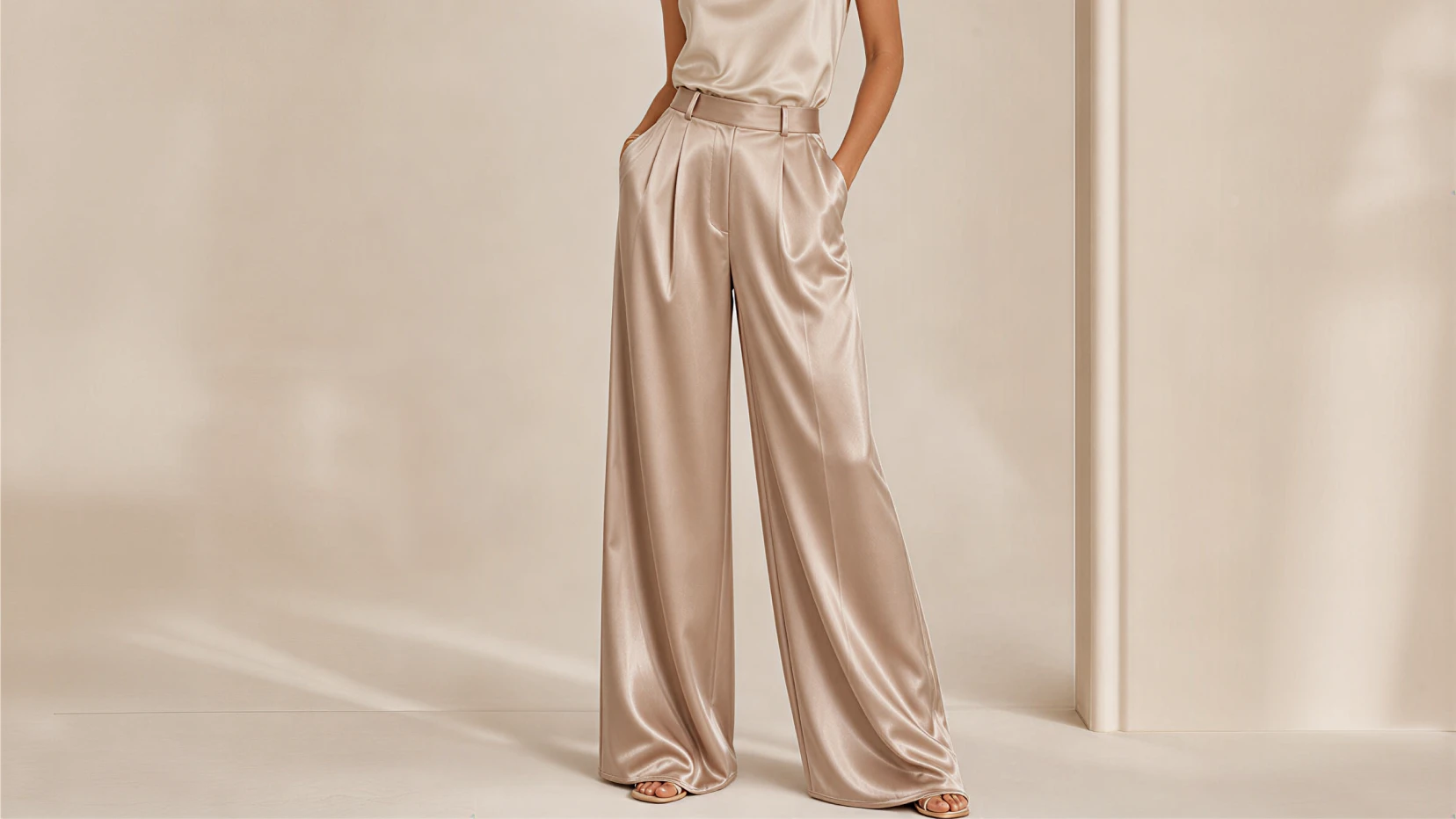
The Tradeoffs of Sandwashed Silk (What Brand Owners Need to Account For)
Sandwashing produces a beautiful product, but it is not free of compromise. Brand owners building a collection around this finish should understand what changes and price the tradeoffs into their development plan.
Fiber strength drops slightly. Mechanical abrasion, by definition, breaks some surface fibers. A well-controlled sandwashing process keeps the strength loss to roughly 5–8%. An aggressive or poorly controlled wash can drop strength by 15% or more, which translates to faster wear and reduced garment life. This is one of the main reasons to spec sandwashed silk only from manufacturers running modern controlled processes.
Shrinkage is higher. Untreated silk shrinks 3–5% on first wash. Sandwashed silk has already absorbed some of that shrinkage during the wash itself, but residual shrinkage in the final garment is still typically 2–4%. Pre-shrinking the sandwashed fabric before cutting reduces final-garment shrinkage to roughly 1%, and is a standard service we include for our apparel clients.
Color shifts toward muted. The sandwashing process slightly fades dye saturation — generally a 2–5% shift toward lighter, more muted tones compared to the same dye on standard silk. For most quiet-luxury palettes this is actually desirable. For brands wanting deep saturated brights, the dyeing recipe must be adjusted up-front, or the post-wash color will read washed out.
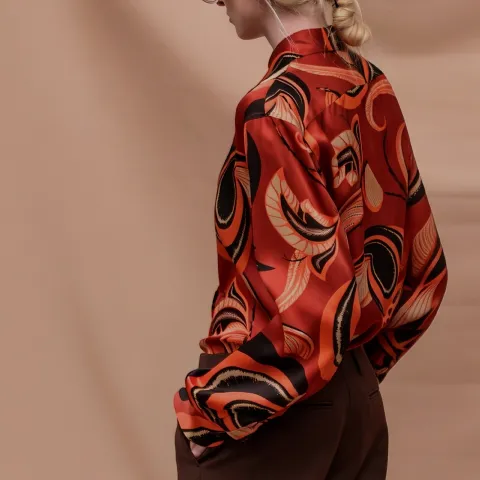
Print clarity decreases. If you are sandwashing printed silk, expect a 10–15% reduction in print sharpness and color brightness. For abstract or organic print designs this looks intentional. For sharp geometric or photographic prints, sandwashing is generally the wrong choice.
Cost increases 8–15%. As covered in the process section, sandwashing adds time, water, energy, and chemistry. The cost premium over standard silk runs roughly 8–15% on fabric. Wholesale buyers should expect a 12–18% increase in finished garment unit cost when specifying sandwashed silk versus standard silk on the same garment style.
Lead time extends. Add 4–7 days to standard silk production timelines. For first-time orders with sample approval cycles, the impact can be longer.
None of these tradeoffs is disqualifying for the right brand and product line. They simply need to be priced in, not discovered after the first production sample.
How to Care for Sandwashed Silk: Wash, Dry, and Storage
Sandwashed silk is easier to care for than standard silk in some ways and harder in others. The peach-skin nap is more forgiving of small surface marks — the matte surface hides minor imperfections that would show on glossy charmeuse — but it is also more vulnerable to harsh abrasion and high heat.
Brand owners should include clear care instructions on garment labels and end-customer packaging. The recommended protocol:
- Hand wash in cold water below 30 °C using a pH-neutral or silk-specific detergent. The sandwashed surface is more receptive to gentle washing than standard silk because the surface fibers have already been partially relaxed.
- Avoid alkaline detergents and chlorine bleach. Both can damage the protein structure further and accelerate fiber breakdown at the surface.
- Do not wring or twist. Press out water gently between two clean towels.
- Air dry in shade. Direct sunlight fades both the dye and the protein fiber over time. Hang on a padded hanger or lay flat on a clean surface.
- Iron on low heat (silk setting, around 110–120 °C) with a pressing cloth between iron and fabric. Sandwashed silk wrinkles less than standard silk but should still be steam-pressed, not directly ironed.
- Store on padded hangers or folded with acid-free tissue. Avoid plastic garment bags for long-term storage — silk needs airflow to prevent yellowing.
- Keep away from rough zippers, Velcro, and metal jewelry. The raised nap can catch on hardware and develop snags.
For machine washing, the delicate cycle at cold temperature with a mesh laundry bag works for most sandwashed silk garments — but only if the original specification was built around machine washability. Confirm this with your manufacturer, not after the fact.
A reference point on washability standards: our silk pillowcase care guide covers the wider washing principles for silk, which apply directly to sandwashed silk products as well.
How to Verify Sandwashed Silk Quality Before You Commit to Production
The biggest risk for brand buyers sourcing sandwashed silk is uneven quality. The treatment is sensitive to drum loading, water temperature, media size, tumbling time, and chemistry. Done well, sandwashed silk is one of the most beautiful fabrics in the luxury apparel world. Done badly, it streaks, pills, develops bald patches, or weakens to the point of tearing in production.
Here is what to check before greenlighting bulk production.
Pre-production swatch evaluation. Ask for two swatches: pre-sandwashing (the dyed base silk) and post-sandwashing (the finished sand washed silk fabric). Compare them under daylight, indoor light, and across the fabric width. Look for:
- Uniform matte surface across the entire swatch with no shiny streaks or sanding lines
- Consistent peach-skin nap that feels even under light fingertip pressure
- No pilling or fiber clumps visible on close inspection
- Color shift within the expected 2–5% range from the dyed base
Hand-feel testing. Scrunch a section of the swatch tightly in your hand for 10 seconds, then release. Sandwashed silk should release wrinkles and return to its relaxed state within 30–60 seconds. Slow recovery indicates over-processing or low silk grade.
Mass loss check. Compare the GSM of the pre-wash and post-wash fabric. A controlled sandwashing process produces a 5–10% mass loss. Over 15% mass loss indicates aggressive processing and predicts shorter garment life.
Tensile strength test. Request an ASTM D5034 or ISO 13934 tensile strength report on both the pre- and post-sandwashed fabric. Strength loss should land within 5–8%. Over 12% is a red flag.
Colorfastness test. Sandwashed silk should pass ISO 105-C06 (color fastness to washing) and ISO 105-X12 (color fastness to rubbing). Some shedding on the first wash is normal; consistent color loss across multiple cycles is not.
Sample wash test. Wash a finished sample garment through 3 to 5 cycles using your recommended care instructions. Inspect for shrinkage beyond 2%, surface degradation, pilling, or color bleed.
Documentation to request from any sandwashed silk supplier:
- Grade certificate confirming 6A mulberry silk on the base fabric
- OEKO-TEX® STANDARD 100 certification for the finished fabric (sandwashing chemistry needs to clear this standard, not just the base silk)
- Pre- and post-treatment fabric weight reports
- Tensile strength and colorfastness test reports
- Pre-shrinking process confirmation (if you specified it)
Red flags to watch for:
- Suppliers who cannot produce both pre- and post-treatment samples
- "Sandwashed" silk that feels identical to enzyme-only washed silk (no peach-skin nap)
- Visible streaks, shiny patches, or color unevenness across a swatch
- Mass loss beyond 15% or strength loss beyond 12%
- Prices noticeably below market — sandwashed silk costs more for real reasons, and discount pricing usually means corner-cutting
At DreamSilk, our sandwashing line runs in the same Suzhou factory as our weaving, dyeing, and garment-making, which means we can match base fabric specifications, dye recipes, and sandwashing intensity within a single quality system rather than coordinating across separate vendors.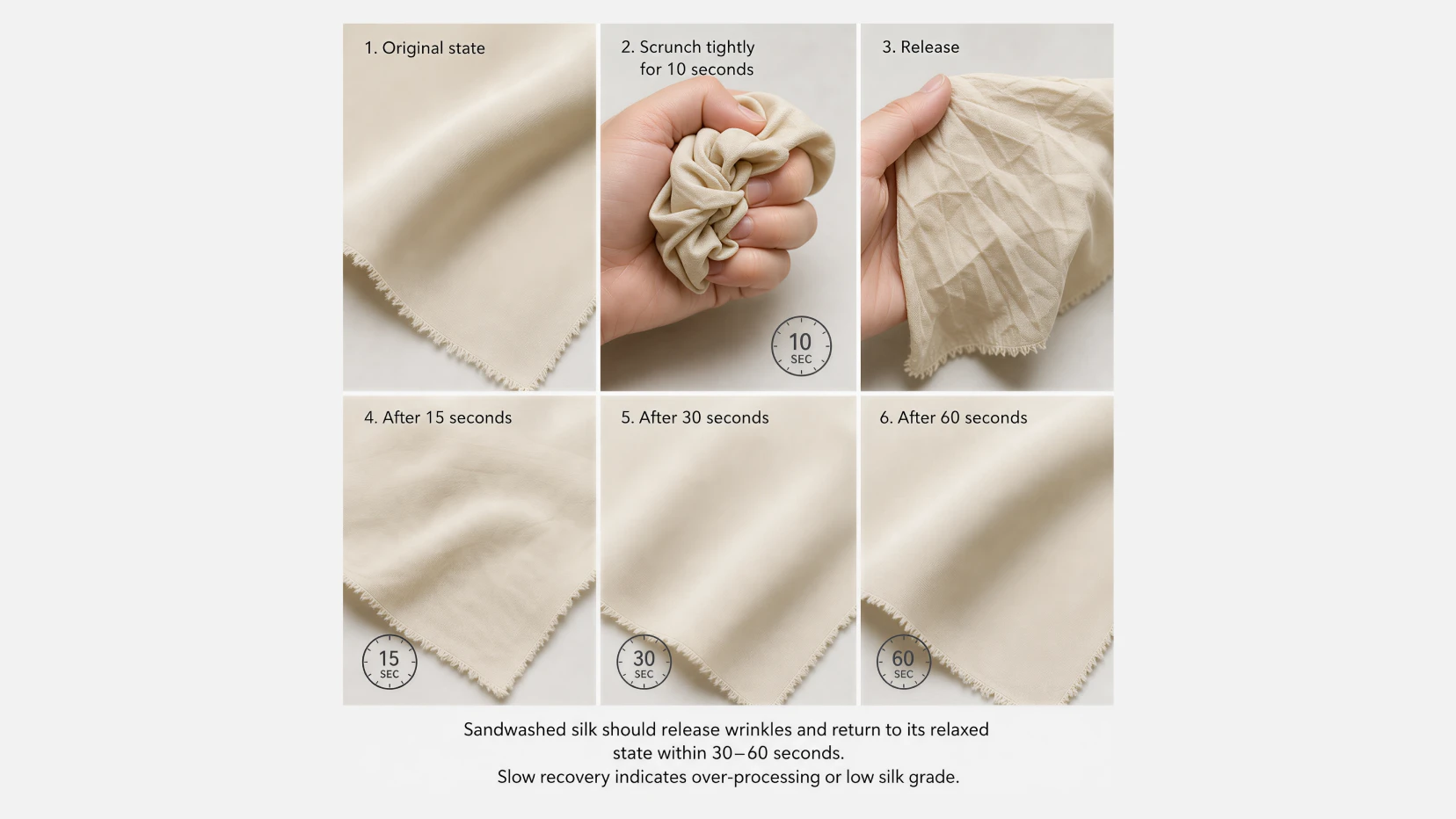
Build Your Sandwashed Silk Collection With DreamSilk
If you are developing a luxury apparel collection and considering sandwashed silk for one or more product categories, DreamSilk can support you from fabric specification through finished garment production in a single Suzhou facility. We weave the base silk, run our own sandwashing line with controlled chemistry and documented quality protocols, and cut and sew finished apparel — all under one roof, with one point of contact.
Tell us the silhouette you want to build, your target market positioning, and your price ceiling. We will come back with fabric recommendations (base weave, momme, sandwashing intensity), pre- and post-treatment swatches so you can feel the difference, a full quality protocol, and a transparent quote.
Contact us for a sandwashed silk quote or explore the full range of DreamSilk custom silk products to see what we can build for your brand.
FAQ
Sandwashed silk is a finished silk fabric that has been mechanically softened after weaving and dyeing, using fine abrasive media (originally sand, today typically ceramic beads or controlled stone wash) combined with mild softeners. The treatment removes the high-gloss shine typical of standard silk and replaces it with a matte, peach-skin surface and a more fluid drape.