
Fabrication de foulards en soie sur mesure : guide B2B sur les tissus, l'impression et la finition des bords destiné aux marques


Pour créer une collection de foulards en soie haut de gamme, il ne suffit pas d’avoir un design convaincant. Il faut également une connaissance pratique des spécifications textiles : ce que signifie le nombre de momme, quel tissage convient à quelle coupe, ce qui différencie un ourlet roulé à la main d’un ourlet roulé à la machine, et quel processus de production en usine permet de transformer un moodboard en stock prêt à être expédié. Les créateurs de marque qui maîtrisent ces spécifications obtiennent des foulards que leurs clients identifient comme des produits de luxe dès le premier contact. Ceux qui se trompent se retrouvent avec des stocks vendus à la moitié de leur prix cible.
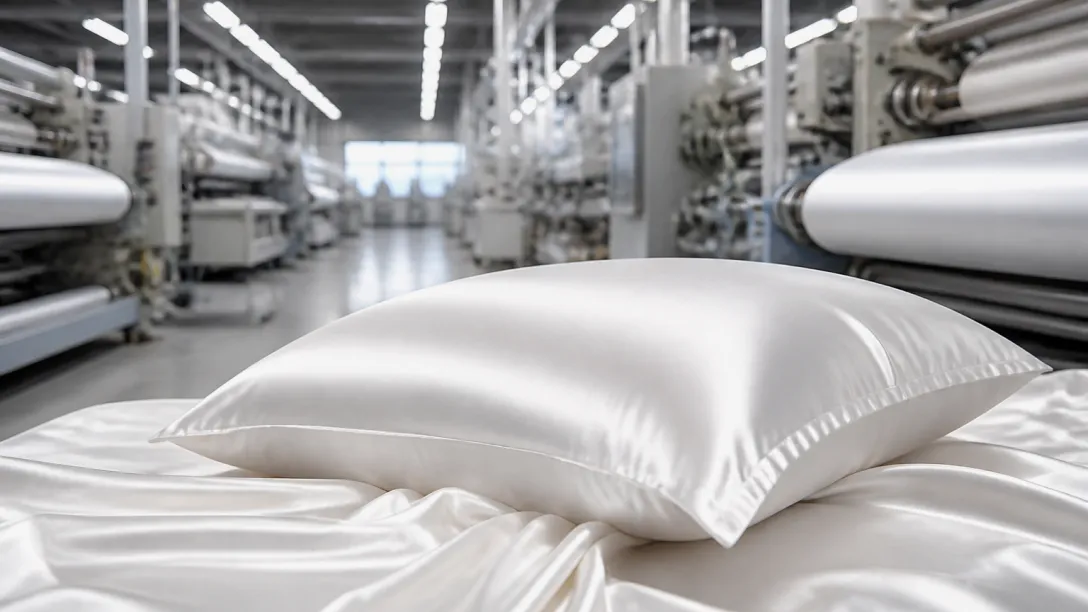
Chez DreamSilk, nous fabriquons des foulards en soie sur mesure pour des marques de mode internationales, des boutiques et des grossistes depuis notre site de Suzhou, qui est depuis toujours la capitale chinoise de la production de soie. Ce guide présente les éléments que les acheteurs de marques doivent réellement préciser lorsqu'ils s'approvisionnent en foulards en soie sur mesure : les tissus et le grammage, les dimensions, les méthodes d'impression, les techniques de finition des bords, ainsi que l'ensemble du processus d'approvisionnement B2B, du cahier des charges à la livraison en gros.
En quoi la commande d'un foulard en soie sur mesure diffère-t-elle de l'achat d'un foulard dans le commerce ?
La plupart des contenus en ligne consacrés aux foulards en soie s’adressent aux consommateurs finaux : comment reconnaître un produit de qualité, comment réaliser 20 nœuds différents, comment repérer une contrefaçon Hermès. Les acheteurs de marques qui commandent des foulards sur mesure évoluent dans un univers radicalement différent. Les décisions que vous prenez au stade du cahier des charges déterminent le coût unitaire, les délais de livraison, la perception du luxe en magasin et les taux de retour des clients. Les guides d'achat destinés aux consommateurs n'abordent aucun de ces aspects. (Notre Guide d'achat des foulards en soie de luxe (couvre le volet grand public ; ce guide en est le pendant B2B.)
Trois éléments font la différence :
La précision des spécifications est importante. Un consommateur peut choisir une écharpe étiquetée « soie » et en être satisfait. En revanche, un fabricant qui produit 2 000 unités de « soie » sans préciser le type de tissage, le nombre de momme, la composition chimique de la teinture et le type de finition se retrouve avec des produits d'une qualité inégale d'un lot à l'autre. La fiche technique fait office de contrat : des spécifications vagues donnent des résultats vagues.
Les économies d'échelle varient selon les cas. Un consommateur paie à l'unité. Le propriétaire d'une marque prend en charge les frais de mise en route (gravure des écrans, séparations de couleurs, séries d'échantillons), qui sont amortis sur l'ensemble du tirage. Des choix qui semblent coûteux à l'unité pour un petit tirage deviennent économiquement rationnels à grande échelle — et l'inverse est également vrai. Choisir la bonne méthode en fonction de la taille de votre tirage est un art en soi.
Les modes de défaillance sont différents. Un consommateur qui achète une écharpe qui ne lui convient pas la renvoie. Un propriétaire de marque qui expédie 2 000 écharpes de mauvaise qualité à un détaillant doit assumer le coût des stocks, la détérioration de la relation commerciale et l'atteinte à l'image de marque. La vérification avant production n'est pas facultative dans l'approvisionnement en écharpes de soie en B2B.
Voici le processus que nous proposons à nos clients lorsqu'ils font appel à nous pour créer une gamme de foulards en soie sur mesure.
Types de tissus pour foulards en soie et choix du poids en momme
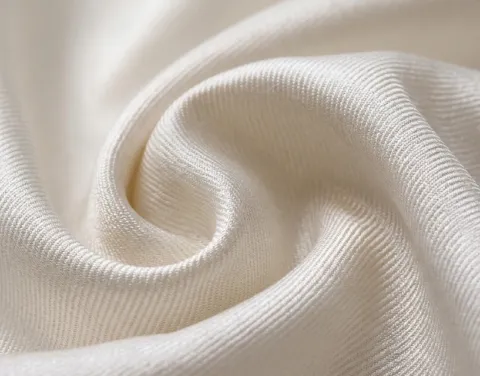
Le tissu de base détermine le tombé, l'éclat, le toucher et le prix maximal. Pour les foulards en soie 100 % pure, la caractéristique la plus importante dans chaque devis est mère.
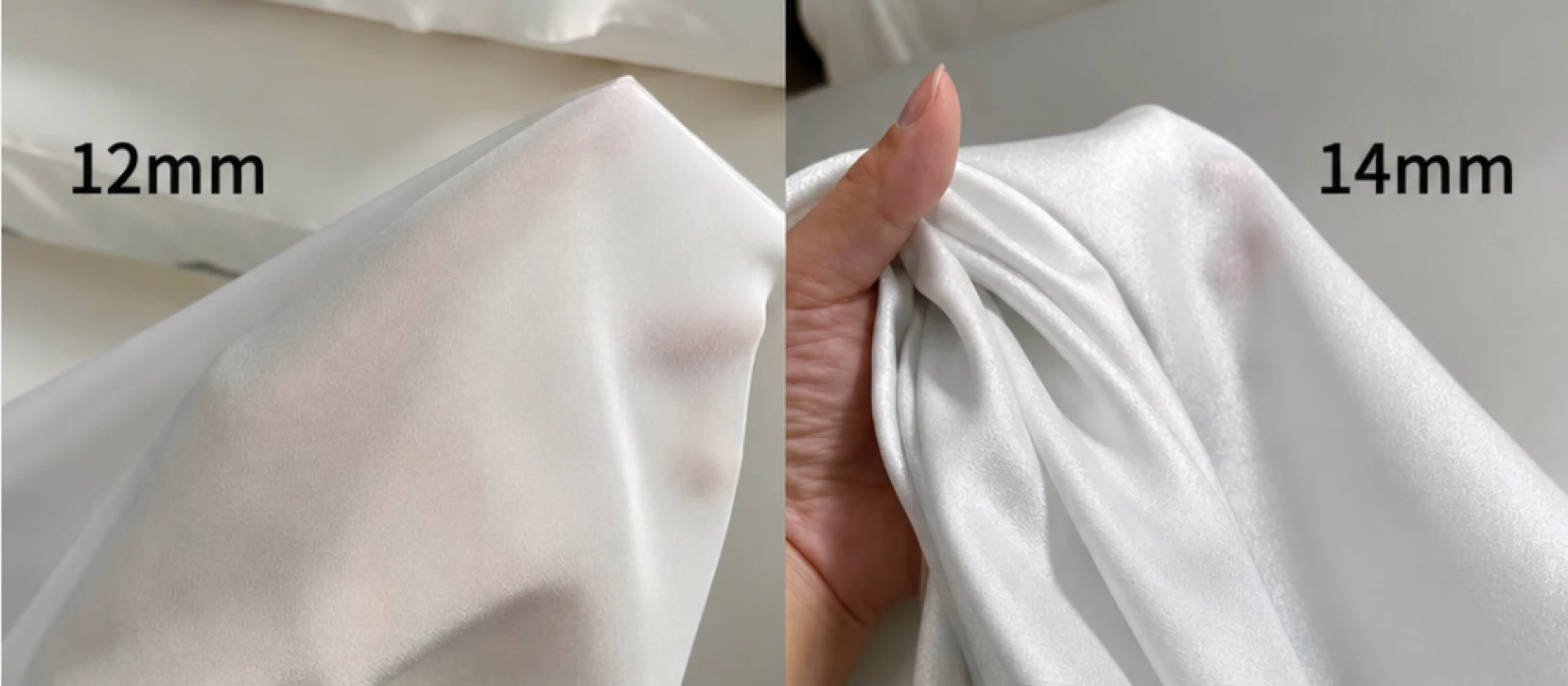
Qu'est-ce que le momme ? Le momme (parfois écrit « mm » ou « m/m ») est l'unité universelle utilisée pour mesurer le poids et la densité des tissus en soie. Un momme équivaut à 4,340 grammes par mètre carré. Un momme élevé indique généralement une soie plus épaisse et plus résistante, offrant un tombé plus ample. Un momme faible correspond à un tissu plus léger et plus translucide. La plupart des foulards en soie ont un momme compris entre 6 mm et 19 mm, selon le tissage et la coupe. Pour une explication détaillée de la façon dont le momme est calculé et de son évolution selon les catégories de produits, consultez notre Guide des poids de la soie momé.
Les huit armures de soie que nous utilisons pour la fabrication de foulards, avec les fourchettes de momme recommandées :
| Type de tissu | Poids courants en momme | Nos conseils pour les écharpes | Caractéristiques et cas d'utilisation recommandés |
|---|---|---|---|
| Twill de soie | 12, 14, 16, 18 mm | 14 ou 16 mm | Tissage diagonal caractéristique, très résistant, excellent tombé. La largeur de 14 à 16 mm est la norme mondiale pour les foulards carrés de luxe classiques à la structure affirmée (référence Hermès / maisons de couture européennes traditionnelles). |
| Silk Charmeuse | 12, 14, 16, 19 mm | 16 ou 19 mm | Tissu fluide avec une face en satin très brillant et un envers mat. La largeur de 16 mm offre un tombé fluide ; celle de 19 mm procure un toucher épais et haut de gamme, idéal pour les écharpes d'hiver et les foulards oblongs. |
| Soie Habotai | 8, 10, 12 mm | 10 ou 12 mm | Tissu lisse à armure toile, léger et croquant. Se prête exceptionnellement bien à la teinture et à l'impression numérique. Le tissu de 8 mm est généralement utilisé pour les doublures ; celui de 10 à 12 mm permet de confectionner d'excellents foulards d'été à petit prix. |
| Silk Chiffon | 6, 8, 10 mm | 6 ou 8 mm | Légère, vaporeuse, très transparente, avec une surface délicate et légèrement rugueuse. Idéale pour des châles de soirée aériens et des accessoires printaniers légers. |
| Georgette de soie | 8, 10, 12 mm | 10 mm | Semblable à la mousseline, mais avec un tissage torsadé plus serré qui le rend légèrement plus lourd et moins transparent. Texture froissée caractéristique. L'épaisseur de 10 mm offre un bon compromis entre résistance et transparence. |
| Crêpe de Chine | 12, 14, 16 mm | 14 mm | Une texture légèrement granuleuse, une excellente résistance aux plis, une belle finition mate et un tombé fluide. Le 14 mm est le choix de luxe le plus polyvalent pour le quotidien. |
| Organza de soie | 5,5, 6, 8 mm | 6 mm | Transparent, impeccable, très structuré — conserve parfaitement sa forme. Le choix idéal pour les foulards aux designs architecturaux avant-gardistes et les superpositions dans les tenues de soirée. |
| Jacquard de soie | 14, 16, 19 mm | 14 ou 16 mm | Des motifs ton sur ton tissés directement dans la structure du tissu avant l'impression. Cela permet d'obtenir une surface texturée sur mesure, idéale pour les collections haut de gamme aux textures riches. |
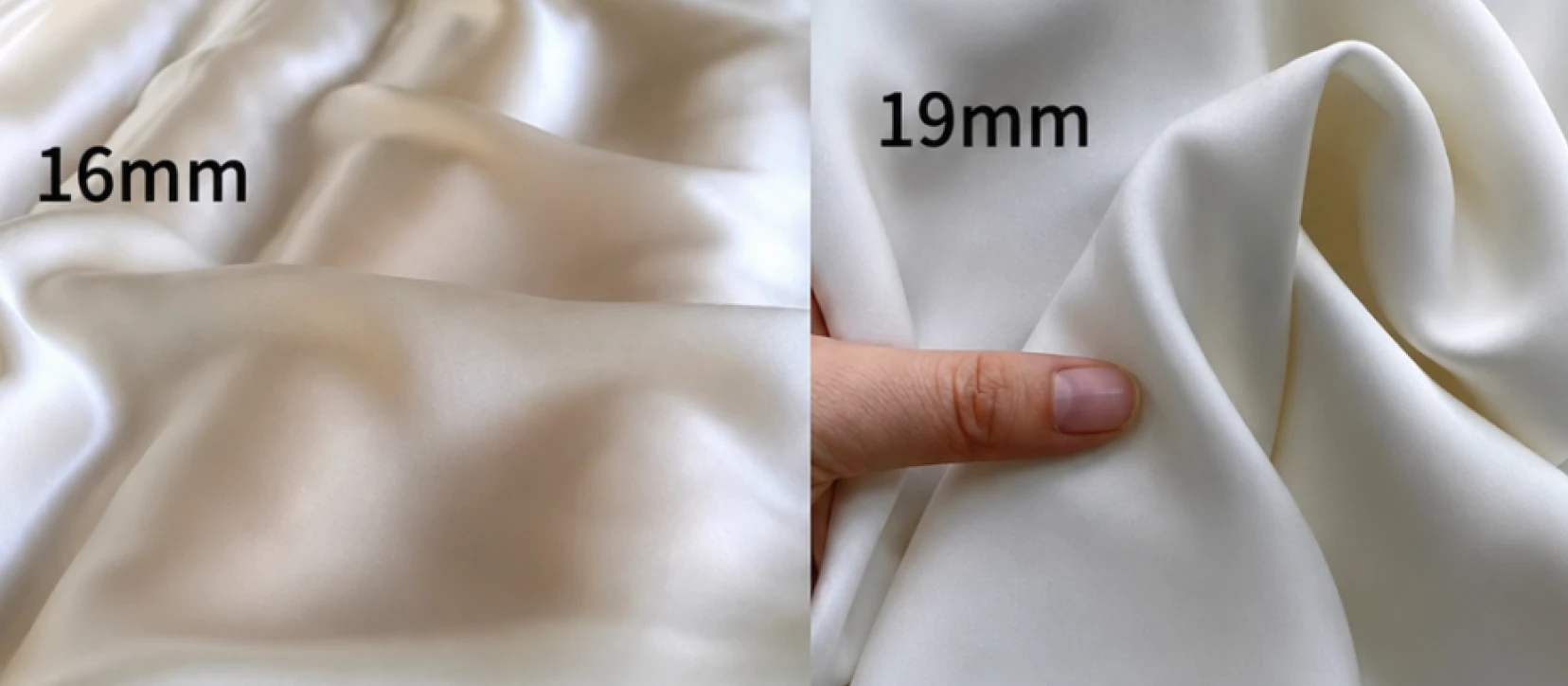
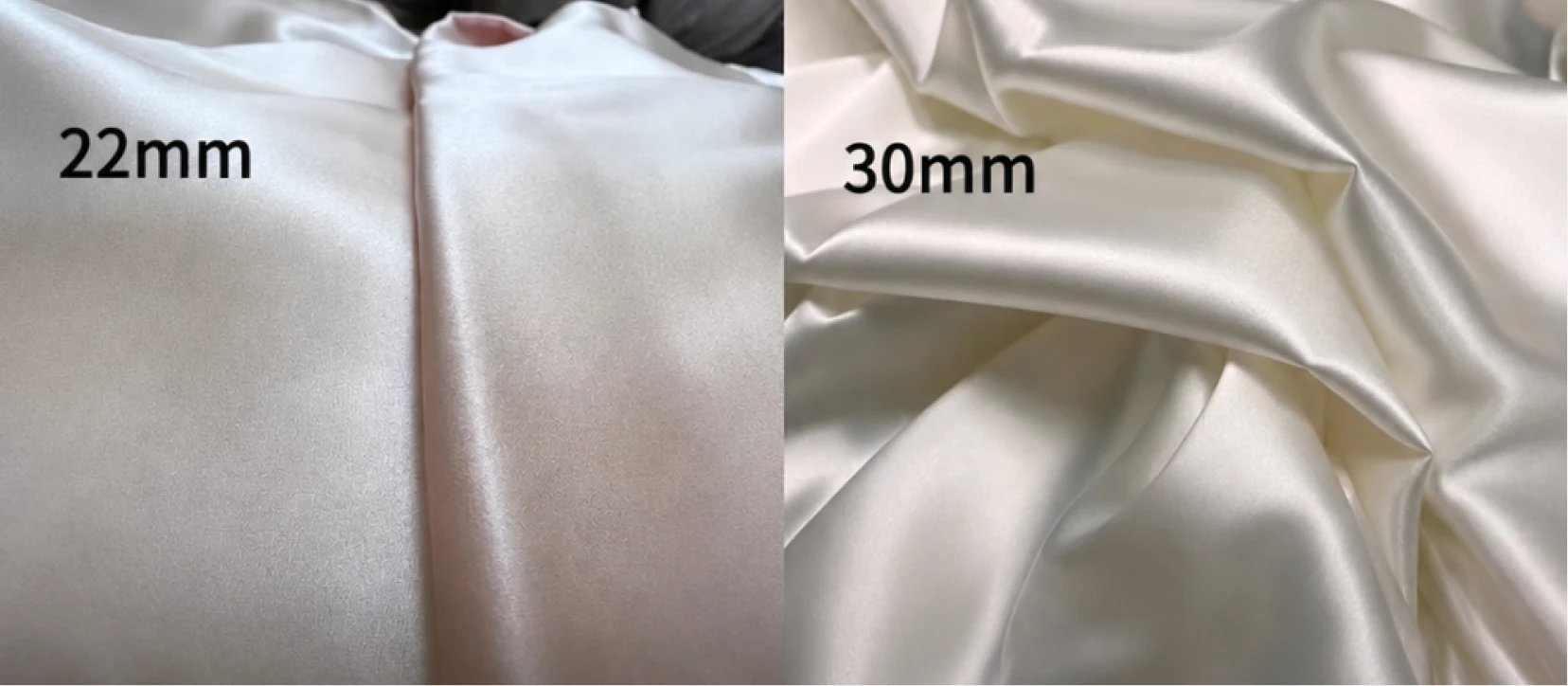
Quelques remarques pratiques issues de la production :
- Pour les marques qui découvrent les foulards en soie, le choix le plus sûr pour commencer est satin de soie de 14 à 16 mm pour les carrés classiques. Il s'agit de la référence mondiale en matière de luxe et du tissage le plus facilement identifiable par les détaillants et les clients finaux comme étant haut de gamme.
- Silk charmeuse at 16–19 mm C'est le choix idéal pour les tenues de soirée et les looks qui se remarquent. Le satin donne une impression de luxe plus marquée que le twill, mais il convient moins aux tenues classiques de jour.
- Crêpe de Chine en soie de 14 mm est la nouvelle coqueluche des marques qui misent sur un positionnement « luxe discret » : fini mat, textures fluides, couleurs intenses et esthétique contemporaine.
- Les soies légères (mousseline, organza, habotai léger) sont très esthétiques, mais nécessitent une doublure ou un soin particulier au niveau de la coupe pour être bien mises en valeur. Elles se vendent généralement à des prix plus bas que le twill de soie de poids moyen.
Mélanges de soie et autres tissus pour écharpes : quand ne pas se limiter à la soie pure
La soie pure constitue la base de la catégorie des foulards en soie haut de gamme, mais ce n'est pas le seul tissu que nous utilisons pour la fabrication de foulards. Les marques qui développent des collections plus variées ont souvent besoin de tissus qui associent la soie à d'autres fibres naturelles ou qui s'inscrivent dans des gammes de prix plus abordables.
Tissus haut de gamme en mélange de soie
- Mélange de soie et de coton. Allie la respirabilité du coton à l'éclat subtil de la soie. Idéal pour les collections de foulards décontractés de printemps/été, les tenues de plage et les vêtements de tous les jours abordables à un prix haut de gamme.
- Mélange soie-viscose / soie-rayonne. Ce tissu offre un excellent tombé et une excellente tenue des couleurs vives, tout en présentant un coût nettement inférieur à celui de la soie pure. Il est idéal pour les marchés contemporains axés sur le volume, où le toucher semblable à celui de la soie prime sur une composition 100 % soie.
- Mélange de soie et de lin. Allie la texture structurée et le rendu impeccable du lin à la douceur de la soie. Le tissu idéal pour les écharpes de villégiature, à la fois respirant et élégant : plus épais que la mousseline, mais plus texturé que le twill de soie pur.
- Mélange soie-laine. Allie la chaleur hivernale à un toucher luxueux. Le choix idéal pour les collections de grandes écharpes et de châles automne-hiver. Particulièrement apprécié dans des dimensions de 110 cm et plus pour les pièces phares de la saison.
Tissus alternatifs pour écharpes adaptés à tous les budgets
DreamSilk fabrique également des foulards à partir de fibres haut de gamme autres que la soie pour les marques qui développent des collections à plusieurs niveaux sous une seule marque propre :
- Polyester. Très résistante, grand teint, abordable. Idéale pour les articles promotionnels, les programmes de cadeaux d'entreprise et les lignes de mode grand public. Elle n'a pas le luxe de la soie, mais se positionne parfaitement dans le segment des écharpes d'un bon rapport qualité-prix.
- Bambou et Tencel. Durable, ultra-doux, évacuant l'humidité. Fortement recommandé pour les marques soucieuses de l'environnement à la recherche d'une alternative végétalienne à la soie offrant un toucher luxueux et authentique.
- 100 % coton. Respirant, facile d'entretien, intemporel. La base idéale pour les bandanas décontractés, les foulards, les châles d'été et les basiques de la marque.
Pour la plupart des marques de mode, une collection coordonnée comprenant des pièces phares en soie ainsi que des déclinaisons en mélanges ou en autres tissus obtient de meilleurs résultats commerciaux qu’une gamme exclusivement en soie. Cette gamme de prix — allant du bandana en coton à 40 $ à l'écharpe en soie et coton à 80 $, en passant par le twill de soie pure à 180 $ — permet de couvrir une plus large partie du spectre des dépenses des clients sans diluer le caractère luxueux de la marque.
Tailles des foulards en soie : dimensions standard et ce qui se vend en magasin
Le choix des dimensions est l'aspect le plus sous-estimé dans la fabrication de foulards en soie sur mesure. Un même tissu et un même motif, déclinés dans des dimensions différentes, s'adressent à des clientèles différentes, se positionnent sur des gammes de prix différentes et rencontrent des succès variables selon les marchés. Les acheteurs de marques internationales devraient choisir les dimensions avec soin, plutôt que de se contenter d'une taille standard.
Les facteurs qui font bouger le commerce de détail :
Foulards carrés en soie
- 35 × 35 cm (foulard / mini carré). Accessoire de sac (poignée décorative), élastique à cheveux, bracelet. Particulièrement prisé par les jeunes et les marques axées sur les accessoires. Prix de vente habituel : entre 30 et 80 $.
- 45 × 45 cm (petit carré / pochette). Pochettes pour hommes, bracelets ou accessoires pour cheveux pour femmes. Offre solide dans les gammes de vêtements pour hommes et d'accessoires. Prix de vente habituel : entre 40 et 100 $.
- 53 × 53 cm (foulard / petite écharpe). Une taille intermédiaire polyvalente : assez grande pour être portée autour du cou, assez petite pour être portée au quotidien. Prix habituel : entre 60 et 140 $.
- 70 × 70 cm (petit carré classique). Version réduite du modèle Hermès. Idéal pour un usage quotidien et des tenues plus décontractées. Prix habituel : entre 80 et 180 $.
- 90 × 90 cm (le carré de luxe par excellence). Le format de référence Hermès. La taille de foulard en soie de luxe la plus reconnue au monde. Elle offre les possibilités de port les plus variées : autour du cou, sur la tête, pour attacher la poignée d'un sac ou en châle. Prix de vente habituel : entre 120 et 400 dollars, voire plus.
- 110 × 110 cm (grand format / châle). Une coupe ample, idéale pour être portée en châle ou en paréo. Très présente dans les collections de vacances et les collections saisonnières. Prix de vente habituel : entre 180 et 500 $ ou plus.
Foulards en soie rectangulaires et oblongs
- 30 × 180 cm (écharpe fine / en ruban). Élastique à cheveux, fin collier tour de cou, modèle ras-du-cou tendance. Très présent chez les marques de mode pour les jeunes et celles axées sur les accessoires.
- 45 × 180 cm (format oblong étroit). Foulard classique en soie pour homme, modèle fin et fluide pour femme. Polyvalent, il se porte aussi bien en journée qu'en soirée.
- 70 × 180 cm (modèle rectangulaire pour femmes). Le modèle oblong classique pour femmes, idéal aussi bien pour un look tendance que pour un style traditionnel.
- 90 × 200 cm (écharpe / châle). Une pièce imposante, idéale pour les occasions formelles, la tenue de la mère de la mariée et les soirées.
Quelques remarques pratiques issues de nombreuses années d'expérience dans la fabrication de foulards pour le marché B2B :
- Pour les premières collections d'une marque, le choix de tailles le plus sûr est 90 × 90 cm en twill de soie. C'est le format que la plupart des détaillants et des clients du monde entier associent au luxe. Il offre également les possibilités de style les plus variées, ce qui réduit les hésitations à l'achat.
- 53 × 53 cm et 70 × 70 cm sont de plus en plus prisées sur le marché actuel : les jeunes consommateurs trouvent que le format 90 × 90 cm est trop grand pour un usage quotidien. Les marques qui ciblent les moins de 35 ans devraient envisager de proposer un petit carré comme produit phare plutôt que le grand format classique.
- 110 × 110 cm et 90 × 200 cm se vendent bien de la fin de l'automne jusqu'à la période des fêtes de fin d'année. En revanche, elles peinent à trouver preneur au printemps et en été.
- Sac à provisions Twillys (35 × 35 cm) constituent généralement les références les plus rentables d'une collection de foulards, car le coût du tissu à l'unité y est le plus bas, tandis que le prix de vente au détail leur confère un positionnement de luxe raisonnable.
- Personnaliser un même tissu pour plusieurs tailles constitue une stratégie de vente en gros judicieuse : imprimer un motif de base sur un seul tissu de base, puis le découper et le finir en 3 ou 4 tailles différentes. Le coût partagé du tissu permet de réduire le coût unitaire de l'ensemble de la collection.
Pour les propriétaires de marques à la recherche d'idées de mise en scène pour leurs visuels marketing, notre Guide pour nouer un foulard en soie couvre 15 styles différents pour ces formats.
Méthodes d'impression pour les foulards en soie personnalisés : impression simple face ou double face
Une fois le tissu et les dimensions choisis, il faut ensuite décider du mode d'application du motif. La méthode d'impression détermine si les couleurs ressortent avec éclat sur les deux faces de l'écharpe — et le choix entre une impression simple face ou double face est l'un des choix les plus déterminants dans la fabrication d'écharpes en soie sur mesure.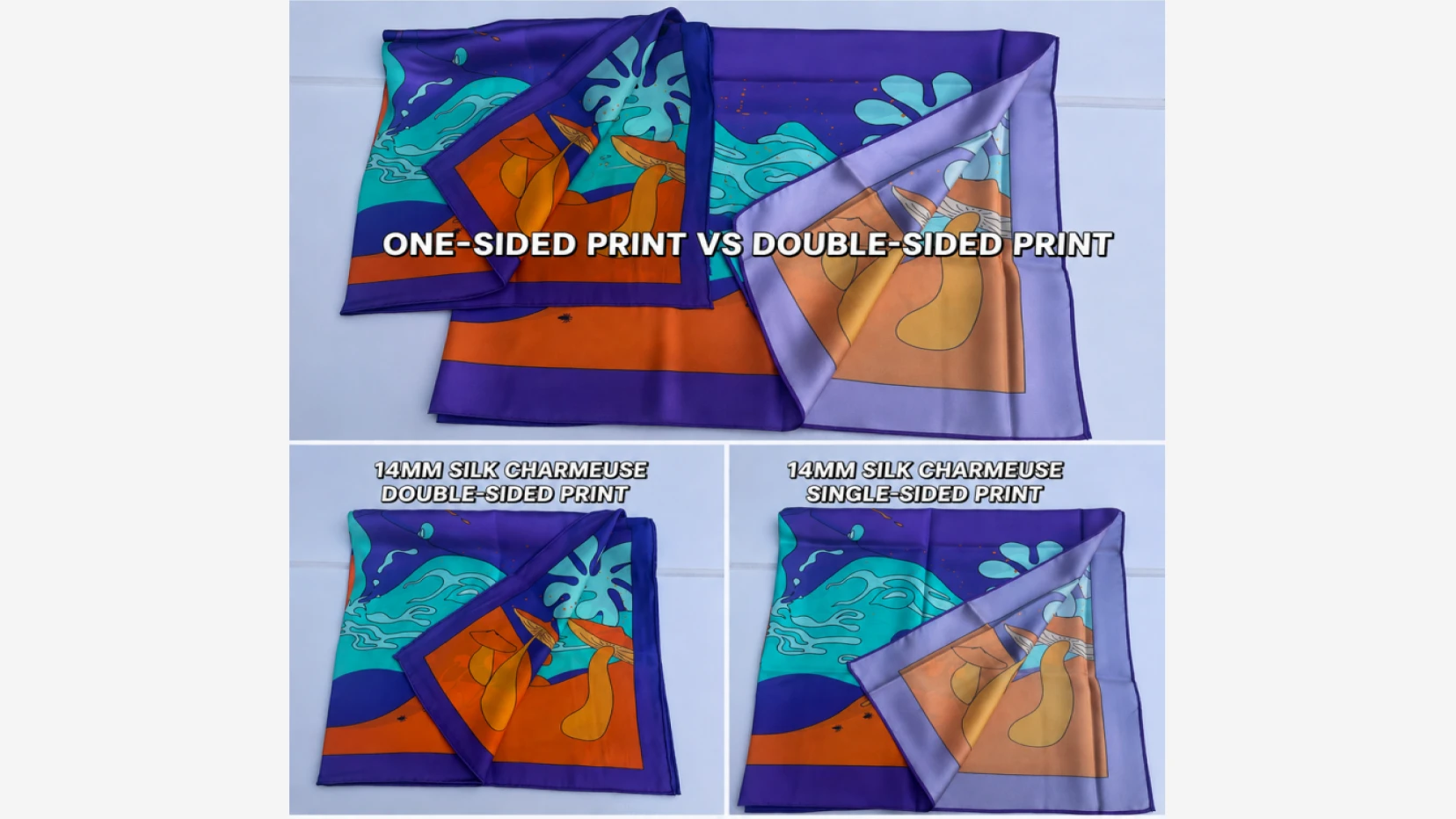
Impression d'un foulard en soie sur une seule face
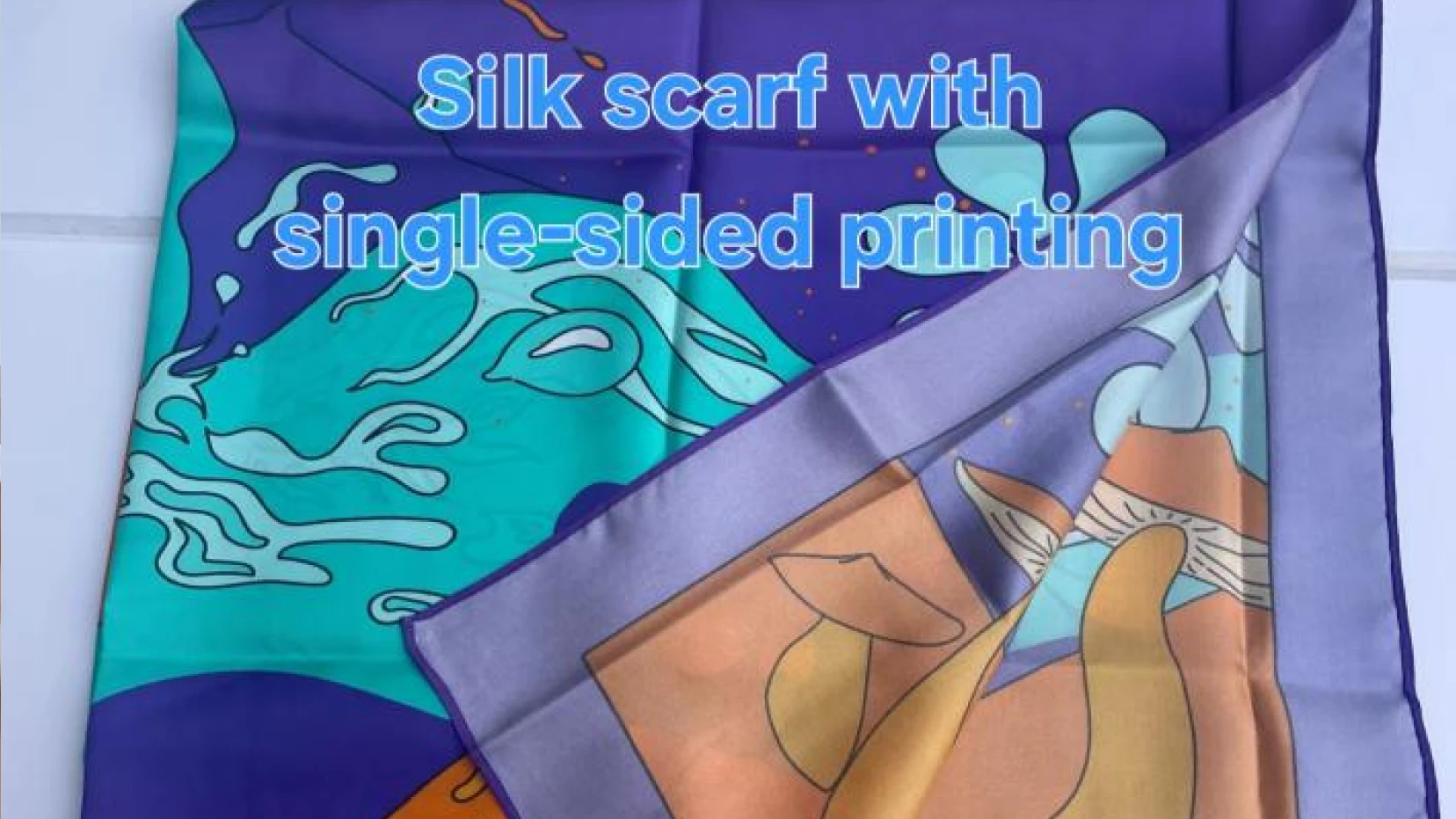
L'impression simple face consiste à appliquer le motif uniquement sur la face avant de la soie. L'encre traverse le tissu jusqu'à l'envers à des degrés divers, en fonction du grammage du tissu :
- Chiffon de 6 mm ou georgette de 8 mm : La pénétration de l'encre est excellente, ce qui permet d'obtenir un motif en miroir pratiquement identique au verso.
- Hobata de 10 mm : très forte transparence : environ 85 à 90 % de la saturation des couleurs de la face avant est visible au verso.
- Twill 14 mm : une pénétration modérée, soit environ 65 à 75 % de la saturation des couleurs de la face avant au verso.
- 16 mm et plus (sergé, charmeuse, jacquard) : une pénétration moindre, avec une saturation d'environ 50 à 65 % au verso. La face arrière paraîtra nettement plus claire que la face avant.
Idéal pour : des soies plus légères où la pénétration naturelle permet d'obtenir une belle couleur des deux côtés ; des collections à prix abordable où la saturation de l'envers est acceptable ; des modèles où l'envers est rarement visible une fois la pièce portée.
Économie B2B : Coût au mètre inférieur à celui de l'impression recto-verso. Délais d'exécution plus courts. Aucune complexité de repérage. Configuration standard d'impression numérique.
Impression recto-verso sur foulards en soie
L'impression recto-verso permet d'appliquer le motif sur les deux faces de la soie avec un alignement précis, éliminant ainsi l'aspect plus clair de la face arrière que l'impression simple face laisse sur les soies plus lourdes. Le tissu passe deux fois dans l'imprimante (ou dans un système d'impression recto-verso spécialisé), l'impression au verso étant calibrée pour correspondre à celle du recto avec une tolérance de 1 à 2 mm.
C'est ce détail technique qui distingue les écharpes de luxe haut de gamme des écharpes imprimées grand public. Lorsqu'une écharpe en twill de soie de 90 × 90 cm, issue d'une maison de couture de luxe traditionnelle, est portée lâchement ou nouée de manière à laisser apparaître l'envers, les deux faces présentent une profondeur de couleur identique. Un foulard dont l'envers est visiblement décoloré est perçu comme de qualité inférieure par les clients avertis dès le premier coup d'œil.
Idéal pour : tissus opaques ou plus épais (14 mm + sergé de soie, 16 mm + charmeuse, soie-laine, jacquard) ; segment haut de gamme et luxe ; modèles d'écharpes réversibles ; tout produit pour lequel le client attend un savoir-faire artisanal de luxe.
Économie B2B : environ 1,8 à 2,2 fois le coût de l'encre au mètre par rapport à l'impression recto. Délais de production allongés de 20 à 30 %. L'alignement du repérage nécessite un contrôle qualité plus rigoureux. Malgré l'augmentation des coûts, la majoration du prix de vente des produits recto-verso (généralement de 40 à 80 % supérieure à celle des équivalents recto) rend le choix du recto-verso très avantageux sur le plan économique pour tout programme de luxe.
Pour une présentation technique complète de toutes les techniques de sérigraphie, notamment la sérigraphie à plat, la sérigraphie rotative et l'impression au bloc à la main, consultez notre Guide des techniques de sérigraphie.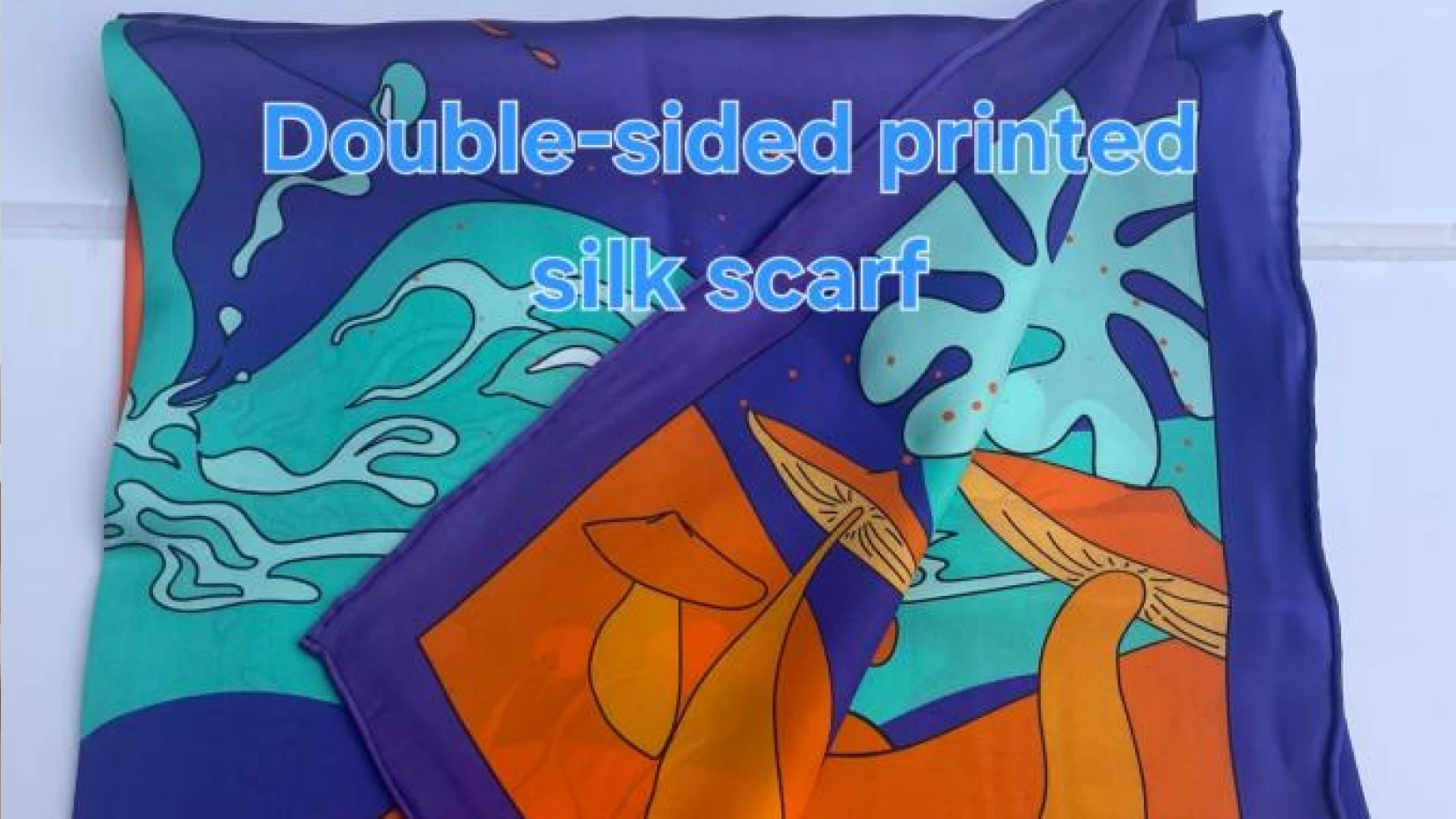
Finitions des bords des foulards en soie : ourlets roulés à la main ou à la machine
La finition des bords est la touche finale qui caractérise un foulard en soie de qualité. Il existe deux options principales, et ce choix constitue à la fois un signal fort de la marque et un véritable enjeu en termes de coûts de production.
Ourlets réalisés à la machine
Les ourlets roulés de précision sont réalisés à l'aide d'un équipement de couture industriel spécialisé, équipé d'un pied pour ourlets roulés. Le bord du tissu est plié mécaniquement deux fois (chaque pli mesurant environ 1 à 1,5 mm) et fixé par une couture fine en un seul passage continu. On obtient ainsi un ourlet net, uniforme et plat, à la fois résistant et d'aspect professionnel.
Idéal pour : les commandes en gros de gros volumes, les programmes de mode éphémère, des gammes de prix abordables, ainsi que des marques pour lesquelles la rapidité de production et le coût unitaire priment sur l'esthétique des finitions à la main propres à la haute couture.
Économie B2B : Un opérateur expérimenté peut réaliser un ourlet à la machine à une cadence d'environ 1,2 mètre par minute. Pour une écharpe de 90 × 90 cm (3,6 m de périmètre), l'opération d'ourlet prend environ 3 minutes. Le coût unitaire reste faible, même pour une qualité haut de gamme.
La signature visuelle : une finition lisse, régulière, d'aspect légèrement mécanique. Elle donne une impression de produit bien fabriqué plutôt que d'artisanat. Acceptable dans la plupart des gammes de prix, même si les clients exigeants du secteur du luxe peuvent s'en rendre compte.
Ourlets roulés à la main
La marque de fabrique d'un véritable savoir-faire artisanal en matière de foulards en soie. Des artisans expérimentés enroulent le bord coupé de la soie entre le pouce et l'index, puis fixent le pli à l'aide de minuscules points cousus à la main avec un fil presque invisible. Il en résulte un bord légèrement bombé et arrondi qui met en valeur le motif en lui conférant une profondeur subtile.
Idéal pour : les gammes de foulards en soie haut de gamme et de luxe, le positionnement des marques de tradition, les pièces phares, ainsi que tout produit dont le prix de vente au détail est supérieur à 150 $. Les ourlets roulés à la main constituent la norme mondiale pour les foulards en soie de créateurs haut de gamme et sont immédiatement perçus par les acheteurs avertis comme un gage de qualité irréprochable.
Économie B2B : Pour un artisan expérimenté, le roulage à la main du bord d’un foulard de 90 × 90 cm prend environ 30 à 60 minutes par pièce. Le coût unitaire est environ 8 à 15 fois plus élevé que celui d’un foulard roulé à la machine, mais la majoration du prix de vente au détail permet de le justifier. Une écharpe en twill de soie de 90 × 90 cm roulée à la main se vend généralement 50 à 120 % plus cher que son équivalent roulé à la machine.
La signature visuelle : Un bord dodu, arrondi et légèrement irrégulier qui reflète la lumière différemment de la surface lisse de l'écharpe. Il incarne le luxe et le savoir-faire artisanal. Les clients habitués aux produits en soie haut de gamme remarquent immédiatement la différence.
Remarque pratique concernant l'approvisionnement : la qualité des ourlets roulés à la main varie considérablement d'une usine à l'autre. Cette technique exige un véritable savoir-faire artisanal ; toutes les usines de confection de soie n'emploient pas les ouvriers qualifiés nécessaires pour la réaliser correctement. Il est essentiel d'inspecter les bords d'un échantillon avant de donner le feu vert à la production en série. Un ourlet « roulé à la main » présentant des rouleaux irréguliers visibles, des fils apparents ou une largeur de pli inégale est pire qu'un ourlet roulé à la machine bien net.
Pour découvrir toutes les informations techniques sur la finition des bords en soie ainsi que d'autres techniques de couture, consultez notre Guide des techniques de couture de la soie.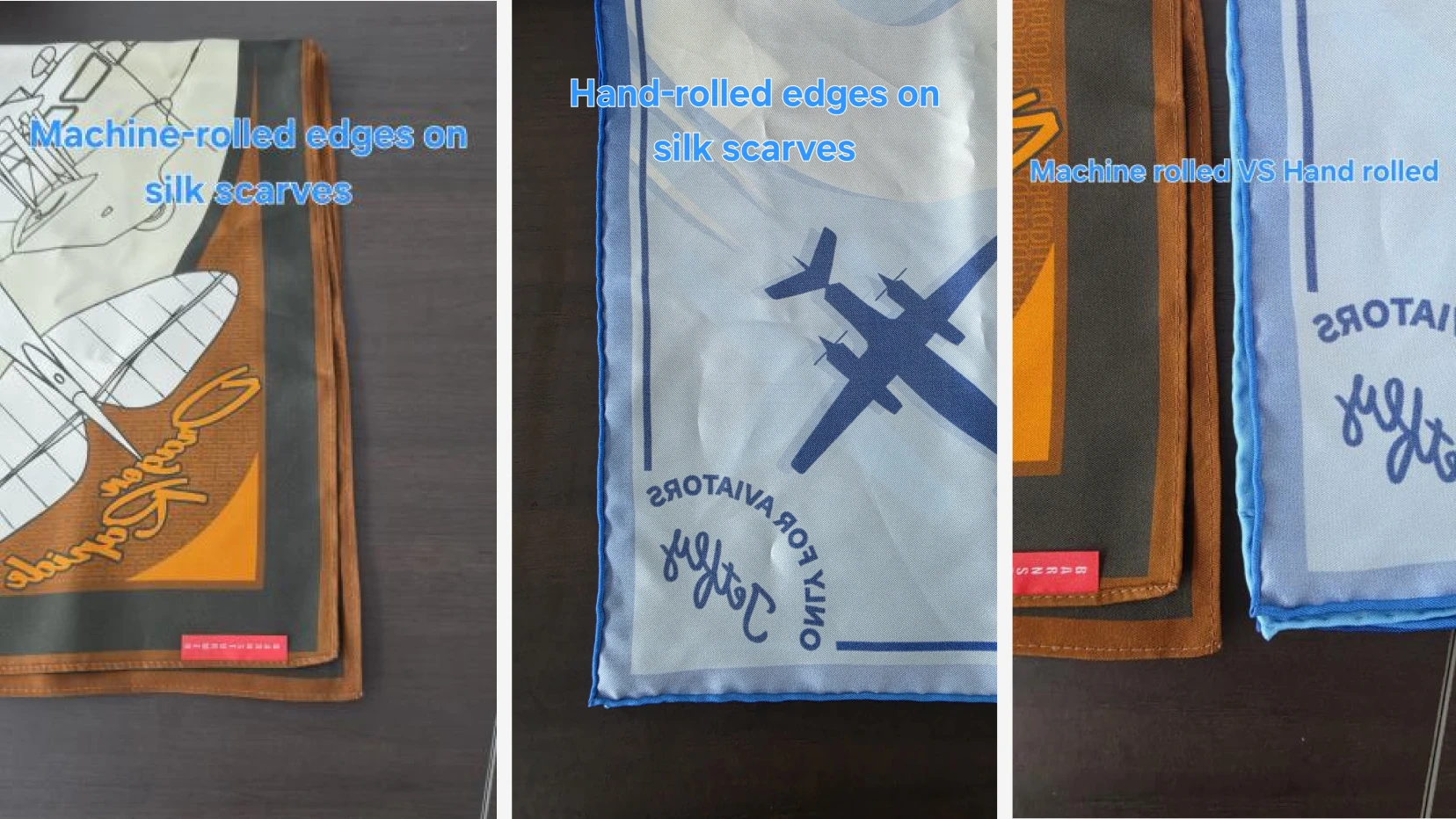
Assortiment des couleurs, étiquettes et emballage pour les foulards en soie personnalisés
Le tissu, l'imprimé et la finition des bords déterminent la qualité intrinsèque du produit. L'harmonie des couleurs, le logo de la marque et l'emballage influencent la perception du produit. Pour le positionnement d'un foulard en soie haut de gamme, ces trois éléments sont essentiels.
Personnalisation des couleurs
La plupart des programmes de foulards en soie sont imprimés à l'unité (la soie de base tissée est imprimée après le tissage et la teinture), ce qui garantit une reproduction des couleurs d'une grande netteté. Pour les programmes de marque nécessitant des couleurs spécifiques :
- Correspondance des couleurs Pantone. Veuillez fournir un code de référence Pantone. Nous réalisons un échantillon en laboratoire sur le tissu de production réel, avec un écart Delta E cible ≤ 2,0 par rapport à votre référence. La mise en correspondance Pantone standard allonge le délai de 5 à 10 jours.
- Développement de couleurs personnalisées. Veuillez nous fournir un échantillon de tissu ou de couleur. Nous élaborons une formule de teinture sur mesure et réalisons un échantillon de laboratoire pour validation. Il faut compter 10 à 14 jours supplémentaires pour le premier échantillon de laboratoire.
- Sélection de nuanciers standard. Nous disposons de plus de 100 formules de teinture sur soie conformes au nuancier Pantone en stock, ce qui nous permet d'accélérer les délais d'exécution. Les couleurs du nuancier standard n'allongent le délai de production que d'un à deux jours.
Pour les programmes de marque où une couleur emblématique fait partie intégrante de l'identité marketing, il est essentiel de respecter scrupuleusement les nuances Pantone : les clients remarquent immédiatement si le rouge de la marque sur un foulard en soie ne correspond pas à celui affiché sur le site web. Investir dès le départ dans une recette de teinture de référence permet d'économiser des coûts de remplacement sur de nombreuses références et au fil des saisons.
Étiquettes personnalisées
Les foulards en soie haut de gamme comportent généralement trois types d'étiquettes, toutes personnalisables :
- Étiquette de marque (cousue ou imprimée). L'élément distinctif de la marque, généralement cousu dans un coin ou imprimé directement sur le dos en soie. Les options comprennent des étiquettes tissées, des étiquettes en satin imprimées ou des logos imprimés directement sur le tissu.
- Composition / étiquette d'entretien. Obligatoire pour la plupart des marchés de détail, ces étiquettes indiquent la composition du tissu et les consignes d'entretien. Des versions multilingues peuvent être demandées pour la distribution internationale.
- Étiquette indiquant le pays d'origine. « Fabriqué en Chine » ou une mention similaire, obligatoire pour les formalités douanières sur de nombreux marchés de destination.
Dans le segment du luxe, les étiquettes tissées rehaussées de fils métalliques constituent la norme dans le secteur. Les étiquettes imprimées sont perçues comme appartenant à un segment plus abordable.
Emballages haut de gamme
L'emballage de vente d'un foulard en soie revêt autant d'importance pour l'image de marque que le foulard lui-même. Options d'emballage standard :
- Coffret cadeau de marque (en carton rigide ou avec fermeture magnétique à rabat). Une présentation haut de gamme. Un élément essentiel pour le positionnement lors de l'achat d'un cadeau.
- Sac à poussière de marque. Sac de protection en tissu souple, dans le tissu ou la couleur de la marque. Emplacement de choix.
- Emballage en papier de soie avec autocollant à l'effigie de la marque. Emballage de milieu de gamme. Économique et soigné.
- Étiquette volante de marque accompagnée d'un récit sur la vente au détail. Se suspend à l'écharpe ou se fixe au coffret cadeau. Il contient l'histoire du produit, les caractéristiques du tissu et des conseils de mise en valeur.
- Présentoirs de vitrine. Fenêtre en acétate permettant de voir l'écharpe à l'intérieur de la boîte. Solide, idéale pour la présentation en magasin.
L'usine intégrée de DreamSilk regroupe sous un même toit le tissage, la teinture, l'impression, la finition, la couture, la pose des étiquettes et le conditionnement final de la soie. L'avantage pour les marques : un interlocuteur unique, un système de qualité unique et une expédition unique, de l'usine jusqu'à votre destination. Découvrez notre programme de coffrets cadeaux en soie personnalisés pour découvrir des exemples d'emballages haut de gamme pour écharpes à offrir.
Le processus d'approvisionnement en foulards en soie sur mesure : du cahier des charges à la livraison en gros (et comment vérifier la qualité tout au long du processus)
Pour les propriétaires de marques qui se lancent dans la fabrication de foulards en soie, voici le déroulement concret des opérations entre le moment où vous soumettez un motif et celui où vous recevez les foulards finis dans votre entrepôt.
1. Évaluation des besoins et consultation en matière de conception. Envoyez-nous vos fichiers de conception, le positionnement sur le marché, le prix de vente prévu, les dimensions et le volume prévu. Notre équipe examine votre cahier des charges et détermine les spécifications optimales pour le tissu, la méthode d'impression, la finition des bords et le conditionnement.
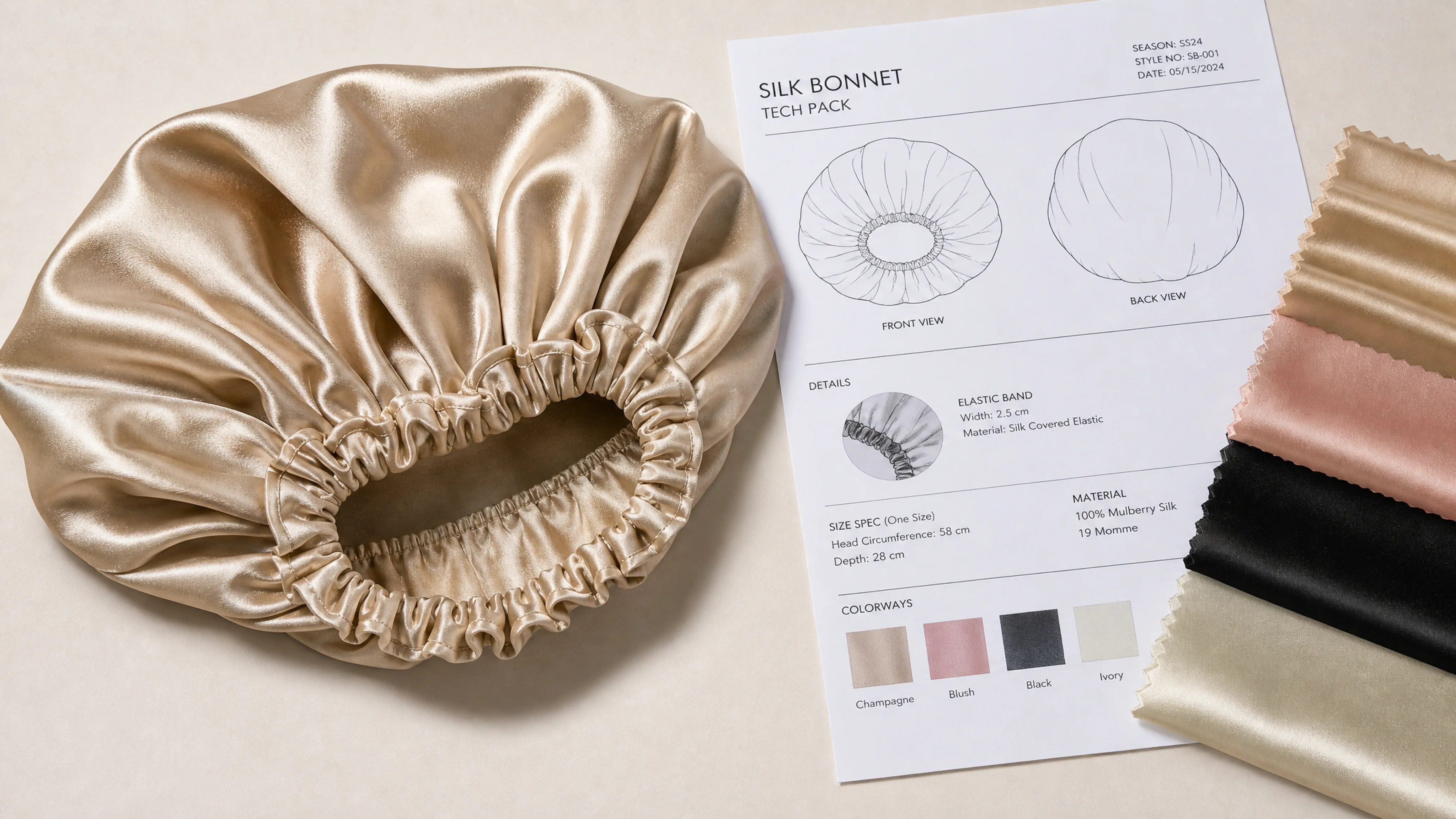
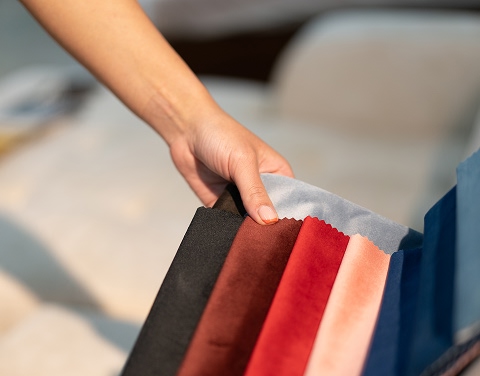
2. Choix des tissus et échantillons. Nous vous proposons gratuitement des échantillons de tissus comprenant plusieurs variétés de soie aux grammages recommandés. Vous pouvez ainsi les manipuler, comparer leur tombé et leur toucher, et choisir le tissu qui vous convient.
3. Échantillons de laboratoire pour les couleurs personnalisées (si nécessaire). Nous réalisons de petits échantillons teints de chaque couleur personnalisée dans le tissu utilisé pour la production. Vous validez la correspondance des couleurs (généralement avec un écart Delta E inférieur à 2,0 par rapport à la référence Pantone). Délai standard : 5 à 10 jours pour le premier échantillon de laboratoire.
4. Épreuve d'impression / échantillon d'impression. Nous réalisons un échantillon imprimé de votre motif sur le tissu de production réel, en utilisant les encres de production, puis nous le soumettons à l'ensemble du cycle de lavage et de finition. C'est le seul moyen fiable de voir à quoi ressemblera réellement votre produit fini. Les fichiers graphiques de studio et les épreuves numériques ne sont pas équivalents.
5. Premier échantillon de production. Une écharpe finie est fabriquée à partir du tissu de production, conformément à toutes les spécifications : impression, finition des bords, étiquettes de marque. Vous vérifiez la fidélité des couleurs, la netteté de l'impression, la qualité de l'ourlet, la précision des dimensions et le toucher général.
6. Échantillon de pré-production (PPS). Une fois le premier échantillon validé et les modifications nécessaires apportées, nous réalisons un échantillon de production (PPS) qui servira de référence exacte pour la production en série. Les deux parties approuvent cet échantillon.
7. Production en série. La production à grande échelle commence. Pour une commande type de 500 à 2 000 foulards en twill de soie de 90 × 90 cm avec ourlets roulés à la main, il faut compter un délai de production de 25 à 35 jours. Les ourlets roulés à la machine sont plus rapides (15 à 25 jours). Les commandes d'ourlets roulés à la main avec impression recto-verso peuvent prendre jusqu'à 40 à 50 jours.
8. Contrôle qualité final et conditionnement. Chaque écharpe finie est soumise à un contrôle AQL de niveau II à 2,5 : précision des couleurs, qualité de l'impression, régularité des ourlets, respect des dimensions et recherche des défauts. Les écharpes validées sont ensuite emballées conformément à vos spécifications : boîtes à l'effigie de la marque, pochettes de protection, étiquettes volantes et papier de soie.
9. Échantillon pré-expédition. Avant l'expédition en vrac, nous vous envoyons un échantillon final prélevé sur le lot de production concerné. Vous l'inspectez et le validez avant la mise à disposition du conteneur.
10. Livraison internationale. Emballage pour l'exportation, préparation des documents et expédition par voie aérienne, maritime ou ferroviaire, en fonction de vos délais et de votre destination.
Délai de livraison habituel entre la validation de l'échantillon et la livraison des marchandises : 35 à 55 jours, hors délai d'expédition. Une production en urgence est possible pour les clients fidèles dont le stock de tissu est confirmé.
Vérification de la qualité des foulards en soie avant de donner le feu vert à la production en série
Définir la qualité et garantir cette qualité sur des milliers d'unités sont deux problèmes distincts. Voici les points que les acheteurs de marques doivent vérifier avant de valider la production en série d'un projet de foulards en soie personnalisés.
Au stade de la première ébauche / du premier échantillon :
- Vérifiez le grammage (g/m²) du tissu sur le lot de production. Un twill de soie de 14 mm doit présenter un grammage d'environ 60 g/m² (±3 %).
- Vérifier que le tissu de base est bien certifié « soie de mûrier de catégorie 6A ».
- Confirmer Certification OEKO-TEX® STANDARD 100 sur le produit fini, y compris les encres d'impression et les produits chimiques de finition.
- Vérifier la correspondance des couleurs par rapport à la référence Pantone sous un éclairage naturel D65. Delta E ≤ 2,0 pour les programmes haut de gamme.
- Examinez l'ourlet à la loupe. Les ourlets roulés à la main doivent présenter un pli d'une largeur régulière et des coutures pratiquement invisibles.
- Lavez l'échantillon pendant 3 à 5 cycles en respectant les consignes d'entretien recommandées. Vérifiez s'il y a un rétrécissement, une décoloration, un effilochage des bords ou une déformation de l'ourlet.
Documents à demander :
- Rapport d'essai sur le grammage du tissu (g/m² sur le tissu fini)
- Certification de soie de mûrier de catégorie 6A
- Certificat OEKO-TEX STANDARD 100
- Essai de solidité des couleurs (lavage selon la norme ISO 105-C06 ; frottement selon la norme ISO 105-X12 — un résultat de niveau 4 à 5 est attendu pour les deux)
- Essai de résistance à la traction sur des applications à coupe en biais
Signaux d'alerte à surveiller :
- Les foulards « en soie » proposés à des prix nettement inférieurs à ceux du marché : il s'agit probablement soit de soie de qualité inférieure mal étiquetée, soit d'un mélange de soie plutôt que de soie de mûrier à 100 %.
- Des ourlets roulés à la main présentant des irrégularités visibles, des rouleaux inégaux ou des fils apparents — ce qui dénote un manque de formation des opérateurs.
- Si l'écart de couleur dépasse 3,0 (Delta E), la production en série s'écartera davantage de cette référence.
- Les fournisseurs refusent de fournir des échantillons sur le tissu utilisé pour la production.
- Des échantillons de pré-production qui sont superbes, mais que le fournisseur ne parvient pas à reproduire en série — un problème courant dans l'approvisionnement auprès de fournisseurs de second rang.
Que DreamSilk, notre Usine de Suzhou réalise le tissage, la teinture, l'impression, la couture et la finition de la soie dans le cadre d'un système de qualité unique. Le contrôle qualité standard avant expédition comprend la vérification du poids par lot, des tests de solidité des couleurs et une inspection visuelle complète de chaque foulard en soie produit.
Créez votre collection personnalisée de foulards en soie avec DreamSilk
Si vous développez une collection de foulards en soie sur mesure — carrés classiques de luxe, petits carrés contemporains, châles rectangulaires, grands châles tendance ou une gamme coordonnée de plusieurs tailles —, DreamSilk peut vous accompagner de la sélection des tissus jusqu'à l'emballage final, le tout au sein d'un seul site de production à Suzhou. Nous tissons la soie de base, imprimons selon votre motif, finissons les bords à la main ou à la machine, étiquetons et emballons selon les spécifications de votre marque, puis expédions dans le monde entier — le tout dans le cadre d'un système qualité unique.
Envoyez-nous vos fichiers de conception, le positionnement sur le marché, le prix de vente cible et le volume prévu. Nous vous proposerons les spécifications de tissu, les tailles, la méthode d'impression et la finition des bords les mieux adaptées, nous vous fournirons gratuitement des échantillons de tissu ainsi qu'un échantillon d'impression sur le tissu de production réel, et nous vous remettrons un devis transparent, sans frais cachés.
Contactez-nous pour obtenir un devis personnalisé pour un foulard en soie ou Découvrez toute la gamme de foulards en soie personnalisés DreamSilk pour découvrir ce que nous pouvons créer pour votre marque.
FAQ
Notre quantité minimale de commande (QMC) pour la production de foulards en soie personnalisés commence généralement entre 50 et 100 pièces par motif et par coloris pour l'impression numérique, qui ne nécessite aucun frais de préparation des pochoirs. Pour les motifs sérigraphiés, la QMC commence généralement entre 200 et 500 pièces par motif en raison de l'amortissement des coûts de gravure des pochoirs. Des séries pilotes plus petites (10 à 30 pièces) sont disponibles pour les échantillons de showroom et les tests de marché.