
Custom Silk Neck Pillows: A B2B Guide to Shell Fabrics, Fill Materials, and Construction Standards


Neck pillows fail in ways that only appear after real travel use. A shell fabric that feels luxurious in hand can pill against a wool coat collar within one flight. A fill that tests well in the showroom can flatten after a month of compression in a carry-on. Brands entering the travel comfort category need specifications written for abrasion, compression recovery, and repeated laundering, not for shelf appeal. This guide covers the engineering decisions behind a durable custom silk neck pillow program.
A production-ready custom silk neck pillow is specified with a 19 to 22 momme silk charmeuse outer shell, a fill matched to the product's price tier and support target, double-needle stitched seams with reinforced stress points, and a concealed zipper that allows shell removal for washing. These four decisions determine the pillow's service life, return rate, and review profile at retail.
1. Shell Fabric Selection: Momme Weight and Weave for Travel Pillows
The shell takes more abrasion than any other silk product category. A neck pillow rubs continuously against jacket collars, seat upholstery, and hair products. Fabric selection must balance the skin benefits that justify silk against this mechanical reality.
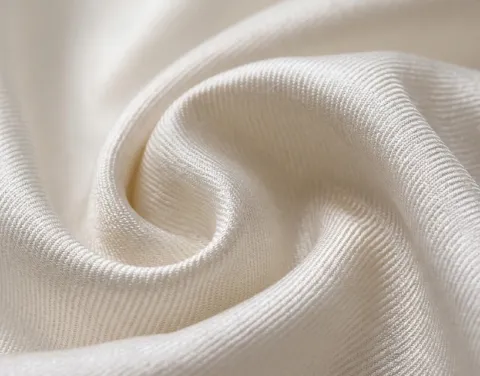
For the outer shell, 19 to 22 momme silk charmeuse fabric is the commercial standard. At 19 momme, the fabric offers a fluid hand feel suitable for mid-market retail. At 22 momme, the tighter weave resists pilling and snagging against velcro, zippers, and coarse outerwear, which suits premium and airline-grade programs. Weights below 19 momme wear through at the contact points within a season of regular travel.
Grade 6A mulberry silk remains the baseline specification. The long-staple fibers produce a smoother yarn surface, and a smoother surface generates less friction against facial skin and hair. This is the functional argument behind silk travel pillows: reduced friction means fewer sleep creases and less hair breakage, claims that support the category's premium pricing. Our silk momme weight guide details the gsm conversions and durability differences between weights.
One structural decision matters more than momme weight: many programs use silk only on the contact face and a color-matched cotton or polyester twill on the reverse. This cuts shell cost by 30 to 40 percent while keeping the skin-contact benefit intact. Full-silk shells remain the standard for luxury retail, but the hybrid construction is a legitimate option for promotional and airline amenity volumes.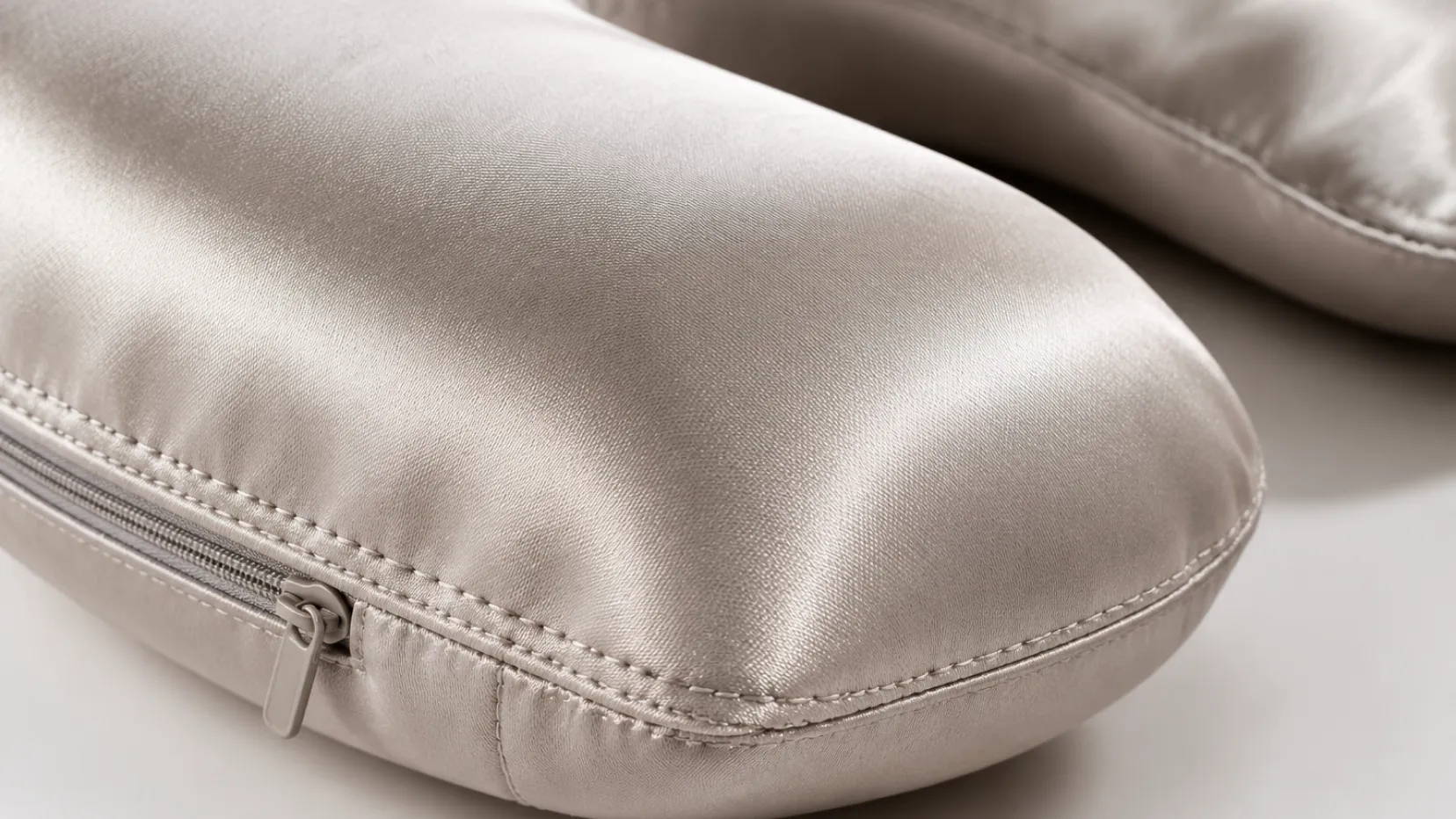
2. Fill Materials: Memory Foam, Microbeads, Polyester Fiber, and Silk Floss
The fill defines the pillow's support character, weight, and price tier. Four fills dominate commercial production: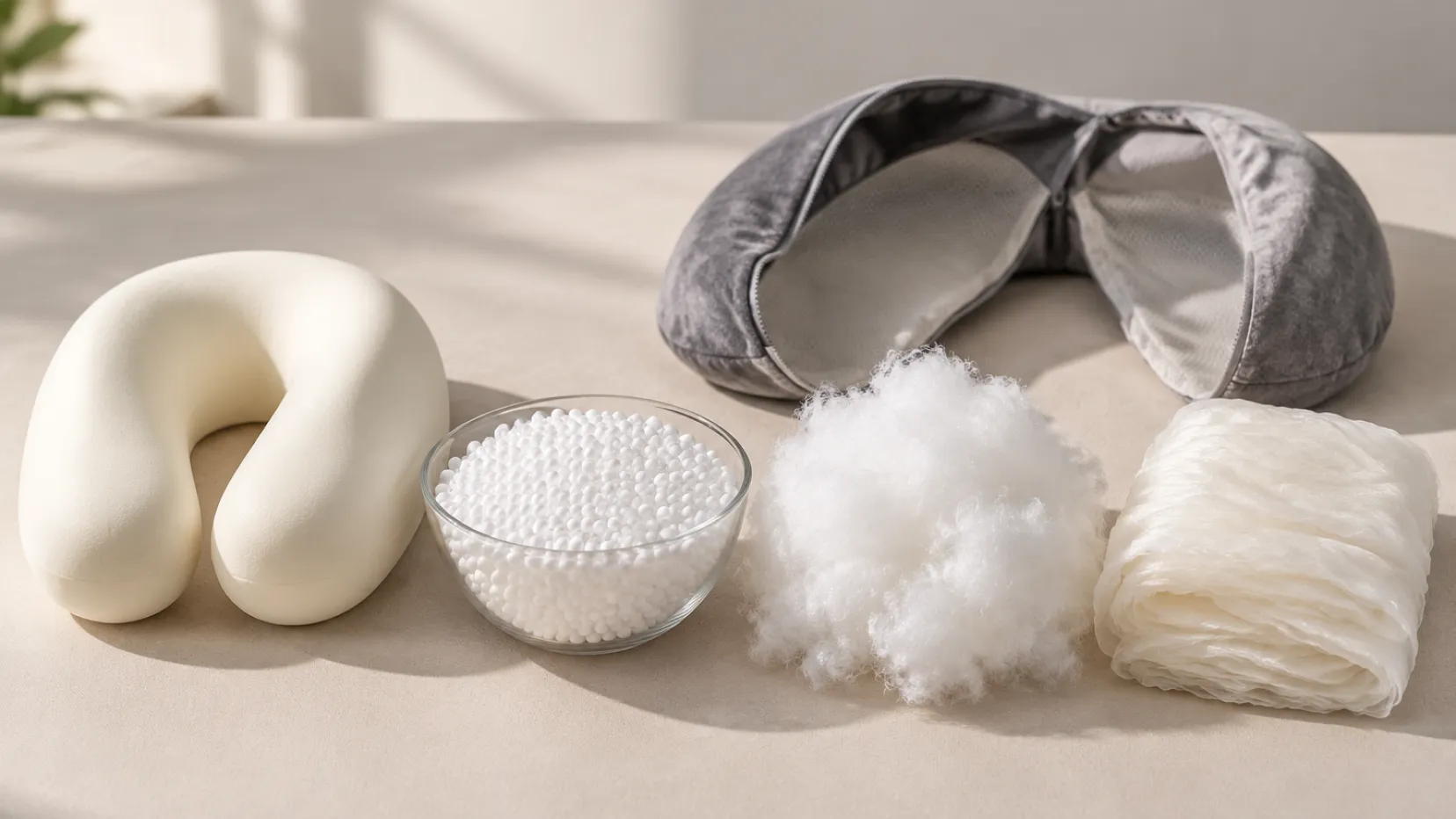
| Fill Material | Support Profile | Weight | Typical Price Tier |
|---|---|---|---|
| Memory foam (40–50D) | Firm, contouring, slow recovery | 250–350 g | Premium retail |
| Microbeads (EPS) | Moldable, medium support | 150–250 g | Mid-market |
| Polyester fiberfill | Soft, plush, low structure | 200–300 g | Entry and promotional |
| Silk floss | Soft, breathable, temperature-neutral | 180–280 g | Luxury and gift sets |
Memory foam at 40 to 50 kg/m³ density delivers the strongest cervical support and anchors most premium programs. Below 40D the foam loses its contour memory after repeated compression; above 50D it becomes too rigid for side sleepers. Microbeads allow the pillow to mold around the neck and pack flatter, which suits the luggage-constrained traveler, but the beads shift and settle over time. Polyester fiberfill keeps unit costs low for gift-with-purchase and promotional runs. Silk floss, the hand-pulled layered fill used in traditional silk filling applications, offers the most breathable and temperature-neutral option and completes an all-silk product story for luxury gift sets.
For a premium retail neck pillow, the specification that performs best across review data is 45D memory foam inside a removable 22 momme silk charmeuse shell with a concealed zipper. This combination survives machine washing of the shell, holds its shape beyond two years of regular use, and supports the anti-friction claims that drive the category.
3. Ergonomic Design and Size Specifications
The U-shaped contour remains the dominant form because it cradles the cervical spine without forcing a fixed head position. The commercial reference dimensions are 30 x 30 x 10 cm (approximately 12 x 12 x 4 inches) for adults, with an inner opening of 10 to 12 cm to fit the 95th percentile neck circumference. Children's versions scale to roughly 24 x 24 x 8 cm.
Pattern engineering for filled products differs from flat goods in two ways. First, the shell must be cut 2 to 3 percent oversize to accommodate fill loft without straining the seams. Second, contoured or orthopedic profiles, including raised side bolsters and flattened back panels, require multi-panel patterns with matched seam curves. A single-panel pattern pulled over a shaped foam core distorts the shell and twists the seams outward.
Closure placement also belongs to the design stage. A rear-flat panel with the zipper centered on the outer curve keeps hardware away from the neck and prevents the pressure points that generate one-star reviews.
Weight targets matter as much as dimensions. Frequent flyers treat every gram in a carry-on as a cost, and a finished adult pillow should land between 250 and 400 grams depending on fill. Programs targeting the travel retail channel should state a finished-weight tolerance of plus or minus 5 percent in the tech pack, since fill weight is the largest variable in bulk production.
4. Construction Standards: Seams, Zippers, and Stress Reinforcement
Filled products concentrate mechanical stress at their closures and seams. The construction standards we apply to custom silk neck pillow production:
- Seams: Double-needle stitching at 12 to 14 SPI on all shell seams, with seam allowances of 1 cm. Single-needle construction is acceptable only on the decorative piping.
- Zipper: A concealed nylon coil zipper, minimum 25 cm for adult sizes, bar-tacked at both ends. Metal zippers scratch skin and seat upholstery and should not be specified.
- Stress points: The zipper ends and any snap-button or drawstring attachments receive bar-tack reinforcement. These are the points where repeated shell removal for washing tears unreinforced fabric.
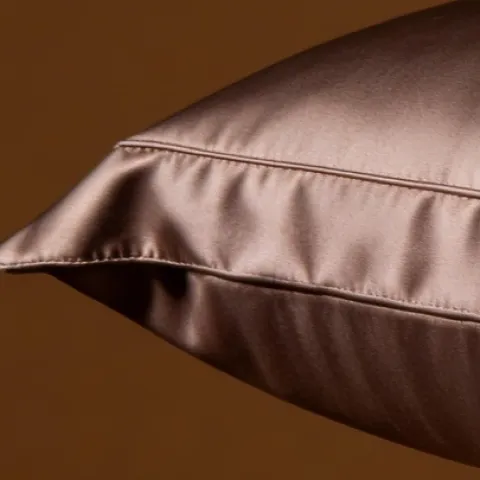
- Piping: Self-fabric or contrast silk piping along the outer seam protects the seam line from abrasion and defines the silhouette. It adds roughly 8 percent to shell labor cost.
Branding methods interact with construction and should be settled before sampling. Embroidery on 22 momme charmeuse requires a cutaway stabilizer and low stitch density to avoid puckering around the logo, following the parameters in our silk sewing techniques guide. Woven labels are typically sewn into the piping seam rather than the shell face. Heat-transfer logos are unsuitable for silk shells, as the press temperature flattens the charmeuse luster permanently.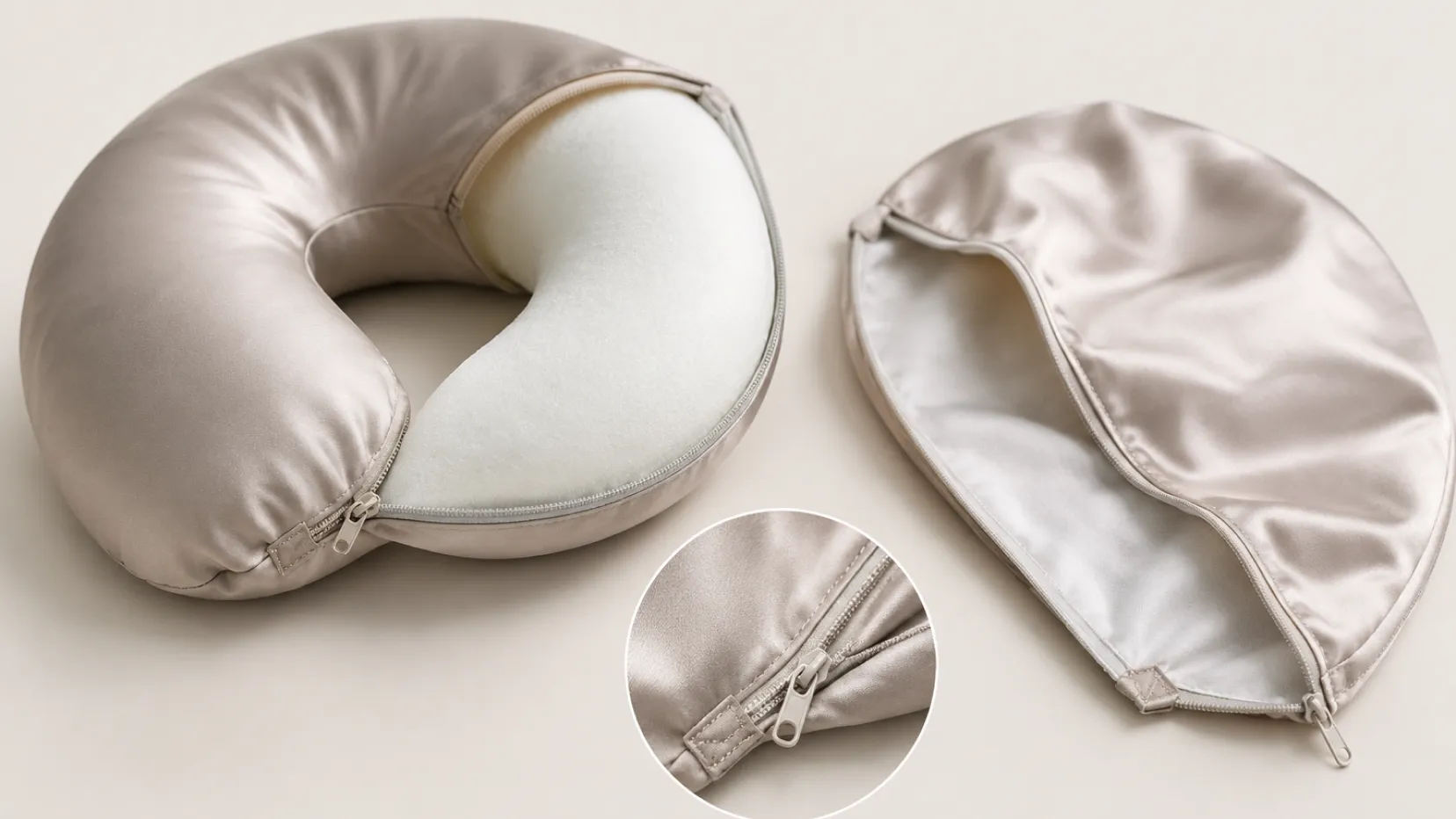
5. Hygiene, Compliance, and Care Specifications
Travel pillows contact facial skin for hours at a time, often in warm cabin conditions. Two specifications protect both the end user and the brand. First, the removable-shell construction described above is effectively mandatory: a pillow that cannot be washed accumulates skin oil and cosmetic residue, and the resulting reviews end product lines. Second, shell fabric and dyes should carry OEKO-TEX Standard 100 certification, which retail buyers in the EU and North America increasingly request at the quotation stage.
Care labeling should specify machine washing of the shell at 30 degrees Celsius on a gentle cycle, air drying, and no ironing of printed surfaces. Foam cores are spot-clean only, and this must appear on the label to prevent warranty claims from machine-washed foam.
Programs sold as sleep or wellness products should also align the neck pillow with matching silk eye masks in a coordinated set. Our airline amenity kit case study documents one such program from specification through delivery.
6. Sampling, MOQ, and Production Workflow
We manufacture custom silk neck pillows from prototype through bulk at our Suzhou facility, with the following commercial terms:
- Prototyping: 5 to 7 working days for standard U-shaped designs; 7 to 10 days for orthopedic multi-panel profiles.
- Production MOQ: 100 pieces per design for solid colors; 300 pieces for custom printed shells.
- Bulk lead time: 20 to 30 days after sample approval, depending on fill material sourcing.
Neck pillows perform strongest commercially as part of travel sets bundled with eye masks and silk gift set packaging, which raises average order value and simplifies logistics into a single carton. Send your design files or a reference sample to our engineering team, or contact us for a direct factory quote to begin your program.
FAQ
The commercial standard for neck pillow shells is 19 to 22 momme Grade 6A mulberry silk charmeuse. 19 momme suits mid-market retail programs. 22 momme provides a tighter weave that resists pilling and snagging against outerwear and seat upholstery, making it the specification for premium and airline-grade products. Weights below 19 momme wear through at contact points within a season of regular travel.