
Silk Organza Fabric: A B2B Guide to Crispness, Weights, and Sourcing Standards


Silk organza does one job no other lightweight silk can: it holds shape. The fabric stands away from the body, keeps a silhouette through a twelve-hour event, and supports volume without weight. That stiffness is also where sourcing programs go wrong. Buyers order organza expecting a flowing sheer, receive a crisp structural cloth, and find the fabric useless for the dress they designed. Others buy cheap filament substitutes that collapse after one pressing. This guide defines the construction, weight, and finishing parameters that separate commercial-grade silk organza from its imitations.
Silk organza is a plain-weave fabric made from tightly twisted filament silk yarns that retain their sericin coating through weaving. The sericin, a natural gum on raw silk, gives organza its signature crispness and spring. Commercial weights run from 4 to 6 momme for standard bridal organza and up to 10 momme for gazar, the heavy couture construction. The fabric is specified for wedding gowns, structured overlays, puff sleeves, and embroidery bases where the silhouette must hold without support layers.
1. What Silk Organza Is: The Sericin Crispness Mechanism
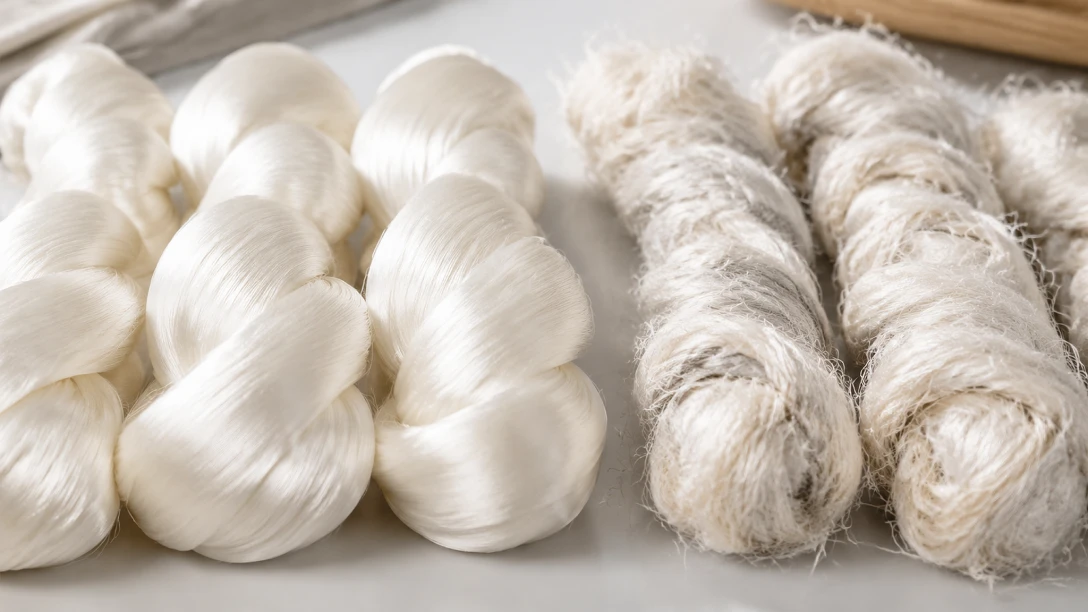
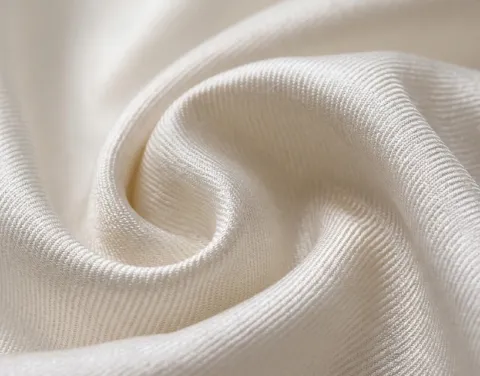
Most silk fabrics are woven from degummed yarn, with the sericin washed out before the cloth is made. Organza reverses that sequence. The fabric is woven from raw filament silk still coated in sericin, and the cloth is degummed only after weaving. The gum locks the yarns in position during weaving, and enough of its stiffening effect survives finishing to give the finished fabric its crisp, paper-like handle.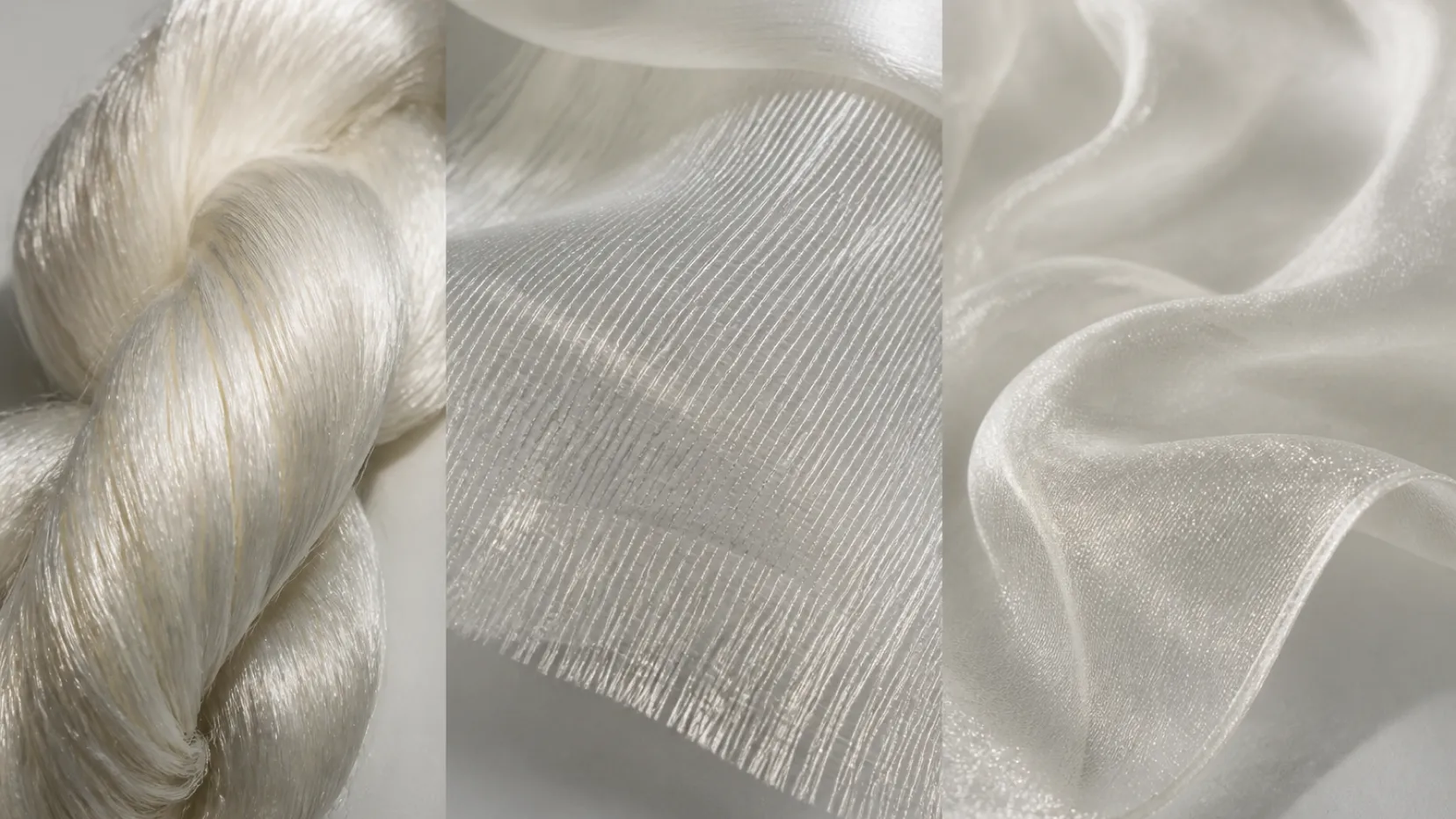
This mechanism explains two sourcing realities. First, the crispness of true silk organza is a fiber-level property that finishes cannot replicate durably. Polyester and nylon organza imitate the look but not the spring: they crease permanently under pressure and lose body after steaming, which is why costume-grade organza collapses in garments that silk organza would carry for years. Second, crispness varies with the degumming rate, and a mill controls the final handle by how completely it strips the sericin. A purchase order that specifies handle, not just weight, gets a more consistent fabric.
Grade 6A mulberry filament silk is the baseline. Organza's open plain weave puts every yarn on display, and slubs or uneven filaments read directly as surface defects. The silk momme weight guide covers the weight conventions; organza's working range sits at the light end of the scale, where tolerance discipline matters most.
Organza's second commercial role is as an embroidery base. The crisp, stable ground holds heavy embellishment without the distortion that ruins softer sheers, which is why couture houses specifiy silk organza under beadwork even when the finished garment shows no visible organza. Programs planning embellished panels should sample the base fabric under actual embroidery before committing, because stitch density and bead weight change the handle of the composite cloth.
2. Weight Specifications: Momme Ranges by Application
Organza sells in the lightest weight band of any apparel silk. The commercial constructions:
| Construction | Momme | Approx. GSM | Typical Application |
|---|---|---|---|
| Light organza | 4 mm | 17 gsm | Veils, delicate overlays, flower making |
| Bridal organza | 5–6 mm | 22–26 gsm | Wedding gowns, puff sleeves, structured skirts |
| Heavy organza | 8 mm | 34 gsm | Statement silhouettes, embroidery bases |
| Silk gazar | 9–10 mm | 39–43 gsm | Couture structured gowns, architectural shapes |
Gazar deserves its own line in the specification. Developed for couture in the mid-twentieth century, gazar uses a tighter weave and heavier yarn to produce a fabric that stands almost on its own. Bridal brands building sculptural gowns should sample gazar alongside standard organza rather than push standard organza heavier, because the weave density, not the weight alone, carries the structure.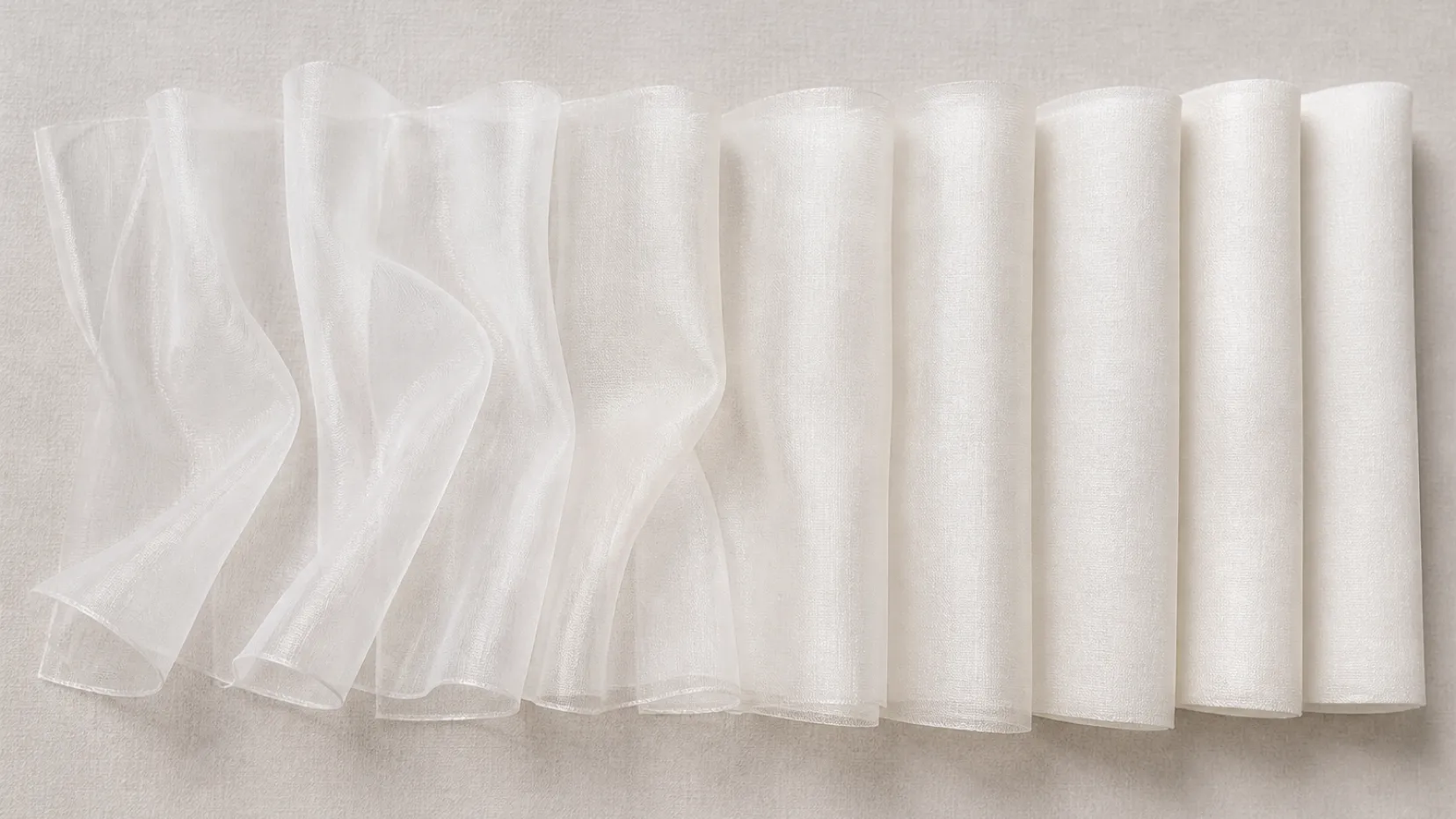
Weight tolerance at these levels is critical. At 5 momme, a one-momme shortfall removes 20 percent of the fabric's substance, and the difference shows immediately in how a skirt stands. Contracts should fix tolerance at plus or minus 5 percent with gsm verification per roll.
Requests for quotation should state the end product and the target handle together. A mill quoting without this context defaults to standard crisp bridal stock, and a blouse program that needed the softened finish discovers the gap only when the first sample arrives stiff enough to stand on the table.
3. Organza vs Chiffon vs Georgette
All three are sheer silks, and buyers weigh them against each other on nearly every bridal and evening program. The functional comparison:
| Property | Organza | Chiffon | Georgette |
|---|---|---|---|
| Yarn | Raw filament, sericin-coated | High-twist crepe | High-twist crepe, both directions |
| Handle | Crisp, springy | Soft, limp | Grainy, springy drape |
| Drape | Stands away, holds shape | Falls close, clings lightly | Floats with body |
| Sheerness | Sheer | Sheer | Sheer |
| Wrinkle behavior | Creases sharply, recovers with steam | Resists wrinkling | Resists wrinkling |
| Primary use | Structure and volume | Soft drape | Fluid overlays |
The selection logic: a sleeve that must hold a balloon shape calls for organza. A skirt layer that must fall softly calls for silk chiffon. An overlay that must move with body calls for silk georgette. The most common substitution error runs in both directions: chiffon specified where volume was needed collapses flat, and organza specified where drape was needed reads stiff and costume-like.
4. Dyeing, Finishing, and Softness Options
Organza piece-dyes cleanly, and the crisp surface shows saturated color with a brightness that matte crepes cannot match. Colorfastness to washing at grade 4 (AATCC 61) is achievable and should be stated in the purchase order, since bridal and eveningwear programs routinely assume a standard that sheer fabrics do not always meet by default.
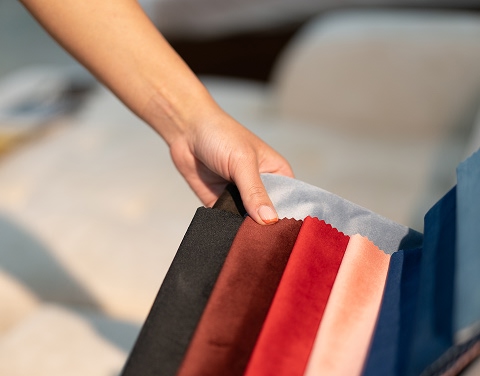
Softness is a finishing variable with real commercial consequences. Standard organza ships crisp. A softened finish, achieved through fuller degumming or mechanical working, produces the semi-crisp handle used for blouses and lighter overlays. The two finishes behave differently in the same silhouette, so the tech pack should name the target handle and reference a physical swatch rather than a verbal description. Printed organza is viable but uncommon; the crisp surface and open weave soften fine detail, and most programs print on chiffon instead. Print method trade-offs are covered in our silk printing methods guide.
5. Cutting and Sewing Requirements
Organza is stable on the cutting table compared to the crepe sheers: the crispness resists shifting, and stacked cutting holds tolerance better than with chiffon. The trade-off is edge behavior. Raw edges fray hard and the crisp yarns show every needle mark, so cutting must be clean and seam planning must enclose every edge.
Sewing parameters: stitch density of 12 to 16 SPI with fine polyester-core thread, size 8 to 10 needles, French seams at 3 to 5 mm for enclosed construction. Pin holes show permanently in organza, so fitting marks belong in the seam allowance. Pressing uses steam with a press cloth from the reverse; the sericin-based crispness softens under direct steam and recovers unevenly, leaving patches of different handle across one panel. Hem finishes follow the silhouette: horsehair braid supports flounced bridal hems, while narrow rolled hems suit overlay edges. The full parameter set appears in our silk sewing techniques guide, and brands building structured gowns can reference the construction standards in our custom silk dress program.
6. Quality Benchmarks and Sourcing Workflow
The checkpoints that belong in an organza first article inspection:
| Checkpoint | Standard | Method |
|---|---|---|
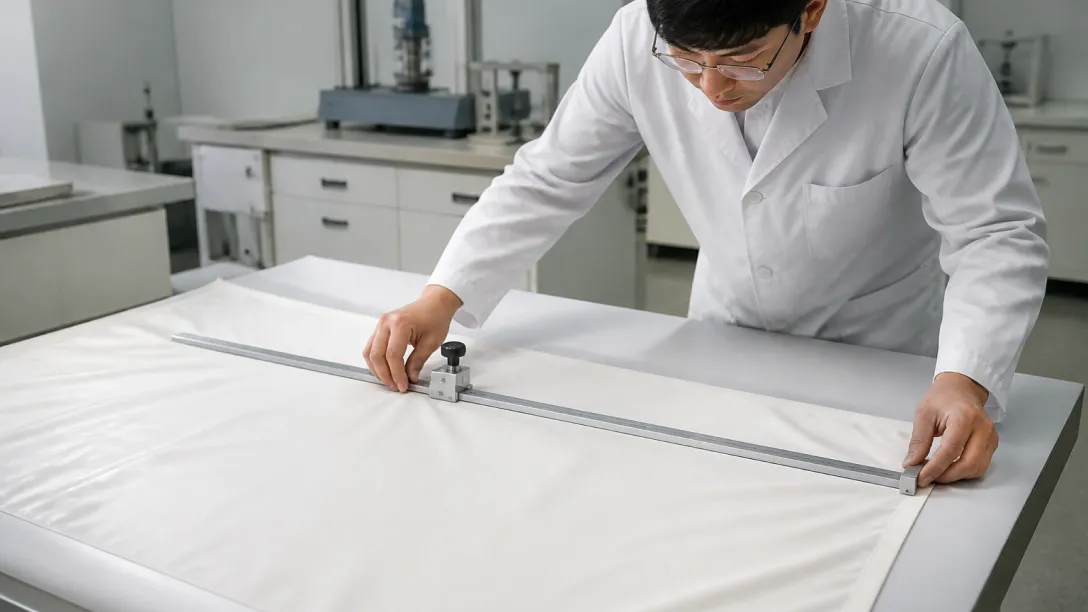
| Fabric weight | ±5% of specified momme | GSM cutter, 5 points per roll |
| Crispness | Matches approved handle swatch | Handle comparison plus flex recovery test |
| Weave uniformity | No slubs, thin places, or reed marks | Full-roll inspection over backlit frame |
| Colorfastness to washing | Grade 4 minimum | AATCC 61 |
| Fiber content | 100% mulberry silk | AATCC 20A fiber analysis |
The backlit inspection deserves emphasis. Sheer fabrics hide defects that read instantly against transmitted light, and filament substitution, the most expensive fraud in this category, shows as an unnatural uniformity that real filament silk never has. Fiber content verification through AATCC 20A belongs in every first order from a new supplier.
Commercial terms for custom programs: lab dips in 5 to 7 working days, production minimums from 100 meters per color for standard constructions and 300 meters for gazar or custom weights, with bulk lead times of 20 to 30 days. We weave and finish silk organza to order at our Suzhou facility, with lot-level test reports supplied on request. Send your target weight, handle reference, and colorway to request swatches and a direct mill quote.
FAQ
Silk organza is a plain-weave fabric made from tightly twisted filament silk yarns that retain their natural sericin gum coating through weaving. The sericin gives organza its signature crisp, springy handle and its ability to hold shape without support layers. Commercial weights run from 4 to 6 momme for standard bridal organza and up to 10 momme for silk gazar, the heavy couture construction.