

Colorfastness and Dimensional Stability: Key Testing Metrics for Custom Silk Bedding


In the high-stakes B2B home textile market, product returns driven by fabric failure systematically erode wholesale margins and destroy brand equity. For luxury custom silk bedding, the two most critical points of vulnerability during consumer use are color bleeding and fabric shrinkage. Unlike polyester or cotton, silk is a delicate protein fiber that reacts aggressively to alkaline detergents, mechanical agitation, and temperature fluctuations during standard laundering cycles. Procurement directors must secure empirical proof that their bulk silk orders can withstand residential washing without degrading. This technical analysis explores the laboratory testing metrics for colorfastness and dimensional stability (shrinkage), providing a strict quality control framework for sourcing premium silk sheets and duvet covers.
1. The Mechanics of Dimensional Stability (Shrinkage) in Silk
Dimensional stability refers to a fabric's ability to retain its original length and width after exposure to washing and drying. All natural fibers possess inherent residual shrinkage. During the weaving process, tension is applied to the warp and weft yarns to hold them taut on the loom. When the finished fabric is eventually exposed to water and agitation, the yarns relax, contract, and attempt to return to their natural, unstretched state. This contraction manifests as shrinkage.
For silk sheets, uncontrolled shrinkage is catastrophic. A fitted sheet designed for a King-size mattress that shrinks by 8% after the first wash will no longer secure over the mattress corners, rendering the product useless. Standard, untreated silk charmeuse can exhibit shrinkage rates between 7% and 10%. To achieve commercial viability, high-end silk bedding must undergo rigorous pre-shrinking processes at the mill level.
2. Standardized Shrinkage Testing: AATCC 135 and ISO 6330
B2B buyers cannot rely on verbal assurances regarding shrinkage; they must mandate standardized laboratory testing. The two primary international standards are AATCC 135 (American Association of Textile Chemists and Colorists) and ISO 6330. Both tests subject the fabric to controlled washing and drying cycles that simulate home laundering.
A swatch of silk is marked with precise measurements in both the warp (length) and weft (width) directions. The fabric is then washed using a standardized detergent, agitated, and dried (usually line-dried or flat-dried for silk). After conditioning in a controlled climate room, the distances between the marks are remeasured. The difference is calculated as a percentage of dimensional change.
Acceptable Benchmarks for B2B Procurement: For heavy-weight silk charmeuse (19 momme to 25 momme) used in luxury bedding, the absolute maximum acceptable shrinkage rate is ±3% to ±5% in both the warp and weft directions. Any batch exceeding a 5% dimensional change must be rejected or subjected to further physical pre-shrinking (sanforization) before garment cutting.
3. Strategies for Controlling Silk Shrinkage
Factories employ two primary methods to control shrinkage before the fabric is cut into panels for silk duvet covers and sheets.
- Physical Pre-shrinking: The raw fabric is passed through a specialized machine that uses steam and mechanical compression to force the yarns to relax and contract before cutting. This removes the residual shrinkage proactively.
- Pattern Grading Compensation: If a batch of silk exhibits a consistent 4% shrinkage rate, the factory's CAD department can adjust the cutting markers, sizing the bedding panels 4% larger than the final target dimensions. When the consumer washes the item, it shrinks down to the exact intended size. However, this method requires strict lot-to-lot consistency in the fabric.
Thick, densely woven silk is inherently more stable. A 22 momme silk will exhibit less dimensional distortion than a 16 momme silk under the same washing conditions. For a detailed analysis of how density affects fabric behavior, review our momme weight guide.
4. Colorfastness: The Threat of Dye Migration and Crocking
Colorfastness measures a dyed fabric's resistance to fading or color transfer when exposed to various environmental factors. Silk fibers possess a highly crystalline structure that makes them difficult to dye deeply. Uncertified dye houses often compensate by overloading the fabric with cheap acid dyes without applying proper chemical fixatives. When the consumer washes the bedding, the unbound dye molecules release into the water, staining other garments (bleeding) and leaving the silk looking washed-out and dull.
For bedding, colorfastness to rubbing (crocking) is equally critical. Crocking occurs when dye transfers from the silk onto another surface through physical friction. A dark navy or burgundy silk fitted sheet with poor dry crocking resistance will literally rub its dye off onto the sleeper's skin and light-colored pajamas during the night.
5. Standardized Colorfastness Testing Protocols
To prevent dye migration disasters, purchase orders must stipulate specific testing standards, primarily governed by ISO 105 or AATCC methodologies.
- Colorfastness to Washing (ISO 105-C06 or AATCC 61): This test evaluates color loss and the staining of adjacent multifiber test fabrics during accelerated washing. The results are graded on a Grey Scale from 1 (poor) to 5 (excellent). Benchmark: Luxury silk bedding must achieve a minimum Grade 4 for color change and Grade 4 for staining.
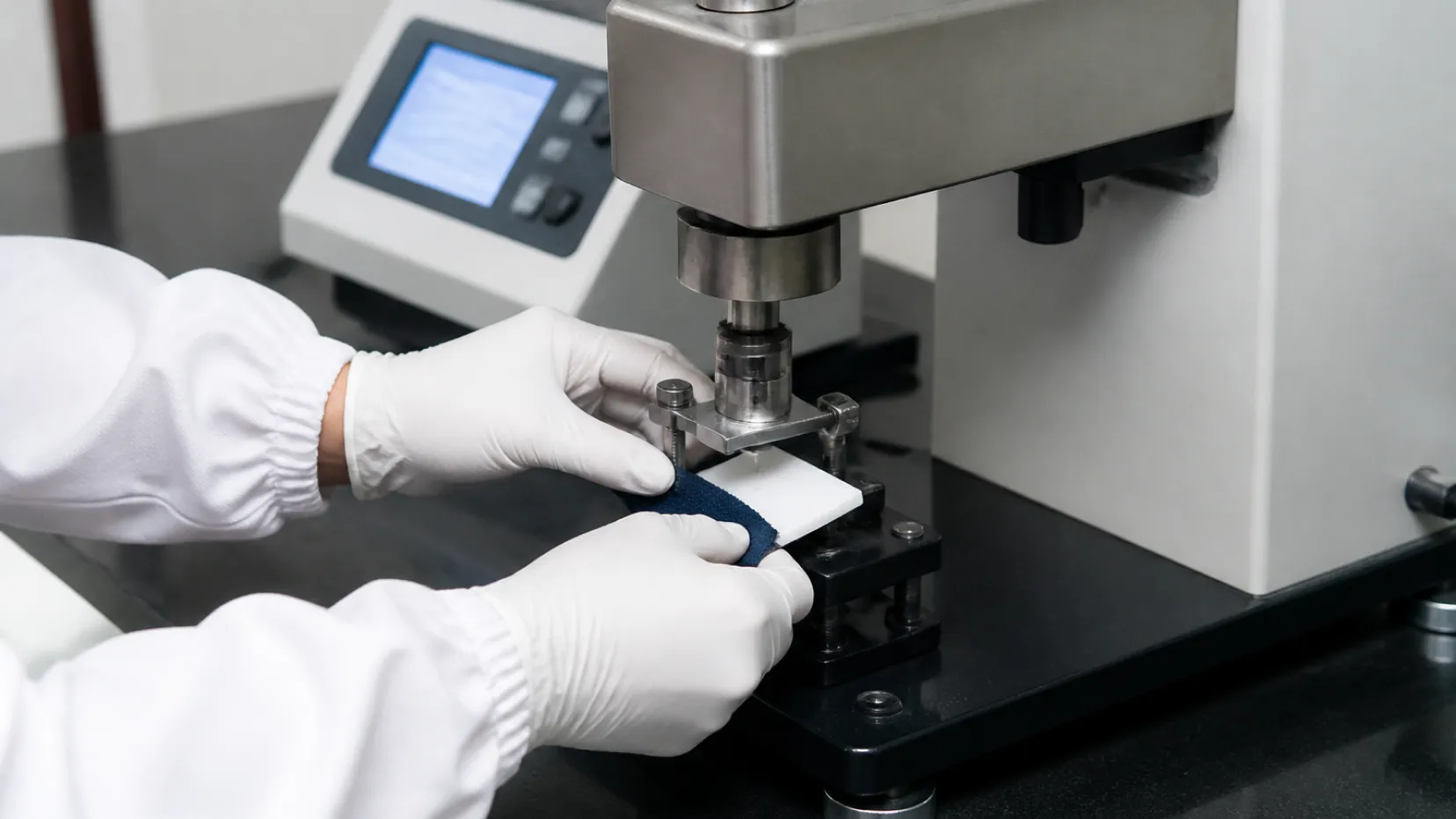
- Colorfastness to Crocking / Rubbing (ISO 105-X12 or AATCC 8): A motorized crockmeter rubs a standard white cotton test cloth against the dyed silk in both dry and wet conditions. The degree of color transfer is evaluated. Benchmark: Grade 4 for dry rubbing, and Grade 3-4 for wet rubbing.
- Colorfastness to Perspiration (ISO 105-E04): Since bedding is in constant contact with the human body, it must resist the acidic and alkaline properties of sweat, which can break down unstable dyes. Benchmark: Grade 4.
6. Advanced Dyeing Techniques for Silk Textiles
Achieving Grade 4 colorfastness on dark, saturated silk requires abandoning basic acid dyes in favor of reactive dyes. Reactive dyes form a covalent chemical bond directly with the amino acids in the silk fibroin. Once this molecular bond is established, the dye becomes a permanent part of the fiber structure, making it virtually impossible to wash out under normal residential laundering conditions.
Furthermore, commercial dye houses must perform a rigorous "soaping off" process after dyeing. This involves washing the freshly dyed silk multiple times at high temperatures to strip away any loose, unbound dye molecules. Factories that skip this step to save on water and energy costs are the primary culprits behind color bleeding complaints. When sourcing dark colorways for items like a silk pillowcase, buyers must mandate reactive dyeing and verify the soaping-off protocols.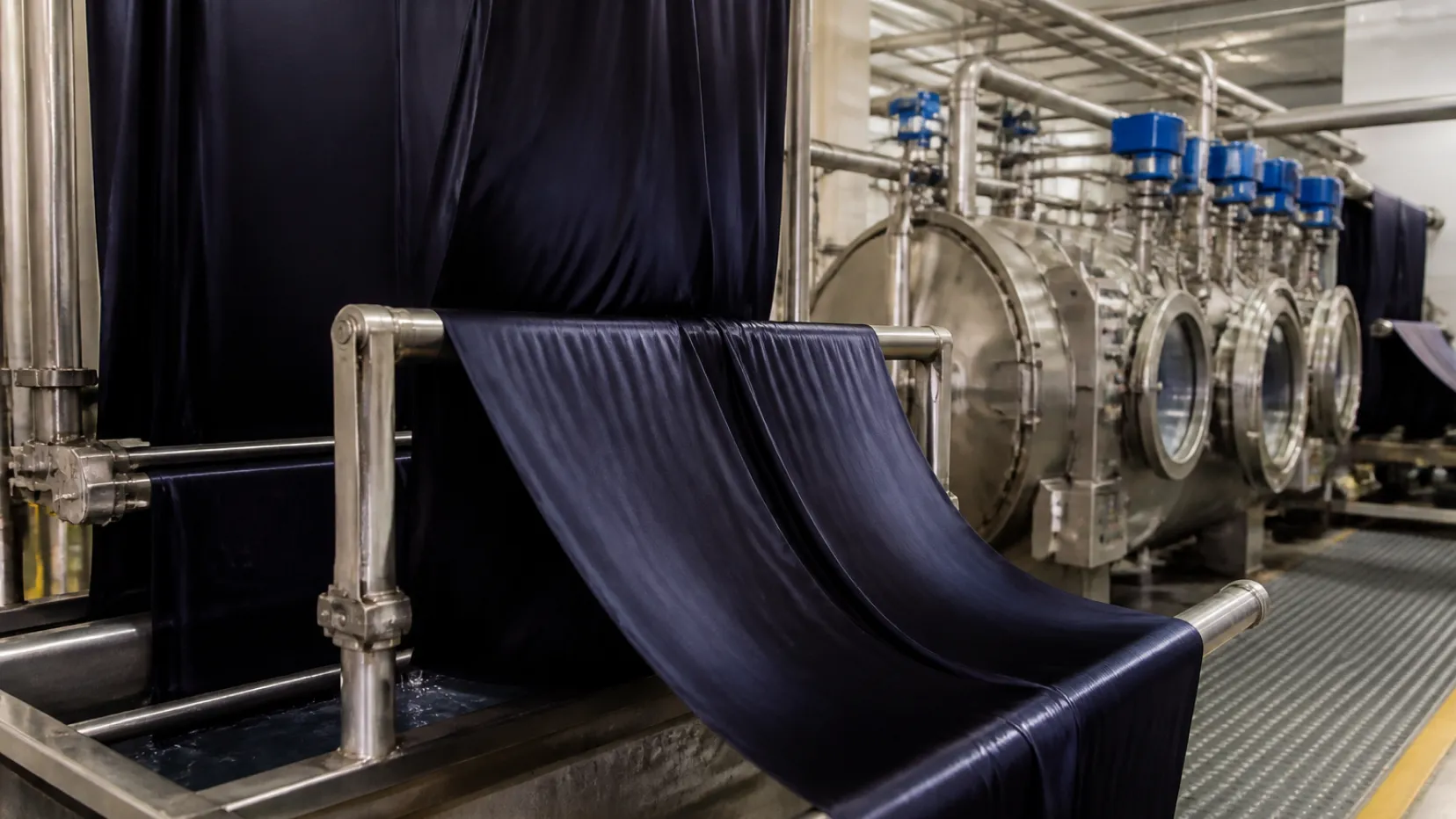
7. Verifying Compliance and Mill Capability
Protecting wholesale investments requires moving beyond visual inspection. Procurement directors should demand batch-specific testing reports from accredited third-party laboratories (such as SGS, Intertek, or TÜV) confirming that the silk meets the stated benchmarks for AATCC 135 (Shrinkage) and ISO 105 (Colorfastness) prior to bulk cutting. Relying on supplier promises rather than empirical lab data exposes the brand to catastrophic retail returns.
At DreamSilk, we engineer our bedding textiles specifically for long-term residential use. We utilize reactive dyeing technology and closed-loop fixing processes to guarantee Grade 4+ colorfastness across our entire color spectrum. Our heavy-weight charmeuse undergoes mechanical pre-shrinking, ensuring dimensional stability remains strictly within a ±5% tolerance. We provide comprehensive testing documentation for every production lot, aligning with global OEKO-TEX safety standards. Review our certifications to see our compliance framework, or visit our contact portal to request lab dips and discuss your specific testing requirements for upcoming bedding collections.
FAQ
Dimensional stability is the textile industry term for shrinkage. It measures a fabric's ability to maintain its original dimensions (length and width) after being subjected to washing and drying. For fitted silk sheets, poor dimensional stability means the sheet will shrink and no longer fit the mattress.