

Silk Velvet Fabric: A B2B Guide to Composition, Weights, and Sourcing Standards


Silk velvet generates more specification disputes than almost any other fabric category. A buyer orders "100% silk velvet," receives a fabric testing at 20 percent silk, and assumes fraud. In most cases, neither party is wrong: the term describes a family of pile fabrics with radically different fiber compositions, and the misunderstanding starts at the quotation stage. This guide defines the constructions, weights, and testing benchmarks that belong in a velvet purchase order.
Commercial silk velvet is a cut-pile fabric woven as a double cloth and separated into two layers. Most commercial grades combine a silk ground weave with a viscose pile, typically at 18 to 30 percent silk content, while true 100 percent silk velvet exists as a specialty construction at two to three times the price. Fabric weight runs from 114 gsm for apparel velvet to over 200 gsm for upholstery grades.
1. What Silk Velvet Actually Is: Construction and Fiber Composition
Velvet is woven as two ground fabrics connected by pile yarns, then sliced apart on the loom to produce two lengths of piled cloth. The composition question has three legitimate answers, and each is a distinct product:
- 100% silk velvet: Silk ground with silk pile. Dense, fluid drape, deep luster, and the highest price in the category. Historically the original velvet construction; today produced in limited volumes for couture and restoration work.
- Silk-viscose velvet: Silk ground with viscose (rayon) pile, most commonly around 18 to 22 percent silk content. The commercial standard for apparel. The viscose pile takes dye with exceptional depth, and the silk ground keeps the fabric light and drapable.
- Viscose velvet: No silk content. Heavier, less lustrous, and priced well below silk-ground grades. Frequently mislabeled as silk velvet in low-tier supply chains, which is why fiber content verification belongs in every first order.
The practical sourcing rule is to specify the fiber content by percentage, not by the word "silk." A purchase order reading "silk velvet, 20% silk / 80% viscose, pile viscose, ground silk" leaves no room for substitution. Our silk velvet fabric range covers both silk-viscose and full-silk constructions with certified composition testing.
Velvet should also be distinguished from velour at the specification stage. Velour is a knitted pile fabric with inherent stretch, produced at lower cost and used for casualwear. Velvet is woven, has no mechanical stretch, and carries the drape and luster that justify luxury pricing. The two are not interchangeable in a tech pack, and knitted substitutes fail the drape tests that woven velvet passes.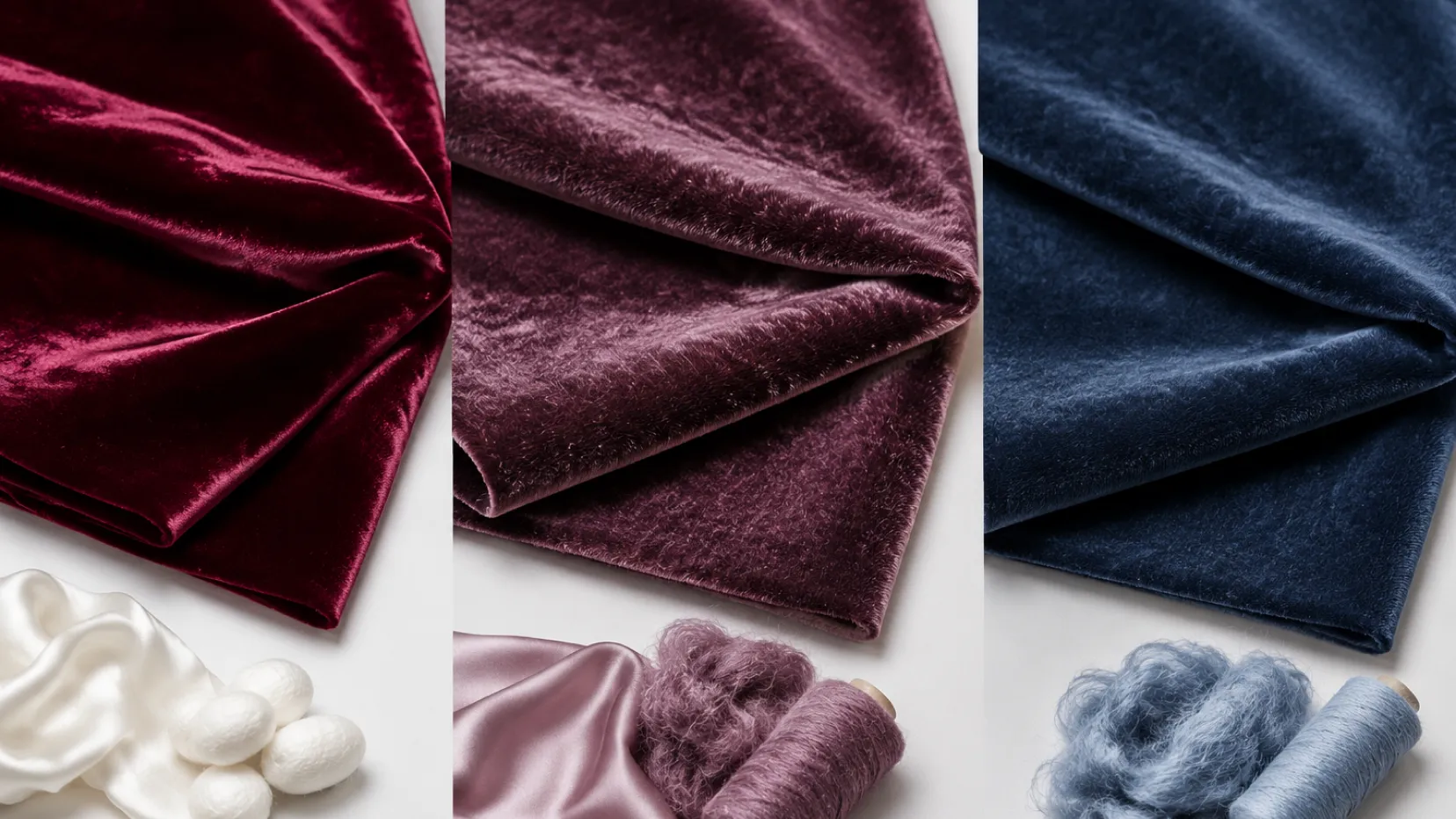
2. Weight Specifications and Pile Parameters
Velvet is specified in grams per square meter rather than momme, because the pile contributes too much surface mass for momme to describe accurately. For the broader conversion logic, our silk momme weight guide explains the gsm-to-momme relationship for flat silks.
| Weight | Pile Height | Drape Character | Typical Application |
|---|---|---|---|
| 114–130 gsm | 1–1.5 mm | Fluid, close to charmeuse | Dresses, blouses, scarves |
| 140–160 gsm | 1.5–2 mm | Medium body, structured drape | Eveningwear, jackets, accessories |
| 180–220 gsm | 2–3 mm | Heavy, architectural | Outerwear, upholstery, drapery |
Pile height affects more than hand feel. Short pile at 1 to 1.5 mm resists crushing and seat-wear marking, which matters for garments that contact chairs. Longer pile above 2 mm develops pressure marks permanently and suits applications with minimal friction. Density matters equally: a 140 gsm velvet with tightly packed pile outperforms a loose 160 gsm construction in both luster and wear. Request pile density per square centimeter alongside gsm when comparing mill quotations.
Requests for quotation should also state the intended end product. A mill quoting for a fluid evening dress and a mill quoting for structured jackets will select different ground weaves and pile densities at the same nominal gsm, and the samples will not be comparable without this context.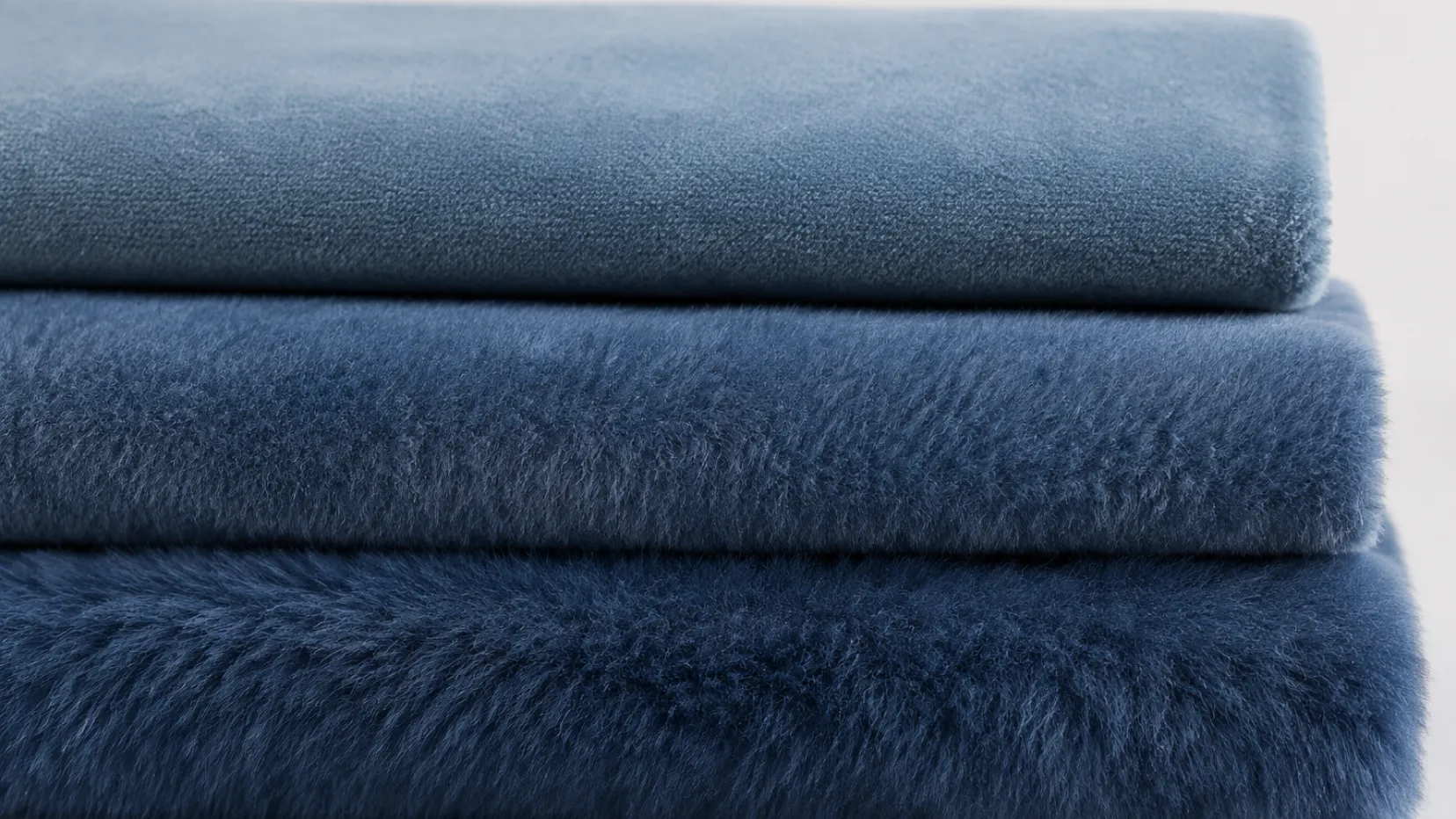
3. Base Fabric Options: Solid Velvet and Devoré
Beyond solid pile fabric, the category includes devoré, also called burnout velvet. Devoré starts as a silk-viscose velvet woven on a silk chiffon or georgette base. A chemical paste printed in a pattern dissolves the viscose pile in selected areas, leaving sheer silk ground visible against the remaining velvet. The result is the patterned, semi-transparent velvet used in eveningwear and statement scarves.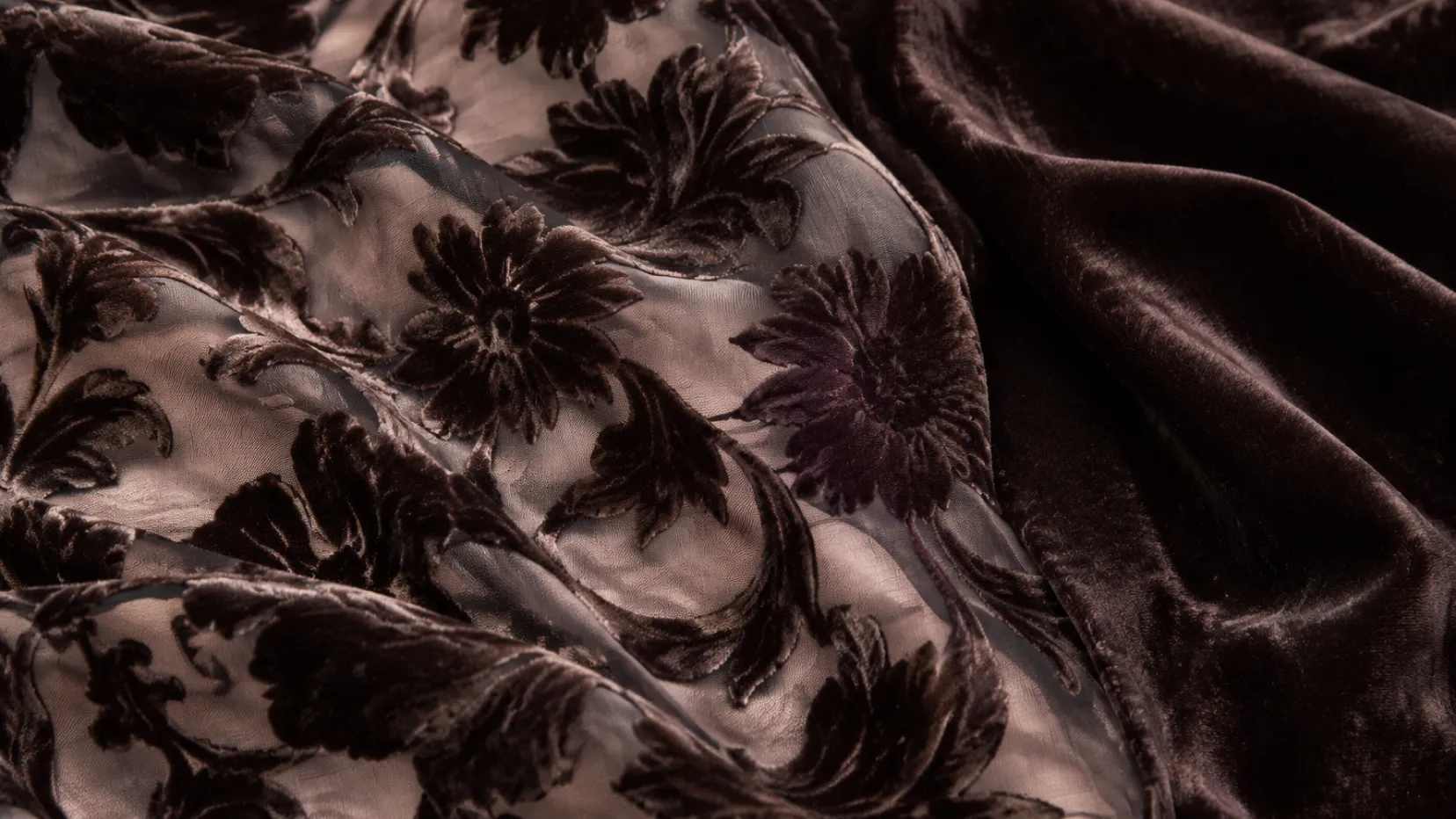
Devoré adds two sourcing considerations. First, the base fabric determines the sheerness and drape of the finished cloth, so the base weave, whether silk chiffon or georgette, should appear in the specification. Second, devoré patterns are produced from printed paste rather than woven design, which keeps minimums low and makes custom artwork viable at 300 to 500 meters, far below jacquard velvet minimums.
Solid velvet in deep jewel tones remains the strongest seller for autumn and holiday programs, while devoré carries spring and resort collections where sheerness matters. Planning colorways against this seasonal split keeps dye-lot consolidation efficient across the calendar year.
4. Dyeing, Finishing, and Color Behavior
Velvet's pile traps dye unevenly when processed on standard equipment. Commercial quality velvet is piece-dyed in specialized machines that keep the fabric under low tension and constant movement. Poorly dyed velvet shows crush marks from the dyeing rope itself, visible as lighter streaks that no finishing will remove. This is a mill-capability question, and it justifies auditing dyeing equipment before committing to a new supplier.
Two color behaviors belong in every tech pack:
- Directional shade: Velvet shows two distinct shades depending on pile direction. Pattern pieces cut in mixed directions read as different colors in the finished garment. This is a physical property of pile fabric, not a dye defect.
- Colorfastness: Grade 4 minimum to dry rubbing (AATCC 8). Pile fabrics release loose surface fiber in early wear, and deep shades such as burgundy and navy transfer onto light-colored linings and skin if crocking performance is not specified and tested.
5. Cutting and Garment Production Requirements
Velvet production requires cutting disciplines that flat-silk factories do not always maintain. All pattern pieces must be cut in a single nap direction, which raises fabric consumption by 15 to 25 percent compared to flat silk layouts. Cutting must be single-ply or in very low stacks, because piled layers shift under the knife and produce mismatched panels. Steam should never touch the pile directly during pressing; garments are pressed from the reverse over a needle board.
For apparel applications, velvet pairs naturally with flat silk linings. Evening dresses in silk-viscose velvet are commonly lined with silk habotai or stretch charmeuse to control friction against the pile. Brands developing velvet collections through our custom silk dress program receive cutting and pressing protocols matched to the selected pile specification as part of the tech pack review.
Sewing parameters follow the pile structure. Stitch density should run 10 to 12 SPI with a fine needle, since dense stitching crushes the pile along seam lines and leaves a visible track. Walking-foot or roller-foot machines prevent the layered shifting that causes mismatched seams, and seams should be finished flat rather than French-constructed, because enclosed seam allowances create ridges that telegraph through the pile. Buttonholes and zippers require a stable backing: a silk organza stay behind the closure area distributes stress without adding bulk.
6. Quality Benchmarks and Sourcing Workflow
The checkpoints that belong in a velvet first article inspection:
| Checkpoint | Standard | Method |
|---|---|---|
| Fiber composition | Matches PO percentage, ±3% | AATCC 20A fiber analysis |
| Fabric weight | ±5% of specified gsm | GSM cutter, multiple points per roll |
| Colorfastness to rubbing | Grade 4 dry, Grade 3–4 wet | AATCC 8 |
| Pile crush resistance | No permanent marking under standard load | Pile recovery test after 24h compression |
| Shade continuity | No dye-rope streaking or lot variation | D65 light box, full-roll inspection |
Commercial terms for custom velvet programs: lab dips in 5 to 7 working days, custom devoré artwork strike-offs in 7 to 10 days, production minimums from 300 meters per color for solid dyeing and 500 meters for devoré patterns, with bulk lead times of 25 to 35 days. We weave and dye silk velvet to order at our Suzhou facility and supply certified composition reports with every lot. Send your target weight, composition, and colorway to request lab dips and a direct mill quote.
FAQ
Not usually. Most commercial silk velvet combines a silk ground weave with a viscose pile, typically at 18 to 30 percent silk content. True 100 percent silk velvet, with silk pile on a silk ground, exists as a specialty construction at two to three times the price. Purchase orders should always state fiber content by percentage rather than relying on the term silk velvet alone.