
Silk Habotai Fabric Guide for B2B Buyers: Lightweight Plain Weave, Specifications, and Sourcing Standards


Silk habotai is the quiet workhorse of the lightweight silk range, and its quietness is exactly why buying programs undervalue it until they specify the wrong fabric. It has no crepe texture, no satin face, no organza stiffness — just a smooth, soft, evenly woven plain weave that does more jobs per dollar than any other silk: linings, scarves, light blouses, sleepwear, silk painting, and the entry point of almost every new silk program. The buying mistakes run in both directions. Programs over-specify, paying charmeuse prices for a lining job habotai does perfectly, or under-specify, expecting habotai to carry a printed scarf program without checking weight and finish, then receive fabric that reads thin and papery against the competition. This guide defines habotai at the construction level, fixes the specifications that govern a purchase order, separates it from the three sheers buyers compare it against, and covers the production behaviors that determine whether a habotai program ships clean.
The short answer for buyers: silk habotai is a lightweight plain-weave silk woven from untwisted or lightly twisted yarns, producing a smooth, soft, evenly balanced fabric with a gentle luster and fluid drape. Standard weights run 8 to 16 momme (roughly 34 to 69 GSM) in 114 and 140 cm widths, with 8 to 12 momme dominating linings and scarves. Habotai is the industry's default lining silk, the standard ground for printed and hand-painted scarves, and the most economical 100% silk specification for light garments. Its smooth surface prints beautifully and dyes evenly, but its plain weave and light weight make it less abrasion-resistant than heavier silks — seam engineering and realistic durability expectations belong in every tech pack.
1. What Is Silk Habotai? The Smooth Lightweight Plain Weave
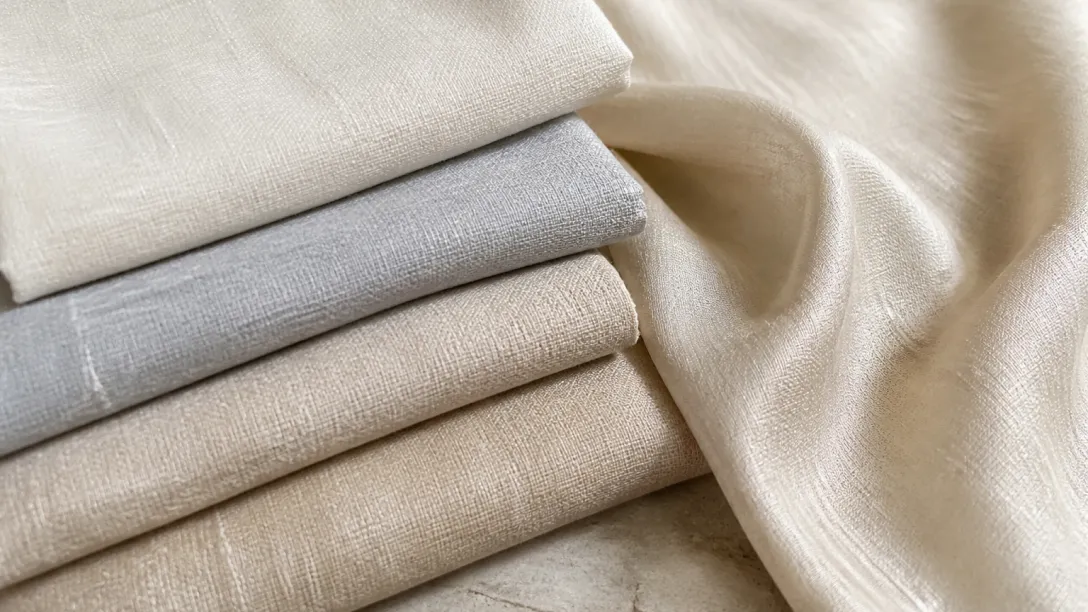
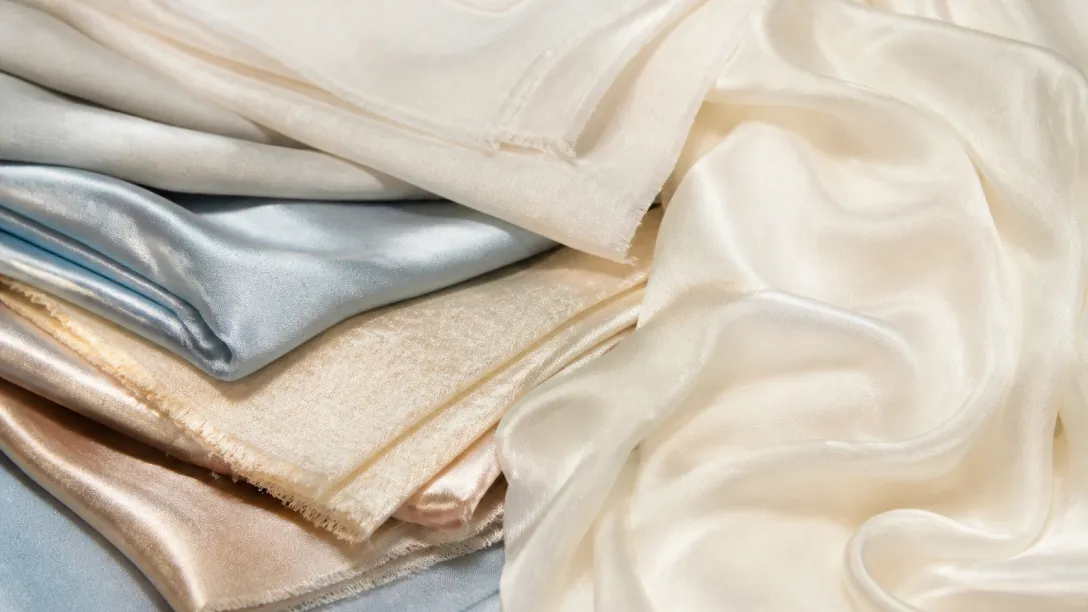
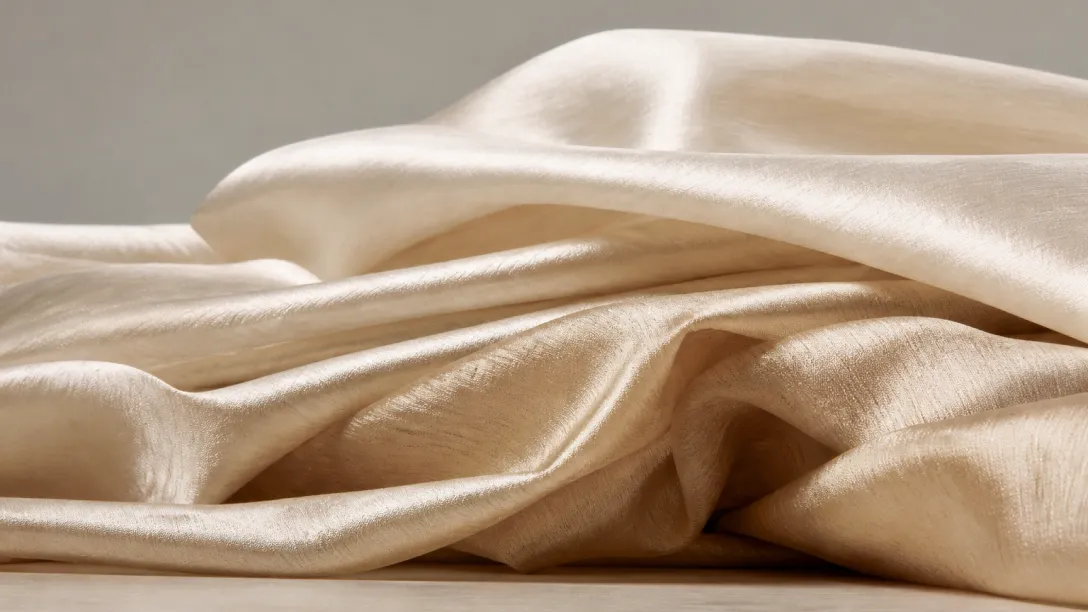
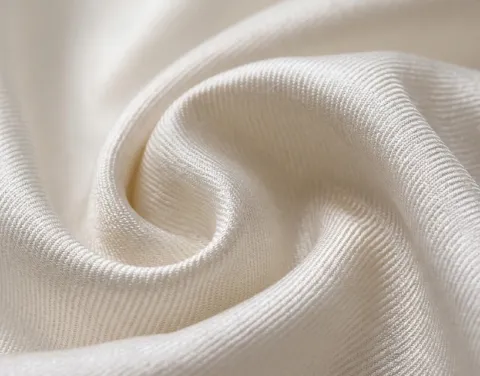
Habotai — the name comes from the Japanese for "soft as down" — is silk in its simplest woven form. The yarns run in a balanced one-over-one-under plain weave with little or no twist, and because nothing in the construction fights itself, the fabric emerges flat, smooth, and evenly balanced in both directions. There is no crepe pebble, no satin float, no slub, no stiffness: the entire character of the fabric is the quality of the yarn and the evenness of the weave. That simplicity is why habotai became the reference fabric of the lightweight trade — it is the easiest silk to print, the easiest to dye uniformly, the easiest to sew, and the most forgiving to handle of any fabric in the range.
Three construction facts carry commercial weight. First, the balanced plain weave distributes stress evenly, which gives habotai good dimensional stability for its weight — it neither creeps on the cutting table like high-twist crepes nor clings like chiffon. Second, the smooth untextured surface reads every irregularity honestly: yarn faults, dye streaks, and print defects all show, which makes habotai an easy fabric to inspect but an unforgiving one to produce cheaply. Third, the light plain weave has no mechanical stretch and limited abrasion resistance — habotai fails first at stress points and friction zones, a durability profile that must be designed around rather than discovered in wear testing. Buyers evaluating silk habotai fabric should read these behaviors as properties of the construction, not quality shortcomings.
2. Silk Habotai Specifications: Weight, Width, and Finish
A habotai specification is short, but each line carries a common failure mode:
- Momme weight: the working range is 8, 10, 12, 14, and 16 momme (roughly 34 to 69 GSM). 8 momme is the scarf and silk-painting standard; 10 to 12 momme is the lining and light-blouse core; 14 to 16 momme serves sleepwear, shirts, and programs that want habotai's smooth hand with more opacity and durability. Below 8 momme the fabric turns papery and fragile; the weight floor matters.
- Width: 114 cm and 140 cm are standard, with the wider width driving yield on scarf squares and lining panels. Confirm usable width after selvedge trim.
- Finish: habotai ships natural (slightly crisp from retained gum), washed (softer, pre-relaxed), or sand-washed (peached, matte). The finish choice changes hand feel, shrinkage, and dye behavior, so it belongs in the purchase order — a "washed habotai" and a "natural habotai" at the same weight are different fabrics on the table.
- Yarn quality: 5A and 6A yarn inputs set the baseline luster and evenness. Because the weave has no texture to hide behind, habotai shows yarn grading more honestly than any crepe — uneven filaments read as visible bands across the width.
The weight logic carries over from the rest of the silk system; our silk momme weight guide maps the full range against end uses for buyers planning multi-fabric programs.
3. Habotai vs. Organza vs. Georgette vs. Chiffon: The Smooth End of the Lightweight Range
Four lightweight fabrics compete for overlapping orders, and the buying decision should fall on construction, not photography:
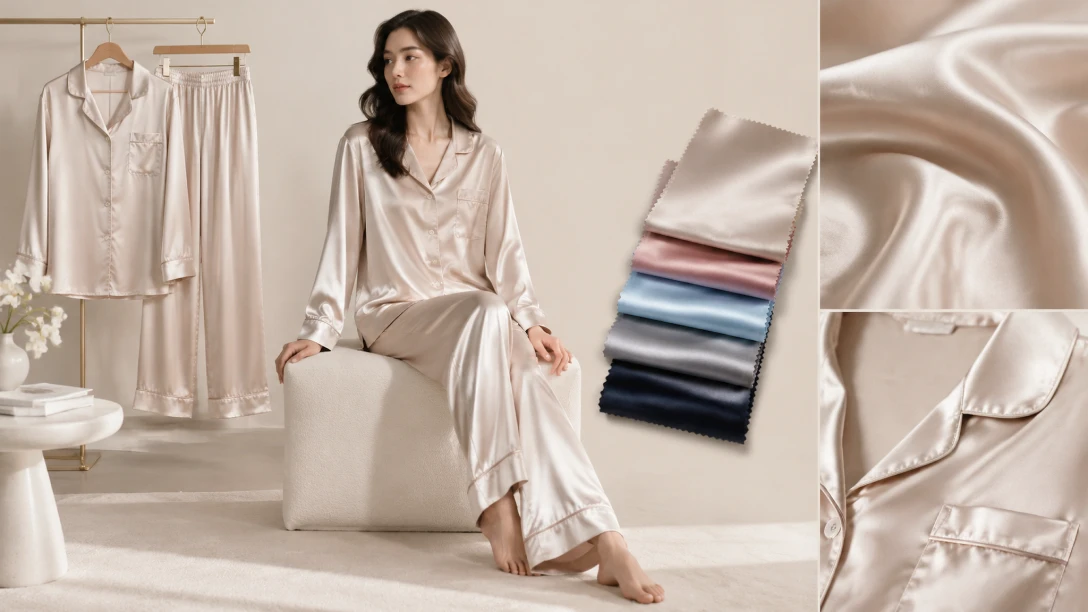
- Habotai is the smooth, opaque-leaning lightweight: soft, fluid, matte-lustrous, and evenly balanced. It covers where the sheers reveal — the default for linings, scarves, and light garments where a quiet solid surface is the point.
- Organza is the structural outlier: transparent, crisp, and self-supporting. Where habotai drapes against the body, organza stands away from it — specify organza for volume and sculpted silhouettes, never for drape. The silk organza fabric page covers the standard stiffness grades.
- Georgette is the grainy, springy middle: a high-twist crepe with pebbled texture and fluid movement, more opaque and durable than chiffon at equal weight. Choose it over habotai when the garment needs texture and motion rather than a smooth face; the silk georgette fabric range shows the standard weights.
- Chiffon is the softest and most transparent of the family, floating where habotai drapes. It needs lining in most garment applications — which, in practice, is often habotai itself. The silk chiffon fabric page covers the sheer end of the range.
The selection rule: smooth coverage points to habotai, volume to organza, texture with motion to georgette, and float with transparency to chiffon. For programs that want habotai's lightness with a lustrous face, the next step up is charmeuse — a different weave, not a heavier habotai.
4. Printing and Dyeing Habotai: The Scarf and Silk-Painting Standard
Habotai is the printing industry's default silk ground for reasons rooted in its construction. The smooth, untwisted surface presents dye and ink an even, predictable plane: solids develop uniformly, fine print lines hold their edges, and photographic detail reproduces without the optical interference a crepe texture or satin float would add. This is why 8-momme habotai became the global standard for printed scarves and why the silk-painting trade built itself on the same fabric — gutta lines sit on the surface cleanly and dyes travel evenly through the open plain weave.
Two disciplines protect the result. First, weight discipline: at 8 momme the fabric is semi-sheer, so double-sided show-through on printed scarves must be evaluated under real light, and dark-heavy designs may need 10 or 12 momme to read solid. Second, finish discipline: the dye bath interacts with the finish state, so lab dips and strike-offs must run on the production finish — a dip approved on natural habotai will not match bulk run on washed. The method trade-offs between digital, screen, and specialty work are covered in our silk printing methods guide. For scarf programs, the custom silk scarf page shows how habotai's weights map to finished product formats.
5. Working with Habotai: Cutting, Sewing, and Defect Control
Habotai is the easiest lightweight silk to run through a factory, which is precisely why workshops get careless with it. The production rules for the tech pack:
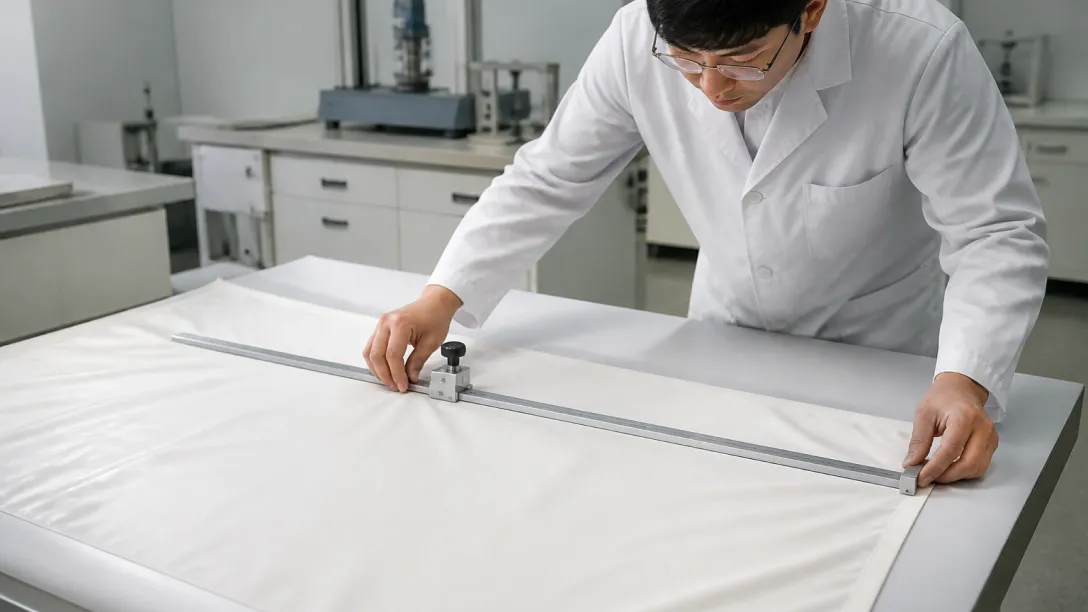
- Cutting discipline: the fabric is stable and handles cleanly in moderate lays — no creeping, no curl, no torque release. Sharp blades still matter: the light plain weave frays at raw edges faster than crepe constructions, so edge finishing belongs early in the sewing sequence.
- Needle and seam discipline: fine needles and moderate stitch lengths prevent seam puckering on the light body. French seams and narrow hems are the standard garment finishes; at 8 to 10 momme the fabric is semi-sheer, so seam allowances show as shadow lines and internal construction must be engineered for it.
- Durability engineering: habotai's plain weave abrades faster than twills and satins at friction points — underarms, seat seams, bag edges. Lining programs should specify stress-point reinforcement, and garment programs should set realistic pilling and wear expectations against the chosen weight.
- Inspection checkpoints: check for yarn bands (uneven filaments read as visible stripes on the flat surface), dye streaks on piece-dyed lots, and water-spot marking on natural-finish goods. All three are visible at the table and cheap to catch there.
Garment-side technique connects directly to our silk sewing techniques guide, which covers seam engineering across lightweight silk types. Programs feeding custom silk clothing lines should treat habotai as the reference baseline: if a workshop cannot run habotai cleanly, it cannot run anything in the silk range.
6. MOQ, Lead Times, and Production Planning
Custom habotai programs typically begin at 300 to 500 meters per color for piece-dyed work, with printed programs following the same minimums per colorway once screens or digital files are set. Weaving runs 20 to 30 days plus 7 to 10 days for lab dips, and print sampling adds one to two weeks depending on method. Habotai is the most widely produced lightweight silk construction, so capacity is rarely the constraint — consistency is. Mills quote habotai at every quality level, and the price spread between 5A-yarn goods and downgraded equivalents is wide; a program priced without a sealed counter sample invites quiet substitutions that only surface at the cutting table.
Because habotai is usually the entry fabric of a new silk program, it pays to lock the discipline early: seal the counter sample, fix weight and finish together, and write inspection standards into the purchase order before the loom starts. Our silk habotai fabric range covers the standard weights and finishes, woven and dyed under one roof at our Suzhou facility with per-roll inspection reports. Send your weight, width, and finish requirements to request samples and a program quote.
FAQ
Silk habotai is a lightweight plain-weave silk woven from untwisted or lightly twisted yarns in a balanced one-over-one-under construction. With no crepe texture, satin face, or stiffness, the fabric is smooth, soft, and evenly balanced with a gentle luster and fluid drape. Standard weights run 8 to 16 momme in 114 and 140 cm widths, and the fabric is the silk industry's default specification for linings, scarves, light garments, and silk painting.