

Silk Georgette Fabric: A B2B Guide to Construction, Weights, and Sourcing Standards


Silk georgette occupies the sheerest end of the apparel silk spectrum, and it is the fabric most often mis-specified in first collections. Buyers order it expecting the body of crepe de chine, or substitute chiffon expecting the same drape, and discover the difference only after the samples arrive. Georgette has a distinct construction, a distinct hand, and a narrow set of applications where it performs better than any other silk. This guide defines the parameters that keep a georgette program on specification, from yarn structure through bulk inspection.
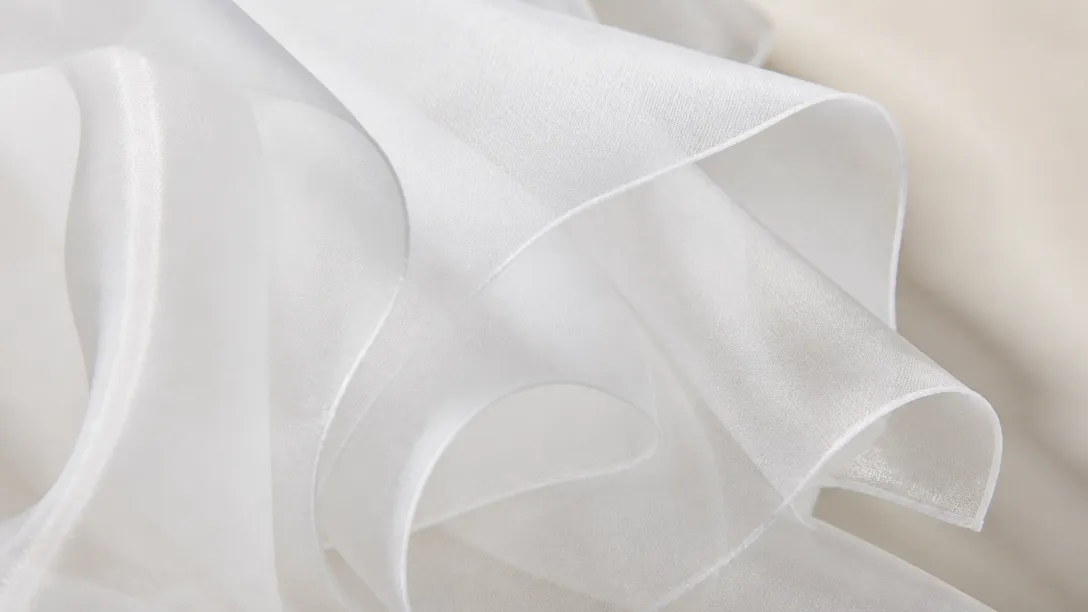
Silk georgette is a plain-weave crepe fabric made with highly twisted yarns in both the warp and the weft, alternating S-twist and Z-twist in both directions. This double crepe construction produces a sheer, springy fabric with a coarse grain and a floating drape. Commercial weights run from 8 to 12 momme, and the fabric is specified for overlays, flowing dresses, scarves, and layered garments where transparency and movement carry the design.
1. What Silk Georgette Is: Double Crepe Construction
Georgette belongs to the crepe family, and its character comes from twist. Both the warp and the weft use crepe yarns twisted to roughly 2,500 to 3,500 turns per meter, woven in alternating S and Z twist directions. When the woven cloth relaxes and is finished, the high-twist yarns in both directions contract, producing the fabric's signature coarse, grainy surface and its springy, almost elastic handle.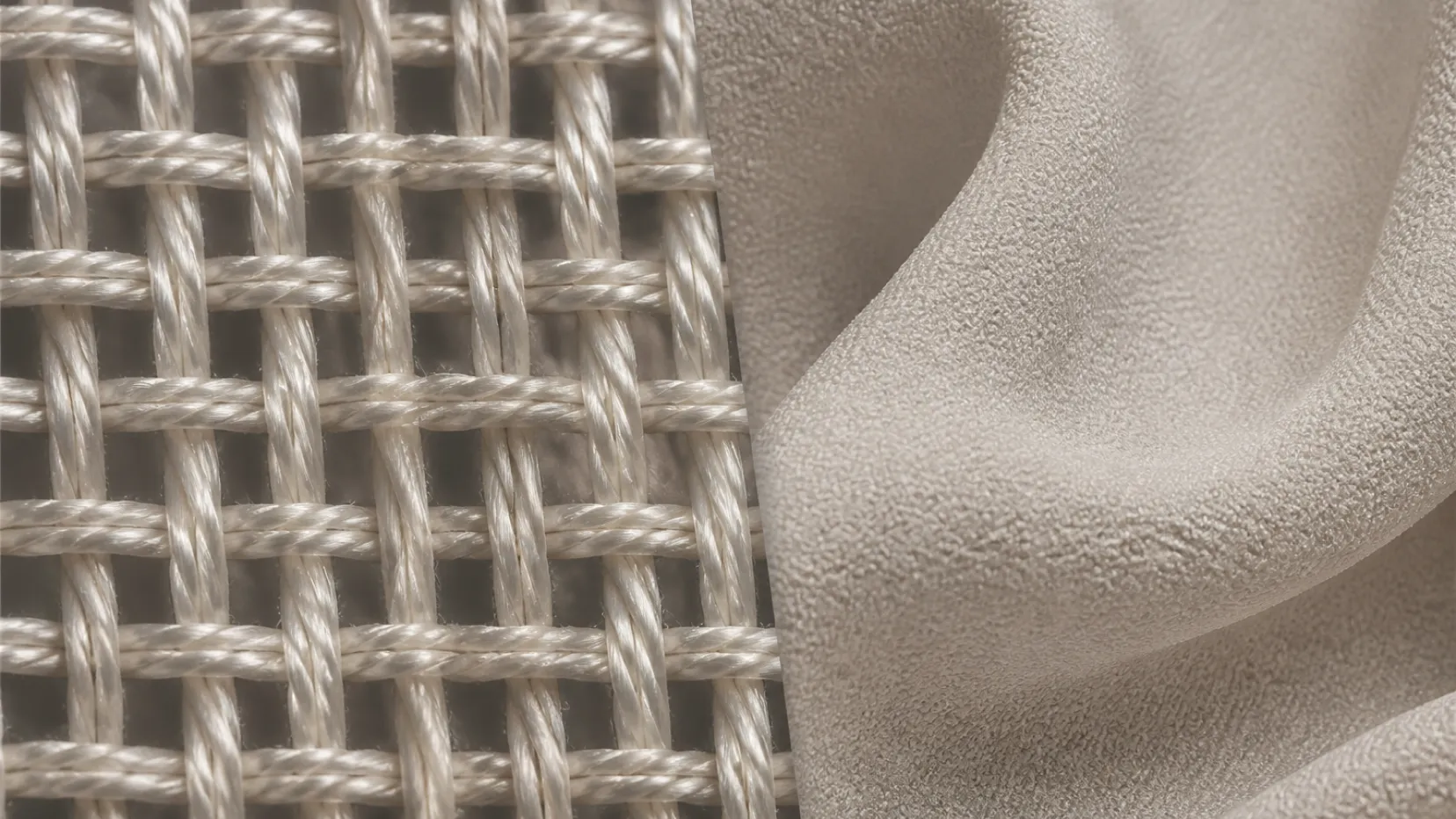
The double-twist construction separates georgette from every neighboring fabric. Crepe de chine carries high twist only in the weft, so it stays smoother and heavier at the same momme. Chiffon uses high-twist yarns too, but at lower twist levels and in a looser weave, which gives chiffon its softer, more limp drape. Georgette's tighter crepe contraction gives it more body per gram than either, and that is why it floats away from the body instead of clinging.
The fabric takes its name from the French dressmaker Georgette de la Plante, who popularized the construction in the early twentieth century. Commercial production now concentrates in the Suzhou silk cluster, where dedicated crepe-twisting capacity determines quality. Yarn quality is amplified by the high twist: any irregularity in the raw silk concentrates into visible slubs and texture streaks, so Grade 6A mulberry silk is the baseline specification for commercial grades.
2. Weight Specifications: Momme Ranges by Application
Georgette sells in a narrow, light weight band. The commercial weights and their applications:
| Momme | Approx. GSM | Opacity | Typical Application |
|---|---|---|---|
| 8 mm | 34 gsm | Sheer | Scarves, veils, overlay panels |
| 10 mm | 43 gsm | Sheer to semi-sheer | Blouse overlays, flowing sleeves, layered dresses |
| 12 mm | 52 gsm | Semi-sheer | Dresses, skirts, lined blouses |
The gsm figures follow the standard conversion covered in our silk momme weight guide. Two sourcing points deserve attention. First, georgette above 12 momme loses the floating character that justifies the fabric, so heavier programs should move to crepe de chine rather than push georgette past its working range. Second, weight tolerance should be contracted at plus or minus 5 percent: at these weights, a one-momme shortfall changes opacity enough to be visible in finished garments.
Requests for quotation should state the end product alongside the target momme. A mill quoting without this context defaults to 10 momme, and a scarf program that needed 8 momme airiness discovers the gap only at the strike-off stage.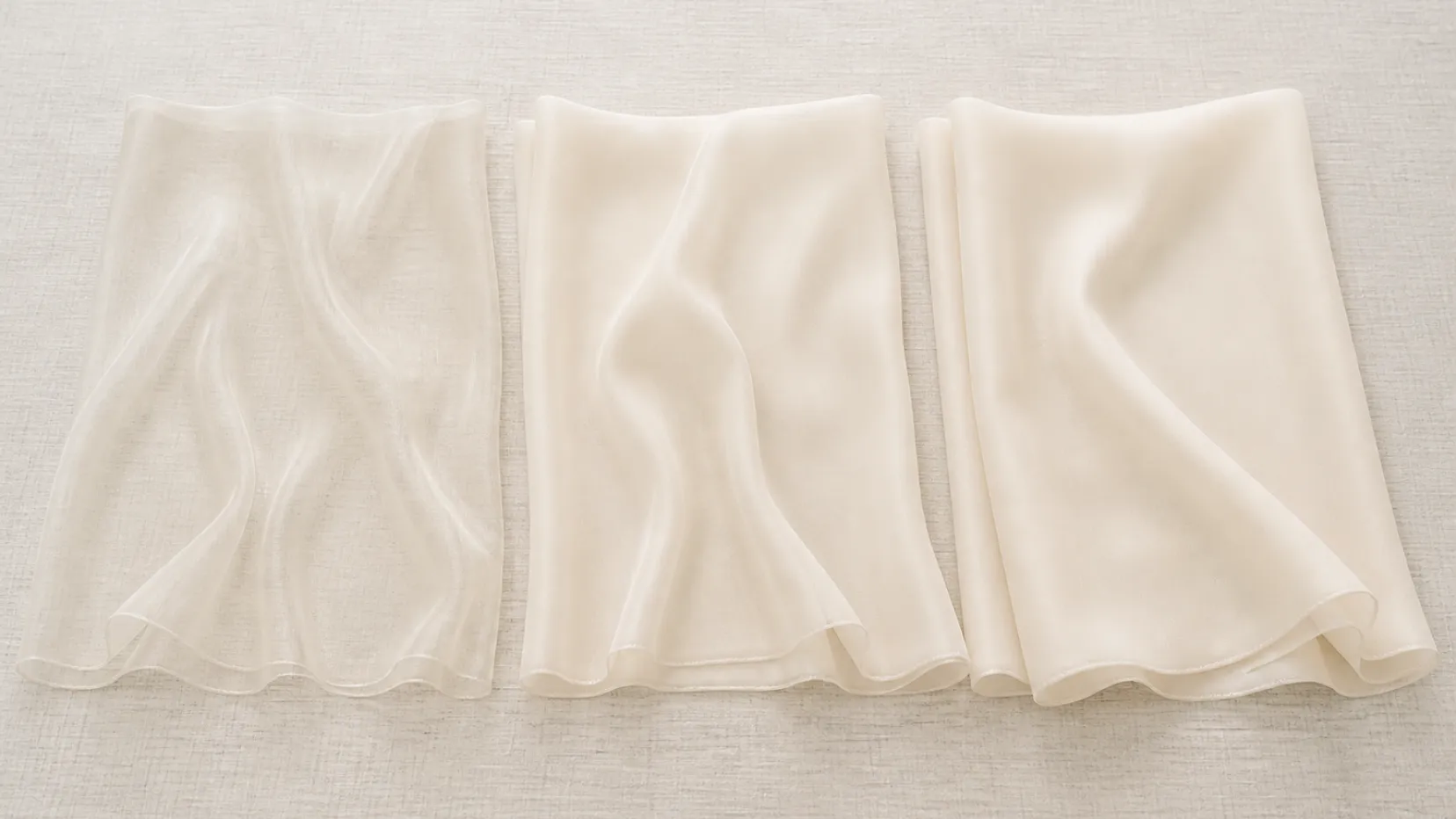
3. Georgette vs Chiffon vs Crepe de Chine
Buyers choose between these three fabrics on nearly every sheer and lightweight program. The functional comparison:
| Property | Georgette | Chiffon | Crepe de Chine |
|---|---|---|---|
| Twist construction | High twist, warp and weft | High twist, looser weave | High twist, weft only |
| Surface | Coarse, grainy | Soft, smooth | Fine pebble |
| Drape | Springy, floats | Limp, clings lightly | Fluid with body |
| Sheerness at 10 mm | Sheer | Sheer | Mostly opaque |
| Resilience | High, resists wrinkling | Moderate | Good |
| Sewing difficulty | High | High | Low to moderate |
The selection logic follows from the table. A scarf or veil that must hold a crisp shape in the air calls for georgette. A draped evening layer that must fall softly calls for silk chiffon. A blouse that must read matte and opaque calls for crepe de chine. Substituting chiffon for georgette in a structured overlay is the most common error: chiffon collapses under its own weight where georgette would hold volume.
For coordinated collections, georgette works as the sheer layer over opaque bases: a georgette overlay on a crepe de chine slip dress, or georgette sleeves on a charmeuse bodice. Specifying both fabrics from one dye lot keeps shades matched across layers and consolidates minimums.
4. Dyeing and Printing Performance
Georgette dyes cleanly in piece dyeing, and its grainy surface hides minor levelness variation that would streak on satin weaves. Commercial quality sits at grade 4 colorfastness to washing (AATCC 61), which programs should state in the purchase order rather than assume. Deep, saturated shades perform well, though the sheer construction means dark colors read lighter in the finished fabric than on the lab dip, since light passes through the cloth rather than reflecting off it.
For printing, georgette accepts digital and screen methods, but two behaviors require proofing on actual fabric. The grainy texture softens fine lines below roughly 0.5 mm, and the sheer ground makes double-sided print show-through a design variable rather than a defect: artwork for scarves should be engineered for how the reverse reads, since both faces are visible in wear. Method selection and minimums are covered in our silk printing methods guide.
One finishing specification applies to sheer crepes specifically: georgette should not be calendared or heavily pressed flat at the mill. Mechanical flattening destroys the grain that gives the fabric its body, and the damage is permanent. If a delivered roll reads suspiciously smooth, the fabric has likely been over-finished, and its drape will collapse in the garment.
5. Cutting and Sewing Requirements
Georgette is among the most demanding silks on the cutting table. The fabric shifts under stacked cutting and frays aggressively at raw edges. Production programs should cut single-ply or in low stacks over tissue paper, with pattern weights rather than pins where possible. Shrinkage in piece-dyed lots runs 3 to 5 percent and must be compensated in the pattern.
Sewing parameters reflect the open crepe structure: stitch density of 12 to 16 SPI with fine polyester-core thread, size 8 to 10 needles, and French seams or narrow rolled hems at 3 to 5 mm to enclose fraying edges. Seam allowances under 1 cm pull out under load, so patterns should carry the full allowance even where the finished seam reads narrow. Pressing stays cool and dry from the reverse; direct steam on the face relaxes the crepe twist unevenly and leaves shiny patches that do not recover. The full parameter set appears in our silk sewing techniques guide, and brands building georgette dresses can reference the construction standards in our custom silk dress program.
Hem finishing deserves a contract line of its own. Machine-rolled hems at 3 mm suit scarves and overlays, while hand-rolled hems at 5 mm remain the luxury standard for premium scarves. A mixed specification, machine hems on a product sold at hand-finished prices, is the kind of substitution that survives inspection but fails in customer hands.
6. Quality Benchmarks and Sourcing Workflow
The checkpoints that belong in a georgette first article inspection:
| Checkpoint | Standard | Method |
|---|---|---|
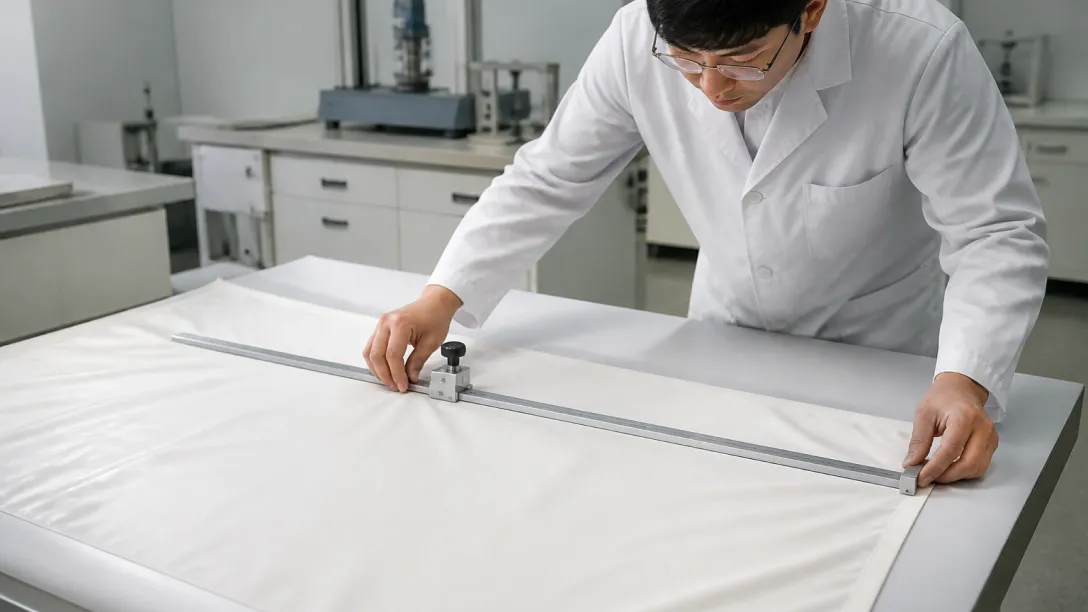
| Fabric weight | ±5% of specified momme | GSM cutter, 5 points per roll |
| Texture uniformity | No twist streaks or slubs | Full-roll visual inspection under D65 |
| Colorfastness to washing | Grade 4 minimum | AATCC 61 |
| Dimensional stability | Shrinkage within declared 3–5% | Wash test per lot |
| Weave density | Ends and picks per cm on specification | Pick glass count per lot |
Commercial terms for custom programs: lab dips in 5 to 7 working days, production minimums from 100 meters per color for stock constructions and 300 meters for custom weights or prints, with bulk lead times of 20 to 30 days. We weave and dye silk georgette to order in 8 through 12 momme at our Suzhou facility, with lot-level test reports supplied on request. Send your target weight and colorway to request swatches and a direct mill quote.
FAQ
Silk georgette is a plain-weave crepe fabric made with highly twisted yarns in both the warp and the weft, alternating S-twist and Z-twist in both directions. This double crepe construction produces a sheer, springy fabric with a coarse grain and a floating drape. It is used for scarves, overlays, flowing dresses, and layered garments in weights from 8 to 12 momme.