
Custom Silk Shirts: A B2B Guide to Fabric Weights, Fit Engineering, and Construction Standards


Silk shirts occupy a demanding position in apparel manufacturing. The fabric must stay light enough for all-day wear yet dense enough to support collar structure, button plackets, and repeated laundering. Brands moving from cotton or polyester programs into silk often discover that their existing tech packs fail: collars collapse, seams pucker, and buttons tear out within the first month of retail wear. A silk-specific specification solves each of these failure points before cutting begins.
A production-ready custom silk shirt program is built on 16 to 22 momme mulberry silk in charmeuse, twill, or crepe de chine weaves, cut from shrinkage-compensated patterns, assembled with French or narrow flat-felled seams at 14 to 18 stitches per inch, and finished with weight-matched collar interfacing and reinforced button attachments. Locking these parameters in the tech pack prevents the structural failures that drive returns in silk shirting.
1. Fabric Selection: Momme Weight and Weave Structures for Shirts
Shirting places different demands on silk than bedding or accessories. A shirt hangs from the shoulders, flexes at the elbows, and carries hardware at the collar and cuffs. Fabric weight and weave determine how well the garment handles each of these stresses.
For most commercial programs, the working range is 16 to 22 momme. Below 16 momme, the fabric turns semi-transparent in pale shades and cannot carry a structured collar. Above 22 momme, the shirt loses the fluid drape that justifies silk at retail. Weave structure then sets the surface character:
| Fabric | Recommended Momme | Surface Character | Best Application |
|---|---|---|---|
| Silk charmeuse | 16–19 mm | High luster face, matte reverse, fluid drape | Dress blouses, evening shirts, drapey silhouettes |
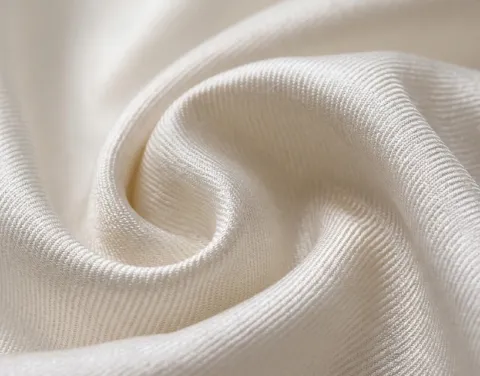
| Silk twill | 18–22 mm | Diagonal rib, soft sheen, strong wrinkle recovery | Classic button-down shirts, tailored styles |
| Crepe de chine | 16–18 mm | Matte, fine pebble texture, moderate drape | Everyday blouses, understated premium lines |
| Stretch silk | 19–22 mm | Charmeuse with 4–6% spandex | Slim-fit and body-contouring styles |
Silk twill fabric has become the default for tailored shirts because its diagonal weave resists wrinkling better than charmeuse and holds a crisp collar line through a full day of wear. Silk charmeuse fabric remains the choice for fluid blouses where drape matters more than structure. For fitted silhouettes, stretch silk fabric with a small spandex content removes the strain that otherwise tears seams at the underarm and back yoke.
Whatever the weave, specify Grade 6A mulberry silk yarn. Lower grades carry more sericin residue and short fibers, which show up as slubs and uneven dye uptake across a shirt front. Our silk momme weight guide covers the gsm conversion and drape behavior of each weight in detail.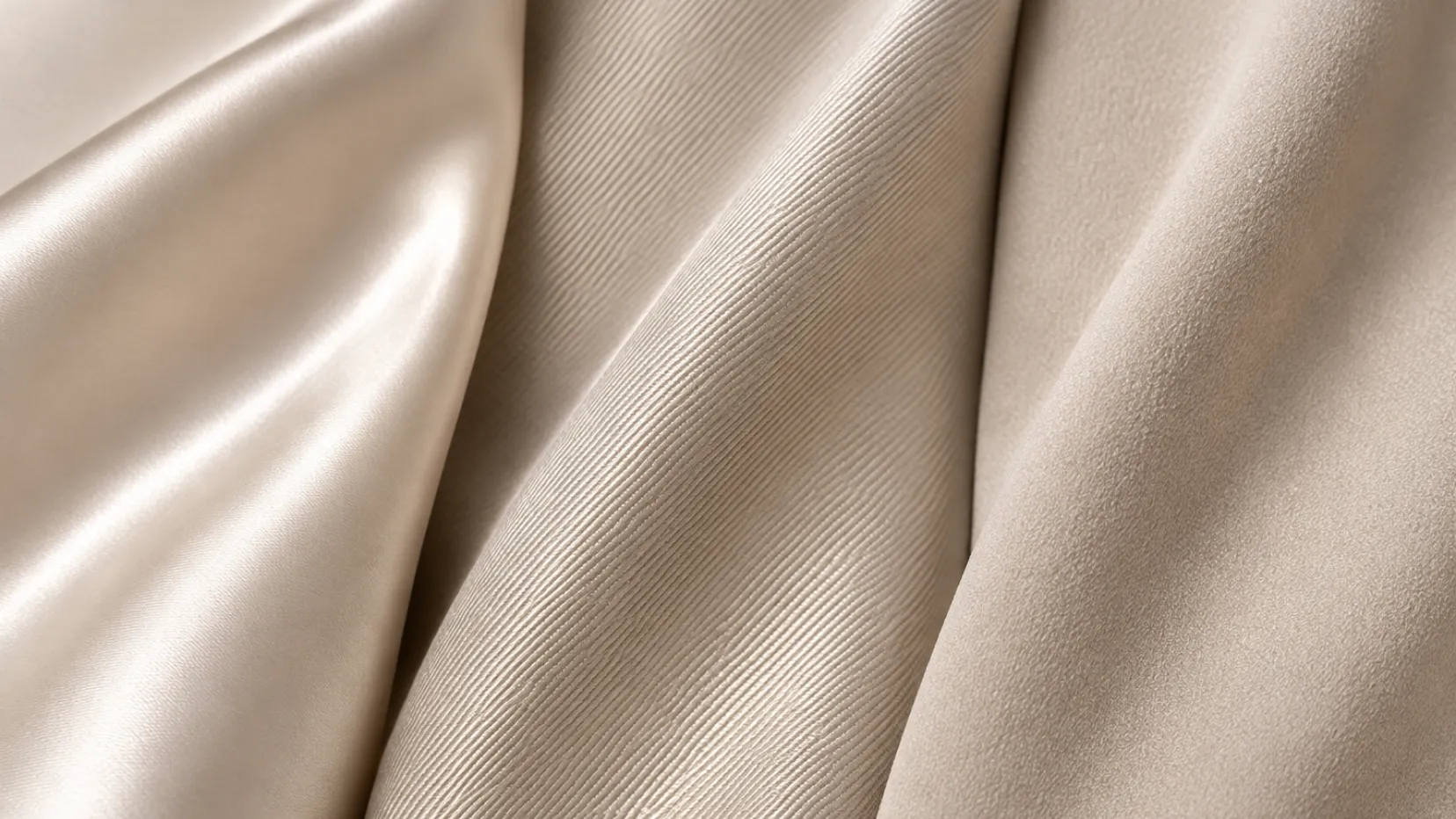
2. Pattern Engineering and Size Grading for Silk
Silk has almost no mechanical stretch and no recovery. A pattern drafted for cotton will fit tighter in silk and will pull at the armhole and bust once the wearer moves. Two adjustments correct this before cutting:
- Wearing ease: Add 6 to 10 cm of bust ease for relaxed shirts and 4 to 6 cm for tailored fits. Silk patterns need roughly 2 cm more ease than an equivalent cotton block.
- Shrinkage compensation: Piece-dyed silk shrinks 3 to 5 percent on the first wash. Patterns should be scaled up by the tested shrinkage rate of the actual fabric lot, or the bulk fabric should be pre-shrunk before cutting. Skipping this step is the most common cause of size complaints in first production runs.
Grading between sizes should hold to 4 to 5 cm at the bust and 2.5 cm at the sleeve length per size step. Because silk frays more readily than cotton, seam allowances of 1 cm are required for French seam construction, and marker layouts must respect grain direction strictly. Charmeuse cut off-grain twists visibly after the first wash, and no pressing will correct it.
Yarn-dyed versus piece-dyed routing also belongs in the pattern stage. Yarn-dyed stripes and checks must be cut with pattern matching at the center front, placket, and pocket, which raises fabric consumption by 8 to 12 percent. Piece-dyed solids carry no matching penalty and remain the most cost-efficient route for first collections.
3. Construction Standards: Seams, Collars, Cuffs, and Closures
Construction quality decides whether a silk shirt survives its first year of retail wear. The standards below reflect what we enforce on custom silk clothing programs at our facility.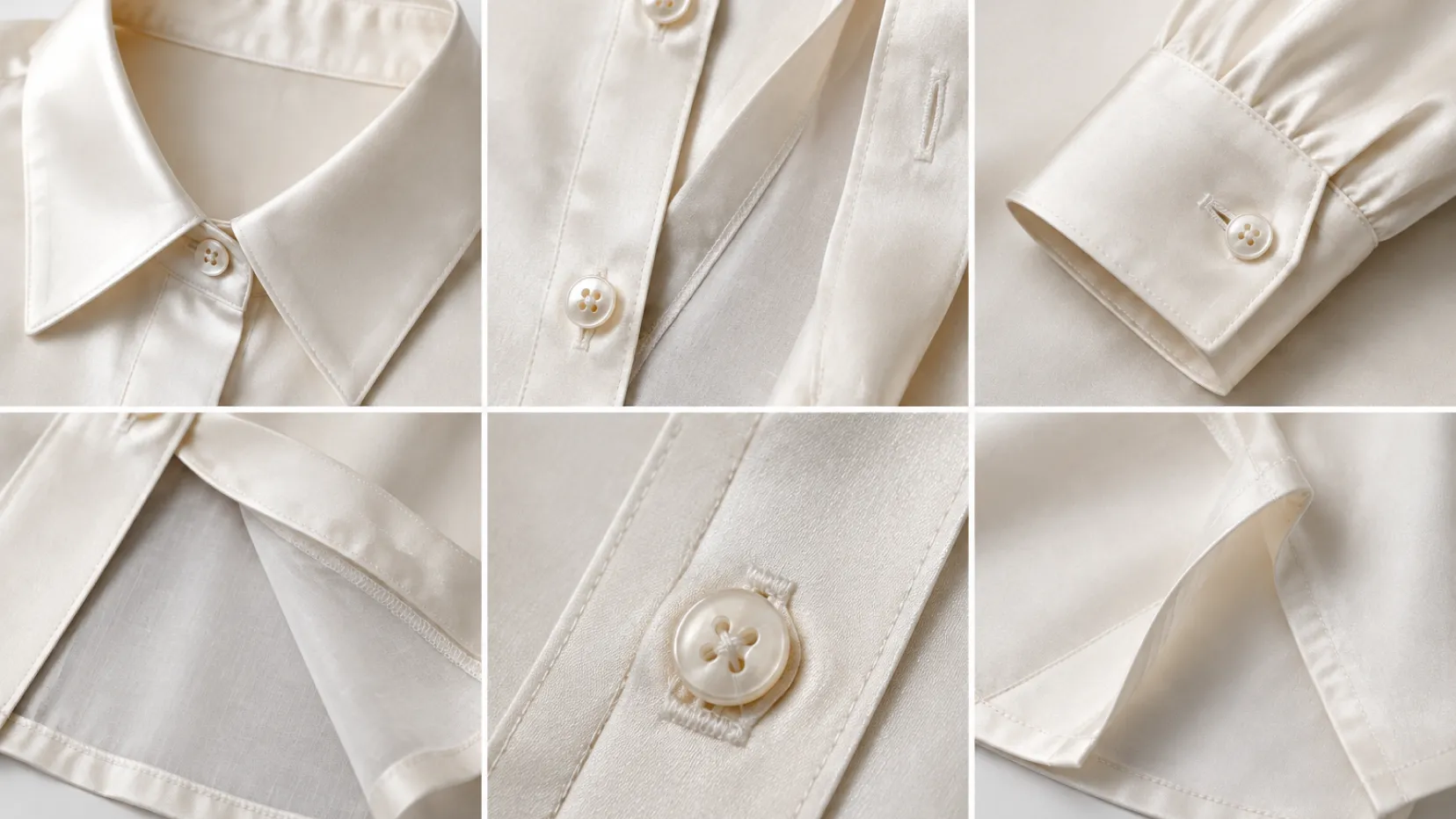
Seam Architecture
French seams at 5 to 6 mm finished width are the standard for side seams and armholes, fully enclosing raw edges that would otherwise fray through the shell. Flat-felled seams at 6 mm work for the shoulder and side seams of casual styles where a visible topstitch line is acceptable. Stitch density should run 14 to 18 SPI with fine 60/2 or 75/2 polyester-core thread; cotton thread degrades faster than the silk it holds and should not be used. A narrower seam with more stitches distorts less and launders flatter than a wide, loose seam.
Collar and Cuff Structure
Collar collapse is the most visible defect in silk shirting. The fix is a lightweight woven fusible, typically 30 to 40 gsm, bonded only to the outer collar stand and upper collar. Heavy interfacings telegraph through 16 to 19 momme silk and create a stiff ridge at the collar edge. Cuffs follow the same rule: one fused ply, matched in weight to the shell.
Closures and Hardware
Buttonholes on silk must be densely stitched, 90 to 120 stitches per buttonhole, with a fusible stay tape behind the placket to prevent tearing. Mother-of-pearl buttons remain the retail standard above the mid-market tier; polyester buttons are acceptable for entry price points. Every button gets a shank or thread wrap so the attachment flexes instead of sawing through the placket. Our silk sewing techniques guide documents needle sizes, thread tensions, and presser foot pressures for each of these operations.
4. Dyeing, Printing, and Surface Finishing
Silk accepts color at a depth few fibers match, but the method affects both cost and minimums. Piece dyeing suits solid programs and carries the lowest per-meter cost at scale. Digital printing handles complex, multi-color artwork with no screen fees and low minimums, which makes it the practical choice for seasonal prints. Screen printing still wins on color saturation for large runs of simple designs. The trade-offs are covered in our silk printing methods guide.
Two finishing specifications belong in every shirt tech pack:
- Colorfastness: Grade 4 or higher to washing (AATCC 61) and perspiration. Silk shirts sit against skin and deodorant all day; anything below Grade 4 fades visibly at the collar and underarm within a season.
- Surface finish: Sandwashing produces the matte, peach-skin hand feel used in casual shirting. It also relaxes the fabric slightly, which reduces seam puckering on fitted styles.
5. Quality Control Benchmarks and Testing Protocols
A silk shirt program should be inspected against written benchmarks, not general garment standards. The checkpoints we apply before bulk shipment:
| Checkpoint | Standard | Method |
|---|---|---|
| Fabric weight tolerance | ±5% of specified momme | GSM cutter, 5 samples per roll lot |
| Seam slippage | ≤6 mm at 100 N | ASTM D434 |
| Colorfastness to washing | Grade 4 minimum | AATCC 61 |
| Shade consistency | No visible banding within one garment | D65 light box, cut panels matched before sewing |
| Final inspection | AQL 2.5 | Full measurement audit plus needle detection |
Shade banding deserves emphasis. Silk lustre shifts with viewing angle, so panels for one shirt must be cut from the same dye lot and matched under D65 lighting before sewing. Mixing lots within a garment is the single most expensive avoidable error in silk shirting production.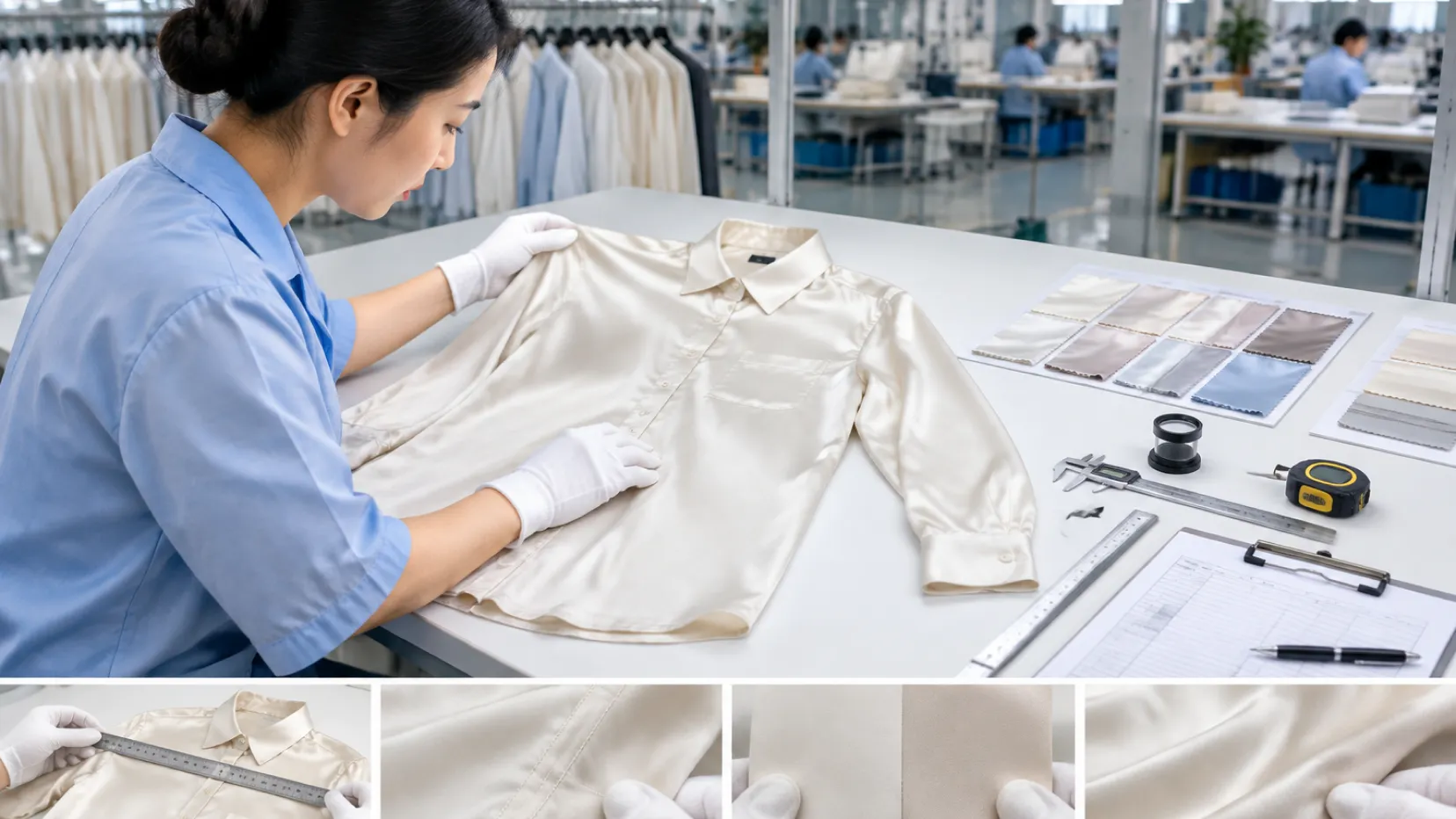
6. Sampling, MOQ, and Production Workflow
We manufacture custom silk shirts and blouses from prototype through bulk at our Suzhou facility, with the workflow below:
- Prototyping: 7 to 10 working days after tech pack confirmation, including fit sample revisions.
- Production MOQ: 50 pieces per style and colorway for piece-dyed solids; 100 pieces for custom prints.
- Bulk lead time: 25 to 35 days after sample approval, depending on dyeing and printing load.
Shirts pair naturally with broader silk assortments. Many of our clients build coordinated collections across shirts, pajamas, and accessories from a single fabric platform, which consolidates dye lots and reduces per-unit cost. Send your tech pack or reference sample to our engineering team, or contact us for a direct factory quote to start your silk shirting program.
FAQ
The commercial working range for silk shirting is 16 to 22 momme. 16 to 19 momme charmeuse or crepe de chine suits fluid blouses and warm-climate shirts. 18 to 22 momme silk twill is the standard for tailored button-down shirts because it holds collar structure and resists wrinkling. Weights below 16 momme turn semi-transparent and cannot support structured collars.